I can play for Nepal team under 19
I am medium fast blower and wicket keeping also batter in short from all-round




The Cricket Association of Nepal (Cricket Association of Nepal - CAN) is the highest national body responsible for managing, developing, and regulating cricket in Nepal. Its primary responsibilities include promoting cricket nationwide, organizing national and international competitions, and ensuring the career development of players who represent Nepal on the international stage.
In Nepali society, cricket is not only a sport but also a symbol of national sentiment. Established in 1946 (B.S. 2003), the organization has experienced many ups and downs over different periods and has contributed to establishing Nepal on the global cricket map as a strong One Day International (ODI) nation.
After affiliation with the International Cricket Council (ICC), this body has carried the responsibility of advancing Nepali cricket in an institutional and structural manner.
The purpose of this profile is to provide the public with official facts about CAN’s internal working system, legal basis, and the services it provides. The details included here are based on official government documents, CAN’s constitution, and ICC standards.
Before understanding any institution, it is necessary to know its basic facts.
Official Name: Cricket Association of Nepal (CAN)
Role in Nepal: National regulatory body for cricket (mandate). It operates as a registered entity under Nepal’s national sports laws.
Year Established: 1946 (B.S. 2003)
International Affiliation:
ICC Membership: 1988 (Affiliate) and 1996 (Associate)
Regional Affiliation: One of the founding members of the Asian Cricket Council (ACC)
Head Office: Mulapani International Cricket Ground area, Kageshwori Manohara, Kathmandu, Nepal
Contact Details:
Phone: +977-1-4912042 (Office hours: 10:00 to 5:00, Sunday–Thursday; Friday: 10:00–3:00)
Email: info@cricketnepal.org.np
Official Channels:
Website: www.cricketnepal.org.np
Facebook/X/Instagram: @CricketAssociationOfNepal (verified handles)
Although the Cricket Association of Nepal is an autonomous body, it is accountable to Nepal’s prevailing laws and the ICC’s codes of conduct.
CAN is an organization registered with the National Sports Council (NSC) under the “National Sports Development Act, 2077 (B.S.).” Its operations are governed by its own constitution, which must be approved by the ICC.
Statute: CAN’s current operations are conducted under the constitution revised in 2019. It defines the structure of elections and the district, provincial, and central committees.
Privacy Policy: CAN states its commitment to safeguarding players’ personal data, medical details, and contract terms.
This is the highest body of the association. It includes district and provincial representatives and designated stakeholders as members. The General Assembly makes policy-level decisions.
This includes the President, Vice President, Secretary, Treasurer, and members. Their tenure is generally four years.
For effective performance, CAN forms various sub-committees, including:
Selection Committee
Disciplinary and Code of Conduct Committee
Finance/Audit Committee
Women’s Cricket Committee
Grassroots Development Committee
Medical and Safeguarding Committee
CAN’s elections follow a democratic process at all three levels: district, province, and center. An independent election committee is formed for elections. If disputes arise, solutions are sought through the appeal mechanisms mentioned in the “National Sports Act” or the constitution.
The main work of CAN is to develop cricket in Nepal by building infrastructure, identifying and protecting talented players, and arranging high-level training. This body is responsible for maintaining the quality and dignity of Nepali cricket.
Beyond CAN’s official role, there are other private activities in the market. For public clarity, the following points are important:
Private Academies: CAN does not directly invest in academies operated through private investment, but such academies may be affiliated with or approved by CAN.
Unofficial Tournaments: Commercial or large tournaments played without CAN approval do not have official recognition.
Fan Pages: “Fan” groups on social media are not official spokespersons of CAN. Any official decision is issued only through CAN’s verified handles.
CAN provides services for various stakeholders.
Levels: Men and women (senior), age groups (Under-19, Under-16, etc.).
Selection Policy: The selection process is based on merit, physical fitness, and performance in recent competitions. Before announcing the national team, the selection committee organizes a closed camp.
Central Contract: Based on performance, players are classified into categories (Grade A, B, C) with provisions for monthly remuneration and insurance.
PM Cup (Prime Minister Cup): A major national one-day competition.
Age-Group Competitions: Games starting from school level and district level, reaching up to the national level.
Registration Process: Participating clubs or teams must apply through the concerned District Cricket Association. Players’ birth registration/citizenship and a recent photo are mandatory.
Coaching Pathways: Level 1 and Level 2 coaching courses.
Umpire and Scorer Training: Exams and accreditation based on national and international rules.
Eligibility: When applications open, individuals with relevant technical backgrounds can apply.
Media Accreditation: For reporting major matches, journalists must submit an official letter and identification to obtain permission.
Press Releases: All policy decisions are posted in the “Media” or “Notice” sections of the website.
This section plays an important role in maintaining the purity of cricket.
If there is any match-fixing, spot-fixing, or suspicious contact, it must be reported immediately to CAN’s Anti-Corruption Unit or the ICC. CAN keeps the identity of informants confidential.
The Nepali cricket team is committed to WADA rules. Players must not consume banned substances. Players must participate in regular and surprise blood and urine drug testing procedures.
A Safeguarding Policy has been implemented against any form of violence, exploitation, or abuse that may affect children and youth players. If a player or fan faces such issues at the ground or in camps, they can file a complaint directly to the safeguarding committee.
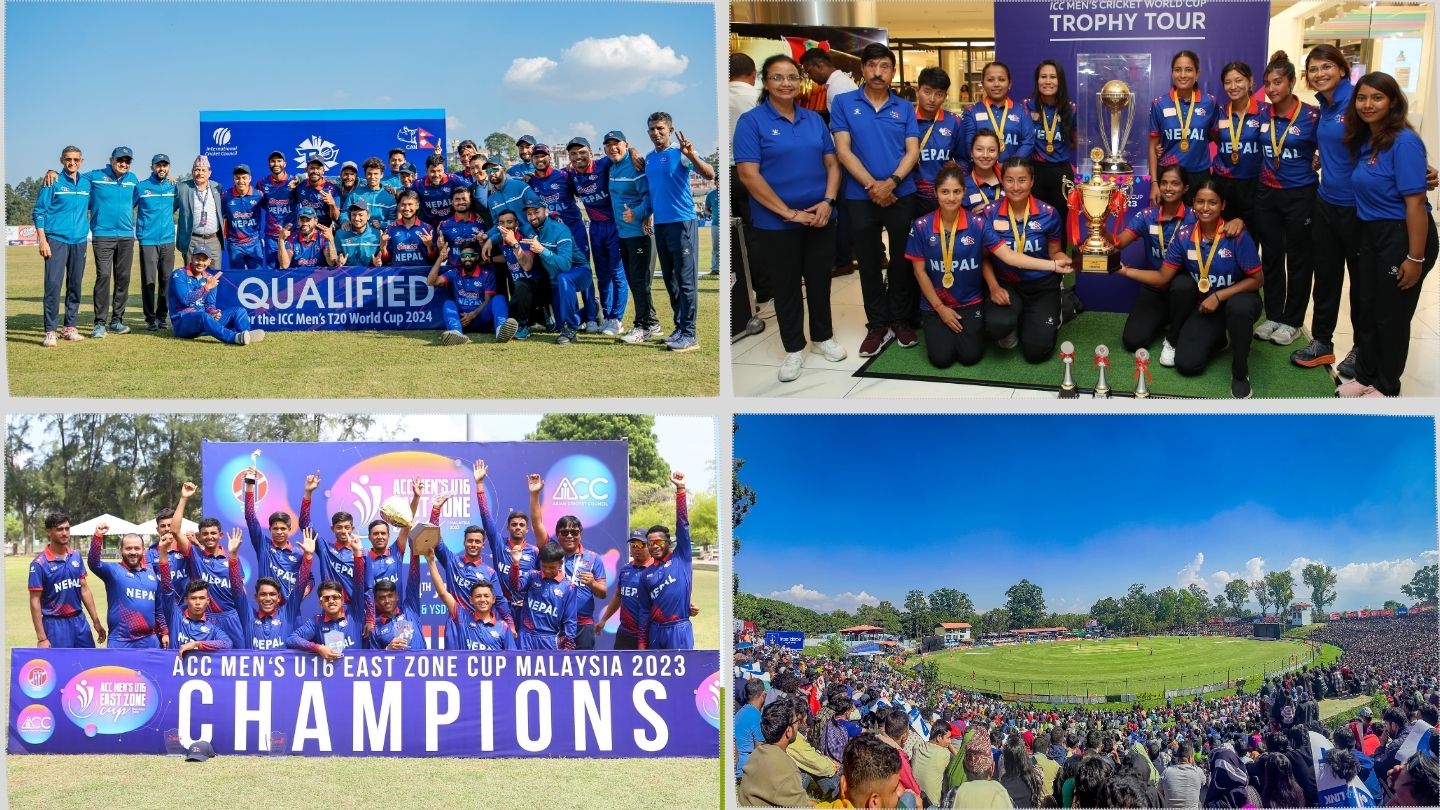
The Cricket Association of Nepal classifies Nepali cricket into different tiers in line with international standards and the ICC’s strategic plan. This classification is based on a player’s age, skill, and future potential.
This is the highest peak of Nepal’s cricket pyramid. The team represents Nepal at the One Day International (ODI) and Twenty20 International (T20I) levels.
Role: The main goal of this team is to compete in prestigious tournaments such as the ICC Cricket World Cup and the Asia Cup and to improve Nepal’s international ranking.
Selection Process: Performance in domestic competitions (such as the Prime Minister Cup), the Nepal Premier League (NPL), and Nepal ‘A’ is taken as the key basis. The selection committee evaluates a player’s technical competence, fitness tests (Yo-Yo test, etc.), and statistics from the past two years.
Administrative Setup: For this team, CAN provides a Head Coach, bowling, batting, and fielding coaches, a physiotherapist, and a conditioning coach.
This is the main body that increases the popularity and professionalism of women’s cricket in Nepal.
Role: The mandate of this team is to establish Nepal as a strong competitor in the Asian region, with particular focus on T20 World Cup qualifiers and the Asia Cup.
Structure: Around 18 to 20 players are placed under a Central Contract.
Development Priority: To increase participation in women’s cricket, CAN presents players from this team as role models and works to build motivation across schools and district levels nationwide.
This team serves as the bridge between the senior national team and domestic cricket. It is also described as a “high-performing reserve team.”
Importance: The team is formed to build bench strength and prepare immediate alternatives for the national team. If a senior player is injured or out of form, the best-performing ‘A’ team player is promoted.
Competitions: This team plays “unofficial” international friendlies (multi-day matches or series) against neighboring countries’ ‘A’ teams and other national teams touring Nepal.
Player Composition: It mainly includes experienced players who are outside the senior national team and promising young players who are close to entering the national team.
In Nepal’s cricket history, this is regarded as the most successful and foundational team. It is considered a “nursery” that produces future national stars.
World Cup Focus: The team’s main operation follows the cycle of the ICC Under-19 World Cup and the Under-19 Asia Cup.
Selection Basis: Players are selected from district, provincial, and national level age-group competitions. For age verification, bone age tests and birth registration are strictly followed.
Progression Goal: The key objective for players in this team is to mature their skills and move on to the senior team or the ‘A’ team.
This team has strategic importance for the future of women’s cricket. In recent years, after the ICC introduced the Women’s Under-19 World Cup, CAN has given this team high priority.
Technical Training: Special training camps are run so that players can learn proper technique from an early age.
Age Verification: To reduce the problem of age falsification, CAN closely monitors documents and certifications linked to the Ministry of Health and local governments.
Pioneer Role: It is believed that players produced from this team will become the core backbone of Nepal’s women’s senior team over the next decade.
This is the lowest tier of the official national representative pathway, where a formal journey into professional cricket begins.
Talent Identification (Talent ID): This team is used to identify top talents from school-level cricket and grassroots programs.
Culture and Discipline: Along with skills, players learn early lessons on international discipline, anti-doping education, and sportsmanship.
Academic Coordination: Because these are under-16 players, CAN arranges training schedules so studies are not disrupted and provides leave during examination periods.
For all these squads, CAN’s Central Selection Committee is responsible. As an administrator, the key points to emphasize are:
Announcement: A medical check-up is mandatory before the announcement of each squad.
Publication: The final squad list is issued through public channels on CAN’s official letterhead, with the signature of the Secretary or the Selection Committee Coordinator.
Contact Point: Anyone seeking information about eligibility criteria for selection can contact the High-Performance Center (HPC) or CAN’s official secretariat.
Warning: Until CAN officially announces it, no squad list published on any Facebook page or unofficial website should be treated as the basis. Since selection is based only on merit, be cautious of anyone using unofficial channels to promise “guaranteed selection.”
Start: Join a local or district-level cricket club.
Registration: Register as a player in the concerned district association (documents: citizenship/birth registration, two photos).
Trials: Participate in trials organized by the district. If successful, you can progress to provincial team selection and eventually participate in national competitions.
Renewal: Annual profile update and registration renewal are mandatory.
Wait for training notices issued by CAN or the Asian Cricket Council.
Meet minimum eligibility (for example, district or club-level playing experience) and submit the form.
After passing written and practical exams, certification is granted and your name is included in the list.
Cricket in Nepal follows a federal model.
CAN has a presence in more than 39 districts. These bodies run grassroots cricket.
Committees formed in seven provinces coordinate between districts and conduct provincial-level competitions.
Affiliated clubs can vote in district elections; districts vote in provincial elections; and provinces vote in central elections.
CAN operates various grounds on its own or with support from the Government of Nepal (National Sports Council).
TU International Cricket Ground (TU Ground): Nepal’s first international ground.
Upper and Lower Mulapani Grounds: Practice and competition center with administrative buildings.
Provincial Training Centers: Grounds in cities such as Pokhara, Bhairahawa, and Dhangadhi are used by CAN for training.
Many people are curious about how CAN’s budget is managed.
Sources of Income: Annual ICC grants, Government of Nepal budget allocations, sponsorship, and ticket sales.
Financial Discipline: Each fiscal year’s accounts are audited by an external auditor. The report is presented to the General Assembly and sent to the ICC.
Public Access: Key policy documents and summaries of financial details are published on the website.
Solution: Check whether the notice is on CAN’s official website or verified social media channels. If a private person asks for money to conduct trials, it may be fraudulent. Official trials have defined fees, and payments must be made only through the office process.
Solution: Meet the secretary of your district cricket association with proof (citizenship or birth registration), or email CAN’s central office administrative department at info@cricketnepal.org.np. The issue is resolved within 7 to 15 working days.
Solution: In Nepal, selection disputes are not taken directly to court, but there are provisions to complain within the association. Write a formal letter with grounds and evidence to the disciplinary committee. Stakeholders have the right to raise questions about transparency in the selection process.
Solution: Contact the customer service of the official ticketing partner (such as Khalti or eSewa). If a match is cancelled, CAN will decide on refunds and publish the notice through official channels.
Solution: Always apply for a media pass before the deadline. You must submit an official recommendation from your media organization and proof of journalism. Last-minute requests are generally not accepted.
You can obtain a list of registered clubs from your District Cricket Association and contact them directly.
The ICC and CAN set a specific date ahead of a competition (for example, September 1 may be used as a reference for U19).
If a player is talented, there is no strict age barrier, but health and maturity are considered. Age-group categories have specific rules.
In international competitions, only those who meet eligibility criteria and have Nepali citizenship or comply with relevant rules can play. In professional leagues (NPL, etc.), foreign players may play according to quotas.
This changes each year based on ICC scorecard performance. On average, it is around NPR 7 to 15 crore.
Yes. Under the grassroots program, schools can request equipment or coaches through the district association.
Contact the official reporting email or phone listed under the integrity section. Informant confidentiality is ensured.
Helmets, sharp metal objects, smoking materials, large bags, and glass bottles are generally prohibited.
Yes. CAN includes specific plans in its annual budget to promote women’s cricket.
During major international matches, CAN opens volunteer applications through its Facebook page.
Yes. To keep technical knowledge updated, refresher courses may be mandatory every two years.
Based on player categories (Grade A to D), the current monthly remuneration is set from NPR 50,000 to NPR 100,000.
National players must be available for testing at any time throughout the year (Whereabouts Rule).
The central executive committee appoints qualified former players or coaches as selection committee members.
From 2016 to 2019, CAN was suspended due to government intervention and internal disputes, but it has now been lifted under conditions.
Live scores are available on CAN’s website and on platforms such as ESPNcricinfo or Crex.
CAN follows a policy of coordinating with educational institutions to recommend scholarships and special leave for players.
Generally, online tickets are prioritized, but physical counters may also operate depending on seat availability.
Due to security and cleanliness reasons, outside food is prohibited in some matches.
You can obtain contact numbers by contacting your area’s sports development committee office or CAN’s central secretariat.
The Cricket Association of Nepal is like a temple of Nepali cricket, serving as a bridge that takes the dreams of millions of youths to the world stage. As an autonomous and democratic institution, CAN’s main focus should be the integrity of the game and respect for players.
This detailed information will help in understanding the structure of Nepali cricket and serve as a guide for anyone who wishes to participate. Being responsible towards cricket is what helps elevate Nepal’s sports sector.
29 December 2025
I am medium fast blower and wicket keeping also batter in short from all-round


.jpg)