Nepal Academy (नेपाल प्रज्ञा–प्रतिष्ठान)
Nepal Academy (Nepal Pragya-Pratisthan) is the highest state-level autonomous institution established for the protection, promotion, and development of Nepal’s language, literature, culture, philosophy, and social sciences. It was founded on Ashar 9, 2014 BS (1957 AD) as the “Nepal Literature and Art Academy,” with special contributions from Mahakavi Laxmi Prasad Devkota and the then King Mahendra.
For a multilingual, multicultural, and historically rich nation like Nepal, there was a strong need for a shared platform that could institutionalize intellectual discourse, research, and creative work. Today, the Academy does not only publish books; it also plays a guardian-like role in promoting Nepal’s identity globally and safeguarding the existence of diverse mother tongues spoken across the country.
This profile is prepared especially for students, researchers, writers, policymakers, and the general public. It presents the Nepal Academy’s history, legal foundation, public services, manuscript submission process, award standards, and practical solutions to common issues faced by citizens in a factual manner.
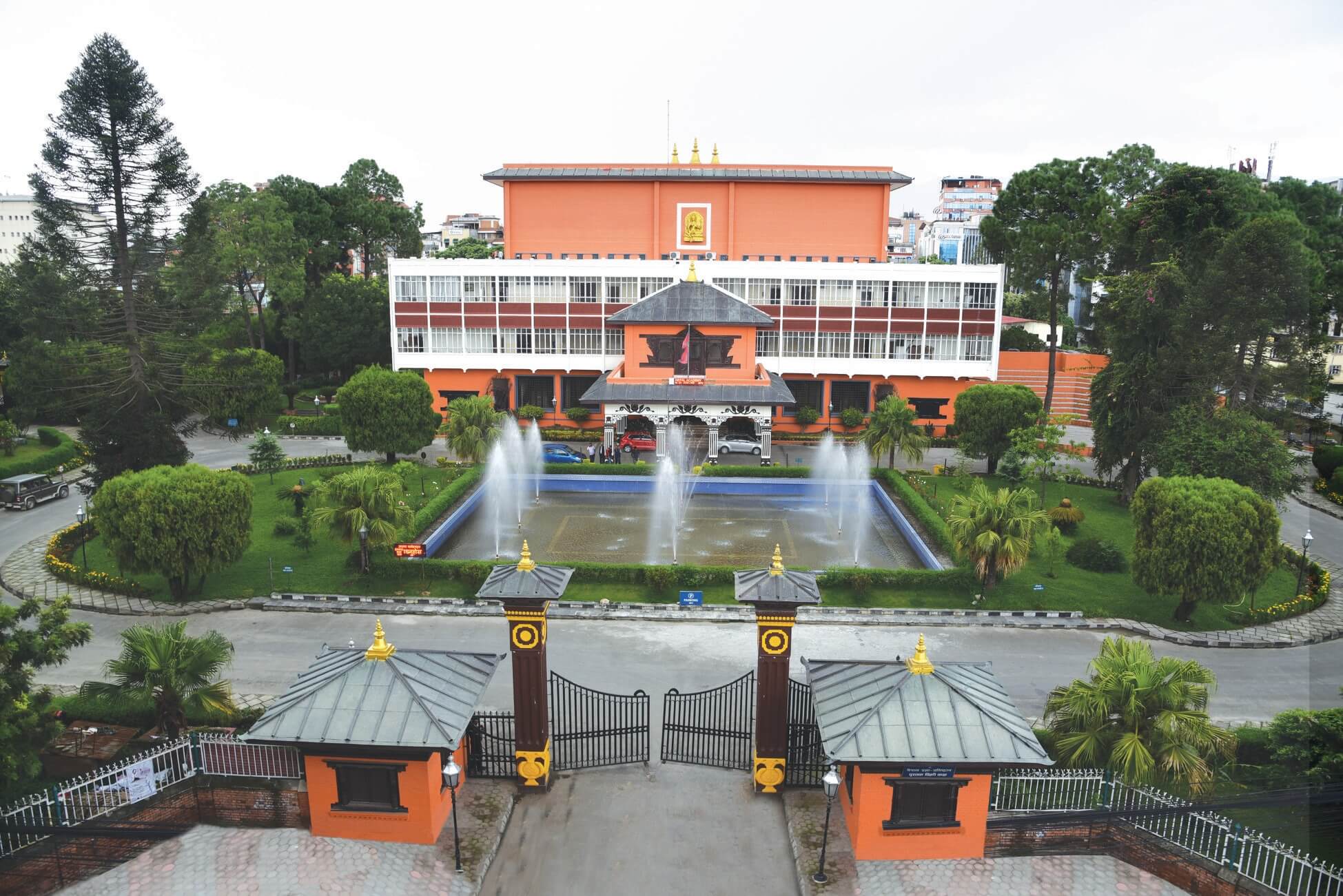
Institutional Identity and Quick Facts
For public reference, the brief and official identification of Nepal Academy is as follows:
-
Official Name (Nepali): Nepal Pragya-Pratisthan (नेपाल प्रज्ञा–प्रतिष्ठान)
-
Official Name (English): Nepal Academy
-
Common Short Name: Pragya-Pratisthan / Academy
-
Institution Type: An autonomous public body operated with government grants
-
Background of Establishment: Established in 2014 BS with the objective of carrying out intellectual and academic work for the development of Nepal’s language, literature, culture, and philosophy
-
Central Office: Kamaladi, Kathmandu, Nepal
Contact Details:
-
Website: www.nepalacademy.gov.np
-
Email: info@nepalacademy.gov.np / nacademy1@gmail.com
-
Phone: +977-1-5321241, +977-1-5321242, +977-1-5341786
Office Hours:
Official Social Media: Facebook (Nepal Academy) and Twitter
What does Nepal Academy do?
It works on compiling dictionaries for Nepali and other mother tongues of Nepal, commissioning original books, conducting research, awarding writers, and organizing national-level literary seminars and events.
How can you use Nepal Academy?
-
To study and research in a world-class library setting
-
To submit your manuscript for publication
-
To purchase dictionaries, journals, and research-based publications of the Academy
-
To participate in literary and cultural programs
-
To apply for various awards and scholarships
Legal Foundation and Authority
The credibility of any public institution depends on its legal base. The following facts clarify how Nepal Academy is governed and operated:
-
Main Legal Basis: “Nepal Academy Act, 2064” and “Nepal Academy Regulations, 2067”
-
Mandate: Language, literature, culture, philosophy, and social sciences
-
Relation with the Government of Nepal: This institution is linked to the Government of Nepal through the Ministry of Culture, Tourism and Civil Aviation. The Prime Minister is the Patron, and the Minister of Culture is the Co-Patron.
-
National Responsibilities: Preparation of Nepal’s standard Nepali dictionary, language standardization, advising on national language policy, and documentation of rare cultural heritage
-
Accountability: Audit is conducted by the Office of the Auditor General. Submitting an annual report to the government and full compliance with the Public Procurement Act are mandatory requirements.
What Nepal Academy is not
Many people may assume that this institution also directly oversees music, theatre, or fine arts (painting/sculpture). However, separate institutions have already been established for these areas, such as the “Nepal Music and Drama Academy” and the “Nepal Fine Arts Academy.” Therefore, visiting Nepal Academy for singing or painting-related matters would only result in wasted time.
Vision, Mission, and Values
Vision: “Building a prosperous academic society through the protection and development of Nepal’s language, literature, culture, and philosophy.”
Mission: To research all languages and cultures of Nepal, promote original creative work, and expand Nepal’s academic presence in the international sphere.
Core Values: Inclusive participation, academic freedom, respect for cultural diversity, and high ethical conduct.
Governance and Structure
To understand how Nepal Academy functions, it is important to know its structure:
-
Academic Assembly: The highest body that approves policy and budget
-
Academic Council: The executive body, including the Chancellor, Vice-Chancellor, Member Secretary, and academic members from different departments
-
Administrative Division: Employee administration and daily operations
-
Major Departments:
-
Language Department (Nepali and other national languages)
-
Literature Department (poetry/prose)
-
Culture Department
-
Philosophy and Social Sciences Department
-
Research, Translation, and Dictionary Department
Practical suggestion for contact:
If you want information about book publication, visit the “Publication Section.” If you need research support, meet the academic member of the relevant department.
Core Functions
Nepal Academy mainly works in the following five areas:
-
Research: Conducting in-depth research on overlooked languages, folk culture, and philosophical dimensions of Nepal
-
Publication: Publishing dozens of books annually, along with reputed journals such as “Pragya” and “Sayapatri”
-
Dictionary Development: The “Nepali Brihat Dictionary” is its greatest achievement, and several other language dictionaries are currently being developed
-
Awards and Honors: Providing recognitions such as the National Poetry Festival, Prithvi Pragya Award, and Nepal Pragya Alankar
-
International Relations: Signing MoUs with foreign academies for translation and cultural exchange
Public Services Directory
This section is the most useful for readers. It provides clear guidance on what to do to receive services.
A) Library and Study Service (Bhanubhakta Smriti Library)
-
Access: Open to students, researchers, and the general public
-
Requirement: Entry is granted by showing an ID card (Student ID or citizenship card)
-
Rules: Mobile phones must be kept silent, bags must be kept outside, and books must not be marked or damaged
-
Fee: Free for study. A minimal prescribed fee applies for photocopy or scanning
B) Manuscript Submission and Publication Process
If you want to publish your book through the Academy:
-
Eligibility: The content must fall within the Academy’s scope (literature, culture, research, etc.)
-
Procedure: Submit a typed hard copy (two copies) and a soft copy along with an application
-
Selection: Expert “Peer Review” is conducted. The Council makes a decision only if experts find it suitable
-
Time: It can take around 6 months to 1 year
C) Application for Awards and Honors
-
National Poetry Festival: Held every year on Ashar 9. Notices are usually published around Baisakh/Jestha, and poems can be submitted online or physically
-
Award categories: From lifetime achievement honors to subject-specific Pragya awards
D) Book Sales and Distribution
“How To” Step-by-Step Guides
How to submit a manuscript
Step 1: Type your manuscript cleanly in Nepali Unicode or Preeti font.
Step 2: Obtain the “Publication Form” from the Academy’s administrative section or prepare an application.
Step 3: Attach your bio-data and a copy of your citizenship certificate.
Step 4: Register the submission at the registration section and receive a registration number.
Step 5: After a few weeks, follow up with the relevant department.
How to get library membership
At present, the Academy library mainly provides reference facilities. For a membership card, meet the library head with a photograph and your identification document.
Service Standards
Below is the service standard information presented in a clear list format:
Service 1: Book Purchase
-
Required Documents: None
-
Time Required: Immediate
-
Fee: Marked price
Service 2: Poetry Festival Registration
Service 3: Manuscript Registration
Service 4: Using the Right to Information
Common Problems and Fixes
Problem 1: “I submitted my manuscript months ago, but there is no update.”
Fix: Expert review at the Academy takes time. With your registration number, you can inquire at the “Planning and Program Division.”
Problem 2: “How do I know which books are in stock?”
Fix: Visit the “Publications” section on the Academy website, or directly call the exhibition/sales room at +977-1-4221283.
Problem 3: “I live outside the district. How can I participate in programs?”
Fix: The Academy now streams many programs via Facebook Live. Participation in the Poetry Festival is also possible through email.
Transparency and Public Information
To support good governance, Nepal Academy publicly shares the following:
-
Annual report: Yearly progress details are available on the website
-
Budget: Details of government grants and internal income are made public
-
Tenders: Printing and construction-related tenders are published in national newspapers
Digital Services and User Experience
Nepal Academy is gradually adopting digital services:
-
Website: Notices and news can be accessed here
-
E-library: Preparations are ongoing to make some old and rare books available in digital format
-
Dictionary mobile app: The official app of the “Nepali Brihat Dictionary” is available on the Google Play Store, making it possible to carry the dictionary in your pocket
Inclusiveness and Language Access
Nepal Academy does not work only on the “Khas-Nepali” language. It is also conducting research and dictionary development in other mother tongues of Nepal, such as Maithili, Bhojpuri, Tamang, Newari (Nepal Bhasa), Rai, Limbu, Gurung, Tharu, and others. Special grants and writing fellowships for writers of minority languages are also arranged from time to time.
Visitor Information
-
Location: Kamaladi (near Ghantaghar and Durbar Marg)
-
Parking: Limited parking is available inside the premises
-
Security: Security checks may be conducted at the main gate
-
Photography: Photos can be taken outside the building, but permission is required inside the library and administrative rooms
Media Relations
For journalists, the Academy’s “Press Information” section is available on the website. The official viewpoint of the institution can be obtained through the official spokesperson or the Member Secretary.
Ethics and Copyright
-
Plagiarism: The Academy checks originality of submitted works for publication. If plagiarism is proven, such writers are blacklisted
-
Royalty: As per the agreement between the writer and the Academy, royalty may be provided either as a fixed percentage of sales or as a lump sum
-
Citation rule: When using references from the Academy’s books, mentioning the author and Nepal Academy is mandatory
Safety and Grievance Management
If you are dissatisfied with any service of the Academy or face misconduct from staff:
Key Documents and Links
For further information:
Conclusion
It presents the real form of an institution that carries the dignity of the Nepali language and literature. For a student, this library is like a temple, and for a writer, this platform can feel like a dream space. If you want to closely observe Nepal’s intellectual sphere, you are encouraged to visit its building at Kamaladi at least once.
In the end, Nepal Academy is not only a government office; it is a meeting point of the Nepali mind and intellect. While using its services, maintain patience and academic discipline. Serving language and culture is the responsibility of all of us.
Notice: This information is intended for general educational purposes. Before making any legal or official decision, it is recommended to verify the Academy’s official notices and website.









.jpg)