For a landlocked and geographically complex country like Nepal, civil aviation is not only a mode of transport but a lifeline. From delivering food and medicines to remote Himalayan regions to connecting the country internationally and supporting tourism, air services play an essential role.
To make these services safe, reliable, and well-managed, the “Civil Aviation Authority of Nepal” (CAAN) was established.
Under the Civil Aviation Authority of Nepal Act, 2053, this institution was established on 2055 Poush 16 (31 December 1998). The earlier aviation department was transformed into an autonomous body with dual roles: both service provider and regulator.
At present, the Authority’s main role is to oversee aviation safety (as a regulator) and to manage airports across Nepal while providing air communication services (as a service provider).
The main purpose of this guide is to provide evidence-based, detailed information to the general public, students, aviation professionals, and policymakers about CAAN’s working approach, legal basis, service procedures, and problem-solving options.

The Civil Aviation Authority of Nepal is a federal autonomous institution that protects Nepal’s airspace sovereignty and safety.
Official Name: Civil Aviation Authority of Nepal (CAAN) - In Nepali नेपाल नागरिक उड्डयन प्राधिकरण (Nepal Nagarik Uddyan Pradhikaran)
Established: 2055 Poush 16 (as per the CAAN Act, 2053)
Headquarters: Babarmahal, Kathmandu
Parent Ministry: Ministry of Culture, Tourism and Civil Aviation, Government of Nepal
Jurisdiction: Nepal’s overall airspace, all domestic and international airports, and all aircraft registered in Nepal and/or using Nepal’s airspace
Main Goal:
To make air operations in Nepal safe, regular, and of acceptable standard in line with International Civil Aviation Organization (ICAO) Standards and Recommended Practices (SARPs).
People often get confused about where to go for which problem. Especially during flight delays or baggage loss, some directly blame the Authority. For clarity, the responsibilities are as follows (presented from the source table, converted into lists):
Primary Responsibility: Regulation and airport infrastructure management, license issuance, safety audits
When to Contact: Pilot licensing, drone permission, airport service issues, or reporting safety risks
Primary Responsibility: Passenger and baggage transport, ticket sales, flight scheduling
When to Contact: Ticket refund, lost baggage, flight delays, or cancellations
Primary Responsibility: National aviation policy-making, bilateral agreements
When to Contact: Policy-level complaints or high-level coordination matters
Primary Responsibility: Screening, security guarding, control of illegal activities
When to Contact: Theft, threats/intimidation, or security-related incidents
Primary Responsibility: Independent team formed by the government to identify causes after an aircraft accident
When to Contact: This is temporary and independent, not for regular services
Primary Responsibility: Weather forecasting
When to Contact: Weather information for flight routes
The Authority is operated by a Board of Directors. This board is led by the Tourism Minister or State Minister of the Government of Nepal.
Honorable Minister/State Minister (Ministry of Culture, Tourism and Civil Aviation) – Chairperson
Secretary, Tourism Ministry – Member
Representative (Joint Secretary), Ministry of Finance – Member
Individuals with aviation expertise (appointed by the government) – Members
Director General, Civil Aviation Authority of Nepal – Member-Secretary
The Authority must submit annual financial and progress reports to the government. Its audit is conducted by the Office of the Auditor General, ensuring financial transparency. The general public may request necessary public information using the Right to Information Act.
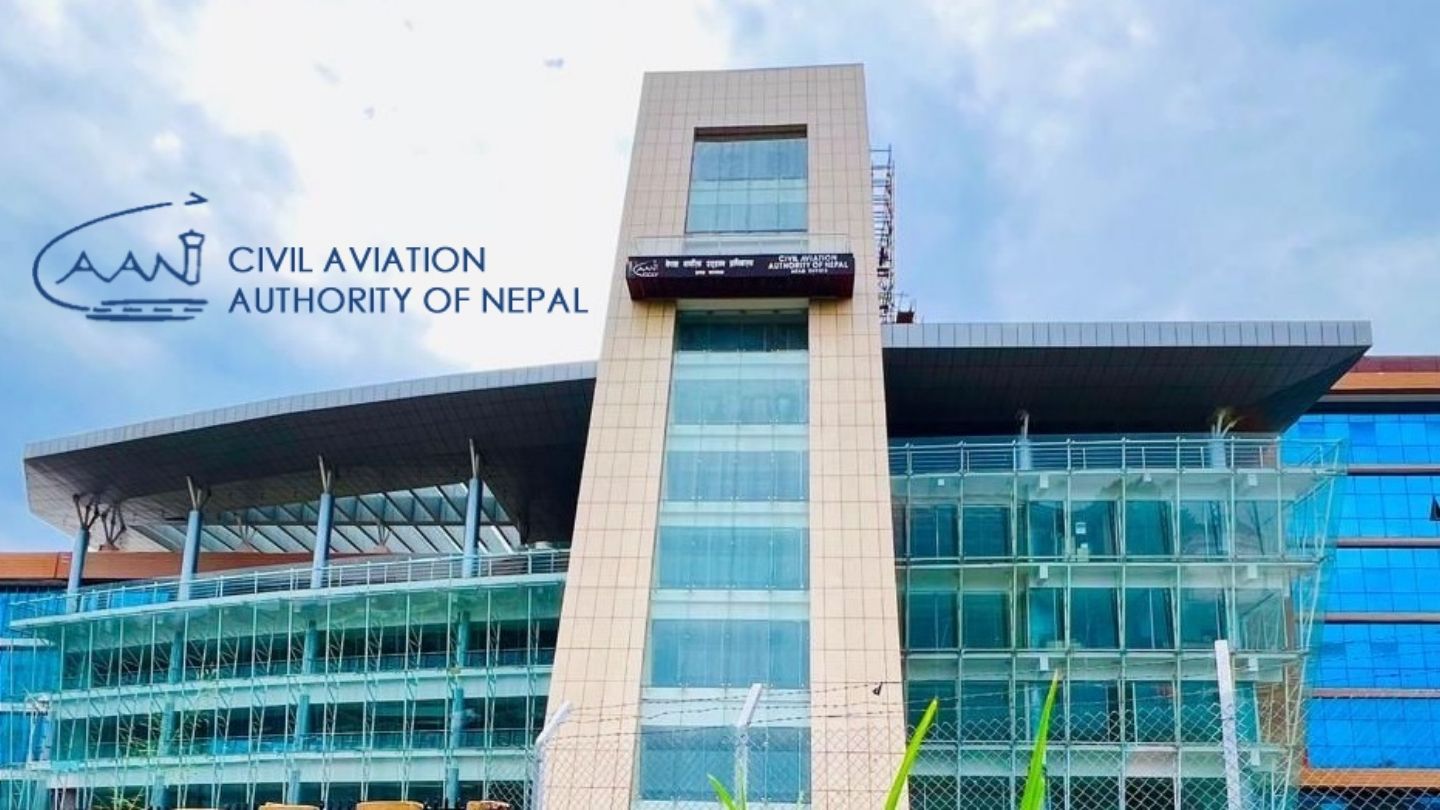
The Authority’s biggest responsibility is to ensure the safety of aircraft operating in Nepal’s airspace and the safety of airports. Through surveys, inspections, and audits, it checks whether airlines follow required rules.
Before bringing any new aircraft into Nepal, approval must be obtained from CAAN’s Airworthiness division. Each aircraft must undergo periodic technical checks and renew its “Certificate of Airworthiness.” If an aircraft is old or technically unsafe, the Authority restricts its operation.
To work in Nepal as a pilot, Aircraft Maintenance Engineer (AME), or Air Traffic Controller (ATC), it is mandatory to pass CAAN examinations and obtain a license.
Pilot Licensing: Issuance of PPL, CPL, and ATPL licenses
Foreign License Validation: Those trained abroad or holding foreign licenses must pass required local exams and complete validation to fly in Nepal
All commercial airports must meet international standards (Annex 14). Only after verifying runway width, rescue and fire-fighting availability (RFF), security perimeter, and lighting systems does the Authority issue an airport operation certificate.
Drone use in Nepal has become widespread for photography, videography, and research. However, lack of knowledge about rules has led some users into legal trouble.
Less than 250 grams: Can be flown without registration, but not near religious sites, around airports, or in sensitive government areas
Commercial use: For drones above 2 kg or for commercial drones, Authority permission is mandatory
Ministry of Home Affairs/Chief District Officer: First, apply to the relevant CDO office or the Ministry of Home Affairs for security clearance for the intended flight location
Tourism Ministry: For filming in tourist areas or documentaries, a recommendation from the ministry is required
Registration at CAAN: Finally, obtain the drone registration certificate (Unique ID) from the Authority’s Flight Operations Directorate
Flying drones is completely prohibited due to air security reasons in the following areas: within 5 kilometers of airports, Singha Durbar, Shital Niwas, religious heritage areas, and international border areas.
Key service processes are presented below in bullet form.
Eligibility check: Recent flight experience and logbook flight hours
Medical certificate: Must pass Class 1 medical examination from an authorized Aviation Medical Examiner (AME) designated by the Authority
Fee: Deposit the prescribed fee (revenue) into the government-designated bank account
Online application: Upload documents through the Authority’s e-Licensing portal
Original certificates: After pending tasks are completed, appear in person and collect the new certificate
To start an airline in Nepal, an “Air Operator Certificate” must be obtained. This is a complex process with five stages:
Pre-application phase
Formal application
Document evaluation
Demonstration and inspection
Certificate issuance
Common passenger issues and their legal remedies are as follows.
According to Nepal civil aviation regulations, if a flight is cancelled or delayed due to technical reasons, the airline must arrange food, snacks, or accommodation for passengers. If the delay exceeds 3–4 hours, passengers can request a ticket refund.
Ask for written information at the airline counter
If the airline does not cooperate, file a complaint at the “Civil Aviation Help Desk” at the airport
If there is serious negligence, email the Authority’s Air Transport Division
The airline is fully responsible for baggage handling. Before leaving the airport, you must register a complaint at the Lost and Found counter. Since Nepal has joined the Montreal Convention, passengers have the right to compensation as per international standards.
If any staff member or agent asks for a bribe or extra money claiming they can fast-track your work, immediately report it to the Authority’s anti-corruption abuse prevention unit or through the complaint box on the website. All government payments must be made only through bank receipts.
With the growth of information technology, the Authority has made many services available online.
Official Website: www.caanepal.gov.np
e-Exam: Portal to apply for licenses and view results
Notices: Access to tenders, new recruitment, and aviation safety-related directives
Flight Statistics: Yearly passenger numbers and route statistics are available for researchers and students
The Civil Aviation Authority of Nepal (CAAN) is not only a regulatory body; it is also a workplace for thousands of skilled technical and administrative professionals. Due to Nepal’s geography and dependence on international tourism, air transport has remained a high-priority sector. Therefore, jobs in this sector are often regarded in society as respectable and well-supported by service facilities.
If you are exploring a future in aviation, it is important to understand the Authority’s services and groups in detail.
Human resources within the Authority are mainly divided into two parts.
Technical Wings: Posts related to flight safety, communications, and airport infrastructure
Air Traffic Controller (ATC): Provides safe guidance for aircraft in the air and on the runway; highly responsible and requires strong capability
Engineering Services: Civil engineers (airport construction), electronics and telecommunication engineers (communication equipment), and mechanical engineers
Flight Safety Inspector: Experienced pilots and engineers trained and appointed to check flight airworthiness and safety
Administrative & Finance:
Includes administrative officers, accounts officers, legal officers, and internal auditors. Since the Authority is also an operational institution, there is strong demand for capable personnel for financial and administrative management.
Airport Rescue and Fire Fighting (ARFF):
Rescue personnel for airport fires or other accidents are also an integral part of the Authority.
The recruitment process for permanent appointments is highly transparent and strict.
Role of the Public Service Commission: Advertising all permanent positions, conducting written exams, and publishing results is done by the Public Service Commission, ensuring entry based on merit and capability
Exam stages: Usually MCQs in the first stage, subject-based written exams in the second stage, and an interview in the final stage
Specialist appointments: For pilots, medical officers, or other highly specialized technical roles, the Authority may also recruit on contract for a fixed period or through special post arrangements
Understanding what to study for which post is important for students.
For ATC Officer: Must have completed a Bachelor’s degree (B.Sc.) with Physics and Mathematics or an undergraduate engineering degree from a recognized institution, along with strong English proficiency (writing and speaking)
For Communication Technician: Bachelor’s degree or equivalent in Electronics or Telecommunication Engineering
For Administration: Bachelor’s or Master’s degree in Management, Humanities, or Law
Minimum qualification and age: Generally, Nepali citizens aged 18 and not exceeding 35 (40 in the case of women and persons with disabilities). However, age limits may differ for higher posts or specialized technical posts
After joining, training is a key part of career development. The “Civil Aviation Training Center” (CATC) located in Sanothimi, Bhaktapur provides specialized training to newly recruited staff.
International opportunities: High-performing staff may get opportunities to participate in trainings, seminars, and conferences organized by ICAO and other foreign institutions, helping bring knowledge to a global standard.
If your child wants to build a career in aviation:
Secondary level (+2): Choose Science (Physical Group), which opens pathways to both engineering and ATC
Invest in language: Since the working language of aviation is English, building proficiency is essential
Physical and mental health: Roles like ATC and pilot require high concentration, quick decision-making, and physical fitness (especially eyesight and hearing), so remain health-conscious
This sector offers not only stability but also an exciting work environment and an opportunity to serve the nation. Participating in the mission of connecting the country to the world through tourism support and aviation safety can be a source of pride. Compared to the civil service or other institutions, the work nature here is distinct and technology-based.
Students are advised to regularly check vacancy notices through the Authority’s official website “Career” section or the Public Service Commission bulletin. Avoid unauthorized agents and prepare based on your ability, as this is the only valid route to enter the institution.
Aviation safety is not only the Authority’s responsibility. If you observe any safety risk at an airport or during a flight, you can submit a “Voluntary Safety Report.” The reporter’s identity is kept confidential, and the goal is not punishment but improvement of the safety system.
Contact Channels:
For urgent contact: Airport Chief’s Office
For non-urgent complaints: grievance@caanepal.gov.np
Some aviation terms can feel complex to the general public.
AOC (Air Operator Certificate): Official authorization to operate an airline
AIP (Aeronautical Information Publication): Official book containing airport and flight rules
NOTAM (Notice to Airmen): Notice of immediate changes due to runway maintenance or weather
Slot: Fixed time allocated for an aircraft to land or take off at an airport
Runway: Paved strip where aircraft operate for takeoff/landing and ground movement
Apron: Aircraft parking area
Students or researchers may obtain historical air traffic statistics, audit reports (up to the extent they are public), and project details by submitting a written request to the Authority’s Corporate or Information desk. The Authority also publishes quarterly and annual bulletins, which are considered official for citation.
This article has been prepared based on the following sources:
Civil Aviation Authority of Nepal Act, 2053
Civil Aviation Regulation, 2058 (including the revised version of 2078)
ICAO Chicago Convention 1944 and Annexes
Office of the Auditor General’s 61st Annual Report (Aviation Safety Section)
If you are at an airport and an emergency occurs:
Immediately inform the nearest security personnel or the Airport Duty Officer (ADO)
Do not panic; listen to announcements on the loudspeaker
Follow safety rules and move to a safe place rather than focusing on personal bags or belongings
The Civil Aviation Authority of Nepal is a dynamic institution. It has faced countless challenges while working to improve aviation safety in the country. Passengers and citizens also have responsibilities to help make air travel safe and accessible. By following rules, demanding correct information, and staying alert against illegal activities, Nepal’s skies can become safer.
The purpose of this article is to reduce the distance between the Authority and the public. For more information, you may visit the Authority’s headquarters at Babarmahal during office hours (10 to 5) and meet the Information Officer.
The information presented in this article is prepared for public information only. Before taking any legal process, fee-related action, or regulatory decision related to the Civil Aviation Authority of Nepal (CAAN), readers are requested to confirm the latest information from the Authority’s official website or the relevant office.
Updated Date: 15 Poush, 2082


.jpg)