



UGC to Provide Equivalency from 2083 Shrawan 1
Tribhuvan University’s equivalency service will now be provided by the University Grants Commission (UGC) starting from 2083 Shrawan 1.
The government, by amending some Nepal Acts, has decided that the equivalency service which the Tribhuvan University Curriculum Development Center has been providing to domestic and foreign students for the past three decades will now be provided by UGC. UGC Chair Prof. Dr. Devaraj Adhikari said that UGC has begun the necessary preparations to start providing the service from Shrawan 1.
Subject-wise equivalency is required for those who have completed higher education in Nepal or abroad and need it for further study and work in Nepal. The work of determining whether education obtained from foreign universities matches Nepal’s standards and issuing equivalency has been carried out by TU’s Curriculum Development Center since the Panchayat era.
Preparation and Policy Work at UGC
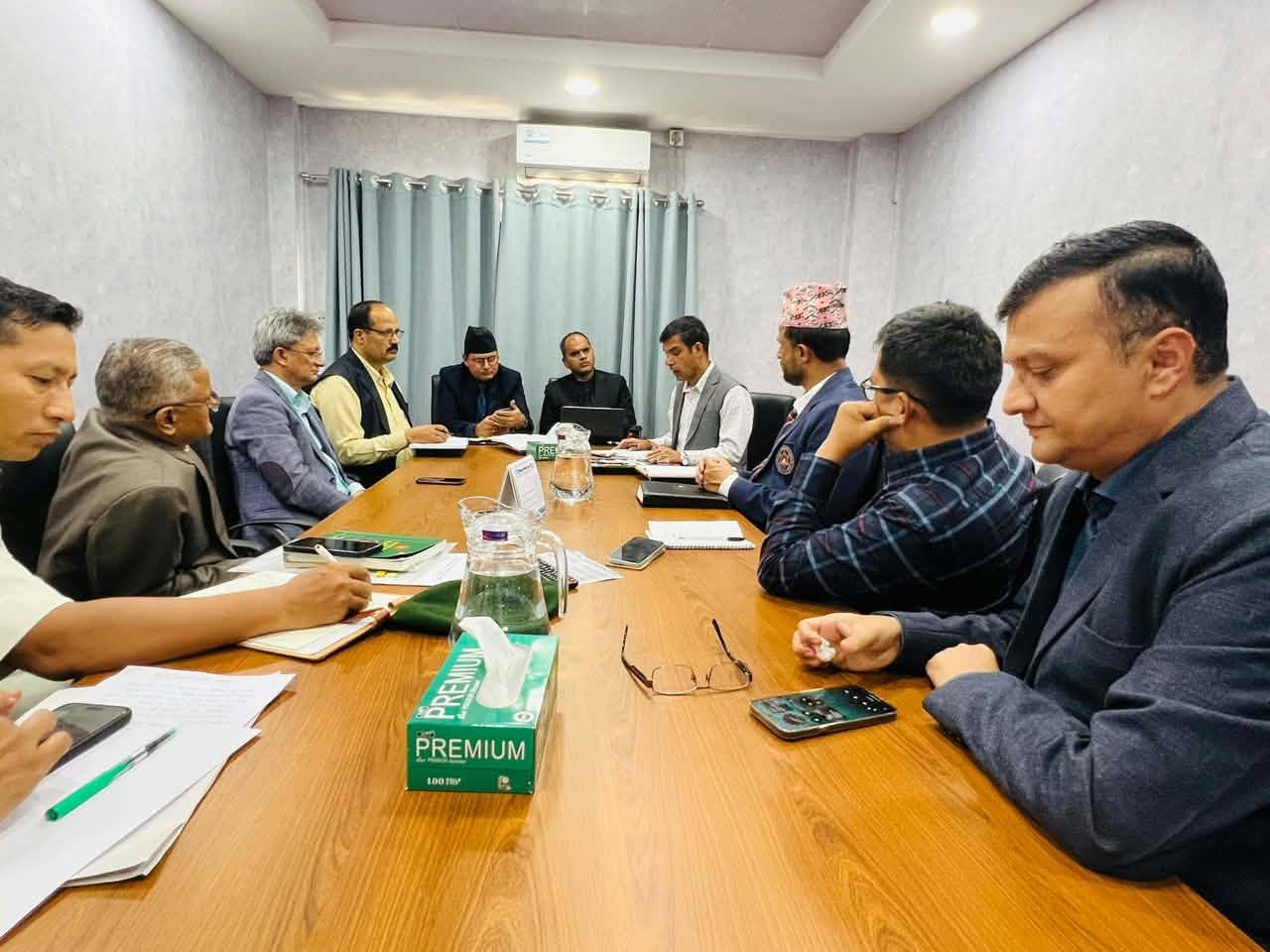
After the government assigned the responsibility to the Commission, Chair Adhikari said a seven-member committee has been formed under the coordination of member Prof. Dr. Yogendra Bahadur Gurung to draft procedures and an equivalency policy.
“The Commission is preparing to establish a separate Equivalency Determination Section to provide equivalency,” Chair Adhikari told Nagarik. “For this, the Commission has requested the government for an additional 23 staff.”
He added that the Commission’s policy is to provide equivalency to students in an easy and accessible manner, and that additional human resources are necessary for this.
UGC Deputy Director and Member Secretary of the equivalency-related committee, Dularaj Chimariya, said that as soon as UGC was assigned the responsibility, the Commission has been engaged in drafting the equivalency policy.
He told Nagarik, “Since universities operating within the country are established and run under Nepal government Acts, the government has made a provision that students who studied at such domestic universities will no longer require equivalency.”
He added that the committee has started drafting policies and procedures to determine the level of higher education obtained from various foreign universities and provide equivalency accordingly.
Toward an Online, Paperless Process
Chimariya said that work has begun on technical preparations, staffing, and developing the required policies. According to him, the Commission’s policy is to make the entire process online—from receiving applications for equivalency to issuing certificates—in order to move toward a paperless Commission.
At present, even if someone has completed higher education from any university in Nepal, equivalency from TU’s Curriculum Development Center is mandatory. However, Chimariya said that once UGC begins equivalency services, discrimination among domestic universities will be removed.
TU Curriculum Development Center’s Expectations
On the other hand, TU Curriculum Development Center Executive Director Ram Krishna Tiwari said that once UGC takes over equivalency services, it is expected that the Center’s other work related to TU curricula will be able to run more smoothly.
He said, “When TU was established in 2016 BS, it was the only higher education institution in Nepal at that time. In 2030 BS, the Curriculum Development Center was established specifically to develop and revise the curricula of subjects taught at TU.”
He added that since Nepali, English, and Nepal Bhasa were compulsory across TU’s faculties and institutes at that time, curriculum development and revision for those subjects were the Center’s responsibility.
He further said that after 2050 BS, as students began going from Nepal to different countries for higher education, TU issued the TU Organization and Administration Regulation 2050 BS, and the curriculum unit also began handling equivalency work. However, he noted that over the last ten years, as the number of Nepali students going abroad for higher studies has sharply increased, the workload has become more challenging.
Tiwari stated that as more than 50 students come daily for equivalency-related work, it has become increasingly difficult for TU’s curriculum unit to focus on curriculum development, revision, and other responsibilities. He expressed confidence that once UGC provides equivalency, obtaining equivalency certificates will also become easier for students.
In recent times, as crowds have grown at TU for equivalency services, there have been complaints that students have had to wait for months.




Comments 0
No comments yet. Be the first to start the conversation.