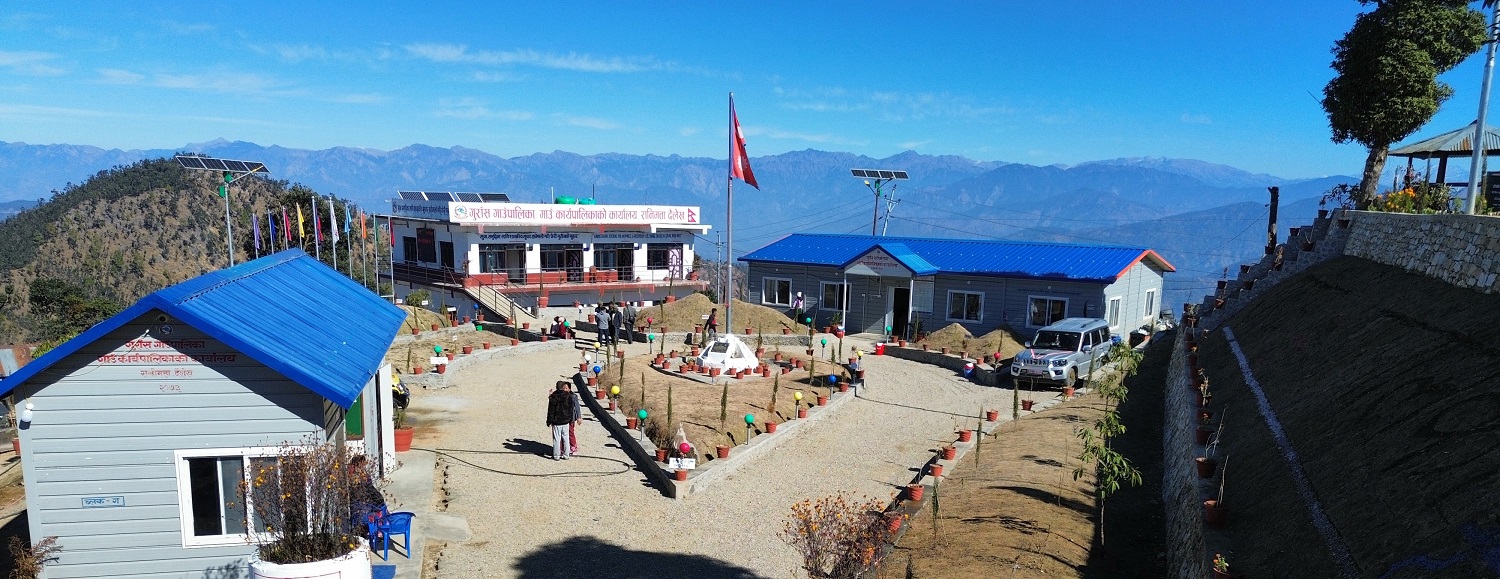
Gurans Rural Municipality (गुराँस गाउँपालिका) is a local government in Dailekh District of Karnali Province, Nepal. The rural municipality was incorporated in 2017 during Nepal’s federal restructuring and provides local public services through its administrative structure.
Gurans Rural Municipality serves residents through local development work, civil registration, education, agriculture, livestock, health, social welfare, taxation, forestry, land-related administration, water resources, irrigation, youth and sports, and communication and information technology services.
| Particular | Detail |
|---|---|
| Name | Gurans Rural Municipality |
| Nepali name | गुराँस गाउँपालिका |
| Local level type | Rural Municipality |
| District | Dailekh |
| Province | Karnali Province |
| Country | Nepal |
| Incorporated | 2017 |
| Service area | Local government services |
| Wards | 8 |
| Population | 21,189 |
| Households | 4,541 |
Gurans Rural Municipality is a rural local government of Nepal. It is located in Dailekh District within Karnali Province and was formed under Nepal’s federal local governance structure.
The municipality covers about 164.79 square kilometres and is divided into 8 wards. According to the National Population and Housing Census 2021, Gurans Rural Municipality has a population of 21,189, including 10,402 males and 10,787 females living in 4,541 households.
Gurans Rural Municipality provides local government services connected with public administration, local development, social services, and resource management.
Main service areas include:
Social security services
Local level development projects
Communication and Information Technology
Urban planning
Agricultural and Livestock Development
Vital registration
Basic and secondary education
Youth and Sports
Forestry
Land registration
Transportation
Use of local resources
Science and Technology
Social Welfare distribution
Water Resource and Irrigation
Tax collection
Health and Population services
Gurans Rural Municipality handles vital registration services for residents. These services include the registration of major life events required for local administrative records.
Vital registration services include:
Birth registration
Death registration
Marriage registration
Migration registration
Divorce registration
These records support personal, family, and civic documentation within the local government system.
Education is one of the service areas of Gurans Rural Municipality. The municipality is connected with basic and secondary education services within its local jurisdiction.
Gurans Rural Municipality has 46 public schools. These include schools at pre-school, basic, secondary, and plus-two levels.
Agriculture and livestock are among the service areas of Gurans Rural Municipality. The local setting includes agriculture, livestock, forest resources, herbs, small enterprises, and local tourism.
The municipality also works with local resource use, forestry, water resources, and irrigation-related services.
Gurans Rural Municipality provides services related to health and population. Social security and social welfare distribution are also part of its local government responsibilities.
These service areas support residents through public welfare and community-level administration.
Gurans Rural Municipality works on local level development projects, urban planning, transportation, tax collection, land registration, and administrative services.
The municipality also includes Communication and Information Technology, Science and Technology, Youth and Sports, and public service delivery within its local governance scope.
Gurans Rural Municipality is located in Dailekh District of Karnali Province, Nepal.
The Nepali name of Gurans Rural Municipality is गुराँस गाउँपालिका.
Gurans Rural Municipality was incorporated in 2017.
Gurans Rural Municipality is a rural municipality and local government of Nepal.
Gurans Rural Municipality provides vital registration services for birth, death, marriage, migration, and divorce.
Gurans Rural Municipality is connected with basic and secondary education services. The municipality has 46 public schools.
Its service areas include social security, local development projects, agriculture, livestock, vital registration, education, youth and sports, forestry, land registration, transportation, water resources, irrigation, tax collection, health, and population services.

.jpg)