




People of different ages may develop different habits, expectations, opportunities, and memories because they have lived through different historical and social conditions. These differences can influence communication, education, work, family relationships, technology use, and attitudes toward change.
A generation label, however, is not a reliable personality profile. Researchers must distinguish differences associated with age and life stage from changes caused by a historical period and patterns associated with a birth cohort. Country, culture, education, income, institutions, family circumstances, and individual experience may also explain an observed difference.
This distinction matters because generation-based assumptions can lead people to misdiagnose a disagreement. A workplace problem attributed to “Gen Z” may instead involve career stage, contract conditions, training, or management. A family conflict blamed on “Boomers” or “Millennials” may be rooted in different responsibilities, economic experiences, or expectations.
This article explains what generation labels mean, why their boundaries vary, how researchers evaluate generational differences, what workplace evidence shows, and how people can communicate across age groups without treating stereotypes as facts.
Answer Summary: Differences between generations may exist, but many popular claims confuse birth cohort with age, life stage, historical events, or social context. Generation boundaries are conventions rather than universal scientific divisions. Reliable analysis asks whether a pattern persists over time, how large it is, which population was studied, and whether differences within each group outweigh the average difference between groups.
Table of Content
- What Does “Generation Gap” Mean?
- What Are the Commonly Used Generation Labels?
- What Makes Generations Appear Different?
- Where Might Age-Group Differences Appear?
- What Does Workplace Research Show?
- Why Do Generational Stereotypes Persist?
- How Can People Bridge a Generation Gap?
- How Can You Evaluate a Generational Claim?
- A More Accurate Way to Discuss Generations
Key Takeaways:
-
Generation labels are analytical conventions, not personality categories.
-
Common birth-year ranges are largely based on U.S. demographic history.
-
Age, period, and cohort effects are different explanations.
-
A one-time survey cannot conclusively isolate a cohort effect.
-
Workplace research gives limited support to many popular generation profiles.
-
Variation within one generation can be substantial.
-
Individual needs and evidence are more useful than age-based assumptions.
What Does “Generation Gap” Mean?
A generation gap is a difference in understanding, attitudes, experiences, habits, or behavior between younger and older people.
A parent and teenager may disagree about privacy. A teacher and student may expect different forms of feedback. Two employees may prefer different approaches to meetings, written communication, or working hours.
These disagreements can be genuine without being caused by a stable generational identity. Role, authority, life stage, culture, workplace procedures, technology access, personality, and family history may all contribute.
The practical question is not only, “Which generation is this person from?” It is also, “What experience, responsibility, condition, or expectation is influencing this person’s position?”
That question directs attention toward the cause of the disagreement instead of using a broad age label as the explanation.
What Are the Commonly Used Generation Labels?
The Silent Generation, Baby Boomers, Generation X, Millennials, and Generation Z are widely used labels in English-language public discussion.
The following ranges reflect definitions that Pew Research Center has used for analyses of the U.S. population. They should be treated as reference conventions rather than exact global divisions.
| Generation label | Pew reference years | Qualification |
|---|---|---|
| Silent Generation | 1928–1945 | A U.S.-oriented demographic convention |
| Baby Boomers | 1946–1964 | Associated with the U.S. post-war increase in births |
| Generation X | 1965–1980 | A commonly used Pew range |
| Millennials | 1981–1996 | Pew’s working definition |
| Generation Z | Beginning in 1997 | The ending year is not universally agreed |
Pew explains these ranges and their limitations in its discussion of where Millennials end and Generation Z begins. It states that generational cutoff points are not an exact science and should mainly be viewed as analytical tools.
“Generation Alpha” is also common in media and commercial demographic frameworks. It is not assigned fixed years here because there is no universally accepted global boundary. Different publishers use different starting and ending dates.
Why Do Birth-Year Ranges Vary?
Birth-year ranges vary because generation categories are constructed for particular research, demographic, editorial, or commercial purposes.
One framework may choose a boundary based on birth rates. Another may emphasize a war, political transition, economic crisis, education reform, or communication technology. Researchers may also group birth years according to the structure of the available data.
The labels are strongly influenced by U.S. history. A person born in the same year in Nepal, Brazil, Nigeria, Japan, Germany, or the United States may encounter different school systems, economic conditions, political events, family expectations, and levels of digital access.
People born near a proposed boundary may also share experiences with those on either side. A person born in 1996 does not automatically have a fundamentally different identity from someone born in 1997.
Generation labels should therefore be treated as historical reference points, not universal identities or tests of personality.
What Makes Generations Appear Different?
Generations may appear different because age, historical period, birth cohort, culture, institutions, and individual circumstances can affect behavior at the same time.
Researchers commonly distinguish three related concepts: age effects, period effects, and cohort effects.
| Explanation | Meaning | Illustration | Risk of misinterpretation |
|---|---|---|---|
| Age effect | A difference associated with aging or life stage | Students and retirees usually have different responsibilities | Treating a life-stage pattern as permanent |
| Period effect | A change associated with an event affecting several age groups | A recession alters employment decisions across society | Assigning the change to one generation |
| Cohort effect | A persistent pattern associated with people born in a similar period | A group enters adulthood during a major social transition | Claiming a cohort effect from one survey |
| Cultural or structural effect | A difference linked to country, institutions, inequality, or access | Internet access differs among same-age populations | Assuming a finding applies globally |
| Individual effect | A difference connected to personal history, role, or preference | Same-age colleagues prefer different feedback methods | Replacing the person with a category |
Age and Life-Stage Effects
An age effect is a difference associated with aging, development, or a person’s current stage of life.
A new employee may seek more guidance because the work is unfamiliar. A parent may value schedule predictability because of caregiving. Someone approaching retirement may have different priorities from someone beginning university.
These patterns can change as the same person moves through life. A preference observed among people in their twenties should not automatically be treated as a permanent feature of their birth cohort.
Life stage does not explain every difference, but it should be considered before a pattern is described as generational.
Period Effects
A period effect is associated with an event or social condition that influences several age groups during the same period.
Examples may include recessions, public-health emergencies, wars, policy changes, rapid inflation, or the adoption of widely used technology. Different age groups may experience the event differently because they occupy different roles, but the event itself is not restricted to one cohort.
An economic downturn, for example, may affect a person entering employment differently from someone approaching retirement. Both are responding to the same historical period, even though the consequences differ.
Cohort Effects
A cohort effect is a persistent pattern associated with people born during a similar period who share some historical or social context.
Cohort effects are possible, but demonstrating one is difficult. Researchers must show that an apparent difference is not simply caused by age or by a temporary historical event.
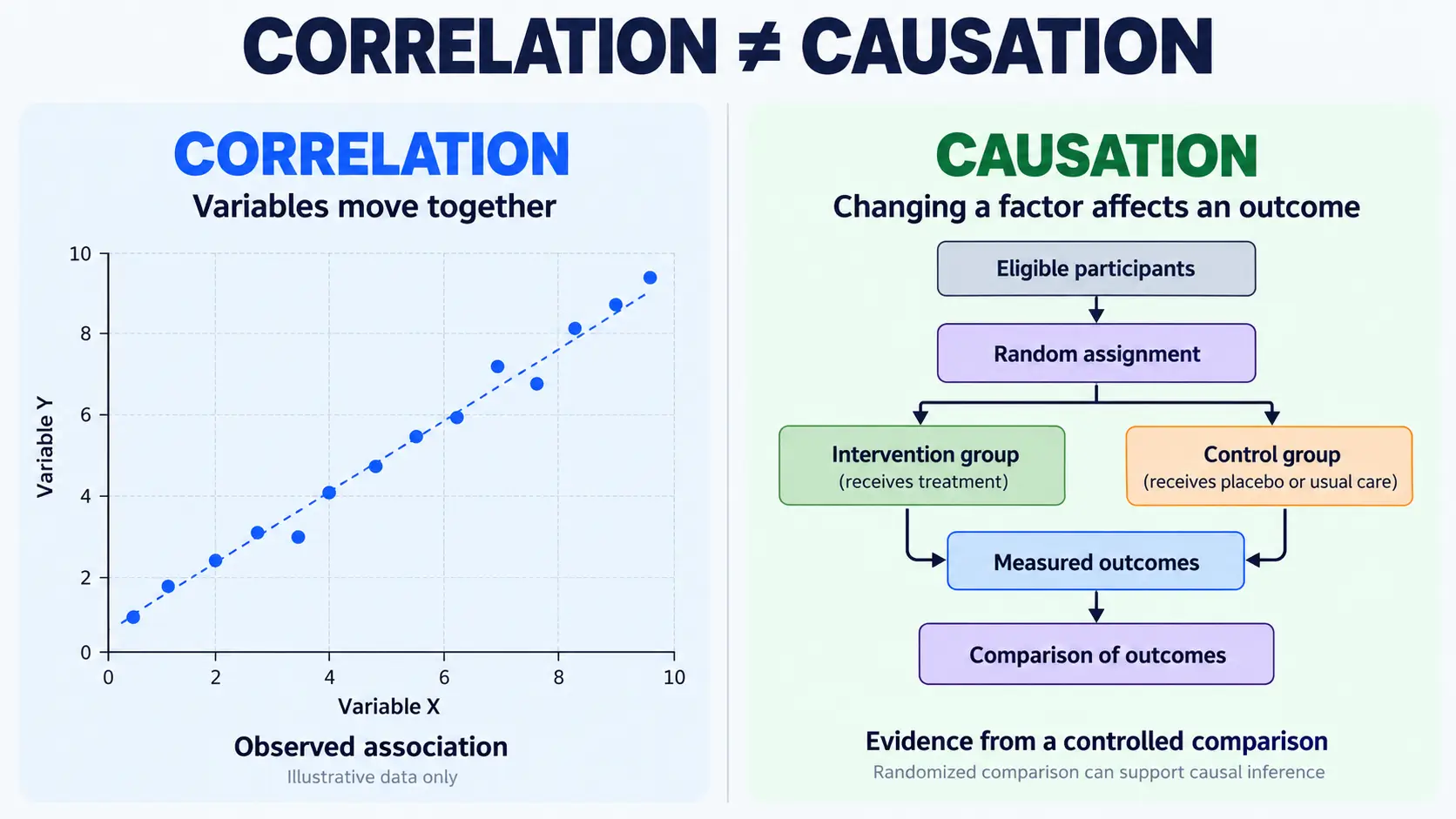
A one-time survey compares people who differ in both age and birth year. It cannot conclusively determine whether a difference is caused by generation. Pew Research Center’s explanation of age-period-cohort analysis describes why researchers need data collected over many years and statistical assumptions to investigate these overlapping influences.
Age-period-cohort models also have limitations because age, period, and birth cohort are mathematically connected. Results depend partly on study design, available data, and modeling choices.
One survey or model should not be presented as unquestionable proof of a permanent generational trait.
Cultural and Structural Differences
Country, culture, education, income, labor markets, family structure, disability, migration, geography, and institutional access can all affect the experiences of people born in the same period.
A technology introduced nationally may still be unavailable to people without reliable electricity, connectivity, suitable devices, training, or accessible design. An economic crisis may affect a salaried urban employee differently from a rural worker, student, caregiver, or migrant.
These factors mean that variation within a generation may be substantial. A broad international label can obscure the local history that shaped a particular group.
Where Might Age-Group Differences Appear?
Age-group differences may appear in technology use, communication habits, work, education, family responsibilities, and social attitudes. An observed pattern should be investigated rather than assumed to represent a fixed cohort identity.
Technology Exposure and Ability
People who encounter technology at different life stages may develop different levels of familiarity with it.
A person who used smartphones in school may have different media habits from someone who first used them at work. That difference does not establish broad technological competence.
Frequent social media use does not automatically demonstrate skill in cybersecurity, spreadsheets, privacy management, research evaluation, data analysis, or specialist software. Similarly, an older adult may have extensive expertise in a professional system despite using fewer consumer platforms.
A responsible assessment asks:
-
Which tools has the person used?
-
What task must the person complete?
-
What training or practice has occurred?
-
Are there accessibility or connectivity barriers?
-
What evidence demonstrates competence?
The phrase “digital native” should not replace an assessment of actual skills.
Communication Habits
Communication habits vary according to task, urgency, culture, organizational norms, and accessibility.
The same person may use a phone call for an urgent issue, email for a formal record, a video meeting for discussion, and a messaging service for a brief update.
Claims that one generation always prefers a particular channel are too broad. A more reliable approach is to establish which channel to use, how quickly a response is expected, what must be recorded, and how feedback will be provided.
Collegenp’s guide to essential communication skills offers additional guidance on listening, empathy, verbal communication, and nonverbal cues. The destination page was verified as accessible and relevant.
Work and Education
Workplace and education articles often assign traits such as loyalty, resilience, motivation, or attention span to entire generations.
These claims can overlook career stage, occupation, contract type, management quality, education, economic conditions, caregiving, and organizational culture.
A worker on a short contract may seek another position because the job is insecure. A student may expect online feedback because the institution uses a digital learning system. These are illustrations of alternative explanations, not evidence of a generation-wide pattern.
The more defensible approach is to evaluate people according to role, skill, circumstances, performance, and stated needs.
What Does Workplace Research Show?
Workplace research gives limited support to many broad claims that generations form distinct and predictable employee types.
Daniel M. Ravid, David P. Costanza, and Madison R. Romero conducted a meta-analysis and qualitative investigation of generational-difference research at work. The study analyzed 143 independent samples and reported few systematic, meaningful generational differences across the outcomes examined.
The article was published online in 2024 and appears in the 2025 volume of the Journal of Organizational Behavior. The findings are available through the generational differences at work meta-analysis.
The conclusion must remain within scope. It concerns the workplace studies and outcomes included in the analysis. It does not prove that all employees are identical or that no cohort-related pattern can exist in another setting.
The evidence does not justify designing workplace or educational practices around profiles such as “Boomers resist change” or “Gen Z needs constant feedback.”
Institutions can instead assess:
-
experience and skill;
-
career or learning stage;
-
role requirements;
-
accessibility;
-
contract and working conditions;
-
preferred communication methods;
-
training needs;
-
demonstrated performance.
Collegenp’s article on workplace challenges employees face is a relevant internal resource on workload, communication, management, and career development. It should be used for reader navigation rather than as primary evidence about generational differences. The page was verified as accessible.
Why Do Generational Stereotypes Persist?
Generational stereotypes persist because labels make complex social change easier to describe and remember.
A simple category may appear to explain behavior without requiring an examination of institutions, economics, policy, family conditions, or life stage. Conflict-focused claims may also be more memorable than findings showing overlap or small differences.
Stereotypes can survive because people often compare younger groups with an incomplete memory of their own earlier behavior. They may remember their responsibilities and values as adults more clearly than their uncertainty, experimentation, or changing preferences when they were young.
Commercial reports and media discussions may also benefit from clear contrasts. A claim that one generation is completely different from another is easier to summarize than an explanation involving age, employment conditions, education, culture, and individual variation.
Generational stereotypes may affect hiring, promotion, training, teaching, task allocation, and family relationships when assumptions replace direct evidence about a person.
How Can People Bridge a Generation Gap?
People can reduce generation-based misunderstanding by replacing assumptions with questions, explaining context, establishing shared expectations, and supporting reciprocal learning.
Ask About the Individual
Instead of assuming that age determines a person’s preferences, ask:
-
How would you prefer to receive this information?
-
Which parts of the task are familiar?
-
What support or training would help?
-
What response time is realistic?
-
What responsibility or constraint is affecting this decision?
The answer may reveal that the difference involves role, accessibility, workload, experience, or culture rather than generation.
Explain the Context
People often understand a position better when they know the experience behind it.
A family member’s caution about spending may be connected to earlier economic insecurity. A student’s preference for digital materials may reflect how a course is delivered. An employee’s request for flexibility may involve transport, health, study, or caregiving.
These are possible contextual explanations, not assumptions that should be made without asking.
Use Reciprocal Knowledge Exchange
Knowledge can move in both directions.
Experienced people may contribute institutional memory, technical knowledge, professional judgment, and an understanding of earlier decisions. Newer members may contribute recent training, familiarity with current tools, or a different view of user needs.
Useful methods may include:
-
mentoring;
-
paired work;
-
job observation;
-
shared documentation;
-
guided training;
-
project debriefs;
-
mixed-experience teams.
These methods should support the needs of the people and organization involved. They should not be built on the assumption that all older people possess one type of knowledge and all younger people possess another.
Build Age-Inclusive Systems
An age-inclusive system evaluates people fairly and responds to actual needs rather than stereotypes.
In workplaces, this may involve consistent recruitment criteria, accessible training, clear communication standards, flexible development routes, and performance decisions based on evidence.
In education, it may involve assessing prior knowledge, access, learning needs, and the requirements of the course rather than assuming ability from age.
In families, it may involve identifying shared goals before discussing differences in methods or expectations.
No single practice will resolve every disagreement. The appropriate approach depends on the people, responsibilities, setting, and problem involved.
How Can You Evaluate a Generational Claim?
Before accepting a claim about a generation, you can apply a five-question test.
1. Could Age or Life Stage Explain It?
Consider whether the observed pattern relates to education, first employment, parenting, caregiving, health, retirement, or another stage of life.
2. Could a Historical Period Explain It?
Consider whether an economic event, policy change, crisis, or technology affected several age groups during the same period.
3. Is There Evidence of a Cohort Effect?
Look for repeated observations or evidence showing that the pattern persists as the cohort ages.
A single cross-sectional survey is not enough to isolate generation because the participants differ in both age and birth year.
4. Does the Finding Fit the Population?
Check the country, sample, occupation, institution, age range, survey date, and definition of each generation.
A U.S. workplace study should not automatically be presented as a global finding.
5. How Large Is the Difference?
A statistically detectable average difference may still be small, with substantial overlap between groups.
Ask whether the difference is practically meaningful and whether variation within each group is greater than the difference between group averages.
A More Accurate Way to Discuss Generations
Generations may share formative historical experiences, but a generation label should begin an inquiry rather than end one.
A careful analysis asks:
-
Which population is being discussed?
-
How were the cohort boundaries defined?
-
Were age, period, and cohort effects separated?
-
What behavior or attitude was measured?
-
How large was the effect?
-
Did the groups overlap?
-
Were cultural and structural factors considered?
-
Has the finding been repeated?
The useful question is not simply, “What is this generation like?” It is, “What explains this pattern in this population, during this period, and for this person?”
That approach allows historical context to remain relevant without turning broad categories into fixed identities.





Comments 0
No comments yet. Be the first to start the conversation.