




Table of Content
- Concept of Effective Learning and Educational Context
- Transition from Passive to Active Learning
- Evidence-Based Learning Techniques
- Classroom Learning and Note Management
- Time Management and Self-Study Structure
- Applied Learning and Conceptual Understanding
- Academic Integrity and Ethical Learning Practices
- Interconnection of Health, Mental Well-Being, and Learning
- Practical Guidance for Students and Parents
Concept of Effective Learning and Educational Context
The school level is the most important foundation for students’ academic and personal development. The knowledge and skills learned at this stage shape their future educational journey and practical life. Traditionally, learning was understood only as the process of reading textbooks and writing answers in examinations. However, modern educational psychology and cognitive science define effective learning as the ability to receive information, process it, and use it correctly when needed.
Effective learning does not mean merely studying for long hours. Rather, it means managing available time properly and developing deep understanding. It discourages rote memorization and promotes conceptual clarity and critical thinking. How students organize their learning process has a direct impact on their academic results and the long-term retention of knowledge.
Transition from Passive to Active Learning
Listening to what the teacher teaches or simply turning the pages of a book is passive learning. In this method, the student only attempts to receive information but does not examine it analytically. By contrast, active learning involves students asking questions, solving problems, and explaining what they have learned in their own words.
For school students to learn effectively, they need to move from passive learning to active learning. This requires not only collecting information but also practicing how to analyze it, compare it, and connect it with real-life examples.
Evidence-Based Learning Techniques
Educational research has shown that certain study methods are more effective than others. Students can include the following science-based strategies in their daily study routine.
Active Recall

Active recall is considered one of the most powerful methods of learning. It means trying to remember what was studied after closing the book.
Students can use flashcards for practice. A question can be written on one side of the card and the answer on the other, allowing them to test themselves. Likewise, after reading a lesson, writing the main points they remember on a blank sheet of paper, or using mind mapping for better learning, forces the brain to retrieve information again, which strengthens memory.
Spaced Repetition
The human brain gradually forgets what it has learned over time. This is called the forgetting curve. To prevent this, spaced repetition can be used. Instead of studying a topic only on the day before the examination, reviewing it repeatedly at fixed intervals helps keep knowledge in long-term memory.
Students should create a schedule to review a new topic on the first day, then on the third day, then after one week, and again after one month. This reduces the excessive pressure of cramming during examinations.
Interleaving Practice
Rather than studying the same type of problem or subject continuously for a long period, it is more effective to mix different topics or problems together.
For example, while practicing mathematics, students should not solve ten problems using only one formula. Instead, they should solve mixed problems from different chapters that require different formulas. This helps the brain learn how to decide which solution to apply in which situation.
Classroom Learning and Note Management
Since students spend much of their time in the classroom, they should make the best use of learning there. Attention and organized note-taking are essential for effective classroom learning.
Active Listening and Participation
Listening carefully while the teacher is teaching and asking questions about things that are not understood are part of active listening. Students should be able to identify the teacher’s key messages, examples, and emphasized topics. Participating in group discussions in class helps students understand the subject matter from different perspectives.
Effective Note-Taking Systems
Copying all the information given in class into a notebook is not effective note-taking. Notes should be brief, clear, and easy to understand when reviewed later. The Cornell Note-taking System is a widely recognized method for this purpose.
In this method, the notebook page is divided into three sections. The large section on the right is used to write the main classroom notes. The smaller section on the left is used to write cue words or questions related to those points. The bottom section of the page is used to write a brief summary of the entire lesson. Notes prepared in this way are very helpful for active recall during exam preparation.
Time Management and Self-Study Structure

For students, balancing homework, extracurricular activities, and personal study is a major challenge. Good time management reduces stress and increases learning productivity.
Creating a Study Schedule
Students should prepare a daily and weekly study routine. While making the schedule, difficult subjects should be placed at the time when the brain is most active, such as in the morning or when the student feels fresh.
The Pomodoro Technique is considered especially useful for time management. In this method, students study with full concentration for 25 minutes and then take a 5-minute break. After four such sessions, they can take a longer break of 15 to 20 minutes. This helps prevent mental fatigue and maintain concentration. Students can also improve their routine with strong time management skills.
Minimizing Distractions
A quiet and organized study environment is necessary for effective learning. In today’s digital age, smartphones, social media, and television are major sources of distraction.
During study time, students should keep their phones on silent mode or place them away from reach. Keeping only the necessary books, notebooks, and stationery in the study area makes it easier to concentrate. Since multitasking reduces the quality of learning, students should focus on only one subject at a time. Building habits around focus and deep work can make this easier.
Applied Learning and Conceptual Understanding
Theoretical knowledge is not complete until it can be used in practice. School students should practice connecting what they study with real life.
Bridging Theory with Practice
Scientific principles should not be limited only to the laboratory but should also be connected to everyday events. For example, when studying gravity in physics, students can try simple experiments at home. While studying social studies, they can compare textbook theories with current events happening in society. This kind of applied learning increases students’ interest in the subject matter.
Creative Problem Solving
While solving mathematics or science problems, students should not depend on only one formula or method. They should develop the habit of asking themselves, “How else can this be solved?”
Searching for different reference materials, discussing problems with teachers or friends, and looking at issues from a new perspective help develop analytical skills.
Academic Integrity and Ethical Learning Practices
Honesty and ethics are very important in the learning process. Following ethical practices from the school level helps students become responsible and professional citizens in the future.
Plagiarism and Homework Ethics
Copying from a friend’s notebook or reproducing material directly from the internet while doing homework or project work is academic dishonesty. This is called plagiarism. Such behavior prevents real learning.
Whenever students use information from any source, they should understand it and write it in their own words. When using someone else’s ideas or data, it is good practice to mention the source from the school level itself.
Responsible Use of Technology
The internet and AI tools are excellent resources for learning, but they must be used responsibly. AI can be used to understand difficult concepts, make study plans, or improve grammar. However, using such tools to write essays or generate direct answers to homework is considered unethical. Technology should be used as a support tool for learning, not as a replacement for the learner.
Interconnection of Health, Mental Well-Being, and Learning
Physical and mental health directly affect a student’s ability to learn. A tired or stressed brain cannot effectively absorb new information.
Adequate Sleep
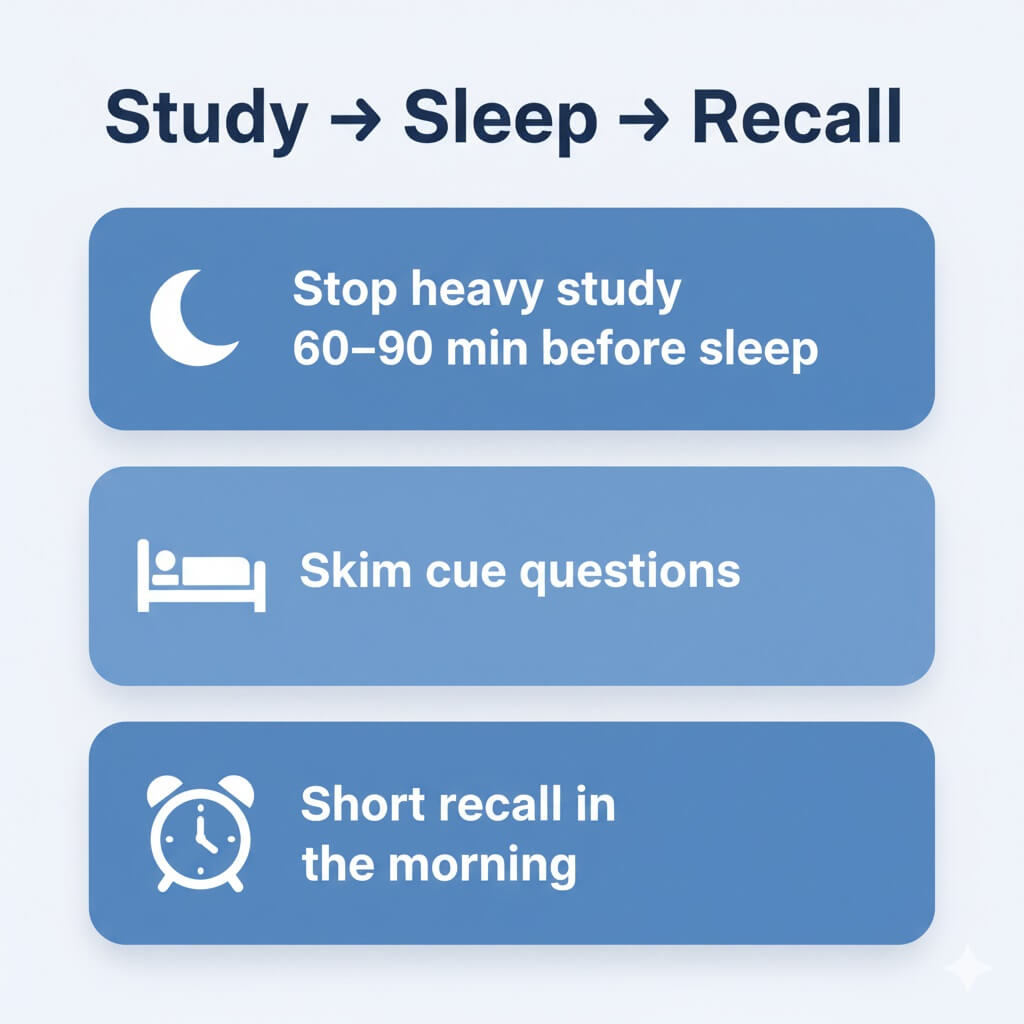
Scientific research shows a deep connection between sleep and memory. The brain processes what is learned during the day and stores it in long-term memory during sleep. Therefore, school-age students need 8 to 10 hours of quality sleep every day.
Balanced Diet and Exercise
Nutritious food provides the brain with the energy it needs. Regular physical exercise improves blood circulation and produces hormones that reduce stress, helping increase concentration. Students and families can also explore the role of food, sleep, and movement for better learning.
Stress Management
Excessive pressure from examinations or homework can increase anxiety among students. In such situations, deep breathing exercises, meditation, or spending time on creative interests such as painting, music, or sports can help maintain mental balance.

Practical Guidance for Students and Parents
Effective learning is a continuous process that cannot be developed overnight. It requires patience and regular practice.
Students can begin by trying one or two strategies, such as the Pomodoro Technique or active recall. Trying to use too many methods at once may create confusion instead. Identifying one’s learning style, whether auditory, visual, or kinesthetic, and preparing study materials accordingly can be useful.
Parents should encourage their children not only based on marks or grades but also based on their learning process and effort. It is the responsibility of parents to create a quiet study environment at home and support their children in managing time effectively.
The effective study skills learned at the school level help students not only pass examinations but also become capable and self-reliant in facing future academic challenges in college life and professional fields.





Comments 0
No comments yet. Be the first to start the conversation.