



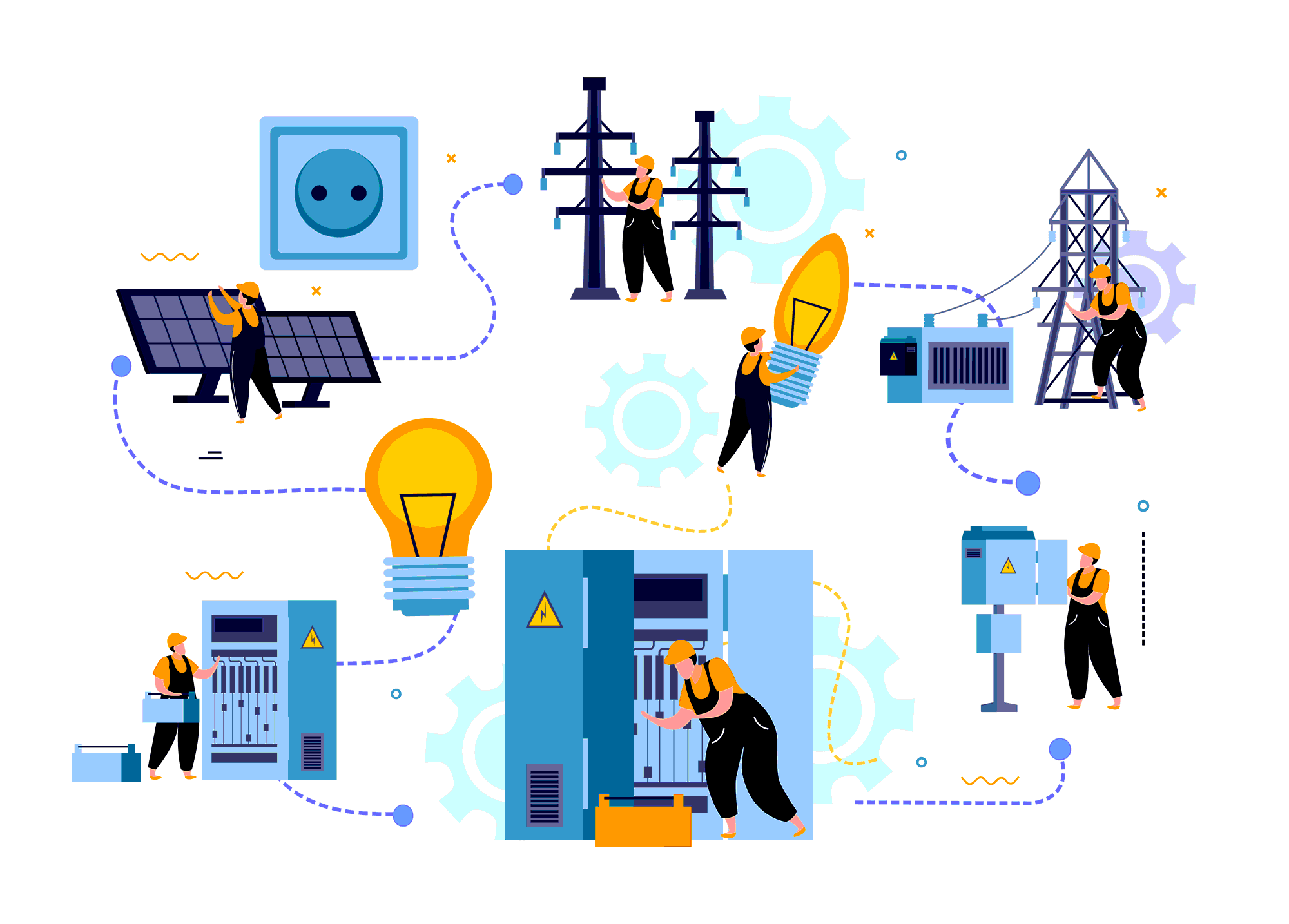
Electrical engineering is the branch of engineering concerned with the study, design, development, and application of electrical and electronic systems. It covers areas such as electric power, electronics, electromagnetics, control systems, telecommunications, signal processing, embedded systems, and automation.
The course combines mathematical and scientific theory with laboratory work, computer-based analysis, system design, and engineering projects. Graduates may work in power infrastructure, electronics manufacturing, telecommunications, industrial automation, semiconductor technology, transportation, research, and related sectors.
Table of Content
- Electrical Engineering Course at a Glance
- What Students Study in Electrical Engineering
- Types of Electrical Engineering Degrees
- Common Electrical Engineering Specializations
- Expected Learning Outcomes
- Electrical Engineering Eligibility and Admission Requirements
- Skills Required for Electrical Engineering
- Electrical Engineering Career Options
- Job Outlook
- Industries That Employ Electrical Engineers
- Emerging Areas in Electrical Engineering
- Academic and Professional Challenges
- Further Study After Electrical Engineering
- How to Choose an Electrical Engineering Program
- Final Perspective
Electrical Engineering Course at a Glance
| Area | Details |
|---|---|
| Main focus | Electrical circuits, electronic devices, power systems, communication, control, and computing applications |
| Common study levels | Bachelor’s degree, master’s degree, and doctoral degree |
| Core subjects | Circuit analysis, electronics, electromagnetics, signals, control systems, digital systems, power engineering, and communication systems |
| Practical components | Laboratory exercises, simulations, design projects, field studies, internships, or cooperative education where available |
| Common specializations | Power systems, electronics, telecommunications, automation, embedded systems, renewable energy, signal processing, and microelectronics |
| Relevant strengths | Mathematics, physics, analytical thinking, programming, design, communication, and problem-solving |
What Students Study in Electrical Engineering
The exact curriculum differs by university, country, degree level, and specialization. A typical electrical engineering program includes subjects such as:
-
Engineering mathematics
-
Physics and basic sciences
-
Electrical circuit analysis
-
Analog and digital electronics
-
Electromagnetic fields and waves
-
Signals and systems
-
Digital logic and system design
-
Electrical machines
-
Power generation, transmission, and distribution
-
Control systems
-
Microprocessors and microcontrollers
-
Communication systems
-
Instrumentation and measurement
-
Programming and engineering software
-
Power electronics
-
Renewable energy systems
-
Engineering design and project work
Laboratory exercises and design projects are important because students must learn how to model, build, test, evaluate, and troubleshoot electrical systems. In the United States, ABET’s 2025–2026 accreditation criteria require accredited bachelor’s-level engineering programs to include substantial mathematics, basic science, engineering topics, modern engineering tools, and a major design experience. Requirements in other education systems may differ.
Types of Electrical Engineering Degrees
Bachelor’s Degree
A bachelor’s degree provides the academic and practical foundation for entry-level engineering work. It normally introduces students to circuits, electronics, power systems, communication, programming, control, and engineering design.
The length of the program depends on the national education system and university structure. Four years is common in many systems, but students should check the official curriculum and credit requirements of the institution they plan to attend.
Students researching undergraduate options may also review the Bachelor in Electrical and Electronics Engineering (BE EE).
Master’s Degree
A master’s degree allows students to develop advanced knowledge in a selected area, such as power systems, microelectronics, telecommunications, automation, signal processing, or renewable energy.
Programs may be coursework-based, research-based, or a combination of both. Admission requirements, duration, thesis expectations, and prerequisite subjects vary by institution.
Doctoral Degree
A doctoral degree focuses mainly on original research. Students normally investigate a specialized engineering problem, conduct research, and produce a dissertation or equivalent scholarly work.
Doctoral graduates may pursue careers in research, university teaching, advanced product development, industrial laboratories, or technical leadership. Entry requirements differ among universities, and some programs admit qualified applicants directly after a bachelor’s degree.
Common Electrical Engineering Specializations
Electrical engineering includes several overlapping specializations. Program names and subject boundaries may vary.
Power Systems Engineering
Power systems engineering covers electricity generation, transmission, distribution, protection, stability, and grid operation. It may also include electrical machines, high-voltage engineering, power electronics, and energy storage.
Electronics Engineering
Electronics engineering focuses on circuits, components, sensors, electronic devices, and systems. Applications may include consumer products, industrial equipment, communication devices, medical equipment, and measurement systems.
Control Systems and Automation
This specialization deals with systems that monitor and regulate machines or processes. It is relevant to industrial automation, robotics, manufacturing, transportation, and process control.
Telecommunications Engineering
Telecommunications engineering covers the transmission of voice, data, and multimedia through wired, wireless, optical, satellite, and digital communication systems.
Signal Processing
Signal processing involves the analysis and transformation of signals such as sound, images, sensor data, and communication signals. It is applied in communication, medical technology, monitoring systems, and multimedia processing.
Embedded Systems and Computer Engineering
Embedded systems combine electronic hardware, processors, software, and sensors to control devices and machines. Applications include vehicles, household equipment, industrial systems, medical devices, and Internet of Things technologies.
Microelectronics and Integrated Circuit Design
This field focuses on semiconductor devices, integrated circuits, chip design, fabrication principles, testing, and related electronic systems.
Renewable Energy and Energy Systems
Renewable energy engineering covers technologies and systems associated with solar, wind, hydropower, energy storage, power conversion, and grid integration.
Robotics and Instrumentation
This area combines electronics, sensors, control, programming, and mechanical systems. It supports the development of robots, automated equipment, measurement systems, and intelligent machines.
Expected Learning Outcomes
After completing an electrical engineering program, graduates should be able to:
-
Apply mathematics, science, and engineering principles to technical problems
-
Analyze electrical circuits, devices, and systems
-
Design components or systems within technical, safety, economic, and environmental constraints
-
Use laboratory instruments, simulation platforms, programming tools, and engineering software
-
Test systems, interpret results, and identify faults
-
Prepare technical reports and communicate engineering information clearly
-
Work with professionals from different technical disciplines
-
Consider engineering standards, ethics, safety, and public responsibility
-
Continue learning as technologies, standards, and professional requirements change
Actual graduate outcomes depend on the program curriculum, available facilities, teaching quality, and the student’s academic and practical engagement.
Electrical Engineering Eligibility and Admission Requirements
Admission requirements are not internationally standardized. Applicants should rely on the official requirements published by the relevant institution or education authority.
For a Bachelor’s Degree
Institutions commonly expect applicants to have completed secondary or higher-secondary education with mathematics and science subjects. Physics and advanced mathematics are particularly relevant preparation for the course. Entrance examinations, minimum grades, subject combinations, and language requirements may also apply.
For a Master’s Degree
Applicants generally need a bachelor’s degree in electrical engineering or a related discipline. Some universities accept students from electronics, computer, communication, mechanical, energy, or other engineering backgrounds, sometimes with additional prerequisite courses.
For a Doctoral Degree
Universities may require a relevant master’s degree, a strong undergraduate record, a research proposal, academic references, or evidence of research ability. Requirements vary significantly, and some institutions admit qualified students directly from a bachelor’s program.
Skills Required for Electrical Engineering
Technical Skills
-
Mathematics and physics
-
Circuit analysis
-
Electronic system design
-
Programming and computational thinking
-
Simulation and modelling
-
Measurement and instrumentation
-
Data analysis
-
System testing and troubleshooting
-
Technical drawing and documentation
-
Understanding of relevant standards and safety requirements
Professional Skills
-
Analytical thinking
-
Problem-solving
-
Written and verbal communication
-
Teamwork
-
Project planning
-
Attention to detail
-
Time management
-
Ethical judgment
-
Adaptability
-
Continuous learning
The U.S. Bureau of Labor Statistics identifies mathematics, programming knowledge, communication, problem-solving, interpersonal ability, and project management among the important skills used by electrical and electronics engineers.
Electrical Engineering Career Options
Career opportunities depend on the graduate’s specialization, practical experience, location, professional recognition, and prevailing labour-market conditions.
| Career area | Typical responsibilities | Possible sectors |
|---|---|---|
| Electrical engineer | Design, test, evaluate, and maintain electrical equipment or systems | Engineering services, infrastructure, manufacturing, transportation |
| Power systems engineer | Work with generation, transmission, distribution, protection, and grid systems | Utilities, energy companies, consulting, infrastructure |
| Electronics engineer | Design and test electronic circuits, devices, and components | Electronics, semiconductors, instrumentation, manufacturing |
| Control and automation engineer | Develop systems that monitor and control machines or processes | Manufacturing, robotics, process industries, transportation |
| Telecommunications engineer | Design and maintain wired, wireless, optical, or satellite systems | Telecom companies, network providers, equipment manufacturers |
| Embedded systems engineer | Develop hardware-software systems for dedicated devices | Automotive, electronics, medical technology, industrial systems |
| Renewable energy engineer | Support renewable generation, storage, conversion, and grid integration | Energy developers, utilities, consulting, research |
| Instrumentation engineer | Design or maintain sensors, measurement equipment, and control instruments | Industry, laboratories, utilities, process plants |
| Research engineer | Investigate new technologies, materials, devices, or system designs | Universities, research institutes, corporate laboratories |
| Engineering project manager | Coordinate technical teams, schedules, budgets, documentation, and delivery | Engineering firms, utilities, construction, manufacturing |
Project management and senior technical positions generally require relevant professional experience. Graduation alone does not guarantee employment, advancement, or eligibility for regulated engineering work.
Job Outlook
Employment conditions differ by country, industry, specialization, and economic cycle. Students should consult current labour-market information for the country in which they plan to work.
As a country-specific reference, the U.S. Bureau of Labor Statistics projects employment of electrical and electronics engineers to grow by 7% between 2024 and 2034. It also estimates an average of about 17,500 openings each year during that period, including positions created by workforce replacement. These figures apply to the United States and should not be treated as a global forecast.
The International Energy Agency reported in 2025 that electricity had become the largest energy-employment sector globally. Employment growth was associated with electricity generation, transmission, distribution, storage, solar power, grids, and electric-vehicle-related activities. However, opportunities remain uneven across countries and technologies, and skills shortages coexist with changes in investment and hiring conditions.
Industries That Employ Electrical Engineers
Electrical engineering graduates may find work in:
-
Electric power generation, transmission, and distribution
-
Renewable energy and energy storage
-
Electronics and semiconductor manufacturing
-
Telecommunications
-
Industrial automation
-
Automotive and electric mobility
-
Aerospace and navigation systems
-
Medical and measurement equipment
-
Consumer electronics
-
Construction and infrastructure
-
Engineering consulting
-
Research and development
-
Government and regulatory organizations
-
Universities and technical institutions
The availability of positions depends on local industry structure and the recognition of the graduate’s qualification.
Emerging Areas in Electrical Engineering
Grid Modernization and Energy Storage
Growing electricity demand and the expansion of variable renewable generation are increasing the need for grid planning, protection, monitoring, power electronics, storage, and flexible control systems.
Renewable Energy Integration
Electrical engineers contribute to the design and integration of solar, wind, hydropower, and storage systems. The International Energy Agency projects substantial global renewable-power expansion between 2025 and 2030, particularly in solar photovoltaic generation.
A related overview is available in Impact of Renewable Energy on Electrical Engineering.
Electric Vehicles and Charging Systems
Electric mobility requires work in batteries, motor drives, power conversion, charging infrastructure, control systems, testing, and grid integration.
Semiconductor and Power-Electronics Technology
Semiconductors and power-electronic devices support applications ranging from communication equipment and computing hardware to renewable energy systems, industrial drives, and electric vehicles.
Industrial Automation and Robotics
Automation combines sensors, control systems, communication networks, embedded computing, and software to improve the operation of industrial equipment and processes.
Artificial Intelligence and Data-Based Engineering
Machine learning and data analysis may be used for equipment monitoring, fault detection, forecasting, system optimization, and predictive maintenance. Engineers applying these methods still need reliable data, appropriate models, technical validation, and human oversight.
Connected and Embedded Devices
Internet of Things systems combine sensors, processors, communication technologies, and control functions. Electrical engineers may contribute to hardware design, power management, signal processing, connectivity, and device testing.
Academic and Professional Challenges
Electrical engineering can be demanding because it combines abstract theory with practical design.
Common challenges include:
-
Mathematics-intensive coursework
-
Complex circuit and system analysis
-
Laboratory and project workloads
-
Programming and simulation requirements
-
Rapid changes in tools and technologies
-
Strict safety and reliability expectations
-
The need to follow technical standards and regulations
-
Continuous professional learning
-
Fieldwork or travel in some roles
-
Professional licensing requirements in certain jurisdictions
Students can manage these demands through consistent study, laboratory practice, project participation, academic support, and gradual development of mathematical and programming skills.
Further Study After Electrical Engineering
Graduates may continue their education through:
-
A master’s degree in an electrical engineering specialization
-
A research-based doctoral program
-
Postgraduate study in renewable energy, robotics, control, telecommunications, electronics, or computing
-
Management or engineering-management education
-
Industry-recognized technical training
-
Professional licensing or registration where applicable
-
Short courses in programming, data analysis, cybersecurity, embedded systems, or project management
The value of an additional qualification depends on the person’s career goal, experience, financial circumstances, and local professional requirements.
How to Choose an Electrical Engineering Program
Before applying, students should check:
-
The institution’s legal recognition
-
Program accreditation or professional recognition where relevant
-
Admission requirements
-
Curriculum and available specializations
-
Laboratory facilities and equipment
-
Faculty expertise
-
Design and project requirements
-
Internship or cooperative education opportunities
-
Tuition fees and additional costs
-
Scholarship conditions
-
Graduate outcomes, where reliable data are published
-
Recognition for professional licensing or further study
-
Delivery format for laboratory-based subjects
Recognition and accreditation requirements vary by country. Students planning to work in a regulated engineering role should verify whether the qualification meets the requirements of the relevant professional authority.
Final Perspective
Electrical engineering combines mathematics, science, computing, design, and practical problem-solving. Its applications range from power networks and electronic devices to communication systems, industrial automation, renewable energy, transportation, and embedded technology.
The course is most suitable for students who are interested in how electrical and electronic systems work and who are prepared for sustained study in mathematics, physics, programming, laboratory practice, and engineering design. Before enrolling, students should compare the official curriculum, recognition status, cost, facilities, and career relevance of each program rather than relying on general course descriptions alone.





Comments 0
No comments yet. Be the first to start the conversation.