



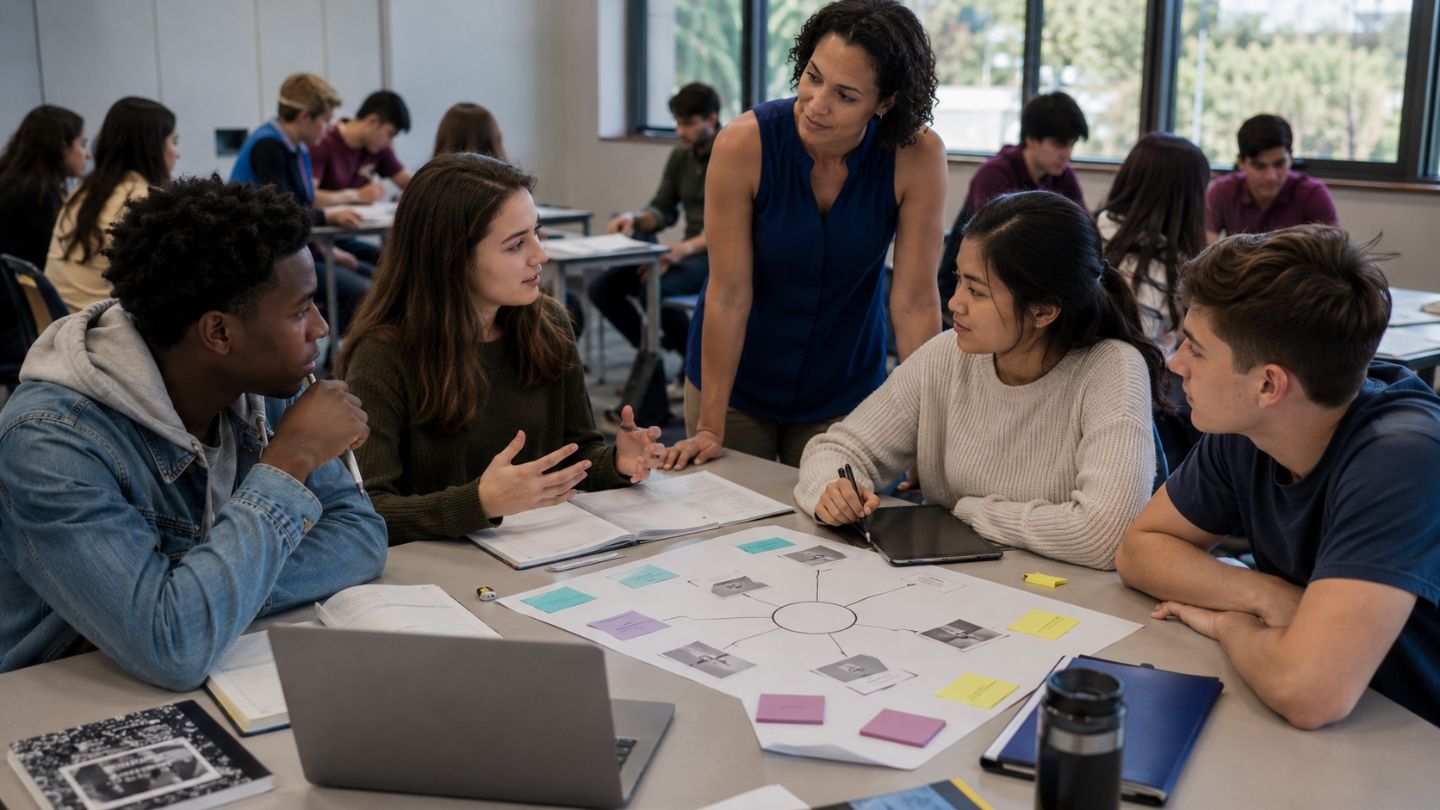
Issue-based learning is a teaching approach that uses a real social, ethical, scientific, environmental, professional, or community issue as the starting point for learning. Instead of beginning only with a textbook topic, students examine an issue that requires evidence, subject knowledge, perspective-taking, discussion, and reasoned judgment.
A topic becomes an issue when people need to interpret, debate, or act on it. “Water use” is a topic. “How should a community balance water needs for homes, farms, and industry during a dry season?” is an issue. “Artificial intelligence” is a topic. “What rules should a school set for student use of generative AI in assignments?” is an issue.
Issue-based learning is closely related to active learning, inquiry-based learning, and problem-based learning, but it is not identical to any one of them. Cornell University’s Center for Teaching Innovation defines problem-based learning as a student-centered approach in which students learn by working in groups to solve an open-ended problem. Issue-based learning may include problem solving, but its wider purpose is to help learners understand an issue, test claims, compare perspectives, and explain a justified response.
Answer Summary:
Issue-based learning helps students connect classroom knowledge with real issues. It works best when the issue is authentic, clearly linked to learning outcomes, supported by reliable sources, and handled with clear classroom norms. The goal is not simply to debate opinions or “solve” complex public problems. The goal is to help students use evidence, concepts, values, and judgment more carefully.
Table of Content
- What Is Issue-Based Learning?
- Topic, Issue, Problem, and Project
- Why Issue-Based Learning Matters
- Issue-Based Learning vs Problem-Based, Project-Based, and Inquiry-Based Learning
- How Issue-Based Learning Works
- Examples of Issue-Based Learning by Subject
- Benefits of Issue-Based Learning
- Risks, Safeguards, and Classroom Norms
- Assessment in Issue-Based Learning
- When to Use Issue-Based Learning
- When to Avoid Issue-Based Learning
- Conclusion
Key Takeaways:
-
Issue-based learning starts with a real issue, not only a topic.
-
It asks students to use evidence, concepts, perspectives, and judgment.
-
It differs from problem-based learning because the outcome is not always a single solution.
-
Strong issue-based teaching needs a focused question, reliable sources, and reflection.
-
Sensitive issues require clear norms, source quality, and attention to student wellbeing.
-
Assessment should reward reasoning, evidence use, and fair treatment of perspectives.
What Is Issue-Based Learning?
Issue-based learning is a structured learning method in which students investigate a real issue and use subject knowledge to understand it. The issue gives students a reason to learn the content, rather than serving as decoration after the content has already been taught.
The University of Akron’s resource on authentic problem-based or issue-based learning explains that scientific information becomes more meaningful when learners can connect it with real-life experiences, and that students can apply science knowledge to questions about their world.
A useful issue-based lesson usually has four qualities. It connects clearly to curriculum goals. It can be studied through reliable evidence. It includes more than one perspective or possible response. It leads students toward explanation, judgment, or action that can be defended.
Issue-based learning should not be treated as an unstructured classroom debate. Students need enough background knowledge, source guidance, and time to examine the issue carefully.
Topic, Issue, Problem, and Project
A class can cover a topic without using issue-based learning. A lesson becomes issue-based when students must investigate a real question, weigh evidence, compare viewpoints, and explain a reasoned response.
| Learning Focus | Meaning | Example |
|---|---|---|
| Topic | A subject area to study | Air pollution |
| Issue | A real question involving evidence, impact, and judgment | How should a city reduce air pollution without unfairly affecting low-income workers? |
| Problem | A situation that needs solving or improvement | A school has unsafe drinking water |
| Project | A product or task students create | A water-quality report, policy memo, or awareness poster |
This distinction matters because a topic alone does not create inquiry. “Climate change” is a topic. “How should a coastal community prepare for flood risk while protecting housing, jobs, and ecosystems?” is an issue.
Why Issue-Based Learning Matters
Issue-based learning matters because many real-world questions do not fit neatly into one subject. A public health issue may involve biology, statistics, ethics, communication, and local culture. A technology issue may involve computer science, law, psychology, employment, and fairness.
This approach can support student-centered learning because learners are not only receiving information. They are using information to make sense of a real situation.
UNESCO explains global citizenship education as learning connected with a broader global community, local and global contribution, understanding how the world works, valuing differences, and working with others on shared challenges. This does not make issue-based learning the same as global citizenship education, but it supports the wider idea that learners need structured ways to understand interconnected issues.
This does not mean every lesson should become a discussion of current events. The issue must serve the learning goal. If the goal is to understand ecosystems, a local water-quality issue may help students apply scientific concepts. If the goal is media literacy, a misinformation case may help students practise source evaluation. If the goal is civic reasoning, a public policy issue may help students compare rights, responsibilities, evidence, and consequences.
Issue-Based Learning vs Problem-Based, Project-Based, and Inquiry-Based Learning
Issue-based learning overlaps with other active teaching methods, but the main focus is different. The distinction is important because many readers confuse issue-based learning with problem-based learning.
| Method | Main Focus | Typical Outcome |
|---|---|---|
| Issue-based learning | Understanding and responding to a real issue | Reasoned judgment, recommendation, explanation, or action plan |
| Problem-based learning | Solving or explaining an open-ended problem | Solution, diagnosis, explanation, or proposal |
| Project-based learning | Creating a product or completing a project | Public product, presentation, model, report, or design |
| Inquiry-based learning | Asking questions and investigating answers | Explanation, investigation, reflection, or research product |
Issue-Based Learning vs Problem-Based Learning
Problem-based learning usually begins with an open-ended problem that students work to solve or explain. Cornell’s Problem-Based Learning page says the open-ended problem drives both motivation and learning. It also lists typical student tasks such as examining the problem, identifying what they need to learn, evaluating possible solutions, solving the problem, and reporting findings.
Issue-based learning may use a similar structure, but the goal can be broader. Students may not “solve” climate migration, misinformation, or unequal access to public services. They can, however, learn to analyze causes, compare evidence, understand trade-offs, and explain what a reasonable response might require.
Issue-Based Learning vs Project-Based Learning
Project-based learning usually asks students to create a product or complete a project over time. A project can be issue-based if it responds to a real issue. However, not every project is issue-based.
Making a poster about recycling is a project. Investigating why recycling rates are low in a school, checking evidence, interviewing stakeholders where appropriate, and proposing changes is closer to issue-based learning.
Issue-Based Learning vs Inquiry-Based Learning
Inquiry-based learning begins with questions and investigation. Issue-based learning is a focused form of inquiry where the question is tied to a social, scientific, ethical, professional, or community issue.
For example, “What affects plant growth?” is an inquiry question. “How should a school use limited space for food gardens, sports, and open recreation?” is an issue-based question because it involves evidence, values, trade-offs, and decision-making.
How Issue-Based Learning Works
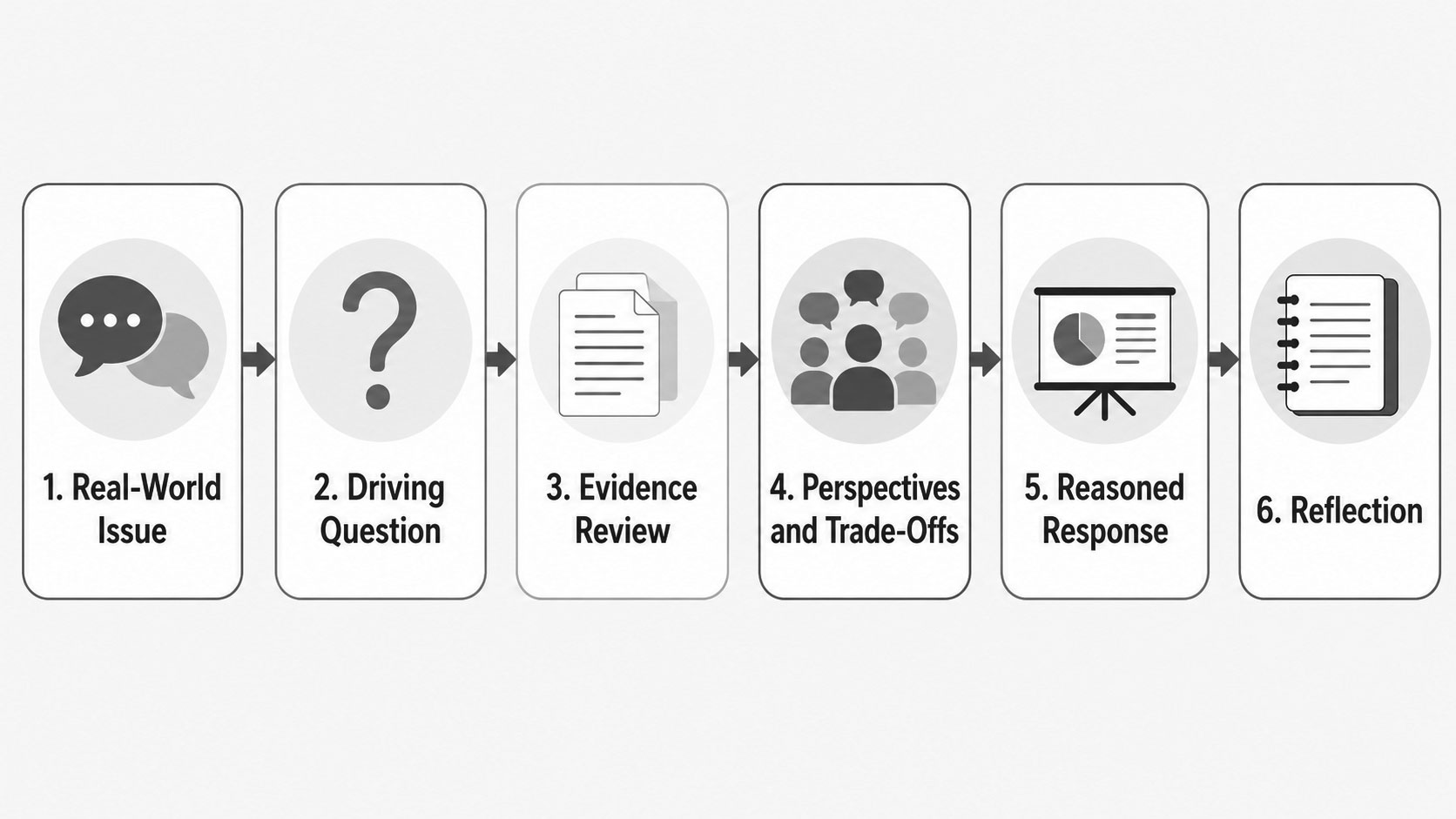
A strong issue-based lesson follows a clear sequence. Teachers can adapt the process depending on subject, age group, time, and classroom context.
Choose a Teachable Issue
A teachable issue is authentic, relevant, and manageable. Authentic means it has real-world significance. Relevant means students can understand why it matters. Manageable means it can be investigated with appropriate sources and handled safely in the classroom.
A good issue is not just dramatic. It must connect to learning outcomes. “Climate change” may be too broad for one lesson. “How should a coastal town prepare for rising flood risk?” is more focused. “Artificial intelligence” is too general. “What should count as acceptable AI assistance in school assignments?” gives students a clearer task.
Create a Focused Driving Question
The driving question should be open enough to invite inquiry but focused enough to guide research.
Weak question: Is social media good or bad?
Stronger question: What rules should a school set for student-run social media pages to protect free expression, privacy, and safety?
Weak question: Should cities reduce traffic?
Stronger question: How should a city reduce traffic congestion while considering workers, small businesses, public transport, and air quality?
A strong question makes subject knowledge necessary. If students can answer only from personal opinion, the question needs more structure.
Activate Prior Knowledge and Knowledge Gaps
Before research begins, students should identify what they think they know, what they are unsure about, and what evidence they need. This step reduces shallow opinion-sharing.
Teachers can ask students to sort early ideas into four categories:
-
What we know
-
What we think but need to verify
-
What we do not know yet
-
Who may be affected by the issue
This helps students see that confidence and evidence are not the same.
Investigate Evidence
Students should use reliable sources suited to the issue. These may include official data, research summaries, institutional reports, laws or policy documents, expert explanations, local observations, credible news reports, or interviews where appropriate.
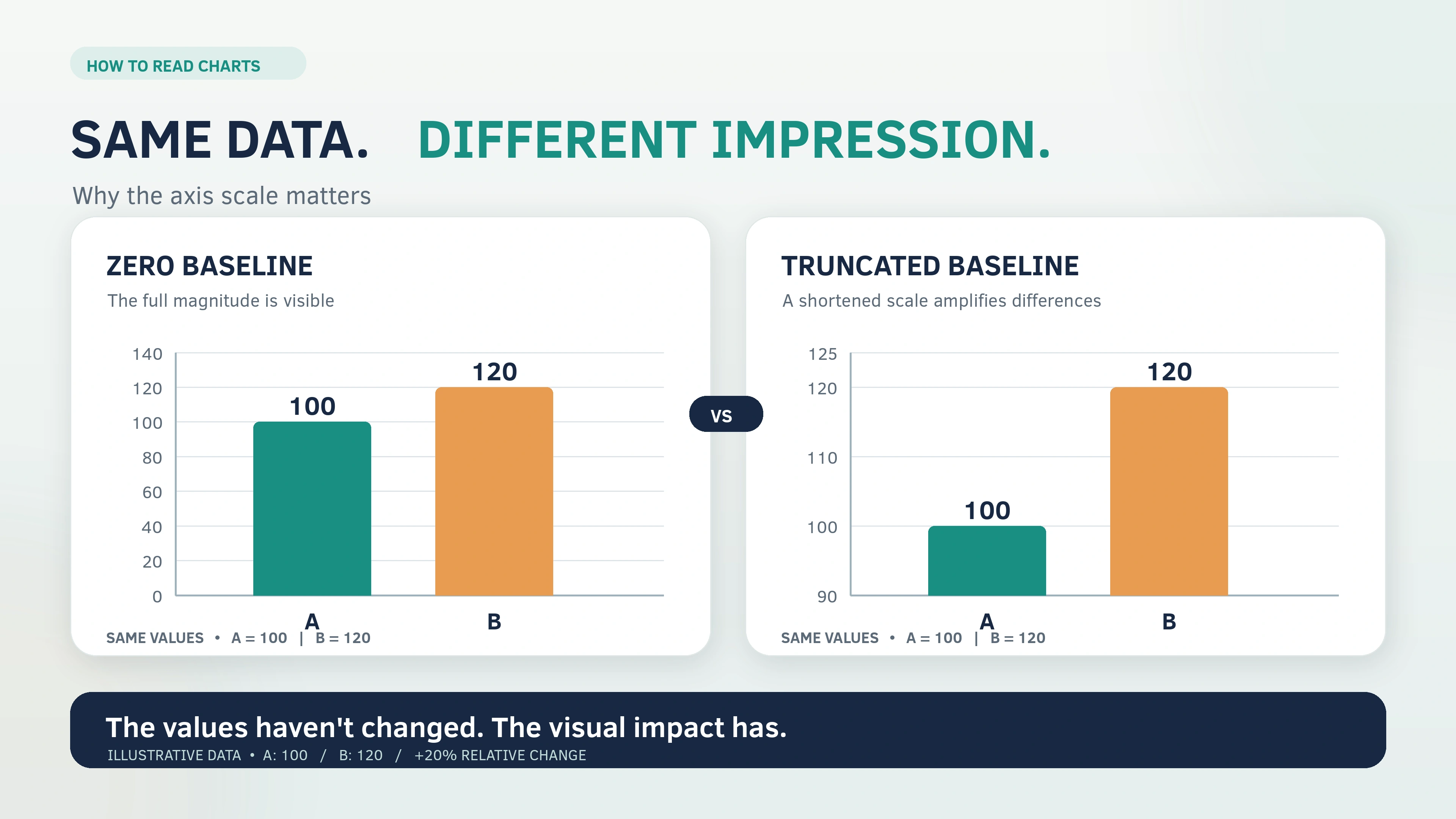
This is where critical thinking in education becomes practical. Students should ask who produced the source, what evidence it provides, what may be missing, whether the information is current, and whether another reliable source confirms or challenges the claim.
Teachers should model source evaluation, especially when issues are controversial or information is changing.
Examine Perspectives and Trade-Offs
Issue-based learning should not train students to repeat one approved opinion. It should help them understand why different stakeholders may reasonably disagree.
A water-use issue may involve farmers, urban households, industries, environmental groups, and local government. Students need to ask what each group values, what evidence each group uses, and what consequences may follow from different choices.
This does not mean all claims deserve equal weight. Some claims are strongly supported by evidence; others are weak, outdated, or misleading. A careful teacher helps students distinguish evidence, values, uncertainty, and misinformation.
Develop a Reasoned Response
The final response may be a policy brief, class presentation, debate, research memo, reflective essay, design proposal, infographic, or community action plan. The format should match the learning goal.
For a science class, the strongest response may depend on evidence quality and correct use of concepts. For a civics class, it may depend on rights, responsibilities, fairness, and public reasoning. For media literacy, it may depend on source evaluation and responsible communication.
Reflect on Learning and Uncertainty
Reflection helps students understand how their thinking changed. Students can explain which evidence mattered, what uncertainty remains, which viewpoint challenged them, and how they handled disagreement.
Without reflection, issue-based learning can become a one-time activity. With reflection, it becomes a way to build stronger reasoning habits.
Examples of Issue-Based Learning by Subject
Issue-based learning can be used in many subjects, but the issue should always serve the learning objective.
Science
Students might study a local air-quality issue. They learn about particulate matter, pollution sources, measurement, health effects, and possible responses. The final task could ask them to compare vehicle restrictions, tree planting, and industrial monitoring.
The goal is not to turn students into campaigners. The goal is to help them use science to reason about a real issue with evidence and limits.
Social Studies
Students might examine whether voting should be compulsory. They can study democratic participation, individual freedom, civic duty, turnout data, and arguments from countries with different systems.
The final product could be a position paper that presents a clear view while acknowledging the strongest counterargument.
Language and Media Studies
Students might investigate misinformation during a public health scare or public event. They can compare headlines, trace sources, identify missing context, and create a short guide for checking claims.
The learning outcome is not only media awareness. It is careful reading, evidence checking, and responsible communication.
Business and Economics
Students might analyze whether a city should support a new tourism project. They can consider jobs, infrastructure, environmental pressure, housing costs, public revenue, and local culture.
This helps students practise cost-benefit reasoning without pretending that every value can be reduced to money.
Professional Education
In professional programs, issue-based learning may be more specialized. The University of Sydney lists SCWK4003: Issue Based Learning Unit 3 as a 2026 undergraduate Social Work unit. The page states that it is the third of four Issue Based Learning units and is intended to develop students’ transfer of knowledge and independent work.
This example confirms that the exact term is used in a professional education context. It should not be treated as a universal definition of issue-based learning across all subjects. It does show why sensitive topics require care. Some issues involve difficult human experiences and should be taught with ethical boundaries, support, and professional standards.
Benefits of Issue-Based Learning
Issue-based learning can support deeper understanding when it is well designed. It asks students to apply knowledge in situations that resemble the complexity of real decisions.
A second benefit is motivation. Students may engage more seriously when they can see why a concept matters. This is not automatic. A poorly chosen issue can distract from learning or polarize the classroom. A well-chosen issue can make abstract content feel necessary.
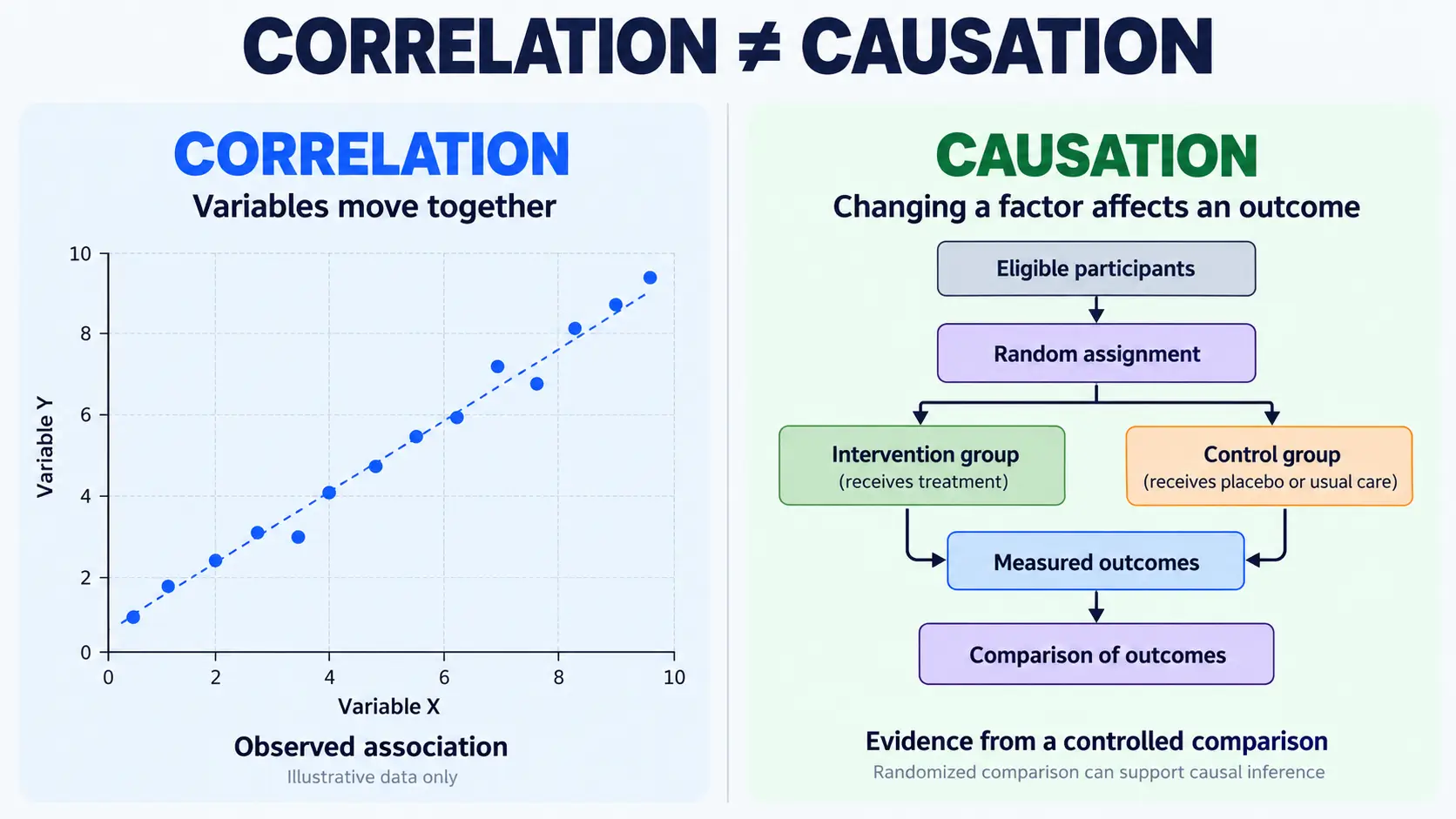
A third benefit is critical thinking. Students must ask whether a claim is supported, whether a source is credible, whether a proposed response has side effects, and whether a viewpoint has been represented fairly.
A fourth benefit is communication. Students need to explain positions, listen to disagreement, revise claims, and present evidence. These skills are difficult to build through lecture alone.
For a wider civic frame, teachers may also connect issue-based learning with global citizenship education, especially when issues involve sustainability, public responsibility, human rights, or cross-border challenges.
Risks, Safeguards, and Classroom Norms
Issue-based learning can fail when it becomes unstructured opinion exchange. If students debate before they understand the issue, the lesson may reward confidence instead of reasoning.
The safeguard is to require evidence before position-taking. Teachers should assess reasoning, not performance style or loudness.
Another risk is choosing an issue that is too broad, too emotionally intense, or too disconnected from the curriculum. Sensitive issues require preparation, clear expectations, and attention to student wellbeing.
The University of Michigan’s Center for Research on Learning and Teaching notes that many instructors avoid controversial issues because heated discussions can be difficult to manage, but it also states that controversy can support learning when handled through careful discussion guidance. Its resource on handling controversial topics in discussion provides guidance for classroom discussions around difficult or high-stakes topics.
Teachers can reduce risk by using these safeguards:
-
Set discussion norms before the activity begins.
-
Require evidence before students take positions.
-
Separate facts, interpretations, values, and opinions.
-
Do not require students to disclose personal experiences.
-
Make space for disagreement without personal attacks.
-
Correct misinformation without humiliating students.
-
Avoid false balance when evidence is clearly stronger on one side.
-
Provide a reflection task after discussion.
False balance is especially important. Not every issue has two equal sides. Some questions involve strong scientific consensus, legal rights, or clear harm. The teacher’s role is not to pretend all claims are equally supported. The role is to help students evaluate the strength of evidence and the consequences of different responses.
Assessment in Issue-Based Learning
Assessment should match the purpose of the lesson. If the goal is scientific reasoning, assess concept accuracy, data use, and recognition of uncertainty. If the goal is civic reasoning, assess fairness to perspectives, evidence quality, and clarity of recommendation. If the goal is media literacy, assess source evaluation and claim-checking.
A simple rubric can include five criteria:
| Criterion | What to Assess |
|---|---|
| Understanding of the issue | The student explains the issue accurately and avoids oversimplification |
| Use of evidence | Claims are supported by relevant and reliable sources |
| Connection to course concepts | Subject knowledge is used correctly |
| Perspectives and trade-offs | Different viewpoints and consequences are treated fairly |
| Final reasoning | The response is clear, justified, and honest about limits |
Group work should include individual accountability. A group presentation can hide uneven learning if each student’s contribution and reflection are not visible.
When to Use Issue-Based Learning
Use issue-based learning when the subject involves real decisions, competing explanations, public consequences, ethical trade-offs, or evidence that students can investigate.
It can work well in science, social studies, environmental education, media literacy, business, teacher education, social work, law-related education, and interdisciplinary courses. It can also work in mathematics when students use data to examine a real issue, but the mathematical learning objective must remain clear.
Issue-based learning is especially useful when students need to practise judgment, not only recall. It helps when the teacher wants learners to ask: What evidence matters? Who is affected? What are the trade-offs? What remains uncertain? What response can be justified?
When to Avoid Issue-Based Learning
Avoid issue-based learning when students first need foundational knowledge that cannot be responsibly developed through open inquiry. Also avoid it when the issue is likely to harm vulnerable students, when the classroom does not have enough trust for discussion, or when there is not enough time to investigate evidence properly.
A short discussion can introduce an issue, but serious issue-based learning needs enough time for research, dialogue, and reflection. Without that structure, it may create confusion rather than understanding.
Conclusion
Issue-based learning is not a slogan for making lessons relevant. It is a disciplined way to help students use knowledge in relation to real issues. At its strongest, it teaches learners to ask better questions, seek stronger evidence, understand competing perspectives, and make reasoned judgments without pretending every issue has an easy answer.
For teachers, the central design question is not “How can I make this topic controversial?” It is “What real issue would make this knowledge necessary, and how can students investigate it safely and fairly?” When that question guides the lesson, issue-based learning can turn content into usable understanding.





Comments 0
No comments yet. Be the first to start the conversation.