




Learning Styles vs Effective Study Methods: What the Evidence Says
Many students and teachers have heard the advice: “Figure out your learning style—visual, auditory, or kinesthetic—then study in that style.” It sounds practical and respectful. People do have preferences, and motivation matters.
The issue is that “learning styles” is often treated as a promise about outcomes: that matching instruction to a learner’s preferred modality leads to better learning. In research, this prediction is commonly discussed as the “meshing hypothesis.” When researchers review studies designed to properly test that matching claim, they do not find consistent evidence that style-matched teaching reliably improves learning results.
That leaves a useful question for learners and educators: if labeling someone as a “visual learner” is not a dependable shortcut, what tends to help most learners across many topics? Research in cognitive and educational psychology points to a smaller set of strategies with stronger support—especially retrieval practice (practice testing) and spaced practice—plus guidance on when visuals, examples, and feedback are most effective.
Table of Content
- Learning Styles vs Effective Study Methods: What the Evidence Says
- Explain: What the Learning Styles Claim Is (and what it requires)
- Inform: What Learning Research Supports Instead
- Practical Insight: Evidence-Supported Methods You Can Apply
- Outcomes and Limitations: What to Expect and What to Avoid
- Conclusion
- FAQs
- Reference
Explain: What the Learning Styles Claim Is (and what it requires)

Learning preferences vs the learning-styles promise
It helps to separate three ideas that often get mixed up:
-
Learning preference: what a person enjoys (videos, diagrams, listening, hands-on tasks)
-
Study strategy: what a person does (self-quizzing, solving problems, summarizing, explaining steps)
-
Learning outcome: what a person can do later (recall, explain, apply, solve, write)
The popular VAK/VARK versions of “learning styles” usually go beyond preference and imply that matching instruction to a preferred modality improves learning outcomes. University teaching centers often highlight this difference: students may have preferences, but matching to “styles” is not supported as a reliable way to raise achievement.
What evidence would count as support for “meshing”
The strongest form of the learning-styles claim is not “people differ.” It is: different groups learn best from different modalities, and they learn better when taught in the modality that matches their style.
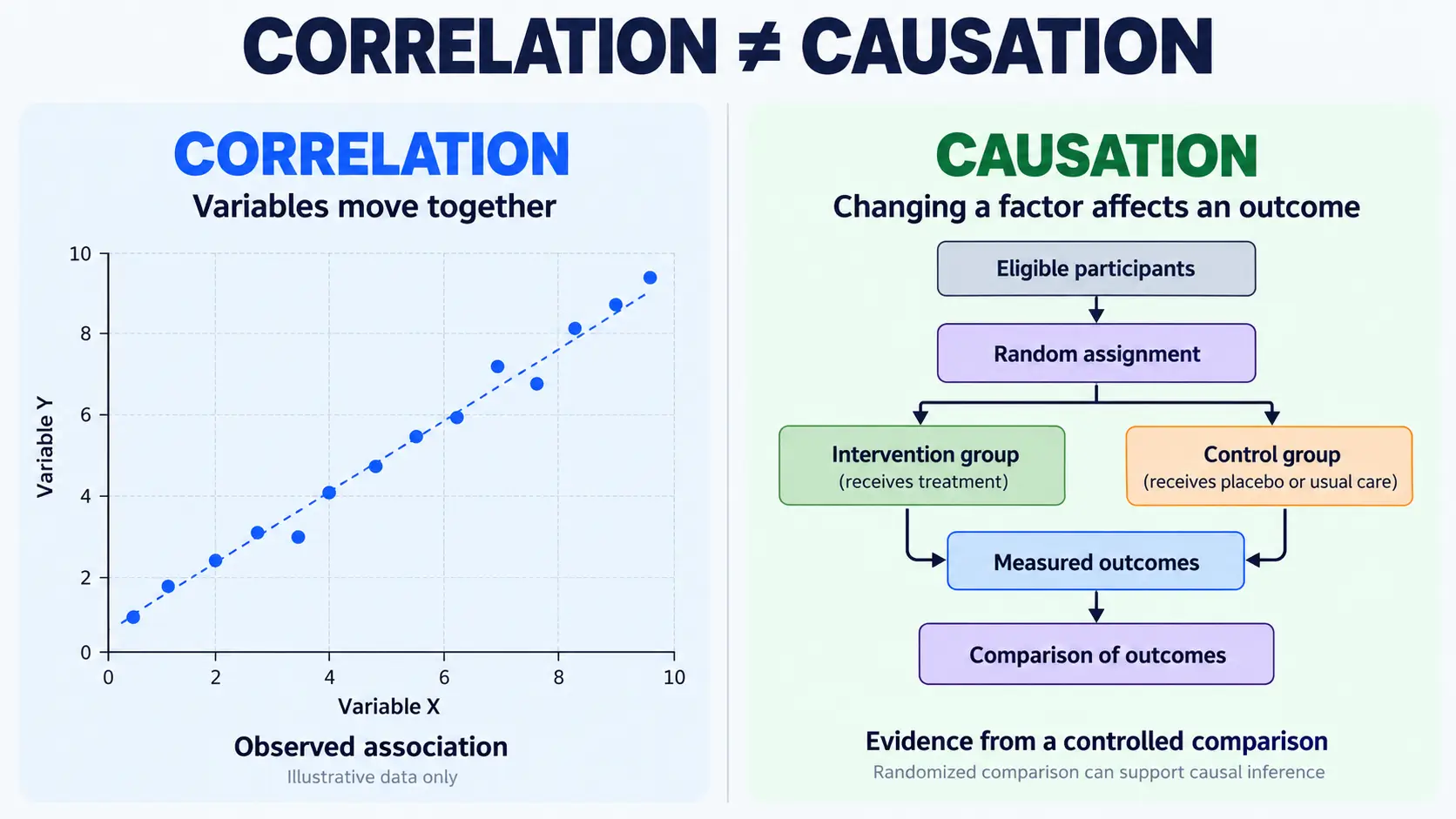
A key review explains that to support this, studies must (1) classify learners by style, (2) randomly assign them to matched vs mismatched instruction, (3) use the same assessment for everyone, and (4) show a specific “crossover” pattern where each style group performs best in its matched condition.
Many studies do not meet these criteria, and the evidence base does not consistently show the predicted crossover benefit.
What research reviews and tests generally conclude
Across rigorous reviews and direct tests, the common conclusion is that style-matching is not a dependable way to improve learning outcomes.
-
A major review in Psychological Science in the Public Interest finds limited evidence supporting the meshing hypothesis and emphasizes the high bar required to claim style-matching benefits.
-
A mini-review focused on modality-specific styles describes the same methodological requirements and reports that strong evidence meeting those standards is limited.
-
An experimental test of matching auditory vs “visual word” preference to audiobook vs text did not find a significant matching advantage on comprehension outcomes (immediate or delayed).
None of this means format never matters. It means “match the format to the person’s style” is not a reliable rule. A better rule is usually “match the format to the content and the task.”
Why the idea stays popular
Belief in learning styles remains common in education settings even when educators also recognize conceptual problems. Research in higher education has documented substantial belief in learning styles among academics, alongside acknowledgment of flaws and inconsistent use.
Learning styles is also often discussed as a “neuromyth”—a claim that sounds brain-based and scientific, spreads widely, and is hard to dislodge. A survey study of teachers in the UK and Netherlands examined the prevalence of neuromyths and included learning-styles-related beliefs among commonly endorsed misconceptions.
Inform: What Learning Research Supports Instead
Learning success depends heavily on the task
A practical replacement for “What’s my learning style?” is a task-first checklist:
-
What do I need to do later? (recall facts, explain concepts, solve problems, write an essay, perform a skill)
-
What kind of knowledge is this? (terms, relationships, procedures, judgment/strategy)
-
Am I a beginner or experienced in this topic?
-
What constraints matter? (time, language level, accessibility needs, materials available)
This approach aligns with the study-strategy research that compares methods by results on later performance—not by how enjoyable they feel during study.
Memory is strengthened by retrieval, not re-exposure
Many learners spend most of their time rereading, highlighting, and watching explanations. These can feel smooth, but smoothness is not the same as durable learning.
A robust finding in memory research is that retrieving information from memory (testing yourself) can improve later retention—often more than additional studying—especially when the final test is delayed.
Prior knowledge changes what “effective instruction” looks like
Beginners often need more structure than advanced learners. Cognitive load theory argues that when working memory is overloaded, unguided problem solving can be a weak route to learning because mental effort goes into searching rather than building stable knowledge structures.
Related work argues that minimally guided instruction tends to be less effective and less efficient for novices, and that the value of guidance changes as learners gain expertise.
Visuals can help, but not because someone is “a visual learner”
“Learning styles” debates sometimes create a false choice: either you match styles, or you ignore visuals. Research on multimedia learning instead focuses on how people learn from words and graphics when materials are designed to support understanding and avoid overload.
So visuals can be useful—especially for spatial relationships, processes, and comparisons—but the reason is usually content-fit and design quality, not a fixed learner type.
Practical Insight: Evidence-Supported Methods You Can Apply
A widely cited review of learning techniques rates the strength and usefulness of common study strategies. Practice testing (retrieval practice) and distributed practice (spaced practice) receive high utility ratings across many contexts, with clear guidance on when and how they work best.
Retrieval practice: make your brain do the remembering
Retrieval practice means trying to recall information first, then checking and correcting. It can be done with practice questions, flashcards (used properly), “blurting,” and teaching-from-memory.
What the evidence supports
A classic paper on test-enhanced learning reports that tests can improve later retention, not just measure it—especially on delayed assessments.
How to do it in a way that stays accurate
-
Attempt closed-book first.
-
Check immediately after the attempt.
-
Correct errors in full sentences or full solution steps (not just “right answer”).
-
Re-test later (the delay matters).
Examples by subject
-
History / biology / civics: turn headings into questions; write a short answer from memory; check; then re-answer two days later in fewer lines.
-
Literature: recall key themes + evidence; then write a 5–7 sentence mini-argument from memory; verify quotes and details afterward.
-
Math / physics / chemistry: before solving, write the method steps or decision rule from memory (“When do I use this approach?”), then solve and check.
Spaced practice: spread learning across time
Spaced practice means distributing study sessions over time instead of cramming. A large meta-analysis of distributed practice reviews hundreds of experimental comparisons and supports spacing as a reliable advantage for long-term retention, while emphasizing that timing and lag matter.
A simple spacing routine that does not require complicated schedules
-
Same day: 5–10 minutes of retrieval after learning
-
Next day: short retrieval again
-
3–4 days later: another short retrieval
-
1–2 weeks later: mixed review (see interleaving)
If an exam is close, shorten the gaps. If it is far away, widen them.
Interleaving: practice choosing the right method
Interleaving means mixing problem types or topics, rather than practicing one type in a block. In math learning research, interleaving has shown benefits because students must choose a strategy based on the problem, similar to real exams and later use.
How to apply interleaving without chaos
-
Learn with examples first (build accuracy).
-
Do a short block to stabilize the method.
-
Then interleave 2–4 types of problems in one set.
Example (math): instead of 20 factorization problems in a row, mix factorization, equations, graphs, and word problems.
Worked examples + guided practice: especially for beginners
If you are new to a topic, worked examples can reduce overload and show patterns before you are expected to generate solutions independently. This aligns with cognitive load findings and guidance-based instruction arguments for novice learners.
A practical error-correction routine
-
Solve.
-
Check.
-
Rewrite the solution with the corrected steps.
-
Record the mistake type (“misread,” “skipped step,” “wrong rule,” “careless arithmetic”) and add one prevention cue.
Elaboration and self-explanation: useful when kept disciplined
Elaboration (linking ideas) and self-explanation (explaining steps in your own words) can support understanding, especially when learners have enough background knowledge to explain accurately. In the learning-techniques review, these methods are often described as useful under the right conditions.
A tight way to use elaboration
-
Explain why a step works (one paragraph max).
-
Give one example and one counterexample.
-
End with a retrieval question you can test tomorrow.
Accessibility and language needs are not “learning styles”
Some learners need materials to be accessible: captions, screen readers, enlarged text, quieter environments, or alternative formats because a modality is not accessible. That is an access issue, not evidence of a fixed learning style.
For language learners, supports often include more spaced vocabulary retrieval, more examples, and structured feedback—again tied to task demands, not a modality label.
Outcomes and Limitations: What to Expect and What to Avoid
What to expect when you switch from “style” to “strategy”
-
Studying may feel harder at first. Retrieval and interleaving reduce the “smooth” feeling of rereading.
-
Scores may improve more on delayed tests than on immediate checks (a common pattern in testing-effect research).
-
Progress is clearer when you track errors and revisit them.
Common traps that mimic effectiveness
-
Rereading until it feels familiar (familiarity is not recall).
-
Watching solutions without attempting first.
-
Doing only blocked practice (fast improvement in the moment, weaker strategy choice later).
Why learning-style labels can backfire
Some learners treat labels as limits: “I can’t learn from lectures,” “I’m not a reading learner.” Teaching-center summaries and education psychology writing warn that students may have preferences, but making instruction decisions based on style labels can be counterproductive.
A press release from the American Psychological Association summarizes research suggesting that belief in learning styles can be detrimental when it leads people to misunderstand what drives learning or invest time in ineffective matching.
A balanced position that fits the evidence
-
Respect preferences when they affect motivation and persistence.
-
Choose formats based on content (diagrams for spatial relations, audio when reading access is limited, hands-on practice for skills).
-
Build learning plans around strategies with stronger support: retrieval, spacing, feedback, and appropriate guidance.
Conclusion
The learning styles idea is appealing because it highlights that learners differ. The stronger claim—teaching works better when matched to a learner’s preferred modality—requires specific evidence (the meshing pattern), and research reviews and tests have not shown consistent support for that matching benefit.
Most learners are better served by shifting attention from labels to strategies: retrieval practice to strengthen recall, spaced practice to improve long-term retention, and structured feedback plus worked examples to build accurate understanding—especially for beginners.
A practical next step is to pick one unit this week and apply a simple cycle: learn with clear examples, quiz yourself the same day, revisit with short quizzes over several days, and end with a mixed set of questions or problems. Track your mistakes, correct them fully, and repeat.
FAQs
Are learning styles real?
People have preferences. The claim that matching teaching to a preferred modality reliably improves learning outcomes (the meshing hypothesis) is not consistently supported by rigorous evidence.
If learning styles don’t work, should teachers stop using visuals and activities?
No. Visuals and activities can support learning when they fit the content and are designed to reduce confusion and overload; multimedia learning research focuses on design and task fit rather than fixed learner types.
What study methods have stronger evidence than learning-style matching?
Across many contexts, retrieval practice (practice testing) and spaced practice have strong support and clear guidance for use.
Does interleaving help with every subject?
Interleaving is most useful when learners must choose among strategies (common in problem-solving). It tends to work best after basic accuracy is established.
How do accessibility needs fit into this?
If a modality is not accessible (for example, uncaptioned audio for a deaf learner), providing an alternative is an accommodation, not evidence of a learning style.
Reference
-
Pashler, H., McDaniel, M., Rohrer, D., & Bjork, R. (2008). Learning Styles: Concepts and Evidence. Psychological Science in the Public Interest.
-
Aslaksen, K., & Lorås, H. (2018). The Modality-Specific Learning Style Hypothesis: A Mini-Review. Frontiers in Psychology.
-
Rogowsky, B. A., Calhoun, B. M., & Tallal, P. (2015). Matching Learning Style to Instructional Method: Effects on Comprehension. Journal of Educational Psychology.
-
Newton, P. M. (2017). Evidence-Based Higher Education – Is the Learning Styles “Myth” Important? Frontiers in Psychology.
-
Dekker, S., Lee, N. C., Howard-Jones, P., & Jolles, J. (2012). Neuromyths in Education: Prevalence and Predictors of Misconceptions Among Teachers. Frontiers in Psychology.
-
Dunlosky, J., Rawson, K. A., Marsh, E. J., Nathan, M. J., & Willingham, D. T. (2013). Improving Students’ Learning With Effective Learning Techniques. Psychological Science in the Public Interest.
-
Roediger, H. L., III, & Karpicke, J. D. (2006). Test-Enhanced Learning: Taking Memory Tests Improves Long-Term Retention. Psychological Science.
-
Cepeda, N. J., Pashler, H., Vul, E., Wixted, J. T., & Rohrer, D. (2006). Distributed Practice in Verbal Recall Tasks: A Review and Quantitative Synthesis. Psychological Bulletin.
-
Rohrer, D., & Taylor, K. (2007). The Shuffling of Mathematics Problems Improves Learning. (journal article PDF).
-
Sweller, J. (1988). Cognitive Load During Problem Solving: Effects on Learning. Cognitive Science.
-
Kirschner, P. A., Sweller, J., & Clark, R. E. (2006). Why Minimal Guidance During Instruction Does Not Work. Educational Psychologist.
-
Mayer, R. E. (2024). The Past, Present, and Future of the Cognitive Theory of Multimedia Learning. Educational Psychology Review.
-
Temple University (Teaching & Learning resource). (2021). Learning preferences are not learning styles… and why the language we use matters.
-
University of Michigan (CRLT). (2024). The Problem with Learning Styles.
-
Yale Poorvu Center. Learning Styles as a Myth.
-
American Psychological Association (Press Release). (2019). Belief in learning styles myth may be detrimental.





Comments 0
No comments yet. Be the first to start the conversation.