




Media Literacy for Students: How to Spot Misinformation Step by Step
Students read, watch, and share information across class groups, short videos, headlines, comment threads, and screenshots. Some content is accurate and helpful. Some content is misleading, out of context, or fabricated. The difficult part is that misinformation often looks normal: a confident caption, a chart, a clip with a logo, or a post shared by someone you know.
Media and Information Literacy is commonly described as a set of skills that helps people engage critically with information and navigate digital environments safely. For students, that translates into practical questions: Who is behind this claim? What evidence supports it? Is the media authentic and in context? If I cite or share it, what am I passing along?
This guide gives a routine you can repeat in schoolwork and daily scrolling. It combines (1) source evaluation (who is behind a claim), (2) claim verification (what evidence exists), and (3) media checks (whether an image or video matches the story). It also explains why misinformation can feel persuasive: repetition can increase belief, and emotionally intense posts can reduce careful checking.
The goal is not to become a professional investigator. The goal is to build a habit: pause, check, and decide whether the content is safe to cite or share.
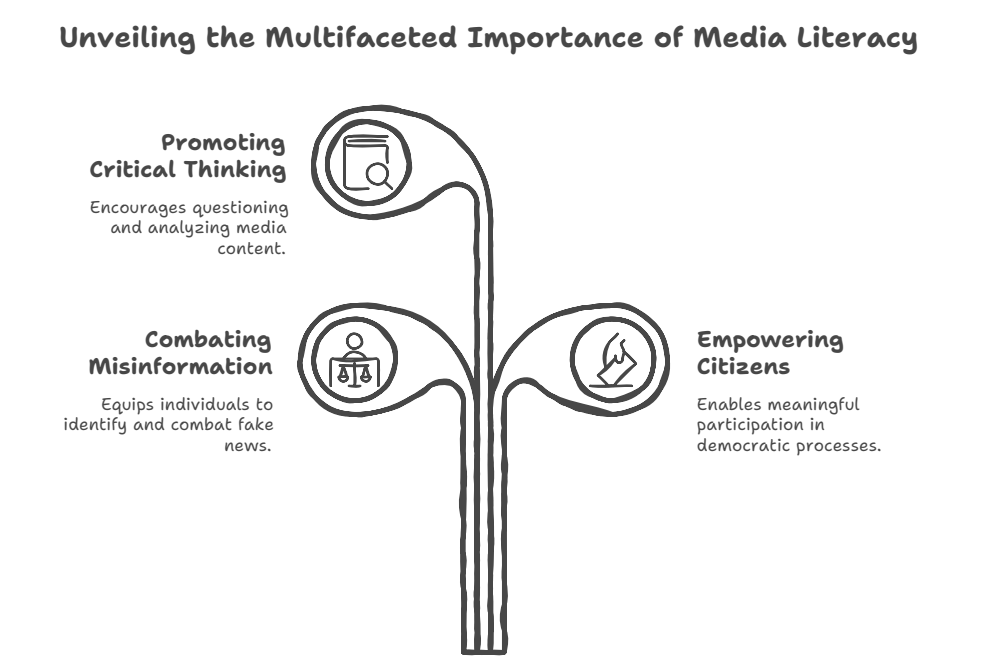
Key terms students need
Misinformation, disinformation, and “fake news”
A practical starting point is to separate accuracy from intent:
-
Disinformation: false information created to mislead.
-
Misinformation: false or inaccurate information shared with or without intent to mislead; many people share it because they think it is accurate.
Some guides use “fake news” as an umbrella phrase, but many educators prefer to avoid it because it can blur categories and distract from evidence. UNICEF’s guide treats “fake news” as one form of disinformation.
Why intent and context matter
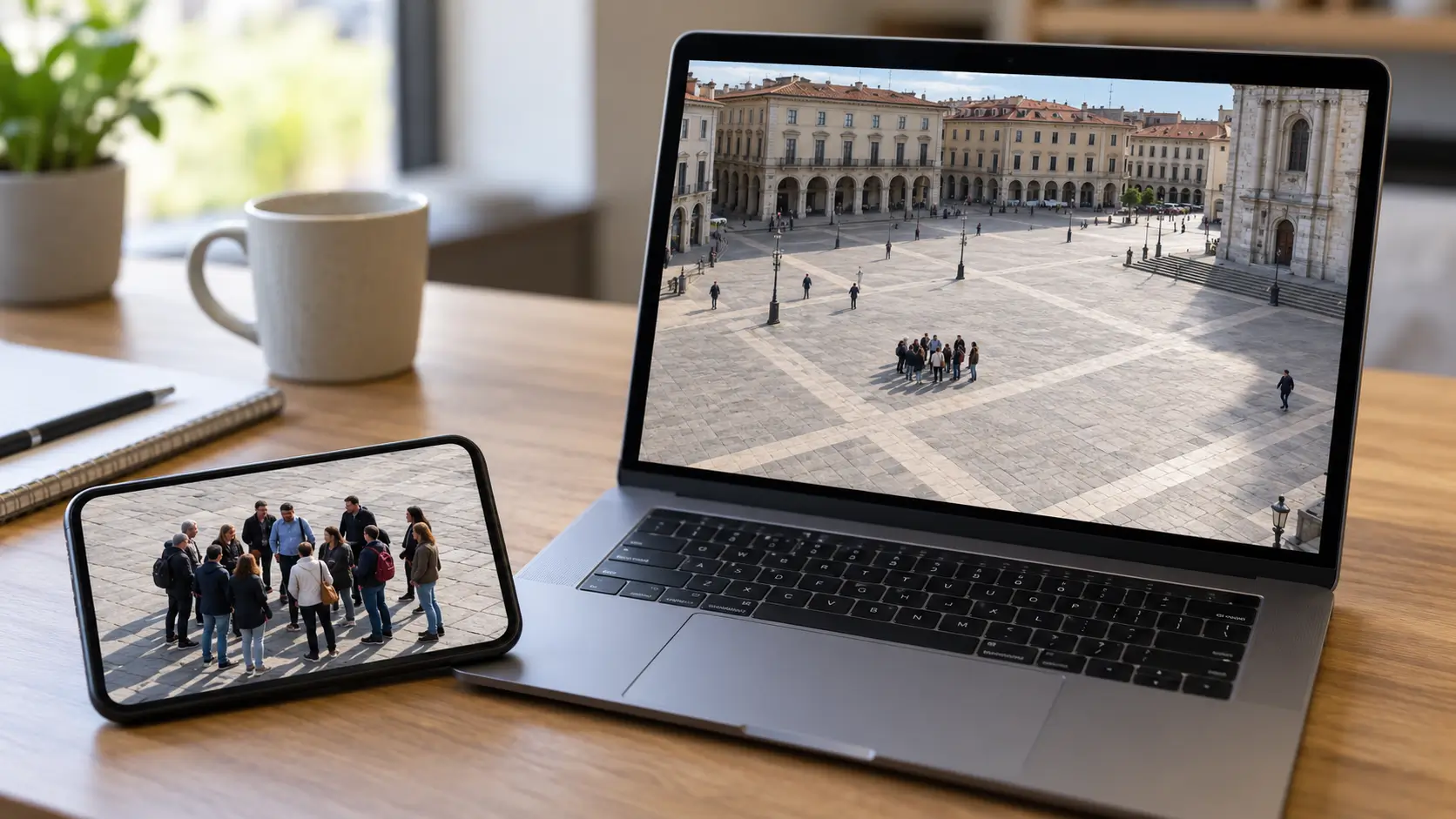
Two posts can contain the same photo and lead to different conclusions depending on context: the time, location, and what happened before or after the image was taken.
Many misleading claims rely on real material placed in a false setting, not invented material. That is why verification includes both authenticity (“is this real media?”) and context (“does it show what the caption claims?”).

Why misinformation spreads
Attention triggers: emotion, urgency, identity
Misinformation is often designed to trigger quick reactions: fear, anger, pride, outrage, or urgency (“share now,” “they are hiding this,” “before it is deleted”).
These cues push people toward forwarding rather than checking. A useful student habit is to treat urgent sharing prompts as a signal to slow down.
Repetition and familiarity
Repetition can change how a claim feels. Research reviews describe the “illusory truth effect,” where repeated exposure can increase belief, including for misinformation.
On social platforms, repetition comes from reposts, stitched videos, screenshots of screenshots, and automated amplification. UNICEF also notes that bots can flood social media with repeated false stories.
Mixed media: screenshots, clips, and edited context
Screenshots and short clips are persuasive because they seem like “proof.” They also remove context: the full article, the earlier segment of a speech, the original date, or the source account. Many verification mistakes happen when a student treats a screenshot as the original record.
The student verification routine
This routine is designed to work in under five minutes for many posts, and longer when a claim will be used in an assignment.
Step 1: Pause and name the claim
Write one sentence: “This post claims that ___.”
Then list what would make it true: a report, an official statement, original data, or full footage. This helps separate the claim from the presentation.
Helpful student prompts:
-
Is this a factual claim, an opinion, or a prediction?
-
Does it name a time, place, person, study, or event that can be checked?
-
What would count as evidence?
Step 2: Identify the source behind the post
Look past the repost:
-
Who published it first (account, channel, site)?
-
Is it a news outlet, an organization, a personal account, or an anonymous page?
-
Does it link to an original document, or only to other posts?
If the post has no clear publisher or origin, treat it as unverified until you can find one.
Step 3: Use lateral reading to check reputation
Lateral reading means leaving the page and opening new tabs to see what other trusted sources say about the site or account. Educational materials on civic reasoning teach students to investigate “who is behind” unfamiliar sources using this approach. Research comparing expert evaluators notes that professional fact-checkers often read less on the page and check more across the web.
Student moves that fit school settings:
-
Search the organization name plus “about,” “funding,” “controversy,” or “corrections.”
-
Look for an “About” page with real names and contact information.
-
Check whether other reputable outlets cite the source as reliable.
Step 4: Find better coverage across outlets
If the claim is newsworthy, independent reporting often exists. UNICEF suggests checking whether reliable sources discuss the same story. If only one unknown site carries the story, treat it as unconfirmed.
What “better coverage” can look like:
-
A reputable news report that links to original documents
-
A government or university page describing the event
-
A peer-reviewed paper (for scientific claims)
-
A reputable fact-check that shows evidence and methodology
Fact-check organizations vary in quality. The IFCN Code of Principles emphasizes transparency and standards for signatories, which can help when deciding which fact-check sources to trust.
Step 5: Trace to the earliest reliable source
Tracing means locating the original context:
-
For quotes: find the full interview, transcript, or official statement.
-
For statistics: find the report or dataset, not a reposted chart.
-
For images: find where the image first appeared and what it originally described.
This logic matches the “Trace claims, quotes, and media to the original context” move in the SIFT method.
A student-friendly tracing checklist:
-
Can you locate a primary source (document, recording, dataset)?
-
Does the primary source match the caption’s claim?
-
Does the post remove important qualifiers (time range, location, sample size)?
Step 6: Verify images and video basics
Image and video verification does not require advanced tools. Start with simple checks:
Images
-
Reverse image search: upload the image or paste its URL to find earlier uses. Training resources for journalists include reverse image search for verification.
-
Look for older matches: the same photo attached to a different event is a common red flag.
-
Check cropping: cropped images can remove signs, banners, or other context clues.
Video
-
Find a longer version: short clips may omit what happened before or after.
-
Search key frames: take a screenshot and reverse-search it.
-
Compare details: weather, language, uniforms, landmarks, and signage.
If you cannot verify the media, treat it as unconfirmed evidence and avoid using it as proof in assignments.
Step 7: Decide: cite, share with context, or stop
Your decision depends on your purpose:
-
For assignments: cite only sources you can identify and cross-check; add a short verification note in your draft.
-
For sharing: if you are not confident, stop. If you share for discussion, label uncertainty and include the best coverage you found.
-
For group chats: encourage a norm of “source-first” posting.
A simple decision rule: if the origin is unclear or independent confirmation is missing, do not treat the claim as established fact.
How to evaluate sources for schoolwork
Authority and expertise in context
Information literacy frameworks note that authority depends on context: what counts as “authoritative” varies by topic and need. A student choosing sources can apply that idea in plain terms:
-
For chemistry: peer-reviewed articles, textbooks, and university materials often rank above personal blogs.
-
For local events: a primary source (official notice, direct statement) plus reputable reporting may be appropriate.
-
For lived experience: first-person accounts can be evidence for experiences, not for broad factual claims without support.
Evidence quality: primary vs secondary
A quick distinction helps:
-
Primary sources: original data, official records, direct interviews, full videos, research papers.
-
Secondary sources: articles that explain or interpret primary sources.
-
Tertiary sources: summaries (some encyclopedias, study guides).
For most school tasks, a strong approach is: locate at least one primary source and use secondary sources for explanation and context.
Dates, versions, and updates
Misinformation often reuses older content to imply a new event. Fact-check guidance highlights checking dates and whether an old story is being presented as current. Students can also check:
-
publication date and update notes
-
whether screenshots hide the date
-
whether a repost omits the year
AI and synthetic media: what changes, what stays the same
What AI can generate
AI systems can generate realistic text, images, audio, and video. Technical reports describe risks to trust, safety, and credibility when synthetic content is used without transparency. UNICEF also notes that modern AI can create lifelike deepfakes and that repeated bot-driven posting can make a false story appear widely accepted.
For students, the key point is not “AI makes everything fake.” The key point is: appearance is a weak signal. Verification relies on source, evidence, and context.
Provenance signals and their limits
Provenance means information about where content came from and how it was edited. NIST discusses approaches such as provenance tracking and labeling, while also noting limits and risks of false confidence when context is manipulated.
Some initiatives develop standards for content provenance. The Coalition for Content Provenance and Authenticity (C2PA) describes an open technical standard for establishing origin and edits, often discussed under “Content Credentials.”
Student takeaway: provenance signals can help, but they do not replace source evaluation. A verified-origin clip can still be presented with a misleading caption.
Practical student safeguards
-
Treat AI-generated images and audio as “unverified” unless you can trace them to a reliable publisher with evidence.
-
Prefer primary documentation: full speeches, official PDFs, datasets, and full-length recordings.
-
Use “context checks” even when content looks polished.
High-stakes claims
Health and science
Health misinformation can cause harm when people act on it. Public resources recommend asking clear questions about who runs a site, what evidence is used, and whether claims are supported by credible sources.
Student rule for health claims in assignments:
-
Use reputable health agencies, medical libraries, and peer-reviewed research.
-
Avoid relying on influencer posts as evidence.
-
If you are making personal health decisions, consult qualified professionals; this guide is informational and focused on media evaluation.
Emergencies, safety, and scams
During emergencies, false guidance can spread fast. WHO’s definition of an “infodemic” highlights how mixed-quality information can make it harder to find trustworthy guidance during outbreaks.
AI-enabled impersonation has also appeared in fraud cases, which supports a cautious stance toward urgent requests delivered through unfamiliar channels.
Student safety habit: confirm urgent claims through official channels or reputable reporting before acting or forwarding.
Classroom and study practice
Fast drills for daily use
-
One-minute claim rewrite: students rewrite a post into a single factual sentence and list what evidence would confirm it.
-
Lateral reading sprint: students spend three minutes finding who funds or runs a source and report what they learned.
-
Image origin hunt: students reverse-search an image and record the earliest credible match.
Longer assignments and citation hygiene
A simple “verification notes” format students can paste into drafts:
-
Claim used:
-
Source used:
-
Cross-check: (2nd source + what matched)
-
Media check: (reverse search result or “not used as evidence”)
-
Remaining uncertainty:
This reduces accidental citation of screenshots or reposts with unclear origins.
Building resilience with prebunking and games
Some educational approaches focus on building resistance before misinformation appears (“prebunking”). A practical guide developed with research partners describes prebunking as a way to build preemptive resilience to misleading and manipulative content.
Other research has evaluated “inoculation” style games, including the Bad News game, as a way to teach common manipulation techniques.
Classroom use guideline: treat games and prebunking activities as practice for identifying tactics, then connect them back to evidence checks and sourcing.
Conclusion
Media literacy for students is not about memorizing a long list of rules. It is a repeatable habit: pause, identify the claim, check who is behind it, compare coverage, trace to original context, and verify media before treating it as evidence. Educational guidance highlights lateral reading and routines such as SIFT because they match how skilled evaluators work across sources rather than trusting a single page. As AI-generated content becomes more common, appearance becomes less reliable as a cue, which makes source checks, evidence checks, and context checks more important. For schoolwork and everyday sharing, the safest default is to treat unclear-origin claims as unverified until you can confirm them through credible sources.
FAQs
What is the difference between misinformation and disinformation?
Disinformation is false information created to mislead. Misinformation is false or inaccurate information that people may share without realizing it is inaccurate.
What is lateral reading, and why do teachers recommend it?
Lateral reading is checking a source by leaving the page and seeing what other trusted sources say about it. Teaching materials describe it as a way to identify who is behind a site and assess trustworthiness.
What is the SIFT method?
SIFT is a short evaluation routine: Stop, Investigate the source, Find better coverage, and Trace claims, quotes, and media to original context.
How can I verify a photo that looks suspicious?
Use reverse image search to find earlier uses of the image, then check whether older matches attach the image to a different event or date. Journalist training resources include reverse image search as a standard verification step.
How should students handle health claims found on social media?
Use reputable health libraries and agencies, and apply evaluation questions about who runs the site, evidence quality, and whether claims are supported by credible sources.
Reference
-
UNESCO — Media and Information Literacy (webpage).
-
UNICEF Europe and Central Asia — A quick guide to spotting misinformation (Feb 10, 2025).
-
World Health Organization — Infodemic (topic page).
-
Wineburg, S. (with McGrew, S.) — Reading Less and Learning More When Evaluating Digital Information (Teachers College Record / SAGE, 2019).
-
Civic Online Reasoning (Digital Inquiry Group) — Intro to Lateral Reading (lesson).
-
Caulfield, M. — The SIFT Method (Pressbooks chapter).
-
ACRL (American Library Association) — Framework for Information Literacy for Higher Education.
-
FactCheck.org — How to Spot Fake News (Nov 18, 2016).
-
NIH Office of Dietary Supplements — How To Evaluate Health Information on the Internet: Questions and Answers.
-
MedlinePlus (U.S. National Library of Medicine) — Evaluating Health Information.
-
NIST — Reducing Risks Posed by Synthetic Content (NIST AI 100-4, 2024).
-
C2PA — Coalition for Content Provenance and Authenticity (site/about).
-
IFCN (Poynter) — IFCN Code of Principles (webpage).
-
University of Cambridge / BBC Media Action / Jigsaw — A Practical Guide to Prebunking Misinformation (PDF).
-
Udry, J., & Barber, S. J. — The illusory truth effect: A review of how repetition increases belief in misinformation (Current Opinion in Psychology, 2024).



Comments 0
No comments yet. Be the first to start the conversation.