



Why Nepal’s Hydropower Expansion Still Depends on Policy Repair
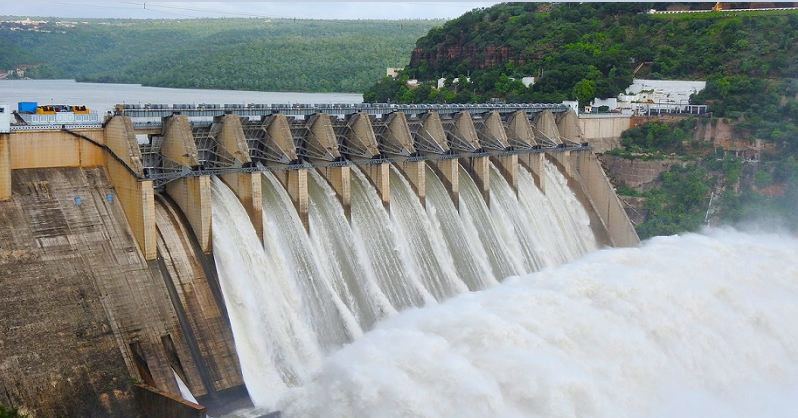
Nepal has moved from chronic power shortage toward a period of faster electricity growth, yet the central question has changed. The issue is no longer only whether the country has enough rivers, investor interest, or headline targets. The issue is whether Nepal can match private investment with dependable policy, faster project approvals, stronger transmission planning, and a market that can absorb more power across the year. The World Bank’s 2025 economic memorandum puts the resource case in plain terms: Nepal has about 83,000 MW of hydropower potential, with about 42,000 MW viewed as economically viable. By July 2025, installed electricity capacity had reached 3,878 MW, which shows major progress but also a wide gap between potential and delivery.
This matters now because Nepal has moved into a more demanding phase of sector growth. NDC 3.0 sets a renewable electricity target of 14,031 MW by 2030 and 28,500 MW by 2035. Republica’s reporting on the cabinet-backed energy roadmap adds that the 2035 plan is tied to about Rs 6.231 trillion in investment and a split between domestic use and exports. In other words, future growth is not a generation-only story. It is also a grid story, a demand story, and a trade story.
The strongest reading of the current moment is that Nepal’s private investors have already shown they can move capital into hydropower, but policy inconsistency still raises costs and delays decisions. Reporting tied to IPPAN says private investment drives over 90 percent of hydropower projects and has mobilized more than Rs 1.31 trillion in the sector. Recent sector reporting and academic reviews, on the other hand, show a familiar set of blocks: disputed power purchase agreement policy, multi-agency approvals, protected-area restrictions, capital-market friction, and seasonal imbalance between wet-season supply and dry-season demand.
Answer Summary
Nepal’s hydropower expansion is now held back less by lack of investor interest and more by policy execution. Private capital has carried much of the recent buildout, but the next stage depends on three linked shifts: bankable power purchase rules, quicker and clearer approvals, and a system plan that joins generation with transmission, storage, domestic demand, and exports. Targets for 2030 and 2035 are large, yet their credibility rests on delivery conditions rather than ambition alone.
Table of Content
- Why Nepal’s Hydropower Expansion Still Depends on Policy Repair
- What has the private sector already changed?
- Why is Nepal still far below its potential?
- Which bottlenecks now matter most?
- Why do run-of-river projects dominate, and what are their limits?
- What would a workable reform agenda look like?
- How should readers judge the next phase?
- Conclusion
- FAQs
Key Takeaways
-
Private investment now carries most of Nepal’s hydropower project pipeline.
-
Installed capacity has grown fast, though it remains small beside Nepal’s resource base.
-
Power purchase agreement policy affects project finance, not only utility procurement.
-
Approval delays still arise from coordination, environmental review, and protected-area rules.
-
Run-of-river growth alone does not solve winter shortage and monsoon surplus.
-
Transmission, domestic demand, storage, and export planning need to rise together.
What has the private sector already changed?
The private sector has changed both the scale and pace of hydropower development in Nepal. A January 2026 report citing an IPPAN study says private investors drive over 90 percent of hydropower projects and have mobilized more than Rs 1.31 trillion in the sector up to fiscal year 2024/25. IPPAN also says projects totaling 3,200 MW are under construction and another 3,500 MW are in financial closure. Even with the caution that these are sector-body figures, they show how strongly Nepal’s current buildout depends on private capital.
How much capital and capacity has private investment added?
Private investment has added both operating capacity and a large forward pipeline. Nepal’s installed capacity reached 3,878 MW in July 2025, and the private sector accounts for the bulk of new project development in the reporting cited above. The core point is less about one exact percentage than about the structure of the sector: recent growth has not been driven by public investment alone.
Why this shift matters beyond generation
This shift matters because hydropower now sits inside Nepal’s wider growth strategy. The World Bank presents hydropower as one of the country’s main long-run economic opportunities, while India’s official commerce brief says the 2024 long-term power trade agreement envisages up to 10,000 MW of exports from Nepal to India over the next decade. The first Nepal-to-Bangladesh transaction through the Indian grid, marked at up to 40 MW, shows that regional trade is no longer a distant idea. Private capital is central in that setting because public finance alone is unlikely to carry generation, grid buildout, and export preparation at the same time.
Why is Nepal still far below its potential?
Nepal remains far below its hydropower potential because megawatts on paper do not move into operation without finance, clearances, transmission, and dependable buyers. The World Bank’s 83,000 MW and 42,000 MW figures show the scale of the resource. The 3,878 MW installed-capacity figure shows that delivery has accelerated, yet the gap between potential and operating power remains large.
What do the 2030 and 2035 targets say?
The clearest current national targets come from NDC 3.0 and the 2035 roadmap. NDC 3.0 sets 14,031 MW by 2030 and 28,500 MW by 2035. Republica’s reporting on the roadmap says the same 2035 plan carries an investment estimate of Rs 6.231 trillion and is split between domestic consumption and export volume. These targets show intent, though they do not settle whether project-level conditions are ready.
Why installed capacity is only part of the story
Installed capacity is only part of the story because Nepal’s power system faces a seasonal mismatch. Heliyon’s 2024 review says Nepal has developed a pattern of winter shortage and monsoon surplus, and it calls for more attention to storage-type projects and energy banking. The JUEM article on Nepal’s hydropower sector reaches a similar conclusion from the project side: development is slowed by coordination gaps, financing pressure, geology, and infrastructure constraints. A system can add capacity and still face shortage or spill if timing, transmission, and demand do not line up.
Which bottlenecks now matter most?
The main bottlenecks are power purchase agreement policy, approvals across agencies, protected-area restrictions, and capital-market friction. These issues matter because they shape whether projects reach financial close, stay on schedule, and connect to buyers on usable terms.
Why power purchase agreement policy shapes bankability
Power purchase agreement, or PPA, policy shapes bankability because lenders and equity investors need a credible revenue path before they release money into construction. In June 2025, Republica reported that the government amended a budget clause after controversy over a take-and-pay provision in hydropower. A related report said the government was under pressure from sector bodies and lawmakers to revoke the move. Whether one reads the episode as a policy mistake or a procurement debate, the financial signal was clear: uncertainty around PPAs changes how projects are valued.
Why approvals and protected-area rules still slow projects
Approvals still slow projects because hydropower cuts across land, forests, rivers, roads, and environmental review. The JUEM article identifies multi-sector coordination as a major challenge. On top of that, Mongabay reported in January 2025 that Nepal’s top court struck down measures that had opened protected areas to infrastructure development, which raised new uncertainty for hydropower and related works in conservation zones. When a project meets both sector regulation and conservation law, delays in one part of the chain can stall the whole project.
Why IPO and rights-share friction matters
IPO and rights-share friction matters because Nepal’s hydropower finance model often depends on staged equity mobilization, public issuance, and bank lending that moves in sequence. Rising Nepal reported in February 2025 that policymakers and private stakeholders argued hydropower IPO and rights-share issuance should not be halted. That dispute was not a side issue. When share issuance slows, project costs keep running while financing remains incomplete.
Why do run-of-river projects dominate, and what are their limits?
Run-of-river projects dominate because they fit the project structure Nepal has used most often for private development. Their limit is that they do not solve seasonal supply imbalance on their own. Heliyon’s review points to the country’s pattern of wet-season surplus and winter deficit, which means the generation mix matters as much as the headline capacity number.
Why private investors leaned toward run-of-river schemes
Private investors leaned toward run-of-river schemes because they sit more easily inside Nepal’s existing financing and approval environment than large storage projects do. The academic literature points to high capital needs, coordination problems, and infrastructure gaps, all of which are heavier for large and storage-based schemes. In that setting, the project type that is easier to finance and move through the system tends to dominate the pipeline.
Why storage, transmission, and demand now matter more
Storage, transmission, and demand now matter more because the next challenge is system balance, not only project count. Heliyon argues for more storage-type hydropower and energy banking. The 2035 roadmap also links future output to transmission lines, substations, domestic use, and exports. A power system built mainly on run-of-river plants needs stronger balancing tools than it did when the country was focused only on raising supply from shortage levels.
What would a workable reform agenda look like?
A workable reform agenda would make approvals faster and more predictable, restore confidence in PPA policy, build transmission ahead of generation bottlenecks, and grow domestic demand alongside exports. That is the mix implied by the roadmap, the academic literature, and regional trade arrangements already on record.
What a single-window approval system would need to do
A single-window approval system would need to do more than collect documents in one office. It would need fixed timelines, public tracking, and clear rules for which agencies decide what. The JUEM article supports the underlying problem by pointing to coordination failures and sector overlap. A useful test for any approval reform is simple: does it reduce the time and uncertainty between licensing, environmental clearance, land access, financing, and construction?
Why domestic demand and export planning must move together
Domestic demand and export planning must move together because surplus power has value only when there is a buyer and a path to deliver it. Republica’s roadmap report says the 2035 plan splits output between domestic use and export. India’s official commerce brief records the up-to-10,000 MW trade arrangement, while the first Nepal-Bangladesh flow through India’s grid shows that regional sales are possible. Domestic industrial demand, electrification, and export contracts are not rival paths. They are parts of the same market puzzle.
Where private participation may widen next
Private participation may widen next in storage, transmission-linked investment, and power trade support. The roadmap’s scale and the IPPAN pipeline figures suggest the sector is moving beyond a first phase centered on run-of-river generation alone. The push for a larger system, linked to exports and stronger year-round use, gives private capital a wider field than before.
How should readers judge the next phase?
Readers should judge the next phase by delivery conditions rather than headline promises. Nepal already has large targets, visible investor interest, and export openings. The harder test is whether projects become easier to finance, easier to clear, and easier to connect to year-round demand.
What policymakers should watch
Policymakers should watch five operating signals: stable PPA rules, faster approvals, transmission buildout, domestic load growth, and financing flow. These are the links between national targets and project completion. When any one of them weakens, the rest of the chain slows with it.
What investors, students, and researchers should watch
Investors should watch bankability and rule stability. Students and researchers should watch how hydropower policy intersects with environmental law, federal governance, infrastructure finance, and regional diplomacy. Nepal’s energy sector is now a useful case of how resource wealth depends on institutions as much as geography.
Conclusion
Nepal’s hydropower sector has already changed in one clear way: private investors now carry much of the project pipeline. The country has also moved into a stronger regional trade position, with a long-term power arrangement with India and a first Nepal-to-Bangladesh flow through the Indian grid. Yet the next stage rests on policy execution more than on new slogans or new targets.
A balanced reading of the evidence leads to one conclusion. Nepal’s future hydro growth will depend on whether PPA policy stays credible, approvals become more predictable, transmission keeps pace with generation, and storage and demand planning catch up with the run-of-river-heavy mix already built. That is the standard by which the 2030 and 2035 targets should be judged.
Informational note:
This article is for general information and does not provide investment, legal, or policy advice.
FAQs
1) What is the main role of the private sector in Nepal’s hydropower growth?
The private sector is the main source of project development and capital mobilization in Nepal’s hydropower pipeline. Recent reporting tied to an IPPAN study says private investors drive over 90 percent of hydropower projects and have mobilized more than Rs 1.31 trillion in the sector.
2) Why did the take-and-pay issue matter so much?
The take-and-pay issue mattered because it affected bankability. When PPA policy looks uncertain, lenders and developers reassess project revenue risk, which can slow financing and construction. Republica reported that the government later revised the disputed budget clause after criticism.
3) What is Nepal’s current 2035 electricity target?
Nepal’s clearest current 2035 target in official and policy reporting is 28,500 MW of renewable electricity generation capacity. That figure appears in NDC 3.0 and in reporting on the cabinet-backed energy roadmap.
4) Why does Nepal still face winter shortage when capacity is rising?
Nepal still faces winter shortage because much of its generation mix is run-of-river, which produces more during the monsoon and less in the dry season. Heliyon’s 2024 review describes this as a pattern of monsoon surplus and winter deficit.
5) Can Nepal export electricity at scale?
Nepal has a growing export path, though scale still depends on project completion, grid capacity, and stable market rules. India’s official commerce brief says the 2024 long-term power trade agreement envisages up to 10,000 MW of exports from Nepal to India over the next decade, and Nepal has already started power trade to Bangladesh through India’s grid.
Resources
-
User-provided Nepali source, translated into English for analysis and context.
-
World Bank. Unlocking Nepal’s Growth Potential: Nepal Country Economic Memorandum. 2025. World Bank.
-
United Nations Framework Convention on Climate Change. Nationally Determined Contribution (NDC) 3.0. 2025. UNFCCC.
-
South Asia Subregional Economic Cooperation. Installed Electricity Capacity for Nepal Reaches 3,878 MW. 2025. SASEC.
-
Republica. Nepal’s Roadmap to Produce 28,500 MW by 2035. 2025. Nagarik Network.
-
New Business Age. Over 90% of Hydropower Projects Driven by Private Investment: IPPAN. 2026. New Business Age.
-
Independent Power Producers’ Association, Nepal. Private Sector Ready for Power Trade. 2024. IPPAN.
-
Republica. Budget Clause Amended Following “Take and Pay” Hydropower Dispute. 2025. Nagarik Network.
-
Republica. Govt Under Pressure to Revoke Mandatory Take-and-Pay Policy for Hydropower. 2025. Nagarik Network.
-
Mongabay. Nepal’s Top Court Strikes Down Law Allowing Development in Protected Areas. 2025. Mongabay.
-
Rising Nepal. Issuance of Hydropower IPO Emphasised. 2025. The Rising Nepal.
-
Aryal, Saugat, et al. Evolution and Future Prospects of Hydropower Sector in Nepal. 2024. Heliyon.
-
Bhatt, Pawan, and Khem Raj Joshi. Hydropower Development in Nepal: Status, Opportunities and Challenges. 2024. Journal of UTEC Engineering Management.
-
Embassy of India, Kathmandu. Commerce Wing Brief. 2025 update. Government of India.
-
Ministry of External Affairs, India. Inauguration of First Trilateral Power Transaction from Nepal to Bangladesh through the Indian Grid. 2024. Government of India.
-
Ministry of External Affairs, India. Visit of Prime Minister of Nepal Rt Hon’ble Mr. Pushpa Kamal Dahal “Prachanda” to India. 2023. Government of India.





Comments 0
No comments yet. Be the first to start the conversation.