



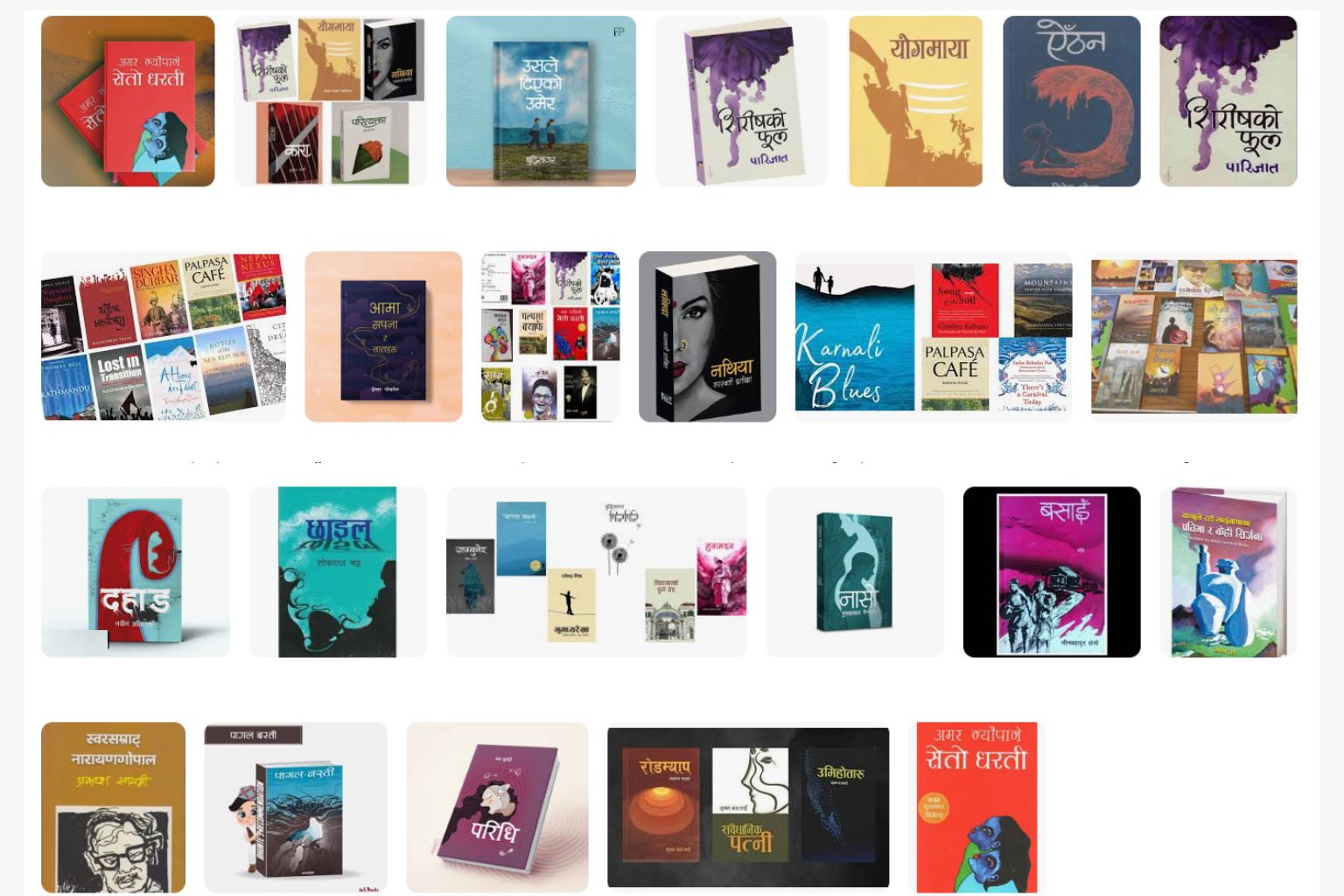
Nepali Literature and Letters: A Critical Analysis of 100 Unforgettable Works
A society’s vitality is determined by its “Intellectual Hunger.” The market stacking up piles of books does not automatically raise intellectual standards.
From the standpoint of an editor and a “student of letters” who has spent more than a decade in close companionship with the written word, Nepal’s current book market appears to be at a stage of “quantitative boom” but “qualitative transition.” We live in the information age, yet we are experiencing a crisis of knowledge.
Developing the patience to read a book over two hours or two days, for a generation that forms opinions after watching a two-minute video on social media, has become as difficult as chewing iron flakes.
However, despair alone is not a solution. Every era has a serious reading public (Serious Readers) that seeks truth and facts instead of following noise. Our responsibility is to guide that readership in the right direction.
Surveys conducted across different media have offered some signals, but from the perspective of a subject matter expert, such lists are not “final truth,” but rather a “starting point.”
This is an analytical article on distinctive works that must reach your hands, must shake your mind awake, and can help you understand Nepali soil, society, psychology, and the future. This is an audit of our civilization’s “intellectual property”. Let us begin this serious journey through Nepali letters.
Table of Content
- Nepali Literature and Letters: A Critical Analysis of 100 Unforgettable Works
- A Window to Understand Nepal (Historical and Social Documents)
- A Reflection of Life (Autobiographies and Memoirs)
- The World of Fiction (Novels: The Mirror of Society)
- The Ocean of Emotion (Poetry, Songs, and Drama)
- The Female Gaze
- The New Generation and Young Adult Trends
- Conclusion
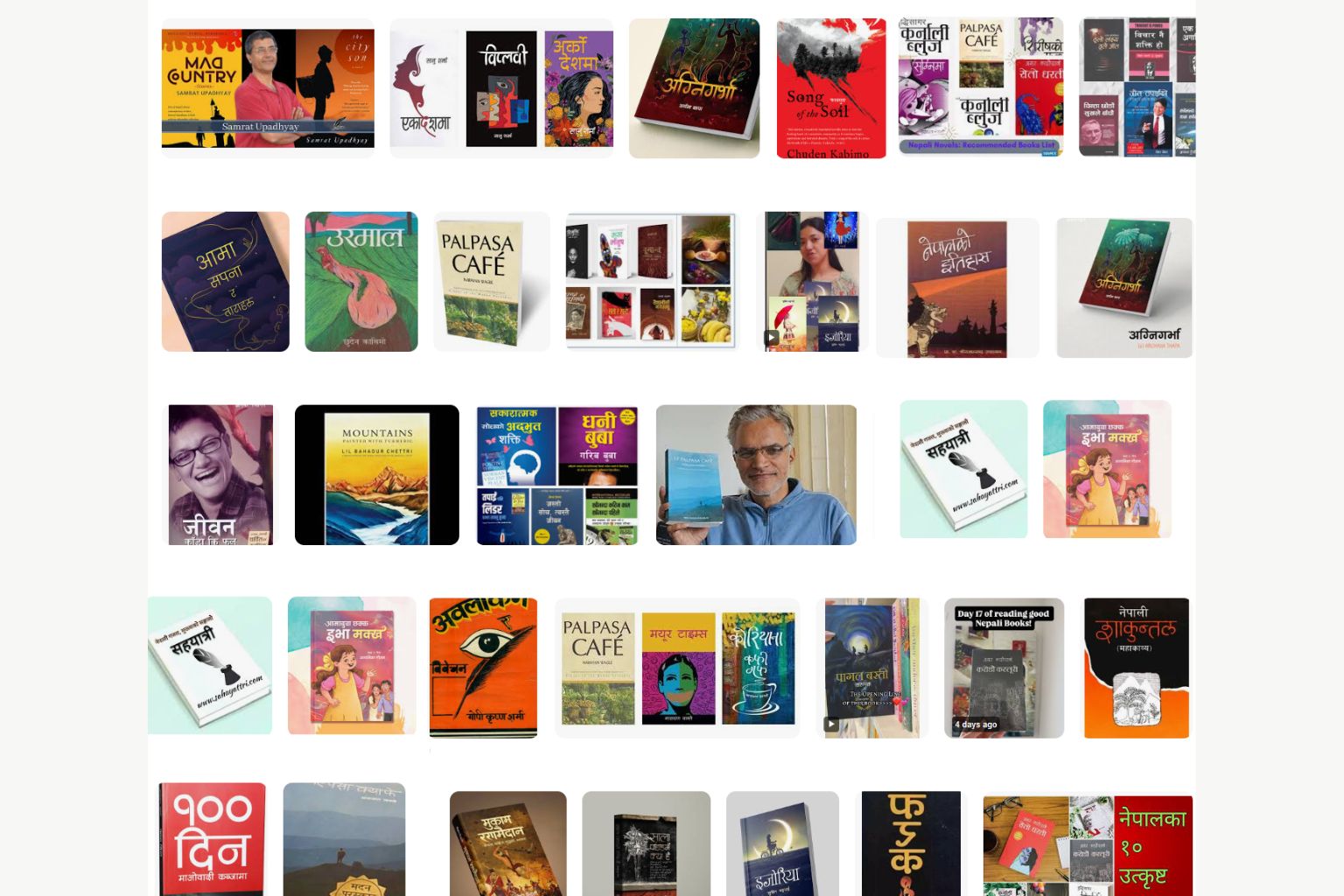
A Window to Understand Nepal (Historical and Social Documents)
Foreigners may have portrayed Nepal as a “peaceful,” “wonderful,” or “poor” country. But Nepal’s internal complexity, the chemistry of the caste system, geopolitical compulsions, and palace conspiracies cannot be seen through a foreign lens.
To understand Nepal from the heart, we need the “original research” of Nepali scholars themselves.
The books recommended in this section are not merely for reading; they are “reference works.”
त्यस बखतको नेपाल (Sardar Bhim Bahadur Pandey)
This is not just a book; it is an administrative and social “MRI” of Nepal during the Rana era. In a culture that tends to only condemn Rana rule, Sardar Pandey presents a balanced view of the administrative efficiency, justice system, and social order within it. Published in five parts, this work is essential not only for students of history but also for policymakers.
सबै जातको फूलबारी (Dor Bahadur Bista)
Anthropologist Dor Bahadur Bista examines Nepal’s ethnic diversity not only emotionally, but structurally. While his other book भाग्यवाद र विकास (Fatalism and Development) attacks social inertia in Nepali society, this book explains the beauty and complexity within Nepal’s diversity.
जनरल भीमसेन थापा: र यिनलाई मैले जस्तो देखें (Chittaranjan Nepali / Baburam Acharya)
Some call Bhimsen Thapa a nationalist; others call him ambitious. These two historians’ books do not only narrate Thapa’s rise and tragic end; they also show, with evidence, how ruthless the power struggle was in Nepal at the time. For researchers, these works are unmatched in demonstrating the importance of “footnotes.”
असहमति (Saurabh)
Saurabh is skilled at breaking down established narratives in Nepal’s intellectual sphere. This book helps replace the “traditional spectacles” through which history, culture, and politics are often viewed. One may not fully agree with Saurabh’s arguments, but he certainly forces the reader to think.
(Other books in the recommendation list: जंगबहादुरको बेलायत यात्रा, राजा राष्ट्रियता र राजनीति, बदलिँदो नेपाली समाज — these books dissect Nepal’s transitional society.)
A Reflection of Life (Autobiographies and Memoirs)
Nepali society long had a high wall of “privacy.” Publicly revealing one’s weaknesses was considered a weakness in itself.
But in the last two decades, autobiographical writing surged. Many of these texts are filled with self-praise, while a few have truly become “documents.” The works recommended here carry a high degree of honesty).
आत्मवृतान्त (Bishweshwar Prasad Koirala)
B.P. Koirala’s work is not only political history but also the psychological study of a sensitive human being. He does not hide his sexual life, weaknesses, or political dilemmas. It is incomparable for understanding the internal story of Nepal’s democratic movement and the human side of a statesman.
जीवन काँडा कि फूल (Jhamak Ghimire)
This book is a manifesto of victory over physical disability. Written with toes by Jhamak, affected by cerebral palsy, it tells the story of human resilience. This Madan Puraskar-winning work has the power to make readers forget their small personal sorrows.
चिना हराएको मान्छे (Hari Bansha Acharya)
This book reveals how much deep pain existed in Haribansha’s life behind his public identity as a comedy artist. In particular, the context of losing his wife and the struggles of childhood can bring tears to the reader’s eyes. Its lucid style made it highly popular among general readers.
आत्मालाप (Jagdish Ghimire)
आत्मालाप was written while facing cancer, observing life and death up close. It carries a philosophy of life. Instead of a traditional detachment that says “the body is a garment we leave behind,” it offers the awareness of “how to live meaningfully while alive.”
(Special mention: Rukmangat Katuwal’s autobiography is important for understanding the relationship between military leadership and the palace, and Binod Chaudhary’s autobiography is important for understanding the formula of business success and Nepal’s web of crony capitalism.)
The World of Fiction (Novels: The Mirror of Society)
Literature is not only a mirror of society; it is also a roadmap for the future. In the Nepali novel tradition, the following works have served as milestones (Milestone). These books bring together artistry, philosophy, and social reality.
The Classics & Experimental
शिरिषको फूल (Parijat)
Parijat is credited with introducing existentialism and absurdism into Nepali literature. Through the characters “Suyogbir” and “Sakambari,” the author performs a world-class dissection of life’s meaninglessness and human ego. This novel is a masterpiece of Nepali literature.
माधवी (Madan Mani Dixit)
This is not merely a novel; it is an encyclopedia of Eastern civilization. This massive work, written on Vedic society, slavery, and women’s existence, demands patience. Written after 26 years of research, माधवी takes the reader nearly 3,000 years back in time.
घामका पाइलाहरू (DhaChh Gotame)
This work depicts Kathmandu’s indigenous Newar community, the Rana-era atmosphere, and middle-class character life. Rather than grand political revolutions, its speciality lies in subtle revolutions inside kitchens and courtyards.
अलिखित (Dr. Dhruv Chandra Gautam)
This novel uses regionalism and magic realism. It tells the story of a fictional Tarai village, “Birahinpur.” It speaks for the ground-level people whose histories were never written.
Contemporary & Realistic
कर्नाली ब्लुज (Buddhisagar)
Buddhisagar moved Kathmandu-centric fiction toward Sudurpashchim, into Kalikot and Kailali. This father–son relationship novel makes readers cry. Its key strength is its “visual language”; reading it feels like watching a film.
उलार (Nayan Raj Pandey)
To see the discrimination of state power through the eyes of a rickshaw driver in Nepalgunj, one must read उलार. Nayan Raj’s craft is showing how exploitation happens without using the word “exploitation.” The work shows how political change throws ordinary people into “ular” (imbalance).
पल्पसा क्याफे (Narayan Wagle)
Set against the backdrop of the People’s War, this novel accounts for the human cost of conflict. Its mix of journalistic style and fiction made it extremely popular among youth and marked the beginning of the “bestseller” era in Nepal’s book market.
(Other must-reads: Indra Bahadur Rai’s आज रमिता छ to understand Darjeeling life, Lain Singh Bangdel’s मुलुक बाहिर to understand diaspora pain, and Sarubhakta’s पागल बस्ती to understand philosophical love.)
The Ocean of Emotion (Poetry, Songs, and Drama)
Nepali society itself is poetic. In every joy and sorrow, songs and poems are intertwined.
घुम्ने मेचमाथि अन्धो मान्छे (Bhuppi Sherchan)
Bhuppi Sherchan is a trendsetter of Nepali poetry. His strength lies in satirizing in the language of the people instead of using complex Sanskrit vocabulary. The poem line “यो हल्लै हल्लाको देश हो” feels even more relevant today.
मुना मदन (Laxmi Prasad Devkota)
This epic poem is revered in almost every Nepali home like the Bible or the Gita. Carrying the humanist message, “A person is made great by the heart, not by caste,” it is the best-selling work in Nepali literature. The magic of its Jhyaure meter is incomparable.
आमाको सपना (Gopal Prasad Rimal)
आमाको सपना is an image of democratic consciousness and revolution. The start of prose poetry and powerful expression made Rimal immortal.
Drama: मसान (Gopal Prasad Rimal) and अन्धवेग (Balkrishna Sama)
To understand Nepali theatre and dramatic literature, the study of Sama and Rimal is necessary. These plays portray women’s rebellion and psychology within the Rana-era and traditional society.
The Female Gaze
Viewing women’s writing in Nepali literature through a “quota” lens is unjust. Their writing is not lesser than men’s; it is often more subtle and sensitive.
लेखककी स्वास्नी (Pragati Rai)
Pragati Rai sharply portrays how patriarchal “writers” and so-called “intellectual” men can be inside the home. This novel exposes “intellectual hypocrisy”.
तुइन (Suresh Pranjali)
(Although this is by a male author, works mentioned here such as ‘Radha’ or ‘Gauri’ are based on women’s sensibility.) Krishna Dharabasi’s ‘Radha’ rewrites the Mahabharata from Radha’s viewpoint, which is a powerful example of feminist consciousness.
फूलको आँखामा (Ani Choying Drolma)
A nun’s life struggle, freedom from domestic violence, and the search for spiritual peace. This book shows the path of forgiveness and love instead of anger and revenge.
The New Generation and Young Adult Trends
To bring today’s “YouTube generation” into reading culture, these books have served as a bridge.
समर लभ (Suvin Bhattarai)
Critics call it “pop literature,” yet it taught millions of youths to hold a book. Its strength lies in its simple portrayal of Kathmandu college life and romantic relationships.
जुकरबर्ग क्याफे (Ashwini Koirala)
A collection of short, simple, readable stories. It is especially suitable for readers with busy lifestyles who prefer short content.
करोडौँ कस्तुरी (Amar Neupane)
This “meta-fiction” imagines the “unlived” sides of artist Haribansha Acharya’s life and inspires youths to identify their dreams.
Conclusion
The list of more than 100 books mentioned above is, in itself, a library. From my long experience, what I have learned is this: reading a book is not only turning pages; it is having a dialogue with the author.
When you read त्यस बखतको नेपाल, you travel to a time 200 years ago. When you read पागल बस्ती, you encounter the madness within yourself.
Suggestions:
-
Make notes
Develop the habit of writing down lines you like while reading. -
Seek diversity
Do not always read only novels. Sometimes read history, sometimes biography, and sometimes books related to economics (such as Sudheer Sharma’s प्रयोगशाला or रक्सौलदेखि मुस्ताङसम्म). -
Prioritize the original
Reading translations is good, but the fragrance of Nepali soil is found in the words of Nepali authors themselves.






Comments 0
No comments yet. Be the first to start the conversation.