



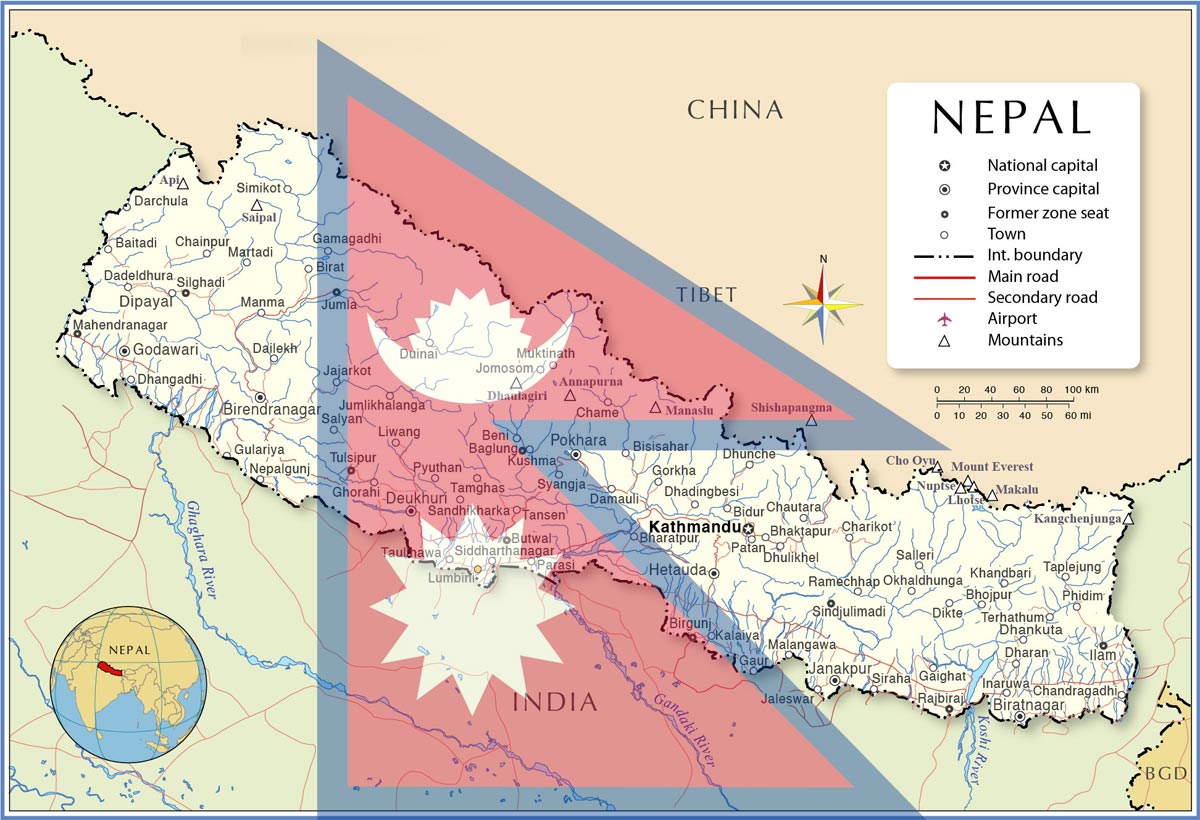
Higher education reform in Nepal is not simply a matter of revising course books or adding new university programs. It requires changes in governance, curriculum design, teaching, research, quality assurance, digital systems, student support, and the relationship between universities and the labour market.
These priorities are already reflected in Nepal’s higher education reform agenda. The Nurturing Excellence in Higher Education Program was designed to strengthen the quality and labour-market relevance of higher education, support collaborative research and innovation, improve governance, expand online learning, and increase access for disadvantaged students.
The need for reform should therefore be discussed through identifiable weaknesses and workable policy responses, not through broad claims that every institution or academic program has failed.
Table of Content
- Main Challenges Facing Higher Education in Nepal
- Priority Areas for Higher Education Reform
- What Reform Should Not Do
- Roles of Key Stakeholders
- Reform Requires Continuity
- Conclusion
Main Challenges Facing Higher Education in Nepal
1. Weak connection between academic programs and employment
A university degree should provide disciplinary knowledge, analytical ability, communication skills, and a foundation for further learning. It should also help students understand how their knowledge can be applied in employment, research, public service, entrepreneurship, or professional practice.
Many academic programs, however, are still criticised for placing greater weight on content coverage and written examinations than on application, investigation, teamwork, and problem-solving. The Government of Nepal’s higher education reform program has treated labour-market relevance as a major priority and has supported programs developed in consultation with employers and industries.
The answer is not to turn universities into short-term training centres. Academic programs must retain theoretical depth while giving students opportunities to apply what they learn through laboratories, fieldwork, projects, placements, case analysis, research, and supervised professional practice.
A broader discussion of skill-based curriculum gaps and reforms in Nepal can help explain why curriculum change must address teaching and assessment as well as course content.
2. Slow and uneven curriculum renewal
Calling an entire curriculum “outdated” is often too broad. Some programs may have revised syllabuses, while others may still rely on content, references, technologies, or assessment methods that no longer meet academic or professional needs.
A credible curriculum review should examine:
-
whether learning outcomes are clearly defined;
-
whether course content reflects current knowledge;
-
whether unnecessary duplication has been removed;
-
whether practical work is properly supervised;
-
whether assessment measures understanding rather than memorisation;
-
whether digital, research, communication, and ethical competencies are included;
-
whether employers, professional bodies, graduates, faculty members, and students are consulted; and
-
whether the curriculum can be delivered with the available staff and facilities.
Reform should not consist of adding new subjects to an already crowded syllabus. Universities need regular review systems that can revise, combine, replace, or remove content when evidence supports the change.
Readers seeking wider background may also consult this overview of Nepal’s higher education policy, structure, and curriculum.
3. Limited practical and research-based learning
Practical education requires more than adding an internship or project title to a syllabus. Students need clear tasks, qualified supervision, suitable facilities, feedback, and assessment standards.
Depending on the subject, practical learning may include:
-
laboratory work;
-
field studies;
-
clinical or professional placements;
-
design projects;
-
data analysis;
-
community-based research;
-
teaching practice;
-
technical demonstrations;
-
business or policy simulations; and
-
supervised internships.
Universities must also protect students from poorly organised placements in which they receive little guidance or perform work unrelated to their academic program.
Research-based learning is equally important. Students should learn how to frame questions, evaluate sources, collect and analyse information, follow ethical standards, and explain the limits of their findings. These abilities are useful in academic research, government, business, professional practice, and community work.
4. Insufficient research capacity
Research is one of the defining functions of higher education, but it requires funding, capable supervisors, ethical review, reliable data, laboratories, libraries, journals, digital access, and time within faculty workloads.
Nepal’s higher education reform program identifies collaborative research and innovation as a separate result area. Its June 2025 implementation report recorded progress in collaborative research awards while also showing that several wider reform targets remained incomplete or under implementation.
Research reform should focus on quality rather than publication numbers alone. Universities need systems that support:
-
transparent and competitive research funding;
-
ethical review and research integrity;
-
collaboration across institutions and disciplines;
-
access to journals, databases, laboratories, and equipment;
-
mentoring for early-career researchers;
-
protection against plagiarism and fabricated data;
-
publication in credible outlets; and
-
the responsible use of research in policy, industry, education, and community services.
Funding formulas should not reward low-quality publication or encourage researchers to use journals with weak editorial standards.
5. Uneven quality assurance
Nepal’s University Grants Commission operates a Quality Assurance and Accreditation system and publishes information on institutions that have received accreditation or reaccreditation. The list shows that quality-assurance processes are active, but accreditation has not yet covered every institution and program.
The World Bank’s June 2025 implementation report stated that accreditation and peer review were progressing, while program accreditation and university-level peer review still required further implementation.
Quality assurance should not become a one-time documentation exercise. It should examine whether an institution:
-
follows its approved curriculum;
-
employs appropriately qualified faculty;
-
conducts fair and timely assessment;
-
provides adequate learning resources;
-
handles student complaints;
-
maintains academic records;
-
supports research integrity;
-
reviews graduate outcomes;
-
publishes accurate institutional information; and
-
acts on weaknesses identified during evaluation.
Students comparing institutions may consult the UGC-based list of QAA-receiving higher education institutions in Nepal. Accreditation status should always be checked against the latest UGC record because accreditation and reaccreditation periods can change.
6. Faculty recruitment, development, and accountability
Higher education quality depends heavily on the people who teach, supervise, assess, conduct research, and manage academic programs.
Reform should support transparent and merit-based recruitment while also giving faculty members access to professional development. Subject knowledge alone does not guarantee effective teaching. Faculty members may need support in:
-
curriculum design;
-
student-centred teaching;
-
assessment methods;
-
research supervision;
-
digital instruction;
-
inclusive education;
-
academic writing;
-
research ethics; and
-
the responsible use of artificial intelligence and other technologies.
Universities should also maintain reasonable systems for workload, performance review, promotion, academic freedom, and professional accountability. Recruitment and promotion rules must be published, consistently applied, and protected from improper influence.
7. Governance and institutional accountability
Claims of “political interference” require evidence and should not be used as a general accusation against every university. The underlying governance concerns can be stated more precisely: delays in appointments, unclear responsibility, inconsistent decision-making, weak implementation, non-merit-based processes, and limited accountability can disrupt academic work.
The June 2025 implementation report for Nepal’s higher education reform program linked some delays to the absence of a University Grants Commission member secretary and included governance, financing, merit-based faculty recruitment, quality assurance, and institutional restructuring among the monitored reform areas.
Universities need autonomy to make academic decisions, but autonomy must be accompanied by accountability. Effective governance requires:
-
transparent appointments;
-
clear division of authority;
-
public academic and financial reporting;
-
timely decisions;
-
conflict-of-interest rules;
-
independent academic review;
-
reliable grievance procedures; and
-
meaningful participation by faculty members and students.
Autonomy should protect academic judgement, not shield institutions from evaluation.
8. Inadequate and unequal infrastructure
Infrastructure needs vary by institution and subject. A humanities campus may need strong libraries, digital resources, discussion spaces, and research access. Engineering, agriculture, health, and science programs may require specialised laboratories, workshops, equipment, safety systems, and field facilities.
A building alone does not demonstrate educational quality. Institutions must consider whether facilities are functional, accessible, maintained, safe, and used in teaching.
Digital infrastructure is now part of this requirement. Universities need stable connectivity, learning platforms, secure academic records, digital libraries, accessible course materials, and staff capable of using them. The June 2025 reform report noted that a digital learning platform had been established while parts of online administration and the integrated higher education information system remained under development.
Technology should support teaching and administration rather than simply replace paper with poorly designed online processes.
9. Inequality in access and participation
Access to higher education is affected by household income, location, disability, gender, language, prior school quality, family responsibilities, and the cost of travel, accommodation, materials, and technology.
Nepal’s higher education reform program includes targeted scholarships and equity grants for disadvantaged students and institutions in underserved or disaster-affected areas. Its stated objective includes improving equitable access for underprivileged groups.
Equity reform should consider both admission and completion. Enrolling a student is not enough when financial pressure, inaccessible facilities, weak academic support, discrimination, or poor accommodation makes continued study difficult.
Universities should examine:
-
transparent scholarship selection;
-
support for students from low-income households;
-
disability access;
-
safe learning environments;
-
academic bridging and mentoring;
-
regional availability of suitable programs;
-
access to devices and connectivity;
-
student counselling; and
-
completion and dropout patterns.
10. Weak use of data in planning
Higher education reform cannot be managed through assumptions. Policymakers and institutions need reliable information on enrolment, completion, subject distribution, student background, faculty numbers, financing, accreditation, research, graduate pathways, and regional access.
The University Grants Commission publishes Higher Education Management Information System reports, including a report for 2023/24. Such reporting provides an important basis for planning, but the value of data depends on its completeness, consistency, timely publication, and use in decision-making.
Institutions should not be rewarded only for increasing enrolment. Planning should also examine whether students complete their studies, what they learn, whether facilities are adequate, and whether programs remain academically and socially relevant.
Priority Areas for Higher Education Reform
| Reform area | Required action | Intended result |
|---|---|---|
| Curriculum and assessment | Introduce regular program review, clear learning outcomes, practical work, and assessment based on understanding | More relevant and academically credible programs |
| Quality assurance | Expand institutional and program-level review and require action on identified weaknesses | Greater consistency and public accountability |
| Faculty systems | Use transparent recruitment, professional development, fair workloads, and merit-based progression | Stronger teaching, supervision, and research |
| Research | Provide competitive funding, ethical oversight, infrastructure, collaboration, and publication safeguards | More credible and useful research |
| Governance | Clarify authority, protect academic autonomy, publish decisions, and strengthen accountability | More stable and transparent institutions |
| Equity | Improve scholarships, disability access, regional support, mentoring, and completion assistance | Fairer participation in higher education |
| Digital systems | Strengthen learning platforms, digital libraries, records, cybersecurity, and institutional data | More reliable teaching and administration |
| Employment relevance | Include fieldwork, placements, career guidance, employer consultation, and transferable competencies | Better connection between study and future pathways |
What Reform Should Not Do
Higher education reform can create new problems when it is based on slogans rather than evidence. Nepal should avoid reforms that:
-
copy foreign university models without considering local conditions;
-
treat immediate employment as the only purpose of higher education;
-
remove theoretical learning in the name of practical education;
-
introduce courses without qualified teachers or facilities;
-
judge universities only by rankings or publication counts;
-
expand enrolment without planning for teaching capacity;
-
use accreditation as a promotional label;
-
allow employers to control academic curricula;
-
promise employment or income from particular degrees;
-
replace academic judgement with political or commercial priorities; or
-
depend on short-term projects without an institutional plan for continuation.
A useful summary of related concerns is available in this analysis of Nepal’s higher education reform priorities.
Roles of Key Stakeholders
Government and the University Grants Commission
Public authorities should establish coherent policy, reliable financing, regulatory clarity, quality-assurance systems, national data standards, and protections for equity and academic freedom.
Universities and campuses
Institutions are responsible for curriculum delivery, assessment, faculty management, student support, research integrity, transparent administration, and the continuous review of their programs.
Faculty members
Teachers and researchers should maintain subject competence, use fair assessment, supervise students responsibly, follow research ethics, and participate in curriculum and institutional improvement.
Students
Students should have access to accurate information and meaningful channels for academic feedback, representation, complaints, and appeals. Their views should inform quality improvement without transferring institutional responsibility to them.
Employers, professional bodies, and communities
External organisations can provide information about workplace practices, professional standards, public needs, and changing technologies. Their role should be consultative and transparent, with universities retaining authority over academic decisions.
Reform Requires Continuity
Nepal does not lack reform projects, policy discussions, or institutional initiatives. The harder task is maintaining direction after projects, leadership terms, and funding arrangements change.
Reform therefore requires:
-
clear institutional responsibility;
-
realistic budgets;
-
published implementation schedules;
-
measurable outcomes;
-
independent monitoring;
-
public reporting;
-
correction when targets are not met; and
-
continuity across changes in leadership.
The World Bank’s June 2025 assessment rated progress toward Nepal’s higher education reform objectives as moderately satisfactory and identified both advances and implementation delays. This illustrates why reform should be judged by sustained institutional change rather than by policy announcements alone.
Conclusion
Nepal’s higher education system needs reform because the country must improve the relevance, quality, fairness, governance, and research capacity of its universities and campuses. The solution is not a single national curriculum, a rapid expansion of new programs, or a narrow focus on graduate employment.
Reform should combine academic depth with practical learning, institutional autonomy with accountability, wider access with student support, and research funding with ethical and quality controls. It should also strengthen faculty systems, accreditation, digital infrastructure, and the use of reliable data.
Progress will depend less on announcing new policies than on implementing them consistently. Students should be able to enter institutions that provide accurate information, qualified teaching, fair assessment, suitable facilities, credible qualifications, and a realistic foundation for employment, research, public service, entrepreneurship, or further study.





Comments 0
No comments yet. Be the first to start the conversation.