



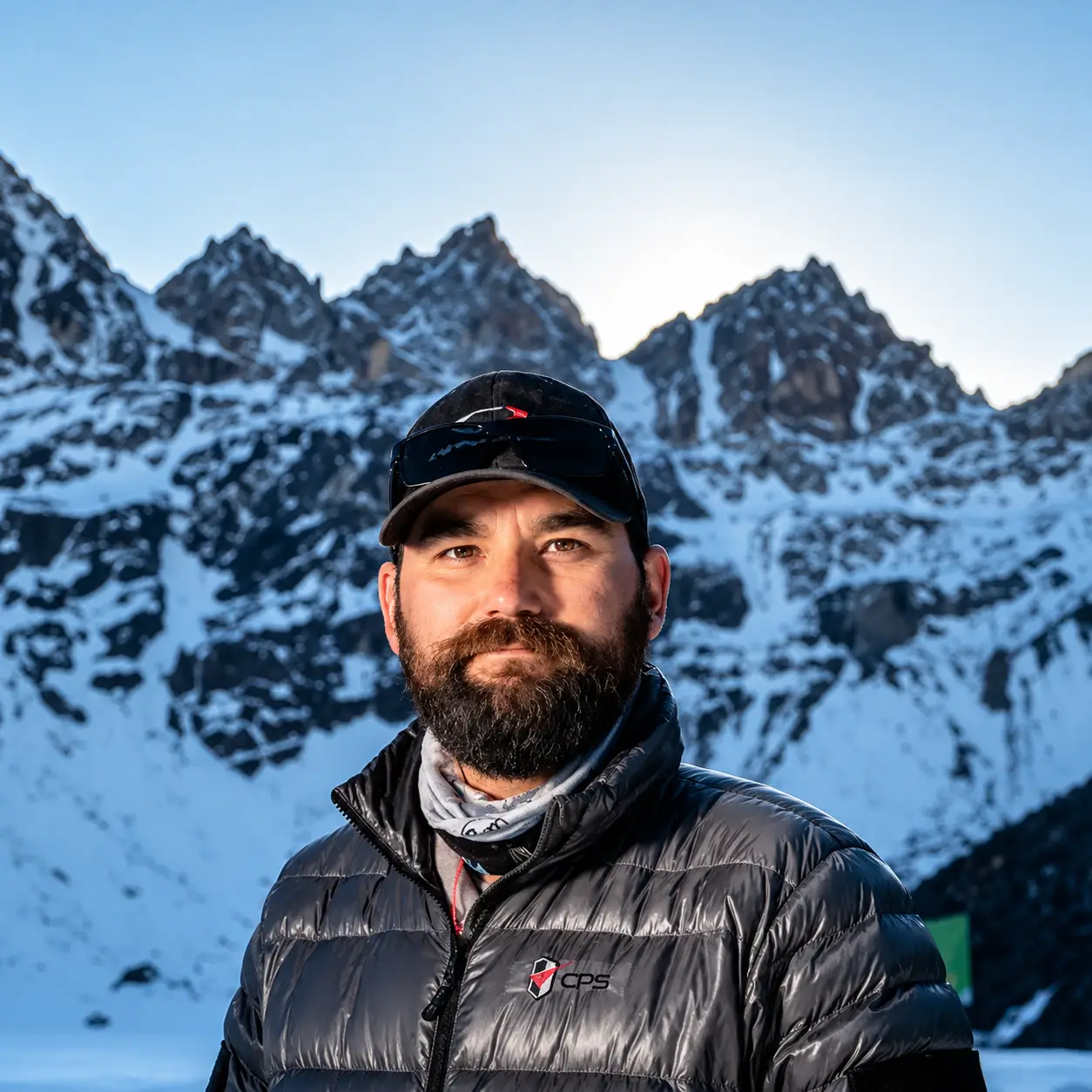
Dawa Steven Sherpa is a Nepali mountaineer, tourism entrepreneur and environmental conservationist. He is the Chief Executive Officer (CEO) of Asian Trekking Pvt. Ltd., a Nepal-based company involved in mountaineering and trekking expeditions. Having successfully climbed Mount Everest three times, Sherpa is known for his work on the Eco Everest Expedition, Himalayan waste management and climate change awareness initiatives.
Born in 1984, Sherpa climbed Cho Oyu in 2006 and successfully summited Mount Everest for the first time in 2007. In 2008, he launched the Eco Everest Expedition to integrate environmental conservation into commercial mountaineering. The initiative introduced activities focused on collecting accumulated waste from Everest's high-altitude camps, managing human waste and testing alternative energy technologies.
In 2012, he completed the Great Himalaya Trail trek across Nepal from east to west with Apa Sherpa and other team members. His contributions to Himalayan environmental conservation have earned him recognition from international organizations, including the World Wide Fund for Nature (WWF).
Dawa Steven Sherpa: Quick Facts
|
Particulars |
Details |
|---|---|
|
Full Name |
Dawa Steven Sherpa |
|
Year of Birth |
1984 |
|
Nationality |
Nepali |
|
Father |
Ang Tshering Sherpa |
|
Family Background |
Nepali Sherpa father and Belgian mother |
|
School Education |
Kathmandu International Study Centre (KISC) |
|
Higher Education |
Honours degree in Business Administration, Heriot-Watt University, Scotland |
|
Profession |
Mountaineer, tourism entrepreneur and environmental conservationist |
|
Major Position |
Chief Executive Officer, Asian Trekking |
|
Mount Everest Summits |
2007, 2008 and 2019 |
|
Other Major Summits |
Cho Oyu, Lhotse, Manaslu and Kangchenjunga |
|
Major Expeditions |
Eco Everest Expedition and Great Himalaya Trail trek |
|
Major Awards |
WWF Leaders for a Living Planet Award (2009), IOC Award for Sport and the Environment, WWF International President's Award (2012) |
Source: Asian Trekking's official profile, Kathmandu International Study Centre, the Himalayan Database and published WWF records.
Birth, Family Background and Early Life
Dawa Steven Sherpa was born in 1984 and grew up in Kathmandu. His father, Ang Tshering Sherpa, is associated with Nepal's mountain tourism industry, while his mother is from Belgium.
His father's ancestral home is Khumjung village in Solukhumbu district. Because of his family's involvement in the mountaineering business, Dawa Steven grew up surrounded by mountains, climbers and trekking expeditions.
Ang Tshering Sherpa had been involved in operating Asian Trekking since 1982. The company has organized trekking and mountaineering expeditions in different Himalayan regions of Nepal.
According to an alumni profile published by Kathmandu International Study Centre, mountaineering teams frequently visited the hotel operated by Sherpa's family. This environment helped develop his interest in mountains and climbing from an early age.
The school's account also states that he experienced rock climbing for the first time at the age of 11, accompanied by his geography teacher in the Balaju area of Kathmandu.
His family's connection to mountain tourism and his participation in outdoor activities during his school years helped sustain his interest in mountaineering.
Education and Academic Background
Dawa Steven Sherpa attended Kathmandu International Study Centre (KISC) for his school education.
According to the school's official alumni profile, he completed his A-Level studies in 2002. He subsequently travelled to Scotland for higher education and studied Business Administration at Heriot-Watt University.
After earning an honours degree from the university, he returned to Nepal in 2006.
Following his return, he began taking on management responsibilities in the family tourism business. His formal education in business administration and his family's experience in mountain tourism became important aspects of his professional career.
His studies at Heriot-Watt University provided an academic foundation in business management, which he had the opportunity to apply in Nepal's mountaineering and trekking industry.
Professional Career and Leadership at Asian Trekking
Dawa Steven Sherpa's professional career is closely associated with Asian Trekking. After completing his higher education and returning to Nepal, he began working in the company's management.
According to Asian Trekking's official profile, he has been involved in the company's management leadership since 2007. The company's historical account states that Ang Tshering Sherpa handed over its leadership to him in 2008.
As Chief Executive Officer, his responsibilities include managing mountaineering expeditions, organizing trekking operations, coordinating climbing teams and overseeing environmental management activities.
According to Asian Trekking, expeditions operated under his leadership have enabled climbers from different countries to successfully summit Mount Everest.
He has also been involved with Astrek Climbing Wall in Kathmandu and other tourism-related business activities.
Alongside his professional responsibilities, Sherpa has remained personally active in high-altitude mountaineering. His work therefore combines expedition management with direct climbing experience.
Mountaineering Journey and Major Achievements
Dawa Steven Sherpa began climbing mountains above 8,000 metres in 2006. In addition to successfully summiting Mount Everest three times, he has climbed several other major Himalayan peaks.
His principal mountaineering achievements are outlined below.
2006: Cho Oyu Summit
Dawa Steven Sherpa successfully climbed Cho Oyu in 2006.
It was his first successful ascent of a mountain higher than 8,000 metres.
In a personal account published by WWF on July 9, 2008, Sherpa explained that he began pursuing mountaineering seriously in 2006 and reached the summit of Cho Oyu that year.
The climb marked an important early achievement in his high-altitude mountaineering career.
2007: First Mount Everest Summit
Sherpa successfully climbed Mount Everest for the first time during the spring climbing season of 2007.
During the expedition, changes in the Khumbu Icefall and growing environmental risks in the Everest region attracted his attention.
According to his account published by WWF, the earlier-than-expected collapse of part of the Khumbu Icefall in 2007 encouraged him to take a greater interest in the effects of climate change in the Himalayan region.
Following the Everest ascent, he developed a plan to combine mountaineering with environmental conservation.
This plan led to the launch of the Eco Everest Expedition in 2008.
2008: Mount Everest and Lhotse Summits
In 2008, Dawa Steven Sherpa successfully climbed both Lhotse and Mount Everest during the same climbing season.
According to Asian Trekking's published records, he reached the summit of Lhotse on May 21. Five days later, on May 26, he successfully climbed Mount Everest for the second time.
Both ascents were completed as part of the Eco Everest Expedition 2008.
Alongside mountaineering, the expedition incorporated activities involving Everest clean-up operations, waste management and climate change awareness.
Ascents of Other Mountains Above 8,000 Metres
In addition to Everest, Cho Oyu and Lhotse, Sherpa has successfully climbed Manaslu and Kangchenjunga.
The Himalayan Database's records of climbers who have summited multiple 8,000-metre peaks list five different mountains above 8,000 metres that he has climbed.
These are Cho Oyu, Mount Everest, Lhotse, Manaslu and Kangchenjunga.
In 2018, he was also involved in leading an expedition to Kangchenjunga. Asian Trekking's August 2018 report describes his role in managing the expedition and its successful ascent.
2019: Third Mount Everest Summit
Dawa Steven Sherpa successfully climbed Mount Everest for the third time on May 21, 2019.
According to the Himalayan Database's Everest 2019 Expedition record (EVER19102), he was among the expedition leaders and successful summit climbers of the Asian Trekking Eco Everest Expedition.
The database records his summit date as May 21, 2019.
He has therefore successfully climbed Mount Everest three times, in 2007, 2008 and 2019.
Eco Everest Expedition: An Initiative for Himalayan Environmental Conservation
The Eco Everest Expedition is one of Dawa Steven Sherpa's major environmental conservation initiatives.
Launched in 2008, the initiative aimed to combine commercial mountaineering with waste management, the use of environmentally responsible technologies and public awareness of climate change.
The first expedition was organized by Asian Trekking in collaboration with the International Centre for Integrated Mountain Development (ICIMOD) and the United Nations Environment Programme (UNEP).
According to the Eco Everest Expedition 2008 report available through ICIMOD's records, Dawa Steven Sherpa wanted to test mountaineering practices that could reduce environmental impacts while remaining practical for commercial expeditions.
The initiative focused on collecting waste from Mount Everest, managing human waste, testing alternative energy technologies and raising awareness about the effects of climate change in the Himalayan region.
Cash for Trash: Financial Incentives for Waste Collection
One of the major practices introduced through the Eco Everest Expedition was the Cash for Trash system.
Under this initiative, climbers and mountain workers received financial incentives for collecting old waste abandoned at Everest Base Camp and higher camps and carrying it down the mountain.
The objective was to encourage the removal of materials left behind by previous climbing expeditions.
Collected waste included empty oxygen cylinders, abandoned tents, ropes and other used mountaineering equipment.
Reports from the 2009 expedition describe a financial incentive of NPR 100 per kilogram of previously abandoned waste collected.
According to the International Climbing and Mountaineering Federation (UIAA), the first Eco Everest Expedition in 2008 collected more than 925 kilograms of waste from Base Camp and higher camps.
Similarly, a UIAA report published on June 18, 2009, stated that the second expedition brought more than 6,000 kilograms of waste from the Everest region down to Base Camp.
The 2009 operation also recovered some remains of a helicopter that had crashed in 1973.
In a report published in August 2018, Asian Trekking stated that its Eco Everest Expeditions had collectively removed more than 18,800 kilograms of previously abandoned waste from Mount Everest by that time.
This figure represents the organization's reported total up to August 2018. It should not be interpreted as an updated cumulative total for all subsequent expeditions.
Human Waste Management at High Altitudes
Managing human waste is one of the environmental challenges associated with mountaineering on Mount Everest and other high-altitude peaks.
Without appropriate management, waste generated at high camps can increase the risk of environmental contamination and pollution of water sources.
Eco Everest Expeditions led by Dawa Steven Sherpa adopted practices involving portable toilets and specialized waste bags to transport human waste back to Base Camp.
Expedition records describe the use of equipment such as the Clean Mountain Can and Restop Bag.
These systems were intended to prevent climbers from leaving their waste on the mountain and enable its removal for appropriate disposal.
The practice emphasized the responsibility of mountaineering expeditions to manage the waste they generate.
Solar Energy and Alternative Technologies
The Eco Everest Expedition also encouraged the use of solar energy and environmentally responsible technologies.
The expeditions used and tested equipment such as parabolic solar cookers, solar lighting systems and alternative water purification devices.
A parabolic solar cooker concentrates sunlight to generate heat. The technology was tested at Himalayan base camps for cooking food and heating water.
In its assessment of the 2009 Eco Everest Expedition, the UIAA highlighted the use of solar technologies alongside waste management activities.
These efforts aimed to examine ways of reducing mountaineering expeditions' dependence on conventional fuels.
Bakery Operations at Everest Base Camp
Dawa Steven Sherpa also initiated bakery operations at Everest Base Camp.
In an interview, he stated that he operated a bakery at Base Camp in 2007 and 2008.
The initiative involved preparing bread and other bakery products for climbers and people staying at Base Camp.
In 2008, the bakery attracted international media attention.
Revenue generated through the bakery was used to support mountain clean-up activities.
The initiative demonstrated one way in which commercial activities at a Himalayan base camp could generate resources for environmental conservation work.
Climate Change Awareness and the Himalayan Environment
Dawa Steven Sherpa's environmental conservation work extends beyond collecting waste from Mount Everest.
He has also participated in initiatives to raise awareness about the effects of climate change on Himalayan glaciers, glacial lakes and local communities.
He was associated with WWF's Climate Witness programme.
In a report published on July 9, 2008, WWF presented his observations about changes in the Khumbu Icefall and their possible implications for the Himalayan environment and mountaineering.
Sherpa has also helped draw international attention to environmental challenges facing local Himalayan communities.
Imja Lake and the Risk of Glacial Lake Outburst Floods
Environmental awareness activities under the Eco Everest Expedition also addressed the condition of glaciers and glacial lakes in the Khumbu region.
These activities included raising awareness about risks associated with glacial lakes such as Imja Tsho and Dig Tsho.
A glacial lake outburst flood (GLOF) occurs when a natural or other barrier holding back water in a glacial lake fails, causing a sudden release of a large volume of water.
Such floods can damage settlements, infrastructure and communities situated along rivers in downstream areas.
According to records available through ICIMOD, the Eco Everest Expedition included raising public awareness about the risk of glacial lake outburst floods and the effects of climate change among its objectives.
Dawa Steven Sherpa used his mountaineering experience to help draw public attention to these issues.
Great Himalaya Trail: A 99-Day Trek
In 2012, Dawa Steven Sherpa completed a trek along the Great Himalaya Trail across Nepal from east to west with Apa Sherpa and other team members.
The journey was organized as part of the Climate Smart Celebrity Trek campaign.
The team included Apa Sherpa, Dawa Steven Sherpa, journalist Saurav Dhakal and photographer Sameer Jung Thapa.
According to a report published by Nepali Times on May 18, 2012, the team covered approximately 1,555 kilometres in 99 days.
The expedition aimed to raise awareness about the effects of climate change in the Himalayan region and bring public attention to the tourism potential of different mountain areas of Nepal.
During the journey, the team gathered information about Himalayan settlements, local lifestyles, the natural environment and the condition of water sources.
The trek provided Sherpa with an opportunity to connect his mountaineering experience with Nepal's wider Himalayan geography and local communities.
Involvement in Reconstruction After the 2015 Earthquake
In addition to mountaineering and environmental conservation, Dawa Steven Sherpa has participated in social reconstruction initiatives.
Following the 2015 Gorkha earthquake, he became involved in the Resilient Homes project of the Himalayan Climate Initiative.
The project aimed to support earthquake-affected communities in rebuilding homes and other structures.
In an interview published by Deutsche Welle on September 9, 2015, Sherpa's leadership involvement in the project was discussed.
During the interview, he also shared his views on how the earthquake had affected Nepal's mountain tourism industry and Himalayan communities.
Mountain Clean-Up Campaign in 2020
Dawa Steven Sherpa continued his environmental conservation activities during a period when Nepal's mountain tourism industry was affected by the COVID-19 pandemic.
In 2020, he led a clean-up campaign covering four Himalayan base camps with support from the Bally Peak Outlook Foundation.
The campaign covered the base camps of Cho Oyu, Mount Everest, Lhotse and Makalu.
According to the foundation's published account, the 47-day operation collected 2.2 tonnes of waste.
The recovered materials included old metal containers, damaged tents, wooden materials and other discarded items.
The foundation reported that the collected waste was sorted and handed over to the relevant waste management authorities.
Local mountain workers also participated in the campaign. At a time when the pandemic had disrupted mountain tourism, the clean-up operation supported environmental activities while providing employment opportunities for local workers.
Awards and International Recognition
Dawa Steven Sherpa has received awards and recognition from several international organizations for his contributions to Himalayan environmental conservation.
His major documented honours are outlined below.
WWF Leaders for a Living Planet Award, 2009
In 2009, WWF presented the Leaders for a Living Planet Award to Dawa Steven Sherpa and Apa Sherpa.
According to WWF's announcement dated December 2, 2009, they received the award at a ceremony held at the organization's headquarters in Gland, Switzerland.
The award recognized their contributions to raising awareness about climate change and promoting environmental conservation in the Himalayan region.
IOC Award for Sport and the Environment
Dawa Steven Sherpa has also received recognition from the International Olympic Committee for his work related to sport and environmental conservation.
On December 3, 2008, the International Climbing and Mountaineering Federation (UIAA) nominated him for the award.
Asian Trekking's official awards records state that he received the International Olympic Committee Award for Sport and the Environment.
The award is associated with efforts to encourage environmental responsibility and conservation practices in sporting activities.
WWF International President's Award, 2012
In 2012, Dawa Steven Sherpa became the first recipient of the WWF International President's Award.
According to WWF's announcement published on May 8, 2012, he received the award during the organization's annual conference in Rotterdam, the Netherlands.
The award was established to recognize the contributions of individuals under the age of 30 to nature conservation.
Dawa Steven Sherpa was its inaugural recipient.
Other Institutional Recognition
Asian Trekking's official profile also mentions honours and recognition associated with the International Union for Conservation of Nature (IUCN), the International Climbing and Mountaineering Federation (UIAA) and the Sir Edmund Hillary Foundation of Canada.
These organizations have recognized his work relating to Himalayan environmental conservation, climate change awareness and the promotion of responsible mountaineering practices.
Contributions to Mountaineering and Environmental Conservation in Nepal
Dawa Steven Sherpa's work demonstrates an approach that combines commercial mountaineering with environmental conservation within the same expedition.
Through the Eco Everest Expedition, launched in 2008, he introduced initiatives involving the collection of abandoned waste, management of human waste and the use of alternative energy technologies alongside mountaineering activities.
The Cash for Trash system provided a practical way to encourage climbers and mountain support workers to participate in clean-up operations by offering financial incentives for removing old waste from high-altitude areas.
Similarly, the practice of carrying human waste down from the mountain rather than leaving it at high camps emphasized the environmental responsibilities of climbing teams.
Beyond waste management, Sherpa has undertaken awareness activities related to climate change, the condition of Himalayan glaciers and risks associated with glacial lakes.
His participation in the 2012 Great Himalaya Trail trek and the 2020 clean-up operation covering four Himalayan base camps provides further examples of this work.
However, the long-term conservation of Mount Everest and other Himalayan regions cannot be achieved through the efforts of a single individual or organization.
Effective protection requires cooperation among local communities, mountaineering operators, government agencies, scientific institutions and other stakeholders.
Dawa Steven Sherpa's contributions can be understood as part of wider efforts to strengthen environmental responsibility within Nepal's mountain tourism industry.Who is Dawa Steven Sherpa?
Dawa Steven Sherpa is a Nepali mountaineer, tourism entrepreneur and environmental conservationist. He is the Chief Executive Officer of Asian Trekking and is known for leading the Eco Everest Expedition initiative, which began in 2008.
References
The information presented in this biography is based on institutional records, official publications and established news sources.
-
Asian Trekking – Dawa Steven Sherpa: Official Profile
-
Asian Trekking – Institutional History
-
Kathmandu International Study Centre – Alumni Spotlight
-
ICIMOD – Eco Everest Expedition 2008
-
Asian Trekking – Eco Everest Expedition 2008
-
Himalayan Database – Everest Expedition 2019
-
Himalayan Database – Multi-8000m Summiters
-
UIAA – UIAA Nominates Dawa Steven Sherpa for IOC Award
-
UIAA – Exemplary Eco-Efficiency Shown Again on Mt. Everest
-
Asian Trekking – Newsletter, August 2018
-
WWF Nepal – Climate Witness: Dawa Steven Sherpa
-
WWF Nepal – Apa and Dawa Steven Sherpa Receive Leaders for a Living Planet Award
-
WWF Singapore – Young Nepalese-Belgian Environmentalist Wins International Award
-
Asian Trekking – Awards
-
Nepali Times – The Greatest Himalayan Trail
-
Nepali Times – Covid-Climate Crises Hit Everest Region
-
Bally – Preserving Mountains
-
Deutsche Welle – Dawa Steven Sherpa: Adventure Sports





Comments 0
No comments yet. Be the first to start the conversation.