



Many Nepali students feel pressure to study abroad after +2 or bachelor’s level. Friends may be applying to Australia, Japan, Canada, the UK, Korea, India, or the USA. Families may be comparing costs. Some students may also feel that staying in Nepal means falling behind.
That is not always true.
The better question is not “Is abroad good or bad?” The better question is: Which option fits your course, budget, family situation, personal readiness, and career plan right now?
Quick Answer:
Choosing to study in Nepal not abroad can be a fair decision when the course is recognized, the total cost is manageable, your career goal is connected to Nepal, and you need family or local support. It is not the right choice for every student, but it can be practical when Nepal offers the program, guidance, and opportunities you actually need.
Table of Content
- Why This Decision Needs a Fair View
- Study in Nepal vs Abroad: A Fair Comparison
- Who Should Seriously Consider Studying in Nepal First?
- Who Should Not Choose Nepal Just for Convenience?
- When Studying Abroad May Still Be Better
- What to Check Before You Act
- Final Direction for Students and Parents
Why This Decision Needs a Fair View
Studying abroad can be valuable. It may offer stronger research facilities, international exposure, specialized programs, and wider professional networks. Some students need to go abroad because their chosen field, licensing path, or research area is not available in Nepal.
But abroad study also brings real pressure: tuition, visa rules, travel, rent, food, insurance, currency exchange, documents, part-time work uncertainty, and adjustment to a new system.
Nepal has its own problems too. Some programs face delays. Some institutions have uneven teaching quality. Some campuses have limited labs, weak mentoring, or poor career support. So the choice should not be made from pride, fear, or social pressure.
A fair decision looks at fit.
The University Grants Commission’s EMIS 2023/24 report states that 633,053 students were enrolled in national higher education institutions, while 59 campuses affiliated with foreign universities had about 28,073 students. The same report also lists 1,432 higher education campuses in Nepal for 2023/24. These figures show that Nepal has a real higher education base, but they do not prove that every program or campus is strong.
1. You May Reduce Total Financial Pressure
Cost is one of the strongest reasons many families compare Nepal before choosing abroad.
Abroad study is not only tuition. Students may also need money for visa processing, airfare, rent, food, insurance, transport, foreign exchange, emergency expenses, and possible delays in part-time work. Even when tuition looks manageable, the total cost can become heavy.
Studying in Nepal may reduce financial pressure because some students can live with family, avoid international travel costs, and compare local colleges more directly. This can matter if a family would need high-interest loans, land sale, or risky borrowing to fund foreign study.
This does not mean every Nepali college is affordable. Some private and professional programs in Nepal can also be expensive. The fair point is simpler: Nepal may give many families more control over the total cost.
Before deciding, compare the full yearly cost, not only the admission fee. Students comparing business or technology programs may also review related cost-focused resources such as BBA fees in Nepal and IT education fees in Nepal.
2. You Can Stay Close to Family Support
Education is not only about classes and exams. Students also need emotional stability, guidance, health support, food, rest, and a safe place to discuss problems.
Some students adjust well abroad. Others face loneliness, homesickness, culture shock, or pressure from managing study, rent, work, documents, and daily life at the same time.
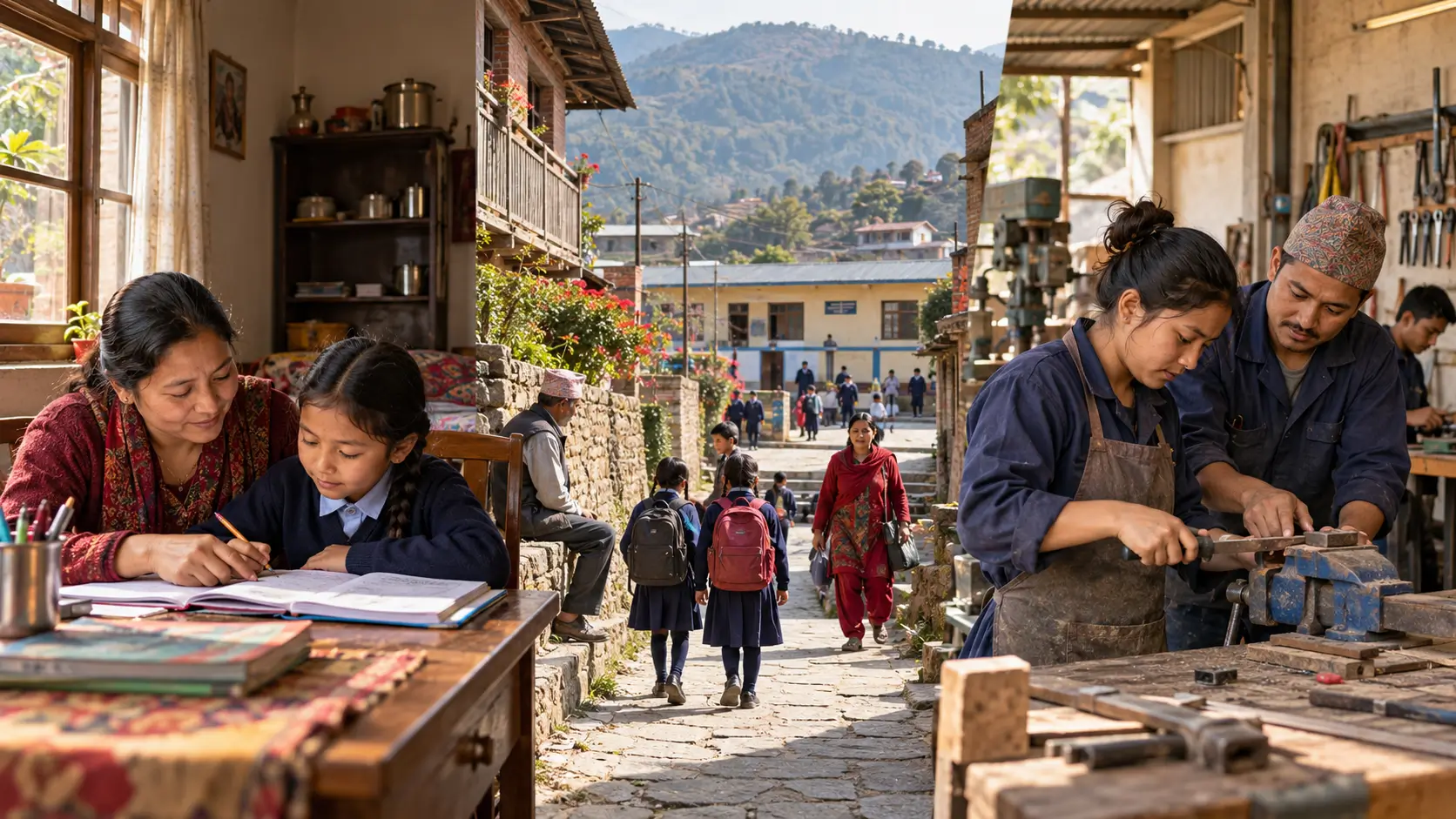
Studying in Nepal can help students who are not ready for sudden independence abroad. Family support may make the first years of higher education more manageable, especially for students who need guidance while choosing a field or building study habits.
This should not be used to hold back a student who is ready for abroad study. The point is not control. The point is readiness.
3. Nepal Has a Real Higher Education Base
Some students assume studying in Nepal means having no serious option. That is too simple.
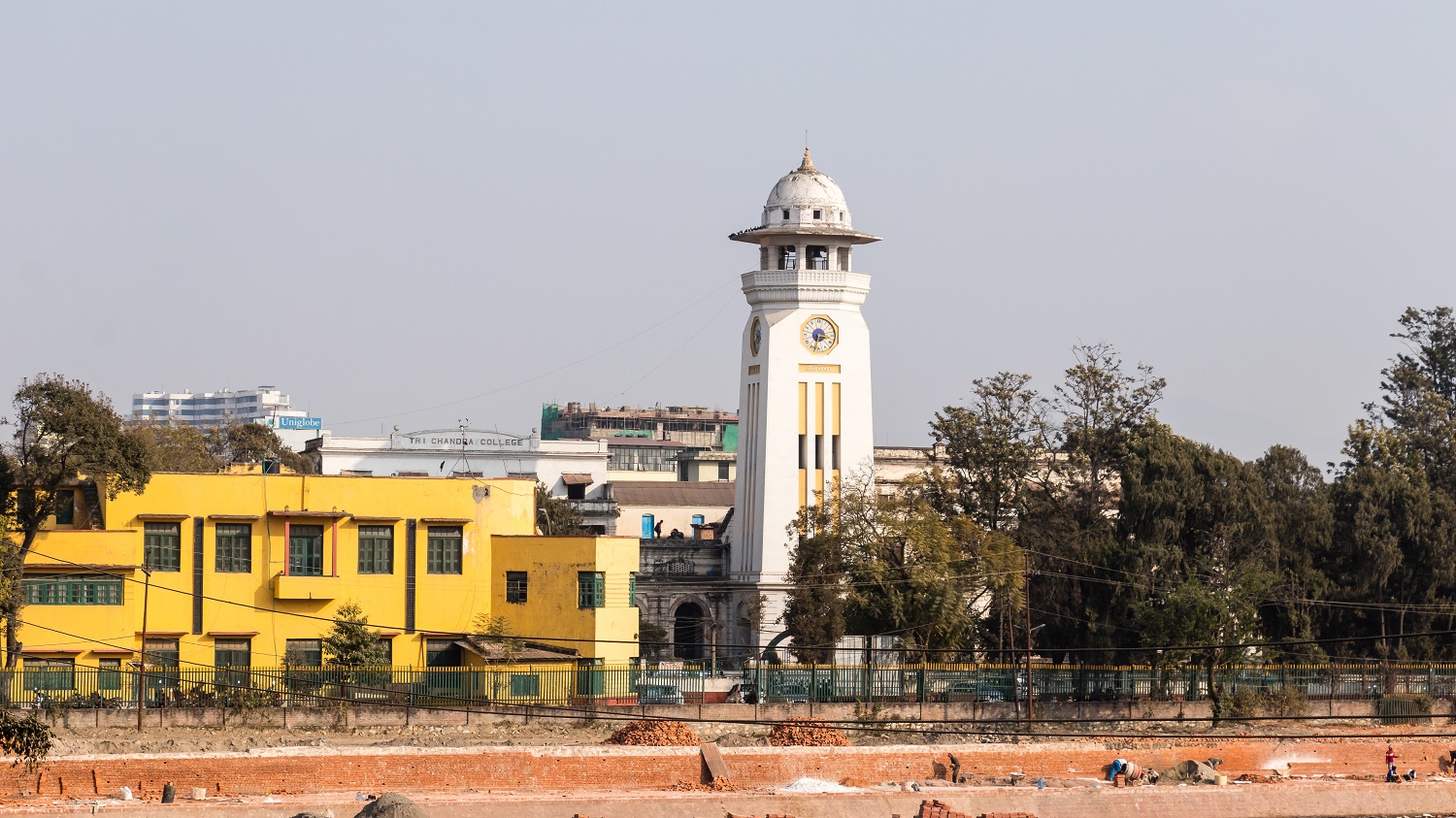
Nepal has universities, medical academies, constituent campuses, community campuses, private campuses, and foreign-affiliated institutions. The UGC EMIS 2023/24 report states that 24 universities and medical academies were part of the higher education system in 2023/24. It also notes that 59 colleges affiliated with foreign universities were providing programs in Nepal.
But students must choose carefully. A degree is useful only when the institution is properly affiliated, the program is recognized, classes are regular, exams are reliable, and the student builds skills beyond passing papers.
Before choosing a college in Nepal, check:
-
university affiliation;
-
program recognition;
-
faculty availability;
-
exam and result history;
-
internship or fieldwork support;
-
scholarship rules;
-
alumni outcomes;
-
professional council requirements, if the field is regulated.
UGC’s QAA list can help students check whether a higher education institution has received quality assurance and accreditation status. But QAA is not the same as automatic program recognition, university affiliation, or professional licensing approval.
For broader background, students can also read about higher education in Nepal.
4. Local Networks Can Help If Your Career Goal Is in Nepal
If your long-term plan is to work in Nepal, teach in Nepal, prepare for public service, join a local organization, start a business, work in health care, practice law, or serve your community, local networks matter.
Your classmates, teachers, internship supervisors, college seniors, local employers, and alumni can become useful contacts. They may help you understand Nepal’s job market, public exam culture, business environment, and professional expectations.
Foreign education can also build strong networks. But those networks may not always connect directly to Nepal’s job market. If your career plan is Nepal-based, studying here can help you build relationships where you plan to work.
5. You Understand the Language, Culture, and Daily System
A familiar environment can reduce adjustment pressure. In Nepal, most students already understand local languages, food habits, transport, festivals, social expectations, and classroom culture.
This does not make study easy. A weak program will still be weak. A careless student will still struggle. But cultural familiarity can help students spend more energy on study, projects, reading, internships, and skill-building instead of dealing with every part of daily life from zero.
For some students, a better route is to complete a strong bachelor’s degree in Nepal and then apply abroad for a focused master’s degree, research program, exchange, training, or professional specialization.
6. Some Courses Are Closely Connected to Nepal’s Needs
Nepal needs capable graduates in education, health, engineering, agriculture, law, public administration, information technology, tourism, climate-related work, social work, and entrepreneurship.
Studying these subjects in Nepal can help students understand local problems directly.
A civil engineering student can study Nepal’s roads, bridges, landslide risks, and urban planning issues. A public health student can understand local hospitals, municipalities, and community health behavior. A management student can study cooperatives, banks, small businesses, family enterprises, and startups.
This local context can become useful when your goal is to solve Nepal-based problems or work inside Nepal.
7. Local Scholarships and Reserved Seats May Be Easier to Track
Nepal-based programs may offer merit scholarships, need-based support, public university options, institutional discounts, reserved seats, or government-linked opportunities depending on the course and institution.
The advantage is not that scholarships are easy. They are often competitive and rule-based. The advantage is that students can track notices, visit offices, ask questions, correct documents, and follow deadlines more closely when applying locally.
For medical and health science programs, students should verify entrance notices, seat distribution, syllabus, matching, and scholarship-related updates through the Medical Education Commission entrance portal. The MEC portal lists current and past notices, including MECEE-BL notices, result notices, and seat-distribution notices.
8. You Avoid Rushing Because Friends Are Going Abroad
Many students do not choose abroad after a careful comparison. They choose it because friends are going, relatives are asking, or social media makes staying in Nepal look like failure.
That is a weak reason to make a major education decision.
Studying in Nepal first can give students time to understand their strengths, improve English or another language, build academic records, complete internships, learn digital skills, prepare for entrance exams, and decide later whether abroad study is necessary.
A student who studies bachelor’s in Nepal and applies abroad later with a clearer goal may make a better decision than a student who leaves immediately without academic or financial readiness.
Students still deciding after +2 can compare both routes through this related guide on study abroad or Nepal after +2.
9. You Can Support Nepal Without Sacrificing Your Goals
Students should not be told to sacrifice their future only for national sentiment. That is unfair.
But when Nepal has a suitable program and your goals match local opportunities, studying here can benefit both the student and society. Students who stay may support local campuses, local businesses, research projects, community programs, and the national workforce.
A stronger higher education system also needs students and parents who ask serious questions about fees, regular classes, transparent scholarships, exam delays, labs, libraries, internships, and accountability.
Choosing Nepal should not mean accepting poor quality. It should mean choosing carefully and demanding better standards.
10. You Can Still Build an International Future Later
Studying in Nepal does not close the door to international opportunities.
Students can still build strong profiles through grades, internships, research projects, competitions, online courses, open-source work, freelancing, language preparation, entrance tests, exchange programs, conferences, and postgraduate applications abroad.
The key is to be intentional. A student who studies in Nepal but builds strong academic records, practical skills, references, and a clear portfolio can still apply for international opportunities later.
Nepal can be a starting point, not a limit.
Study in Nepal vs Abroad: A Fair Comparison
| Factor | Studying in Nepal | Studying Abroad |
|---|---|---|
| Cost control | May be easier to manage if the student can live with family or choose a lower-cost program. | Can include tuition, visa, airfare, rent, insurance, and emergency expenses. |
| Family support | Easier access to parents, relatives, mentors, and familiar support. | More independence, but also more adjustment pressure. |
| Local career network | Useful for Nepal-based jobs, business, public service, and community work. | Useful for international exposure and global networks. |
| Cultural adjustment | Lower daily-life adjustment burden. | Requires adjustment to new systems, climate, rules, and work culture. |
| Best fit | Students with Nepal-based goals, budget limits, or need for gradual planning. | Students needing specialized programs, research facilities, or international career pathways. |
Who Should Seriously Consider Studying in Nepal First?
Studying in Nepal may be a strong option if:
-
your chosen course is available and recognized in Nepal;
-
your family would face heavy debt for abroad study;
-
you want to work in Nepal after graduation;
-
you need family support during higher education;
-
you are unsure about your long-term field;
-
you want time to build a stronger profile before applying abroad;
-
you find a college with proper affiliation, regular classes, and useful mentoring.
Who Should Not Choose Nepal Just for Convenience?
Do not choose Nepal only because it feels easier.
You should think again if:
-
the program is not properly recognized;
-
the college cannot clearly prove its affiliation;
-
the course has poor teaching, weak labs, or frequent delays;
-
your field needs licensing abroad and the Nepali pathway does not support it;
-
your goal requires research facilities or specialization not available in Nepal;
-
you are choosing a college only because it is near home;
-
you have not compared fees, outcomes, and alternatives.
A convenient but weak program can waste time and money.
When Studying Abroad May Still Be Better
Studying abroad may be better if your chosen program is not available in Nepal, the local program quality is weak, your research field needs advanced facilities, your career goal requires international licensing, or your family can afford the full cost without risky borrowing.
It may also be better for students who are ready to manage study, work, rent, documents, health, and daily life in a new country.
The decision should be based on fit, not fear.
What to Check Before You Act
Before choosing Nepal or abroad, verify:
-
current admission notice;
-
university or board affiliation;
-
program recognition;
-
total fee, not only admission fee;
-
scholarship rules and deadlines;
-
entrance exam process;
-
licensing council rules, if applicable;
-
hostel, transport, and living costs;
-
internship and practical learning opportunities;
-
exam schedule and result history;
-
refund policy;
-
NOC and visa requirements for abroad study.
For abroad study, Nepal’s official NOC Online portal is the government service page for No Objection Certificate applications. Because processes and document requirements can change, students should check the official portal before applying or paying any service fee.
NOC figures should also be read carefully. They show approval or application activity for foreign study, not always confirmed foreign enrollment.
Final Direction for Students and Parents
Studying in Nepal is not right for everyone. Studying abroad is not wrong. The right decision is the one that fits your course, budget, family situation, readiness, and career plan.
Choose Nepal if the program is recognized, the total cost is manageable, the institution is reliable, and your goals benefit from local networks or gradual planning.
Choose abroad if the course, facilities, exposure, licensing path, or career route clearly supports your goal and your family can handle the full cost and risk.
Before paying any fee, check official notices, compare total expenses, and ask one practical question: Will this choice still make sense after the social pressure is gone?





Comments 0
No comments yet. Be the first to start the conversation.