Sadashiva Multiple Campus is a community campus in Barabardiya Municipality-6, Manpur, Bardiya, Lumbini Province. It is affiliated with Tribhuvan University and approved by the University Grants Commission. The campus offers bachelor-level study in Bachelor of Arts (BA) and Bachelor of Education (B.Ed.).
It was established through local initiative to make higher education available within the area and has continued to serve students from Bardiya and nearby communities. The campus later shifted into its own building at Manpur, Ward No. 6, and its profile shows a strong community-supported institutional base.
Established: 2010 AD
Type: Community campus
Location: Barabardiya Municipality-6, Manpur, Bardiya, Lumbini Province, Nepal
Affiliation: Tribhuvan University
Approval: University Grants Commission
Programs Offered: BA and B.Ed.
Academic Level: Bachelor’s level
Academic System: Four-year TU-affiliated annual system
Current Enrollment Mentioned in campus material: 426 students at bachelor level
Approximate Bachelor-Level Graduates from the Local Community: 145
Scholarship Support: Available for deserving and economically disadvantaged students
Campus Contact: 084-404065, 9841937203, 9742218235
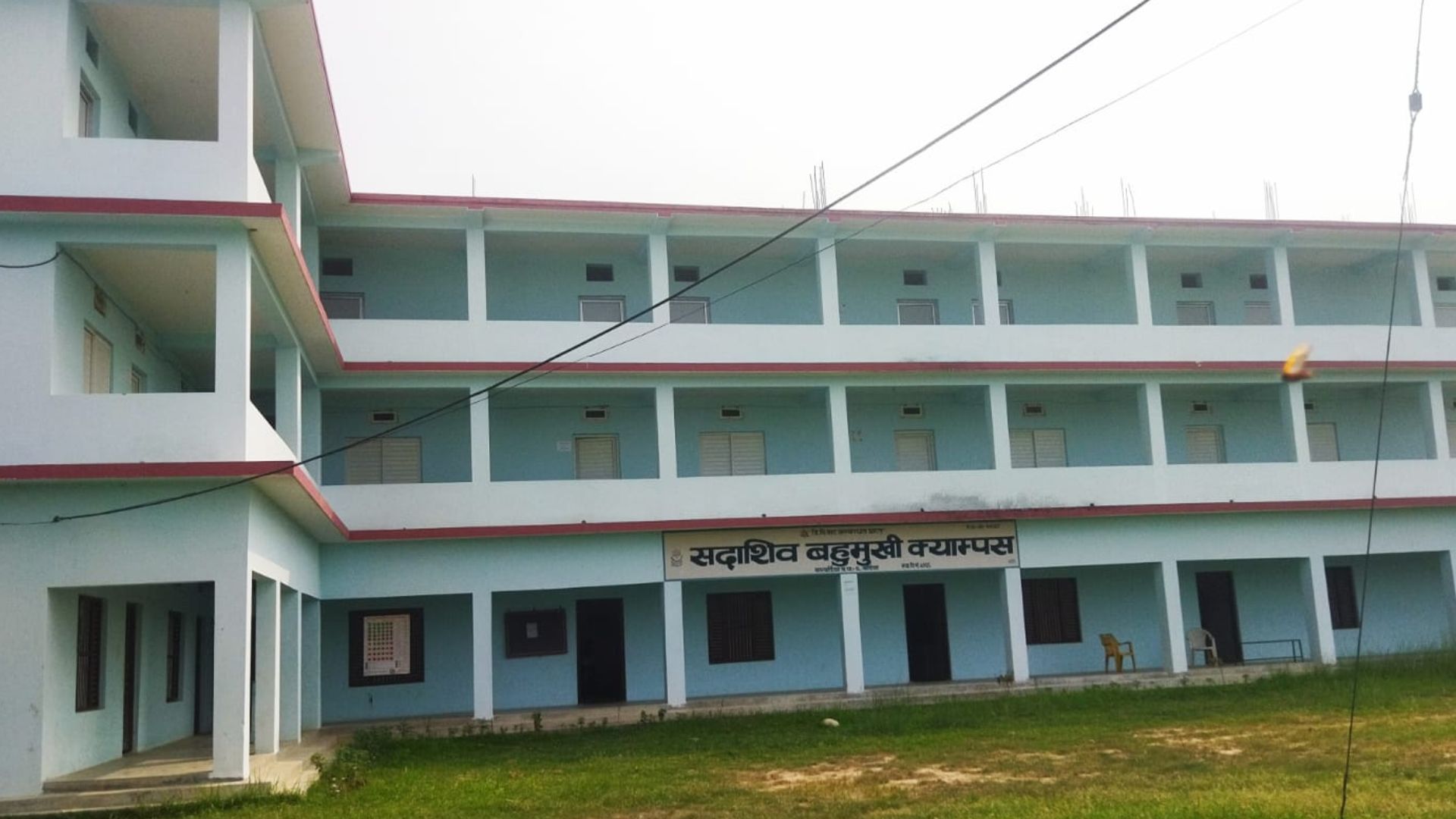
The Sadashiva Multiple Campus (सदाशिव बहुमुखी क्याम्पस, वर्दिया) was established with the involvement of local education supporters, intellectuals, social workers, political workers, and community members. Its early classes were run in a school building at Jaynagar, and the campus later developed its own physical base. The institutional narrative links its foundation to local effort around Shree Anshuverma Secondary School and records the growth of the campus under the framework of the Tribhuvan University Act.
At the beginning, bachelor-level study was limited to humanities subjects. English was added later, and the Faculty of Education was approved afterward. The profile also notes that the campus has shown interest in adding the Faculty of Management in the future. Since 2075 BS, it has been operating from its own building at Manpur, Ward No. 6.
The campus is rooted in the setting of Barbardiya Municipality, where local demand for nearby higher education has shaped its growth. Its role has been tied closely to access, especially for students who would otherwise need to leave the area for bachelor-level study.
Sadashiva Multiple Campus runs two TU-affiliated bachelor programs:
Bachelor of Arts (BA): A four-year bachelor program under the Faculty of Humanities and Social Sciences. Campus materials mention major study in English, Nepali, and Sociology, while humanities subject offerings also include Economics.
Bachelor of Education (B.Ed.): A four-year annual-system bachelor program under the Faculty of Education. Campus materials list English, Nepali, Health and Physical Education, and Population Education among the education subject areas in operation.
For B.Ed., the TU curriculum structure includes communication skills, professional core courses, specialization major and minor areas, and teaching practice/practicum. Under the annual system, final examinations are conducted by TU through the Office of the Controller of Examinations.
Admission to bachelor-level programs follows the rules of the concerned faculty, Dean’s Office, and campus under Tribhuvan University.
Applicants generally apply after the publication of the campus admission notice.
Students submit the prescribed form along with the required academic documents.
Admission may include an entrance examination, merit-based selection, or both, depending on the program or campus procedure.
Selected applicants complete admission after document submission and fee payment.
Academic registration, examinations, and results follow TU rules, guidelines, and the applicable academic calendar.
For BA and B.Ed., applicants should have completed Grade 12 / Higher Secondary / equivalent recognized by TU.
Academic Transcript or Grade Sheet of Class 12 / +2 or equivalent
Character Certificate from the previous institution
Migration Certificate, if the previous board or university is different
Transfer Certificate (TC) from the previous school or college
Citizenship Certificate or Birth Certificate copy
Passport-size photographs
Entrance Examination Scorecard, if required
Completed campus admission or application form
Admission fee payment receipt
Equivalence Certificate, if the previous qualification is from a foreign board or university
Teaching and learning at the campus continue within the TU annual system. The available academic environment points to classroom-based bachelor instruction supported by whiteboards, computers, projector use, printers, and internet access. In the B.Ed. framework, teaching practice is part of the program structure, which gives the education program a direct school-teaching component.
The campus profile also notes efforts to make teaching and learning more effective through the use of internet and projectors. This aligns with the available ICT tools and the existing physical setup used for regular academic activity.
Three campus buildings
Library support with a 36-compartment book rack
200 desk-bench sets for student seating
10 desktop computers
Computer tables
1 projector
1 laptop
3 printers
18 whiteboards
Internet and Wi-Fi access
Office furniture and academic support furniture
Sound system
Sports materials
12 toilets
Clean drinking water support through an electric filter and water dispenser
Boundary wall support from the provincial government
The campus experience is closely tied to its local setting. The institutional narrative places the campus in a rural area where many students face financial barriers to studying in outside urban centers. In that context, Sadashiva Multiple Campus functions as a nearby route to bachelor-level education for students who want to continue study while remaining at home.
The profile also connects the campus to the social composition of the surrounding area, including Indigenous Janajati Tharu communities as well as Dalit, Brahmin, and Chhetri residents. Community participation appears throughout the campus history, from its establishment to fundraising and land support. That gives the campus a local identity shaped by public participation rather than private expansion.
Scholarship support is available for deserving students and poor students.
The campus materials mention scholarship provisions for poor, talented, freed Kamaiya, and freed Kamalari students.
The institutional plan also mentions the search for additional financial sources to extend scholarship support to economically disadvantaged students.
Established as a community campus in 2010 AD
Affiliated with Tribhuvan University for bachelor-level operation
Faculty of Education added on 2070/08/18
Operating from its own building at Manpur since 2075 BS
Around 145 students from the local community had completed bachelor-level study at the time of the campus profile
426 students were reported to be studying at bachelor level
Community fundraising through a religious Mahayagya helped purchase additional land
The campus also received land support through registered donation
Sadashiva Multiple Campus has grown as a local higher education institution shaped by community initiative, TU affiliation, and continued support from public bodies and local stakeholders. Its role in Bardiya is tied to bachelor-level access in arts and education, supported by its own buildings, scholarship provisions, and basic academic facilities.
College Name: Sadashiva Multiple Campus
Location: Barabardiya Municipality-6, Manpur, Bardiya, Lumbini Province, Nepal
Phone No.: 084-404065, 9841937203, 9742218235
Email: sadashivacampus@gmail.com
Website: https://www.smcbardiya.edu.np
The campus is located at Barabardiya Municipality-6, Manpur, Bardiya, Lumbini Province, Nepal.
Yes. Sadashiva Multiple Campus is affiliated with Tribhuvan University and is approved by the University Grants Commission.
The campus offers bachelor-level study in BA and B.Ed..
Yes. The campus materials mention scholarship support for deserving and economically disadvantaged students, including provisions for poor, talented, freed Kamaiya, and freed Kamalari students.
The campus has three buildings, library support, desk-benches, desktop computers, projector, laptop, printers, whiteboards, internet and Wi-Fi, toilets, drinking water support, and sports materials.
Admission generally begins after the campus publishes its notice. Applicants submit the form and academic documents, and the process may include entrance, merit, or both depending on the program or campus procedure. Final registration, examinations, and results follow TU rules and calendar.
Yes. The campus profile notes that it has been operating from its own building at Manpur, Ward No. 6, since 2075 BS.