Shree College of Technology (SCoT), formerly known as Shree Medical and Technical College, Chitwan, was established in 2007. The college is based in Bharatpur, Chitwan, and focuses on health-science education in nursing, pharmacy, and public health.
The main academic block is located at Bharatpur-12, Gondrang, Hamro Chowk, Chitwan. The nursing block operates separately at Bharatpur-10, Thani Chowk, near Bharatpur Secondary School.
| Particular | Details |
|---|---|
| Current Name | Shree College of Technology (SCoT) |
| Former Name | Shree Medical and Technical College |
| Established | 2007 |
| Location | Bharatpur, Chitwan, Bagmati Pradesh, Nepal |
| Affiliation | Purbanchal University |
| Academic Areas | Nursing, Pharmacy, and Public Health |
| Bachelor Programs | BSc Nursing, PBNS, BPH, B.Pharm |
| Master Programs | M.Pharm in Clinical Pharmacy, MPH in Public Health Service Management |
| Bachelor Admission | MECEE-BL |
| Master Admission | MECEE-PG |
| Admission Authority | Medical Education Commission (MEC), Nepal |
| Professional Councils | Nepal Nursing Council, Nepal Pharmacy Council, and Nepal Health Professional Council, according to the relevant discipline |
| Main Block | Bharatpur-12, Gondrang, Hamro Chowk, Chitwan |
| Nursing Block | Bharatpur-10, Thani Chowk, Chitwan |
Shree College of Technology is affiliated with Purbanchal University (PU) for its bachelor’s and master’s health-science programs.
Its academic areas cover nursing, pharmacy, and public health. These disciplines also fall within the professional regulatory framework of the respective health councils in Nepal.
The college has the following departments:
Department of Administration
Department of Nursing
Department of Pharmacy
Department of Public Health
The college offers six Purbanchal University programs at bachelor’s and master’s levels.
| Program | Academic format | Admission entrance |
|---|---|---|
| Bachelor of Science in Nursing (BSc Nursing/BSN) | 4 years, yearly system | MECEE-BL |
| Post-Basic Bachelor of Nursing Science (PBNS) | 3 years, yearly system | MECEE-BL |
| Bachelor of Public Health (BPH) | 4 years, 8 semesters | MECEE-BL |
| Bachelor of Pharmacy (B.Pharm) | 4 years, 8 semesters | MECEE-BL |
| Master in Pharmacy (M.Pharm) in Clinical Pharmacy | 2 years, semester system | MECEE-PG |
| Master of Public Health (MPH) in Public Health Service Management | 2 years, 4 semesters | MECEE-PG |
The four-year Bachelor of Science in Nursing program combines basic health sciences, nursing theory, practical learning, and clinical subjects.
The curriculum includes anatomy and physiology, biochemistry, microbiology and parasitology, pathophysiology, pharmacology, nutrition and dietetics, and foundations of nursing.
Students continue into subjects such as medical-surgical nursing, psychiatric nursing, community health nursing, geriatric nursing, pediatric nursing, midwifery, and gynaecology nursing.
The fourth year includes research and biostatistics in nursing, educational science, leadership and management, and advanced medical-surgical nursing.
The Post-Basic Bachelor of Nursing Science is a three-year program designed for post-basic nursing education.
Its academic structure covers subjects including medical-surgical nursing, pediatric nursing, midwifery, community health nursing, psychiatric nursing, epidemiology, geriatric nursing, educational science, leadership and management, and research and biostatistics.
The third year also includes elective study in nursing areas such as community health nursing, midwifery, medical-surgical nursing, and psychiatric nursing.
The Bachelor of Pharmacy is a four-year, eight-semester program covering basic sciences, basic medical sciences, and pharmaceutical sciences.
The program develops knowledge and skills related to pharmaceutical care, medication distribution and control, community and hospital pharmacy, drug information, pharmaceutical manufacturing, public health, and participation in clinical healthcare settings.
The academic content includes areas such as pharmaceutical chemistry, pharmacognosy, pharmaceutical analysis, pharmacology, pharmaceutics, biochemistry, microbiology, anatomy and physiology, and other pharmacy-related subjects.
The Master in Pharmacy in Clinical Pharmacy is a two-year postgraduate program.
Its study areas include biopharmaceutics and pharmacokinetics, pathophysiology, principles of pharmacology and toxicology, clinical pharmacy, hospital pharmacy, pharmacotherapeutics, novel drug delivery systems, biostatistics, and pharmacy practice.
The academic structure also includes clinical clerkship and dissertation-related work.
The Bachelor of Public Health is a four-year program organized over eight semesters.
Its curriculum covers introductory public health, anatomy and physiology, public health microbiology, biochemistry, epidemiology, family health, nutrition, environmental and occupational health, demography, reproductive health, sociology and anthropology, rural and urban health, and related public-health subjects.
Laboratory, field-based, and concurrent field-based components are included within different parts of the program.
The Master of Public Health in Public Health Service Management is a two-year, four-semester postgraduate program.
The program focuses on advanced public-health education, health-service management, leadership, public-health practice, and competencies connected with health-service needs.
Admission to the bachelor-level health programs is based on MECEE-BL. This applies to BSc Nursing, PBNS, BPH, and B.Pharm.
Admission to the master-level M.Pharm and MPH programs is based on MECEE-PG.
The admission process follows the prevailing rules, guidelines, code of conduct, scholarship provisions, seat-allocation system, fee structure, and admission procedures established by the Medical Education Commission (MEC), Nepal.
Seat numbers are determined by MEC for each admission cycle and may change from one year to another. Applicants should therefore follow the seat allocation applicable to the relevant intake.
Fees, scholarships, admission procedures, and examination-related guidelines are also subject to MEC decisions and the official MEC calendar.
Graduation from a health-professional program is followed by the professional requirements applicable to the relevant field.
Students entering nursing practice are subject to the professional licensing requirements of the Nepal Nursing Council.
Pharmacy graduates come under the professional framework of the Nepal Pharmacy Council.
Programs falling within the regulated health-professional categories are also connected with the Nepal Health Professional Council (NHPC), according to the discipline concerned.
Graduates must pass the respective professional council licensing examination or meet the prescribed licensing requirements before entering regulated professional practice.
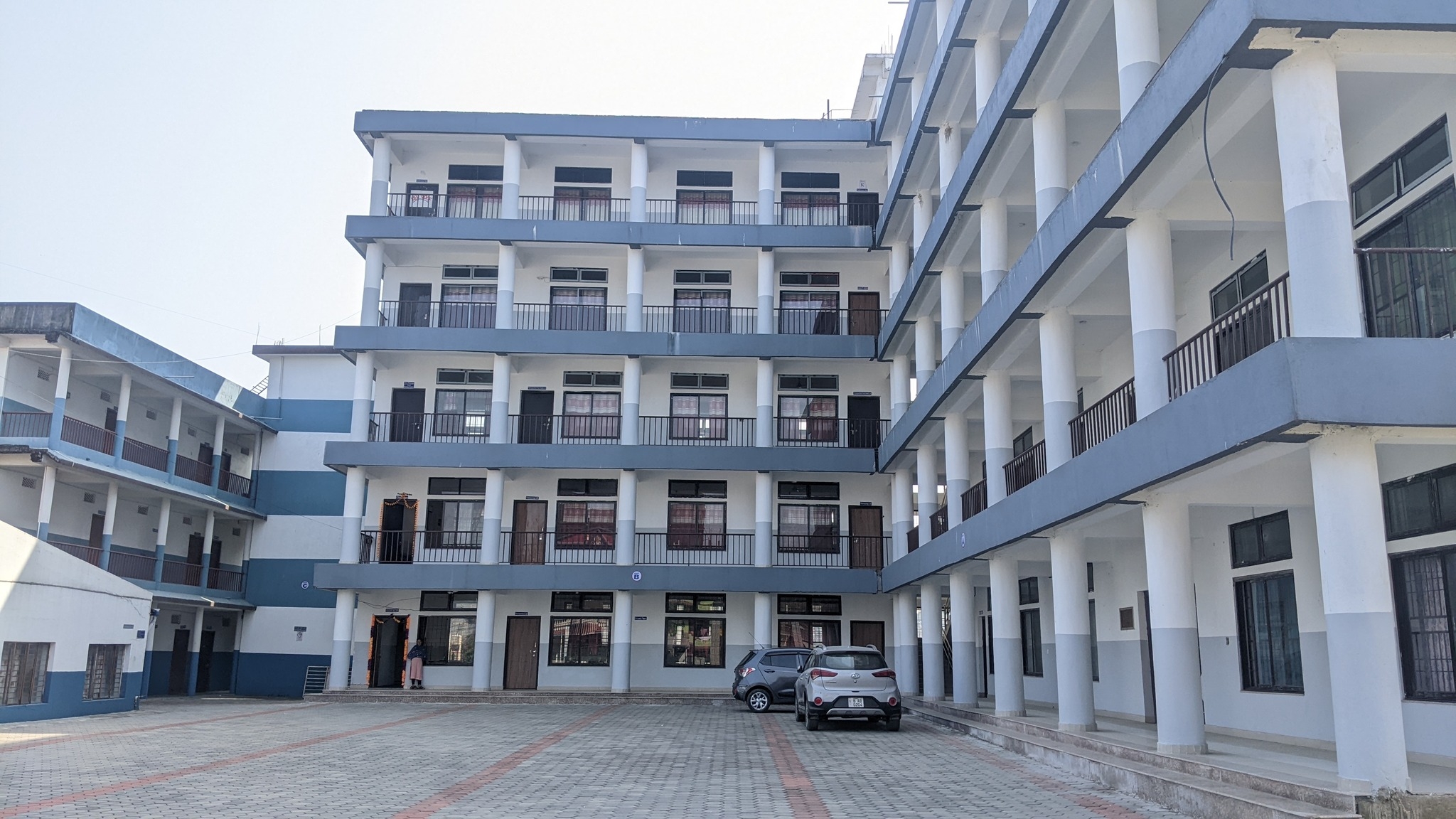
The college operates from its own building premises and maintains separate locations for its main academic activities and nursing education.
Its learning facilities include:
Laboratories for practical study
Library
Computer laboratory
Internet access
Academic building space
Access to local transportation
These facilities support programs that combine classroom study with laboratory, clinical, practical, and field-based learning.
The college’s vision focuses on developing skilled professionals in health science and contributing to health-science education.
Its mission is centered on improving the healthcare system through the development of competent human resources who can contribute to healthcare and social development.
The college also identifies practical training, research, innovation, professional ethics, skill development, student-centered learning, and community engagement among its educational priorities.
The structure of the programs reflects the practical nature of health-science education.
Nursing programs combine classroom instruction with practical and clinical components. Pharmacy education includes laboratory, pharmaceutical, and clinical study. Public-health programs incorporate field-based learning alongside theoretical and management-oriented subjects.
At postgraduate level, students move into more specialized areas of clinical pharmacy and public-health service management.
Shree College of Technology operates from two locations in Bharatpur, Chitwan.
Main Block: Bharatpur-12, Gondrang, Hamro Chowk, Chitwan, Bagmati Pradesh, Nepal
The main block serves as the principal academic and administrative location.
Nursing Block: Bharatpur-10, Thani Chowk, near Bharatpur Secondary School, Chitwan, Nepal
The nursing block supports the college’s nursing education activities.
Address: Bharatpur-12, Gondrang, Hamro Chowk, Chitwan, Bagmati Pradesh, Nepal
Phone: +977-056-420097, +977-056-420064
Fax: +977-056-420064
Email: admin@shreeedical.edu.np
Address: Bharatpur-10, Thani Chowk, near Bharatpur Secondary School, Chitwan, Nepal
Phone: +977-056-522911
Email: nursing@shreemedical.edu.np / Website: www.scot.edu.np
Shree College of Technology, formerly Shree Medical and Technical College, has operated in Chitwan since 2007 with an academic focus on nursing, pharmacy, and public health.
Its Purbanchal University programs include BSc Nursing, PBNS, BPH, B.Pharm, M.Pharm in Clinical Pharmacy, and MPH in Public Health Service Management.
Admission to these health-professional programs follows the applicable MEC entrance and admission framework. Students should follow the current MEC calendar, seat allocation, scholarship provisions, fee structure, eligibility requirements, and admission procedures for the relevant academic year.
Professional practice after graduation is also subject to the licensing requirements of the respective professional council.
Shree Medical and Technical College is currently known as Shree College of Technology (SCoT). The institution was established in 2007 and is located in Bharatpur, Chitwan.
Shree College of Technology is affiliated with Purbanchal University for its bachelor’s and master’s health-science programs.
The college offers BSc Nursing, Post-Basic Bachelor of Nursing Science (PBNS), Bachelor of Public Health (BPH), Bachelor of Pharmacy (B.Pharm), M.Pharm in Clinical Pharmacy, and Master of Public Health (MPH) in Public Health Service Management.
Admission to BSc Nursing, PBNS, BPH, and B.Pharm is based on the MECEE-BL entrance examination under the Medical Education Commission.
Applicants seeking admission to M.Pharm in Clinical Pharmacy and MPH in Public Health Service Management follow the MECEE-PG admission process.
No. Program seats are determined by the Medical Education Commission for the relevant admission cycle and may vary from one year to another.
A 10% scholarship provision is indicated for the programs. Scholarship allocation and implementation follow the prevailing provisions of the Medical Education Commission for the applicable admission cycle.
Graduates entering regulated health professions must fulfill the licensing requirements of the respective professional council. The relevant bodies include the Nepal Nursing Council, Nepal Pharmacy Council, and Nepal Health Professional Council, according to the discipline concerned.
The main block is located at Bharatpur-12, Gondrang, Hamro Chowk, Chitwan, Bagmati Pradesh, Nepal. The nursing block is at Bharatpur-10, Thani Chowk, near Bharatpur Secondary School, Chitwan.
The college focuses on nursing, pharmacy, and public health education at bachelor’s and master’s levels.