



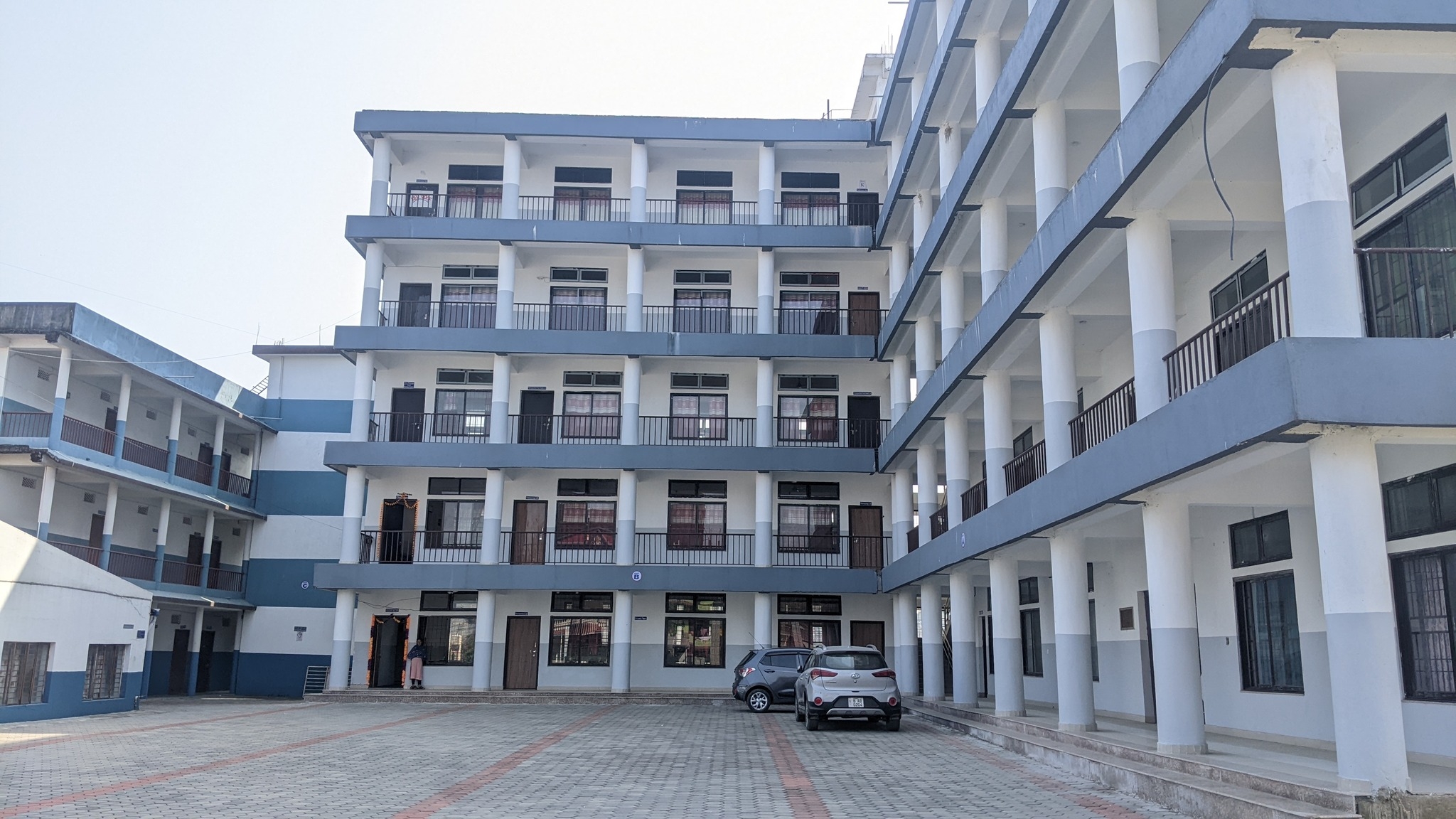
The Master in Clinical Pharmacy (M.Pharm) at Shree College of Technology, Chitwan, formerly Shree Medical and Technical College, is a two-year postgraduate pharmacy program affiliated with Purbanchal University.
The college started the program in 2022. The course runs across four semesters and carries 62 credits. Its academic work centers on clinical pharmacy, pharmacotherapeutics, hospital and community pharmacy, pharmacology and toxicology, clinical research, pharmacoepidemiology, pharmacoeconomics, clinical clerkship, and dissertation research.
| Particular | Details |
|---|---|
| Course | Master in Clinical Pharmacy (M.Pharm) |
| Level | Master |
| Duration | 2 years |
| Academic Structure | 4 semesters |
| Total Credits | 62 |
| College | Shree College of Technology |
| Former Name | Shree Medical and Technical College |
| Affiliation | Purbanchal University |
| Location | Bharatpur, Chitwan |
| Admission Entrance | MECEE-PG |
| Entrance Pass Mark | 50% |
| Professional Council | Nepal Pharmacy Council |
Clinical pharmacy deals with the appropriate, safe, effective, and economical use of medicines in patient care. The M.Pharm curriculum develops this area through advanced pharmacotherapeutics, clinical pharmacy, hospital pharmacy, pharmacy practice, clinical research, and medication-related study.
Students also work with biopharmaceutics and pharmacokinetics, pathophysiology, pharmacology and toxicology, novel drug-delivery systems, pharmaceutical products, jurisprudence, pharmacoepidemiology, and pharmacoeconomics.
The course moves progressively from taught subjects during the first year to advanced clinical study, research planning, clinical clerkship, and a dissertation during the second year.
Eligibility: Applicants must:
Hold a B.Pharm or equivalent degree recognized by the Government of Nepal.
Be registered with the Nepal Pharmacy Council.
Secure at least 50% in the Medical Education Commission entrance examination to become eligible for the merit list.
Admission follows the prevailing postgraduate medical education requirements applicable to the relevant admission cycle.
Admission to M.Pharm in Clinical Pharmacy is based on MECEE-PG under the Medical Education Commission (MEC), Nepal.
The entrance examination format includes:
Single-best-response multiple-choice questions
Four options for each question
200 questions
3-hour examination duration
Recall, understanding, and application ratio of 30:50:20
Minimum pass mark of 50% for eligibility on the merit list
The entrance syllabus is pharmacy-specific.
| Entrance subject | Marks |
|---|---|
| Biopharmaceutics and Pharmacokinetics | 20 |
| Industrial Pharmacy | 18 |
| Physical Pharmacy | 18 |
| Instrumental Analysis | 18 |
| Quality Assurance | 18 |
| Pharmacology and Toxicology | 18 |
| Pharmaceuticals and Jurisprudence | 18 |
| Pharmacotherapeutic | 18 |
| Clinical Pharmacy | 18 |
| Hospital Pharmacy | 18 |
| Pharmacy Practice | 18 |
| Total | 200 |
Seats, fees, scholarships, merit procedures, matching, and admission arrangements follow the prevailing MEC framework and may change between admission cycles.
The first semester carries 19 credits and establishes the clinical and pharmacological base for later study.
Students study:
Biopharmaceutics and Pharmacokinetics
Pathophysiology
Principles of Pharmacology and Toxicology
Clinical Pharmacy I
Hospital Pharmacy
Seminar work is incorporated into selected practical courses.
The second semester also carries 19 credits and moves further into pharmacotherapy, research, and pharmacy practice.
Subjects include:
Novel Drug Delivery System and Pharmaceutical Products
Pharmacotherapeutics I
Biostatistics and Clinical Research
Clinical Pharmacy II
Hospital and Community Pharmacy
Pharmaceutical Jurisprudence
Clinical clerkship forms part of the practical work connected with Pharmacotherapeutics I, Clinical Pharmacy II, and Hospital and Community Pharmacy.
The third semester carries 12 credits and shifts toward advanced clinical study and preparation for research.
Students study:
Pharmacotherapeutics II
Clinical Pharmacy III
Dissertation Synopsis
Pharmacoepidemiology and Pharmacoeconomics
Clinical clerkship is also integrated with Pharmacotherapeutics II and Clinical Pharmacy III. The research component begins with preparation of the dissertation synopsis.
The fourth semester is devoted to the final research stage.
Its academic components are:
Project Dissertation – 8 credits
Article Writing – 2 credits
Defense (Viva-voce) – 2 credits
The semester carries 12 credits. Across all four semesters, the program totals 62 credits.
Clinical clerkship is integrated into the second- and third-semester clinical subjects. It connects pharmacotherapeutics and clinical pharmacy study with practical pharmacy work.
The program also includes practical components in subjects such as biopharmaceutics and pharmacokinetics, pathophysiology, clinical pharmacy, hospital pharmacy, pharmacotherapeutics, and hospital and community pharmacy. Seminar and research activities add further applied work to the curriculum.
At Shree College of Technology, pharmacy education is supported by the college’s laboratories, library, computer laboratory, internet access, and academic spaces.
Research becomes a major part of the second year. The third semester includes Dissertation Synopsis, while the fourth semester is centered on Project Dissertation, Article Writing, and Defense.
This sequence takes students from selecting and planning a research topic through written research work and final academic defense.
Biostatistics and Clinical Research in the second semester provides academic preparation for this research component.
The program addresses pharmacy work related to:
Pharmaceutical care
Disease-state management
Patient care
Clinical pharmacy services
Medicine-related clinical interventions
Prevention of medicine interactions and adverse events
Community pharmacy
Hospital pharmacy management
Drug discovery and evaluation
Clinical and pharmaceutical research
Graduates may explore pharmacy-related roles in hospitals, health institutions, research settings, community pharmacy, and other areas where clinical and pharmaceutical knowledge is relevant. Actual employment depends on professional requirements, experience, recruitment conditions, and available positions.
Registration with the Nepal Pharmacy Council is already an eligibility requirement for admission to the M.Pharm program.
Professional pharmacy practice remains governed by the prevailing registration and licensing requirements of the Nepal Pharmacy Council. Applicants and graduates must follow the professional rules applicable to their registration status and area of practice.
M.Pharm admission falls within the MEC postgraduate admission framework. Seat allocation may vary from one academic year to another according to MEC determination.
The applicable fee structure, scholarship arrangements, admission procedures, and examination guidelines are also governed by the prevailing MEC decisions and official admission calendar for the relevant intake.
The program takes two years and is divided into four semesters.
The program is affiliated with Purbanchal University.
The complete program carries 62 credits across four semesters.
Applicants must hold a B.Pharm or equivalent degree recognized by the Government of Nepal and be registered with the Nepal Pharmacy Council.
Admission follows MECEE-PG under the Medical Education Commission, Nepal.
Applicants must secure at least 50% in the entrance examination to become eligible for the merit list.
Yes. Clinical clerkship is integrated into selected pharmacotherapeutics, clinical pharmacy, and hospital and community pharmacy practical components.
Yes. The third semester includes Dissertation Synopsis, and the fourth semester includes Project Dissertation, Article Writing, and Defense (Viva-voce).
No. Seat allocation is determined for the relevant admission cycle under the MEC system and may vary from year to year.






