The Post-Basic Bachelor of Nursing Science (PBNS) at Shree College of Technology, Chitwan, formerly Shree Medical and Technical College, is a three-year bachelor-level nursing program affiliated with Purbanchal University.
PBNS is designed for nurses who have already completed Proficiency Certificate Level or Diploma in Nursing and want to continue their education at bachelor level. The program develops further study in medical-surgical nursing, midwifery, community health nursing, psychiatric nursing, nursing management, education, research, and related areas.
| Particular | Details |
|---|---|
| Course | Post-Basic Bachelor of Nursing Science (PBNS) |
| Level | Bachelor |
| Duration | 3 academic years |
| College | Shree College of Technology |
| Former Name | Shree Medical and Technical College |
| Affiliation | Purbanchal University |
| Location | Bharatpur, Chitwan |
| Eligibility | PCL/Diploma in Nursing with at least 50% aggregate and Nepal Nursing Council registration |
| Admission Entrance | MECEE-BL |
| Professional Council | Nepal Nursing Council |
The revised Purbanchal University PBNS curriculum is structured over three academic years and combines theory with extensive nursing practice.
PBNS builds on previous nursing education rather than beginning with entry-level nursing preparation. Its academic direction covers nursing care, problem identification, planning, implementation, health education, professional development, evaluation, research, and management.
The program includes four elective nursing areas: Midwifery, Community Health Nursing, Medical-Surgical Nursing, and Psychiatric Nursing.
This structure allows students to study foundational and applied nursing subjects before progressing into leadership, research, oncology nursing, and a selected major area during the final year.
Eligibility: Applicants must have completed Proficiency Certificate Level or Diploma in Nursing with at least 50% aggregate marks and be registered with the Nepal Nursing Council.
Admission is governed by the prevailing eligibility requirements and admission procedures applicable to the relevant Medical Education Commission admission cycle.
Admission to PBNS is based on MECEE-BL under the Medical Education Commission (MEC), Nepal.
The entrance examination format includes:
200 multiple-choice questions
200 full marks
Single-best-response questions with four options
3-hour examination duration
Recall, understanding, and application ratio of 30:50:20
The entrance content is divided into Core Subjects, Basic and Integrated Health Science applied to nursing, and Mental Agility Test components. Core nursing areas include community health nursing, adult health nursing, child health nursing, midwifery and gynaecological nursing, fundamentals of nursing, leadership and management, and behavioural science and mental health.
Admission, merit procedures, scholarship arrangements, seat allocation, fees, and other requirements follow the prevailing MEC rules, guidelines, code of conduct, and admission calendar. Seat numbers may change between admission cycles based on MEC determination.
The first year establishes the scientific and nursing base needed for advanced study. Major subjects include:
Anatomy and Physiology
Pharmacology
Pathophysiology
Microbiology and Parasitology
Biochemistry
Nutrition and Dietetics
Basic Science/Nutrition Practice
Medical-Surgical Nursing-I
Nursing Concepts and Theories
Pediatric Nursing
Medical Sociology/Anthropology
Professional English
Medical-Surgical Nursing and Pediatric Nursing include practical components alongside theory.
The second year shifts toward maternal health, community care, mental health, nursing education, epidemiology, and ageing.
Subjects include:
Midwifery-I
Community Health Nursing-I
Psychiatric Nursing-I
Educational Science
Epidemiology
Geriatric Nursing
Applied Computer Technology
Midwifery, community health nursing, psychiatric nursing, educational science, and geriatric nursing include practical components.
The final year places greater emphasis on management, research, oncology care, and specialized nursing practice.
Students study:
Leadership and Management
Research and Biostatistics in Nursing
Oncology Nursing
Elective subject and practicum
The elective areas are Community Health Nursing-II, Midwifery-II, Medical-Surgical Nursing-II, and Psychiatric Nursing-II.
Practical education is built into all three years of the PBNS program.
First-year clinical activities include general hospital and children’s hospital practice, along with laboratory-based learning in microbiology, parasitology, biochemistry, and nutrition.
Second-year practice extends to maternity, specialty and mental-health settings, senior citizen care, nursing education institutions, and community health placements.
Third-year study includes management practicum, oncology-related clinical practice, research work, and practicum in the selected major nursing subject. Research activities include proposal preparation, conducting research, and report writing.
The academic approach includes lectures, group discussions, demonstrations, assignments, observation visits, practical assignments, presentations, self-directed learning, and problem-based learning.
For theory subjects, the evaluation structure assigns 20% to internal assessment and 80% to the final examination. Practical evaluation includes internal assessment, with a final practical examination component in the major elective subject.
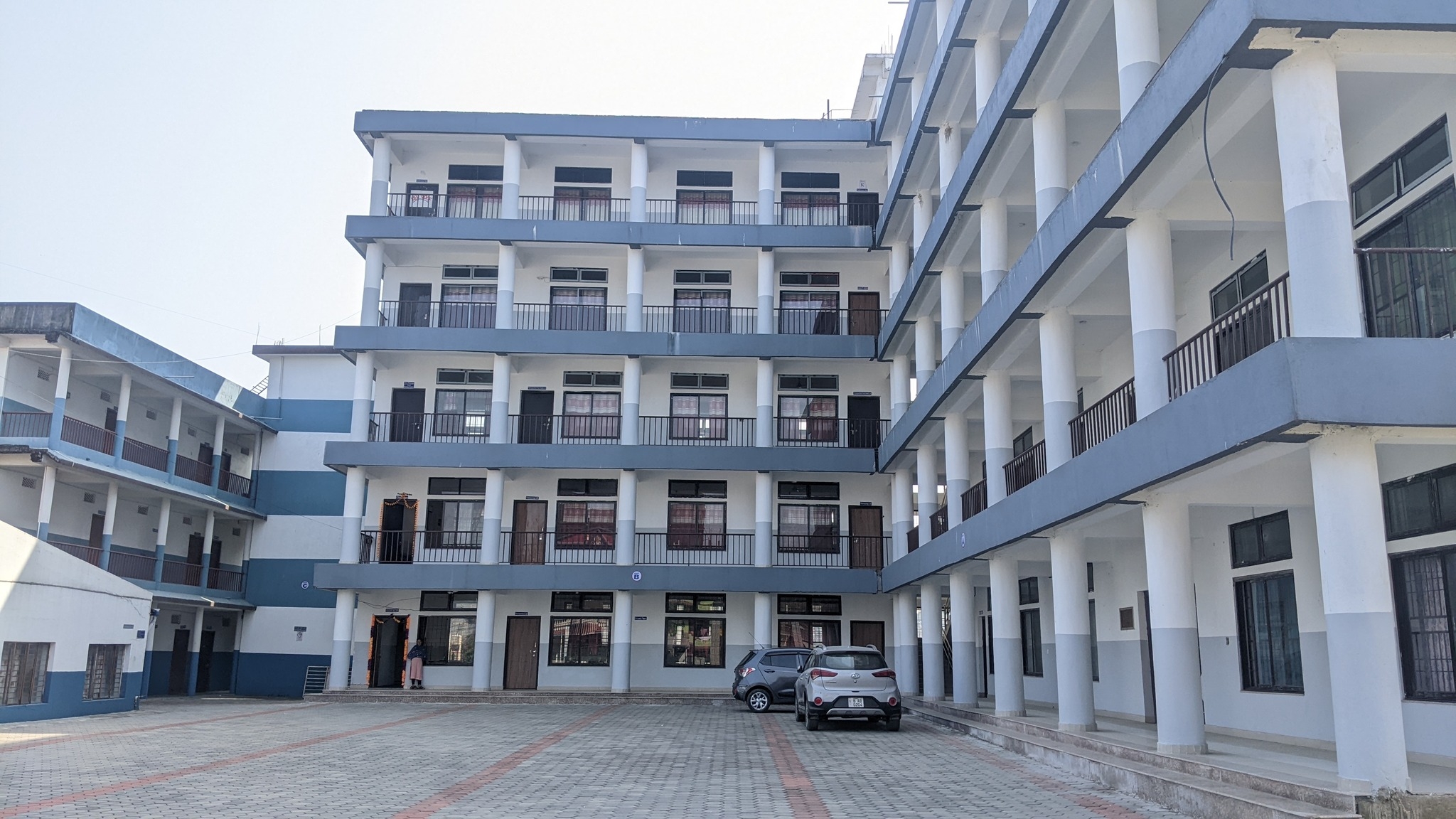
The nursing program operates within the college’s nursing education setting in Bharatpur, Chitwan. The Nursing Block is located at Bharatpur-10, Thani Chowk, near Bharatpur Secondary School.
The college has laboratories, a library, a computer laboratory, internet access, and academic spaces supporting its health-science programs. PBNS itself requires substantial clinical, practical, educational, community, management, and research-based learning across the three years.
PBNS extends the academic preparation of nurses who already hold PCL or Diploma-level nursing qualifications. The course develops study in clinical nursing, community health, midwifery, mental health, teaching, management, research, and a selected specialist nursing area.
Graduates may explore nursing roles connected with hospitals, community health services, nursing education, management, and the clinical area related to their training and experience. Actual professional opportunities depend on licensing requirements, experience, recruitment conditions, and the requirements of individual employers.
After completing the program, graduates must fulfill the prevailing professional licensing requirements of the Nepal Nursing Council before entering professional practice under the applicable regulatory framework.
Fees, scholarship provisions, and seat allocation for PBNS are governed by the prevailing MEC framework for the relevant admission year. MEC determines seats for each admission cycle, so an allocation from an earlier year should not be treated as a permanent intake capacity.
Applicants should use the current MEC admission calendar and the applicable college admission information when making admission and financial decisions.
PBNS is structured for PCL or Diploma-qualified nurses seeking bachelor-level nursing education. Its three-year combination of nursing theory, clinical practice, community work, educational practice, management, research, and elective specialization is particularly relevant to nurses planning to deepen their academic and professional preparation within nursing.