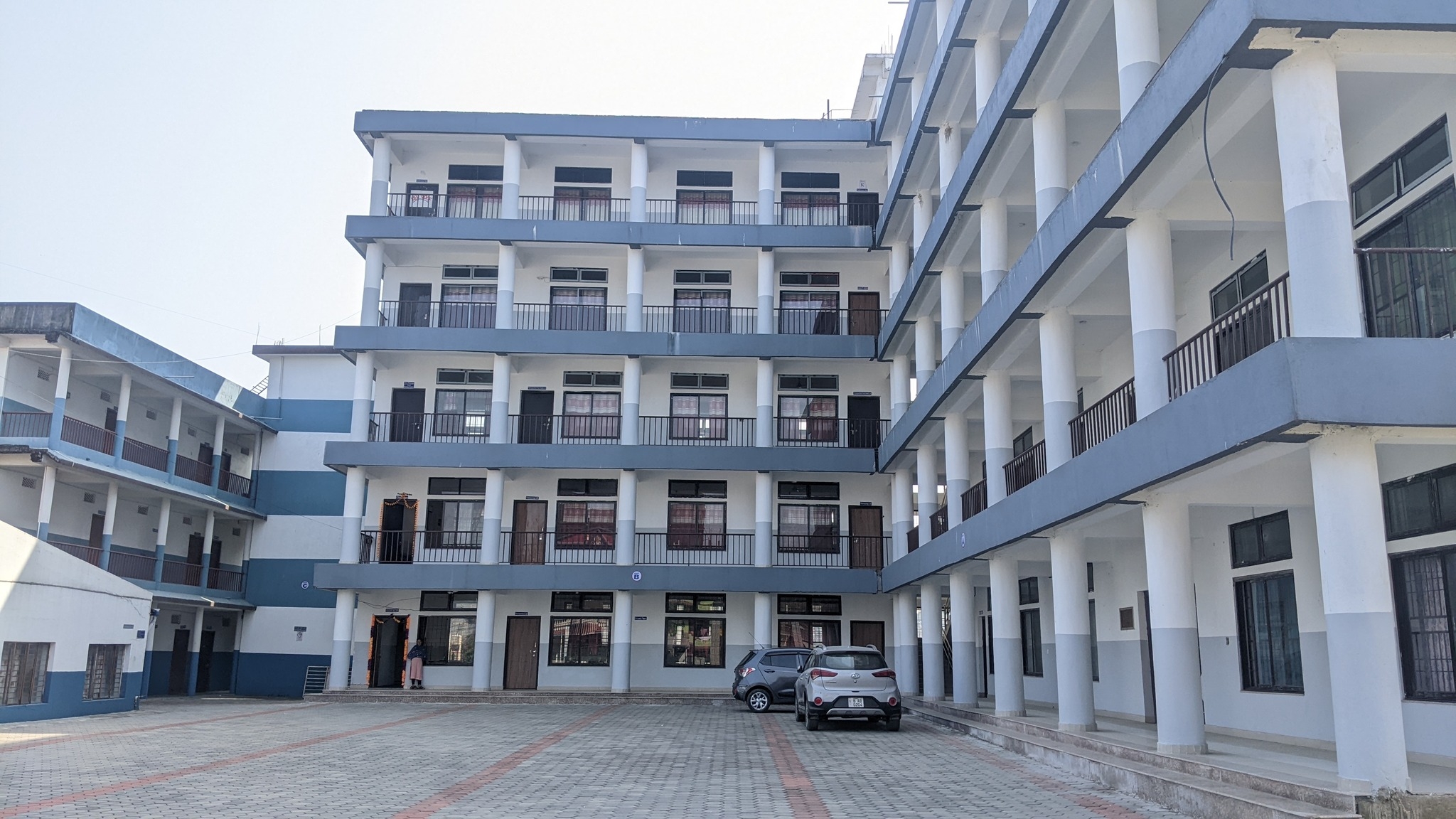
The Bachelor of Public Health (BPH) at Shree College of Technology, Chitwan, formerly Shree Medical and Technical College, is a four-year bachelor’s degree affiliated with Purbanchal University. The revised university curriculum is organized into eight semesters and combines public health theory with laboratory, classroom, field-based, residential field, project, and research activities.
The program covers population health, epidemiology, family and reproductive health, nutrition, environmental and occupational health, health education, health-service management, statistics, research, health economics, and public health project work.
| Particular | Details |
|---|---|
| Course | Bachelor of Public Health (BPH) |
| Level | Bachelor |
| Duration | 4 years |
| Academic Structure | 8 semesters |
| College | Shree College of Technology |
| Former Name | Shree Medical and Technical College |
| Affiliation | Purbanchal University |
| Location | Bharatpur, Chitwan |
| Admission Entrance | MECEE-BL |
| Professional Council | Nepal Health Professional Council |
BPH prepares students for public health work that involves identifying health problems, planning and conducting health programs, health education, training, research, and management.
The curriculum moves from basic health sciences and introductory public health into epidemiology, community interventions, program management, research, statistics, policy, health financing, and field-based public health practice.
Eligibility: Applicants may qualify through the following academic routes:
10+2 Science or equivalent with Physics, Chemistry, and Biology, securing at least 50% aggregate marks or GPA 2.4.
Health Science Proficiency Certificate/Diploma in General Medicine, Medical Laboratory Technology, Ophthalmic Science, Dental Science, Pharmacy, Ayurveda, Nursing, Radiography, or Physiotherapy with at least 50% aggregate marks. Applicants through this route must also hold registration with the relevant professional council according to their previous program.
An equivalent percentage under a certificate-level qualification such as A-Level with a different grading system.
Eligibility and admission are applied under the prevailing requirements for the relevant admission cycle.
Admission to BPH follows MECEE-BL under the Medical Education Commission (MEC), Nepal.
The entrance format includes:
200 single-best-response multiple-choice questions
200 full marks
Four options for each question
3-hour examination duration
Recall, understanding, and application ratio of 30:50:20
The admission process follows the prevailing MEC rules, guidelines, code of conduct, merit and matching procedures, scholarship provisions, seat-allocation system, fee structure, and admission calendar.
Seats, fees, scholarships, and examination arrangements may change between admission cycles according to MEC decisions.
The first two semesters establish the scientific and public health foundation of the program.
Major areas include:
Introduction to Public Health
Anatomy, Physiology and Patho-physiology
Public Health Microbiology
Public Health Biochemistry
Applied Professional English
Public Health Entomology and Rodentology
Public Health Pharmacy, Pharmacology and Toxicology
First Aid and Safety
Basic Foods and Nutrition
Ecosystem and Environmental Health
Epidemiology of Risk Factor and Communicable Diseases
Laboratory and field-based practice accompany several subjects.
The third and fourth semesters move further into community and population health.
Students study areas such as:
Public Health Core Actions
Epidemiology of Communicable Diseases
Family Health
Applied Public Health Nutrition
Environmental and Occupational Health
Demography, Population Studies and Family Planning
Reproductive Health and Gender
Epidemiology of Non-communicable Diseases and Mental Health
Public Health Epidemiology Methods
Sociology, Anthropology and Social Psychology in Public Health
Rural, Urban and International Health
Concurrent field-based practice and term-paper work are included within this stage of the curriculum.
The fifth and sixth semesters strengthen public health planning, management, education, statistics, and community intervention.
Study areas include:
Public Health Statistics and Computer Application-I
Community Organization, Participation and Action
Public Health Infrastructure Engineering and Disaster Management
Fundamentals of Health Education
Health-Promoting School Program
Fundamentals of Public Health Service Management
Applied Health Education and Promotion
Public Health and Medical Services in Nepal
Public Health Policy, Plan and Program in Nepal
Community Health Diagnosis and Intervention
Community Health Diagnosis and Intervention includes residential field-based practice.
The final two semesters emphasize research, monitoring, management, economics, training, and project work.
The curriculum covers:
Public Health Statistics and Computer Application-II
Public Health Research
Health Program Supervision, Monitoring and Evaluation
Health Economics and Financing
Health Management Information System and Logistic Management
Comprehensive Public Health Management Field Practicum
Education and Training of Human Resource
Public Health Profession and Entrepreneurship
Public Health Project Management
Public Health Research Practicum
Students also complete proposal-writing, training, residential field-practice, and research components.
Fieldwork is built into the BPH curriculum from the early semesters. Practical formats include laboratory-based practice, field-based practice, concurrent field-based practice, classroom-based practice, residential field-based practice, proposal writing, training-program conduction, and research practicum.
This structure connects classroom subjects with community health diagnosis, health education, environmental health, program management, research, and other public health activities.
BPH graduates may explore work in:
Government public health services
Health organizations
Health centers
Private health sector organizations
Research
Universities and education
NGOs and INGOs
Local development sectors
Career opportunities depend on professional registration, recruitment requirements, experience, further qualifications, and the needs of individual organizations.
BPH is also an academic entry qualification for Purbanchal University MPH study, including Public Health Service Management and other specified public health specialization pathways.
After completing the degree, graduates entering regulated professional practice must fulfill the licensing requirements of the Nepal Health Professional Council (NHPC).
The applicable professional licensing examination and registration process must be completed under the prevailing council requirements before professional practice.
BPH seats are determined for each admission cycle under the MEC system and may vary from one academic year to another.
The applicable fee structure, scholarship provisions, seat distribution, admission procedure, and entrance-related guidelines follow the prevailing MEC decisions and official admission calendar.
The Bachelor of Public Health is a four-year program divided into eight semesters.
The program is affiliated with Purbanchal University.
Applicants follow the MECEE-BL entrance and admission process under the Medical Education Commission.
The curriculum includes epidemiology, family and reproductive health, nutrition, environmental and occupational health, health education, statistics, public health management, policy, health economics, research, and community-based practice.
Yes. The curriculum contains laboratory, field-based, concurrent field-based, residential field, community intervention, training, proposal-writing, and research activities.
No. Seats are determined under the MEC admission system for the relevant academic cycle and may change from year to year.
BPH is an academic entry qualification for specified Purbanchal University Master of Public Health pathways.
Graduates entering regulated professional practice must complete the applicable Nepal Health Professional Council licensing and registration requirements.