Overview
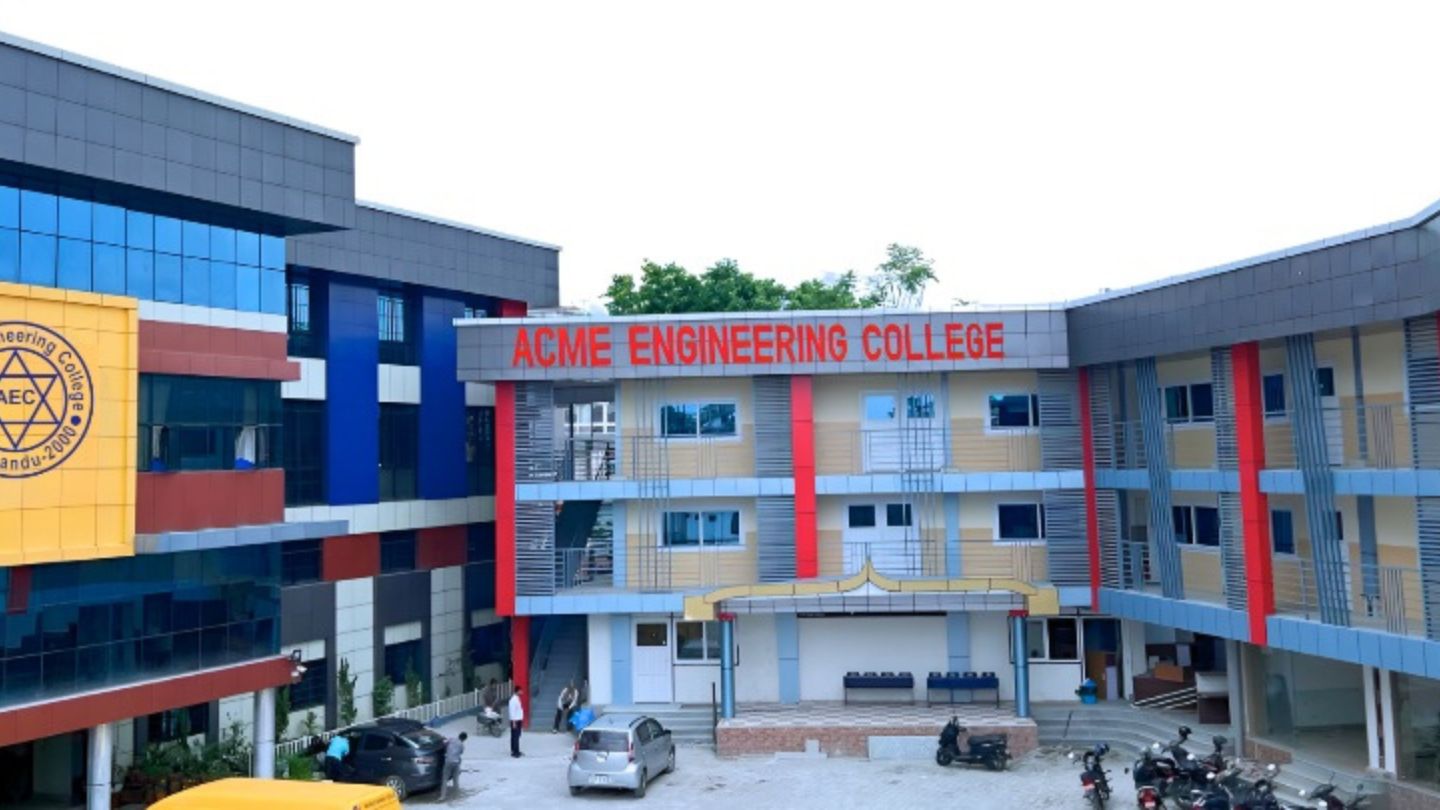
BE Computer Engineering at Acme Engineering College, Basundhara, Kathmandu
Bachelor in Computer Engineering at Acme Engineering College is an undergraduate engineering program affiliated with Purbanchal University. The college is located in Basundhara, Kathmandu. BE Computer has 60 seats and is offered in the day shift.
The Purbanchal University Faculty of Engineering curriculum is organized across eight semesters. The course structure effective from the 2021 batch combines mathematics and science with programming, electronics, computer architecture, databases, networks, software engineering, computing systems, projects, electives, and internship.
Key Highlights
-
Course: Bachelor in Computer Engineering
-
College: Acme Engineering College
-
Location: Basundhara, Kathmandu, Nepal
-
Affiliation: Purbanchal University
-
Level: Bachelor’s
-
Academic Structure: 8 semesters
-
Seats: 60
-
Shift: Day
-
Curriculum: Purbanchal University Faculty of Engineering, effective from the 2021 batch
-
Project Work: Project I, Project-II, and Project-III in two parts
-
Final-Semester Component: Internship
-
Study Components: Lectures, tutorials, practical work, laboratory-based subjects, projects, and electives
Course Structure and Subjects
The first year builds a base in mathematics, science, programming, computing, electronics, and general engineering.
Semester I carries 21 credit hours and includes Mathematics I, Physics, English for Technical Communication, Computer Programming, Fundamental of Computing Technology, Engineering Drawing, and Workshop Technology. Semester II has 18 credit hours with Mathematics-II, Chemistry, Object Oriented Programming with C++, Digital Logic, Basic Electrical Engineering, and Applied Mechanics.
Programming appears from the first semester rather than being introduced later in the course. The opening year also brings students into contact with digital systems, electrical engineering, engineering drawing, and workshop practice alongside computing subjects.
Programming, Data Structures, and Computer Systems
The third semester moves further into core computer engineering study through Mathematics-III, Data Structure and Algorithm, Object Oriented Analysis and Design, Computer Graphics, Electronic Devices and Circuits, Applied Sociology, and Project I.
Semester IV covers Database Management System, Python Programming, Discrete Structure, Microprocessor, Communication System, and Probability & Statistics. Several of these subjects include practical hours within the semester structure.
This stage connects software development with data organization, microprocessor study, communication systems, graphics, electronics, mathematical structures, and project work.
Advanced Computing and Engineering Subjects
Semester V consists of Algorithm Analysis and Design, Computer Architecture and Design, Numerical Methods, Operating System, Engineering Economics, Research Methodology, and Project-II. It carries 20 credit hours.
Semester VI includes Artificial Intelligence, Computer Network, Internet of Things (IoT), Software Engineering, Theory of Computation, and Elective-I. Practical components are attached to several technical subjects, including computer networks and other computing courses.
The seventh semester moves into Distributed & Cloud Computing, Information Technology Project Management, Simulation and Modeling, Elective-II, Elective-III, and Project-III (Part A).
Semester VIII concludes with Cyber Security, Engineering Professional Practice, Elective-IV, Project-III (Part B), and Internship.
Project and Practical Work
Project work is distributed across different stages of the curriculum.
Project I appears in Semester III, followed by Project-II in Semester V. Project-III begins as Part A in Semester VII and continues as Part B in Semester VIII. The last semester also contains an internship as a separate three-credit component.
Practical hours are included in subjects such as Computer Programming, Fundamental of Computing Technology, Object Oriented Programming with C++, Digital Logic, Data Structure and Algorithm, Computer Graphics, Database Management System, Python Programming, Microprocessor, Numerical Methods, Operating System, Computer Network, and several later-semester courses.
The structure therefore places programming, laboratory work, project development, and computing systems alongside the theoretical parts of the degree.
Eligibility for BE Computer Engineering
Purbanchal University’s Faculty of Engineering entrance eligibility covers BE Computer among its bachelor-level engineering programs.
The criteria include routes through 10+2 or equivalent, three-year engineering diploma or National Examination Board Technical study, A Level, and other specified equivalent qualifications. Mathematics, Physics, and Chemistry/Computer are part of the stated subject requirements, with minimum grade, CGPA, or percentage conditions depending on the applicant’s academic route.
Admission to the BE/B.Arch programs at Acme Engineering College also requires candidates to pass the entrance examination conducted by Purbanchal University.
Learning Environment at Acme Engineering College
Acme Engineering College uses lectures as the main form of undergraduate instruction, with tutorials, seminars, laboratory work, and field study used according to course requirements. Lectures also use audiovisual media, and guest lecturers are invited each semester.
The college library has more than 20,000 books, with textbooks provided at a stated 1:1 ratio. Students may also participate in internships, exhibitions, tours, seminars, and workshops.
For BE Computer students, these college-level arrangements accompany a curriculum with regular programming, practical work, technical laboratories, projects, electives, and an internship.
Scholarships
Scholarship provisions include merit-based and classified categories. The top 5% of admitted students in each faculty based on entrance examination performance receive the merit-based scholarship provision, while another 5% of admitted students receive classified scholarships.
Frequently Asked Questions
1. Which university is BE Computer at Acme Engineering College affiliated with?
BE Computer Engineering at Acme Engineering College is affiliated with Purbanchal University.
2. How many seats are available for BE Computer?
The program has 60 seats.
3. Which shift is available for BE Computer?
BE Computer is offered in the day shift.
4. How is the BE Computer curriculum structured?
The curriculum is organized across eight semesters under the Purbanchal University Faculty of Engineering structure effective from the 2021 batch.
5. Does BE Computer include project work?
Yes. Project I is included in Semester III, Project-II in Semester V, and Project-III is divided between Semesters VII and VIII.
6. Is an internship included in the curriculum?
Yes. Internship is included as a three-credit course in Semester VIII.
7. What subjects are studied in BE Computer Engineering?
The curriculum covers programming, data structures and algorithms, databases, computer graphics, microprocessors, computer architecture, operating systems, computer networks, software engineering, distributed and cloud computing, cyber security, communication systems, projects, and electives.
8. Is a Purbanchal University entrance examination required?
Yes. Candidates seeking admission to the BE/B.Arch programs are required to pass the entrance examination conducted by Purbanchal University.