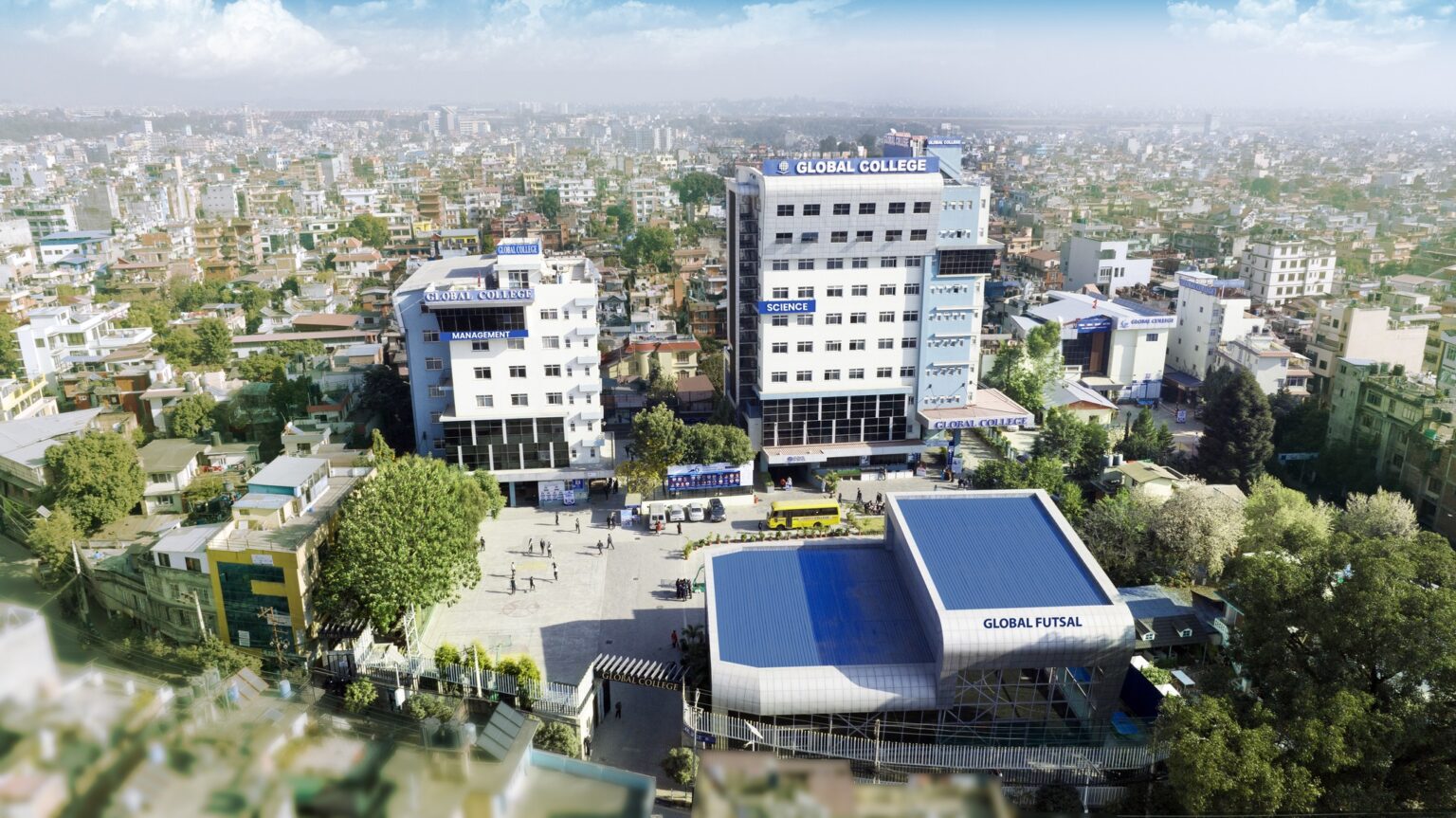
The Bachelor of Technology in Artificial Intelligence (B.Tech. in AI) at Global College of Social Science and Technology (GCST) is a four-year undergraduate program affiliated with Purbanchal University. GCST, previously known as the College of Development Studies (CDS), is located in Mid-Baneshwor, Kathmandu.
The program combines programming, mathematics, computer systems, data science, and artificial intelligence subjects with laboratory work, semester projects, an internship, electives, and a professional project. Students progress from introductory computing and mathematical courses to subjects such as machine learning, pattern recognition, natural language processing, reinforcement learning, and cloud computing. The curriculum follows an eight-semester structure under the Faculty of Science and Technology of Purbanchal University.
| Attribute | Details |
|---|---|
| Course | Bachelor of Technology in Artificial Intelligence |
| Common Name | B.Tech. in AI |
| College | Global College of Social Science and Technology |
| Previous College Name | College of Development Studies |
| Location | Mid-Baneshwor, Kathmandu, Nepal |
| Affiliation | Purbanchal University |
| Faculty | Faculty of Science and Technology |
| Academic Level | Bachelor’s degree |
| Duration | Four academic years |
| Structure | Eight semesters |
| Total Seats | 48 |
| Medium | English |
| Entrance Requirement | Purbanchal University entrance examination |
| Attendance Requirement | At least 80% |
| Practical Components | Laboratory courses, semester projects, internship, and professional project |
The B.Tech. in Artificial Intelligence develops knowledge across computing, mathematics, data analysis, intelligent systems, and software-related subjects. The first year introduces programming, digital logic, calculus, artificial intelligence, communication, professional ethics, probability, statistics, and linear algebra.
Later semesters cover database systems, algorithms, computer networks, AI programming tools, data science, machine learning, embedded systems, pattern recognition, data mining, computer vision, deep learning, natural language processing, reinforcement learning, and cloud computing.
The program also includes continuing project work. Project I begins in the second semester, followed by projects in subsequent semesters, an internship in the seventh semester, and a professional project in the final semester.
The program may suit students who are interested in:
Programming and software-related problem-solving
Mathematics, probability, statistics, and analytical methods
Artificial intelligence and intelligent systems
Data science and data analysis
Computer systems, networks, and embedded systems
Laboratory activities and semester-based project work
Research, technical reporting, and presentations
Students should be prepared for a curriculum that combines theoretical study with programming, laboratories, assignments, group projects, fieldwork, and continuous assessment.
Applicants must have completed twelve years of schooling in the science stream.
They must meet one of the following academic requirements:
A minimum D+ grade in each subject of 10+2 with a CGPA of 2.0 or above; or
At least second division, equivalent to 45%, in 10+2, PCL, or an equivalent qualification in the science discipline.
Students who have passed Grade 11 and are waiting for the Grade 12 supplementary examination may apply. They must submit all required academic documents at the time of admission.
Students who have appeared in the final examination and are waiting for their results and certificates may also apply for the entrance examination. Their required documents must be submitted during admission.
Applicants holding foreign academic certificates must submit an equivalence certificate and documentation showing subject-wise grades with CGPA or the total percentage issued by the concerned authority.
Applicants must pass the entrance examination conducted by Purbanchal University. Admission eligibility depends on meeting the academic requirements and passing the university entrance examination.
Duration: Four academic years
Semesters: Eight
Medium: English
English is used for instruction and examinations in all subjects. The curriculum is arranged semester-wise, with each semester containing theory, tutorial, laboratory, project, internship, or fieldwork components according to the nature of the courses.
The first semester carries 18 credits and introduces the foundations of programming, computing, mathematics, communication, and professional responsibility.
Subjects include:
Introduction to Programming
Digital Logic
Calculus
Introduction to Artificial Intelligence
Technical Report Writing and Presentation
Society and Professional Ethics
The second semester carries 17 credits and begins the program’s continuing project component.
Subjects include:
Object Oriented Programming
Artificial Intelligence and Intelligent Systems
Microprocessor and Assembly Language
Probability and Statistics
Linear Algebra
Project I
The first-year curriculum establishes a base in programming, digital systems, mathematics, artificial intelligence concepts, technical communication, and project work.
The third semester carries 17 credits.
Subjects include:
Database Management System
Data Structure and Algorithm
Computer Organization
Operating System
Differential Equations
Project II
The fourth semester also carries 17 credits.
Subjects include:
Numerical Methods
Computer Networks
Design and Analysis of Algorithms
Programming for AI (Tools, Techniques and Libraries)
Introduction to Data Science
Project III
During the second year, students study databases, computing architecture, operating systems, networks, numerical methods, algorithm design, data science, and programming tools used in artificial intelligence coursework.
The fifth semester carries 17 credits.
Subjects include:
Machine Learning
Optimization Techniques
Embedded Systems
Pattern Recognition and Image Processing
Data Warehousing and Mining
Project IV
The sixth semester carries 17 credits.
Subjects include:
Object Oriented Software Engineering
Computer Vision
Deep Learning
Speech and Natural Language Processing
Research Methods
Project V
The third year concentrates on major artificial intelligence study areas while continuing semester-based project work. Research Methods also prepares students for structured academic and technical inquiry.
The seventh semester carries 11 credits.
Subjects include:
Internship
Reinforcement Learning
Cloud Computing
Project VI
The internship is assigned three credits and includes practical and fieldwork components.
The eighth semester carries 12 credits.
Subjects include:
IoT for Smart City
Elective I
Elective II
Professional Project
The final semester allows students to select two elective subjects and complete a professional project.
The curriculum groups elective options into four areas.
Image and Video Processing
Surveillance Video Analytics
People Detection and Bio-metric Recognition
Introduction to Statistical Learning
Optimization Methods in Machine Learning/Convex Optimization
Kernel Methods
Bayesian Data Analysis
Smart Product Development
Predictive Analysis and IoT
Modeling and Simulation
Pervasive Computing
Fundamentals of Big Data Analytics
Data Analysis and Visualization
Business Intelligence
Social Media Analytics
Students take Elective I and Elective II during the eighth semester.
Project work begins in the second semester and continues through the remaining semesters. Students are expected to apply concepts and principles from their coursework while completing practical assignments.
The project structure is intended to develop abilities related to:
Goal setting
Planning
Research
Teamwork
Practical application
Assessment
Report writing
Presentation
Students may work in groups of up to three under the guidance of a group adviser. Each group selects a project and defines its aims and objectives. The curriculum progresses from Project I to Project VI before the Professional Project in the eighth semester.
The internship appears in the seventh semester and carries three credits. It consists of practical and fieldwork activities. It is studied alongside Reinforcement Learning, Cloud Computing, and Project VI.
GCST follows a participatory and practical teaching approach. Learning activities include classroom discussions, case-based assignments, collaborative work, workshops, seminars, and student presentations.
The college has classrooms equipped with projectors and whiteboards, a library containing books, journals, research materials, and digital resources, and a computer laboratory with internet access and software for academic work. Mentoring support is available for assignments, research, and project planning.
These institutional resources complement the B.Tech. in AI curriculum, which requires regular programming, laboratory work, reporting, research, presentations, and semester projects.
Students must maintain at least 80% attendance in lectures, tests, and tutorial classes to qualify for the final examination in a subject.
When absence results from illness or another compelling reason, missed academic work must be completed satisfactorily. Responsibility for completing missed work rests with the student, with support from the concerned teachers.
The program uses continuous assessment throughout each semester. Assessment may cover:
Class and tutorial participation
Assignments
Laboratory work
Class tests
Quizzes
Practical examinations
End-semester examinations
Students are informed at the beginning of each course about the assessment methods and the weight assigned to different activities.
For combined theory and laboratory or practical courses:
Internal assessment: 20%
Practical assessment: 20%
Final examination: 60%
For theory-only courses:
Internal assessment: 20%
Final examination: 80%
For laboratory or practical courses:
Continuous internal evaluation: 60%
University-evaluated final viva: 40%
End-semester examinations are set and evaluated by examiners.
| Marks | Grade | Grade Point |
|---|---|---|
| 90 and above | A+ | 4.00 |
| 80 to below 90 | A | 3.75 |
| 70 to below 80 | B+ | 3.50 |
| 60 to below 70 | B | 3.00 |
| 50 to below 60 | C | 2.50 |
| 40 to below 50 | D | 1.75 |
| Below 40 | F | 0.00 |
| Not Qualified or Absent | I | Incomplete |
A student receiving an Incomplete grade for unmet coursework requirements may complete the requirement within six weeks from the end of the semester. When the requirement is not completed within that period, the grade is converted to Fail.
Students must maintain a cumulative grade point average of at least 2.0 throughout the study period. A student who does not maintain the required CGPA may be required to withdraw from the program.
Through coursework, laboratories, projects, presentations, and the internship, students may develop abilities in:
Programming and object-oriented software development
Database and computer system fundamentals
Data structures and algorithm design
Probability, statistics, calculus, and linear algebra
Data analysis and data science
Artificial intelligence and intelligent systems
Machine learning and pattern recognition
Image, speech, and natural language processing
Research methods and technical reporting
Project planning, teamwork, and presentations
The level of skill developed will depend on academic participation, practical work, project quality, individual study, and performance across the program.
After completing the B.Tech. in Artificial Intelligence, graduates may pursue programs such as:
Master of Technology in Artificial Intelligence
Master of Science in Artificial Intelligence
Master of Computer Applications
Master of Information Technology
Master of Science in Computer Science
Master of Science in Computer Information Systems
Master of Business Administration
Admission to any graduate program remains subject to the eligibility and selection requirements of the concerned university or institution.
The B.Tech. in AI program at GCST has 48 seats.
GCST offers some scholarship support based on merit and financial need. Support may include scholarships for academically performing students and assistance for students from remote or marginalized backgrounds or those experiencing financial hardship.
Prospective students should consider the program’s science-stream eligibility, Purbanchal University entrance requirement, four-year duration, English-medium instruction, and minimum attendance requirement.
The course includes mathematics, programming, laboratory activities, continuous assessment, semester projects, an internship, electives, and a professional project. Students considering the program should assess their interest in these areas and their readiness for sustained theoretical and practical study.
The full course name is Bachelor of Technology in Artificial Intelligence.
The B.Tech. in AI at GCST is affiliated with Purbanchal University.
The program runs for four academic years across eight semesters.
Global College of Social Science and Technology is located in Mid-Baneshwor, Kathmandu, Nepal.
The B.Tech. in AI program has 48 seats.
Yes. Applicants must pass the entrance examination conducted by Purbanchal University.
Students must maintain at least 80% attendance in lectures, tests, and tutorial classes to qualify for final examinations.
Yes. Project work begins in the second semester and continues across later semesters. The curriculum also includes an internship and a final professional project.
English is the medium of instruction and examination for all subjects in the program.
Students must maintain a CGPA of at least 2.0 throughout the study period.