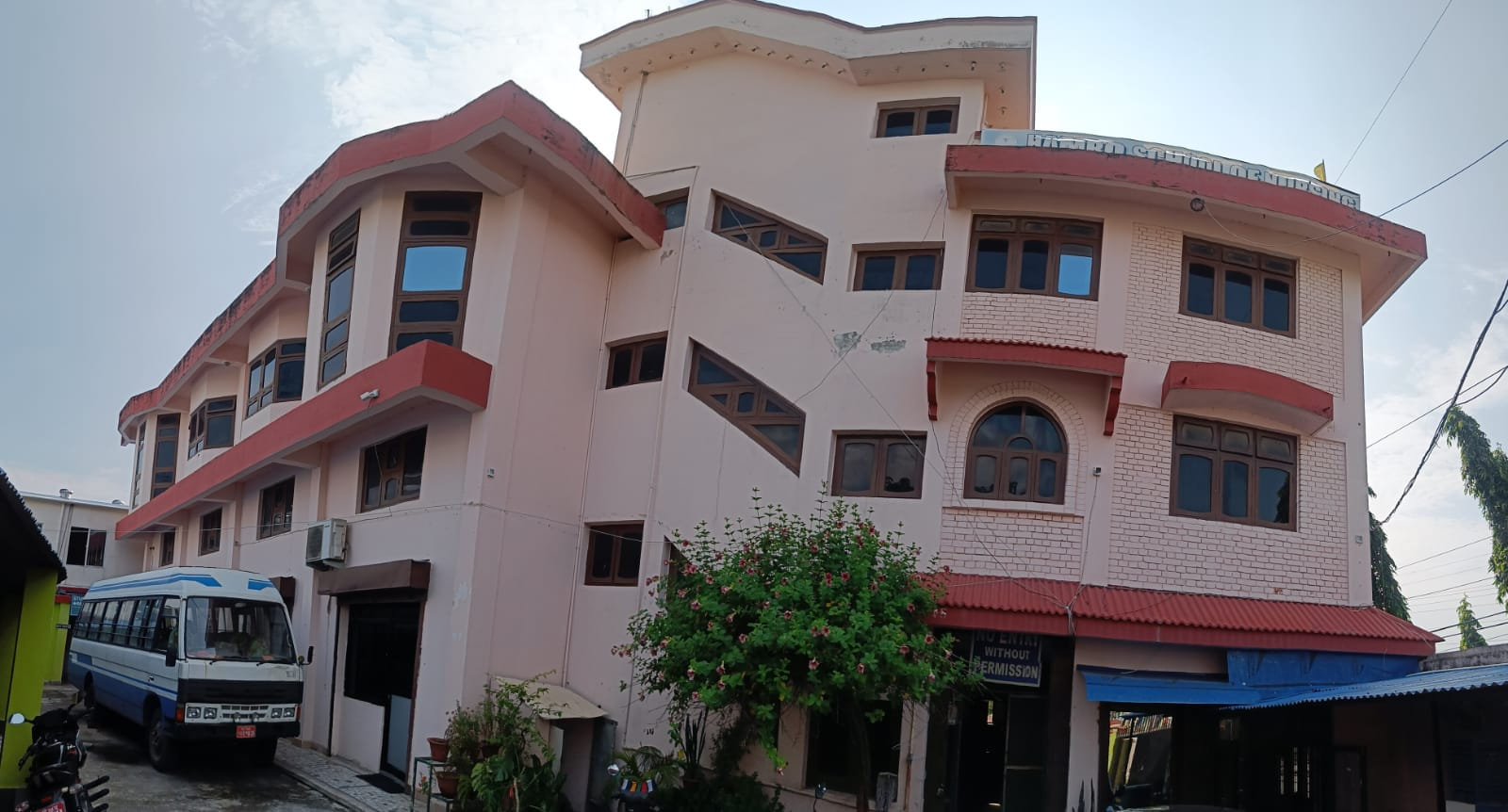
The Bachelor of Science (BSc) in Nursing at Hamro School of Nursing, Morang is a four-year, full-time undergraduate nursing program affiliated with Purbanchal University (PU). The college is located in Kanchanbari, Biratnagar, Morang, and is recognized by the Nepal Nursing Council.
The program combines nursing theory with practical, clinical, community, research, education, and management components. Purbanchal University’s revised Bachelor of Science in Nursing (BSN) curriculum was introduced in 2019 (2076) under the Faculty of Medical and Allied Sciences.
| Particular | Details |
|---|---|
| Course | Bachelor of Science (BSc) in Nursing |
| College | Hamro School of Nursing |
| Duration: | Four academic years, full-time |
| Affiliation: | Purbanchal University |
| Recognition: | Nepal Nursing Council |
| Location: | Kanchanbari, Biratnagar, Morang, Nepal |
| Admission: | MECEE-BL under prevailing MEC rules |
The program is designed to prepare nursing graduates with knowledge and practical skills for nursing care, community health, midwifery, health education, administration, research, and management. The curriculum integrates the nursing process across hospital, family, reproductive health, midwifery, and community nursing.
Students study basic health sciences in the early stage of the program before moving into medical-surgical nursing, psychiatric nursing, community health, geriatric nursing, pediatric nursing, midwifery, gynaecology nursing, research, educational science, and leadership and management.
The four-year curriculum is organized as follows:
First-year study builds the scientific and nursing foundation through:
Anatomy and Physiology
Biochemistry
Microbiology/Parasitology
Pathophysiology
Pharmacology
Nutrition and Dietetics
Foundation of Nursing
Community Health Nursing-I
The second year moves into clinical and community nursing areas:
Nursing Concept and Theories
Medical-Surgical Nursing-I
Medical-Surgical Nursing-II
Psychiatric Nursing
Community Health Nursing-II
Medical Sociology/Anthropology
Geriatric Nursing
Third-year study concentrates on maternal, child, reproductive, and community health:
Pediatric Nursing
Midwifery-I
Midwifery-II
Midwifery-III
Community Health Nursing-III
Basic Epidemiology
Gynaecology Nursing
The final year covers nursing research, education, management, and advanced clinical areas:
Research and Biostatistics in Nursing
Educational Science
Leadership and Management
Medical-Surgical Nursing-III (Advance)
The revised curriculum carries 141 theory credit hours and 122 practical credit hours across the four academic years.
Teaching methods include lectures, discussions, demonstrations, self-directed learning, problem-based learning, observation, skill-lab simulation, field and clinical practice, assignments, project work, and group presentations.
At Hamro School of Nursing, students also receive practical exposure through Hamro Aspatal Pvt. Ltd. and community centers. The college provides a library, Resource Center, Resource Point, and ICT facilities that support academic study.
Admission to the BSc Nursing program is based on MECEE-BL and follows the prevailing rules, guidelines, code of conduct, scholarship provisions, seat allocation system, fee structure, and admission procedures of the Medical Education Commission (MEC), Nepal.
Seats, fees, scholarship arrangements, examination guidelines, and admission procedures may change according to MEC decisions and its official academic calendar.
Theory courses use internal and final assessments. The revised curriculum assigns 20% of theory marks to internal assessment and 80% to the final written examination.
Practical assessment is divided equally between internal and final evaluation. Assessment activities can include project work, performance evaluation, case study or presentation, client teaching, student teaching, nursing care plans, procedure evaluation, logbooks, OSPE/OSCE or simulation, and viva examinations.
After completing the degree, graduates must pass the applicable professional council licensing examination before entering professional practice.
The curriculum prepares graduates for responsibilities connected with nursing care, nursing education, administration, community health, and basic-level research. Professional practice remains subject to the requirements of the Nepal Nursing Council and other applicable regulations.
The program runs for four academic years on a full-time basis.
It is affiliated with Purbanchal University.
Admission is based on MECEE-BL and follows the prevailing rules and admission procedures of the Medical Education Commission, Nepal.
Yes. The curriculum includes practical, field, clinical, community, and skill-lab learning. Hamro School of Nursing also provides practical exposure through Hamro Aspatal Pvt. Ltd. and community centers.
The curriculum covers basic health sciences, foundation nursing, medical-surgical nursing, community health nursing, psychiatric nursing, geriatric nursing, pediatric nursing, midwifery, gynaecology nursing, epidemiology, research, education, and nursing management.
Yes. Graduates must pass the applicable professional council licensing examination before entering professional practice.