Bachelor of Business Studies (BBS)
- Bachelor Degree
- BBS
- Tribhuvan University (TU)
- Duration4 Years
- Total Seats100
- Study ModeFull Time
- MediumEnglish
About Bachelor of Business Studies (BBS)
BBS at Kathmandu Model College (KMC Bagbazar), Kathmandu
Bachelor of Business Studies (BBS) at Kathmandu Model College (KMC Bagbazar), Kathmandu is a four-year undergraduate program under Tribhuvan University’s Faculty of Management (FOM), designed to build a broad base in business, economics, and management while gradually developing practical, workplace-ready skills.
TU frames BBS as a four-year annual system program aimed at preparing graduates to work as competent managers across business, industry, and government.
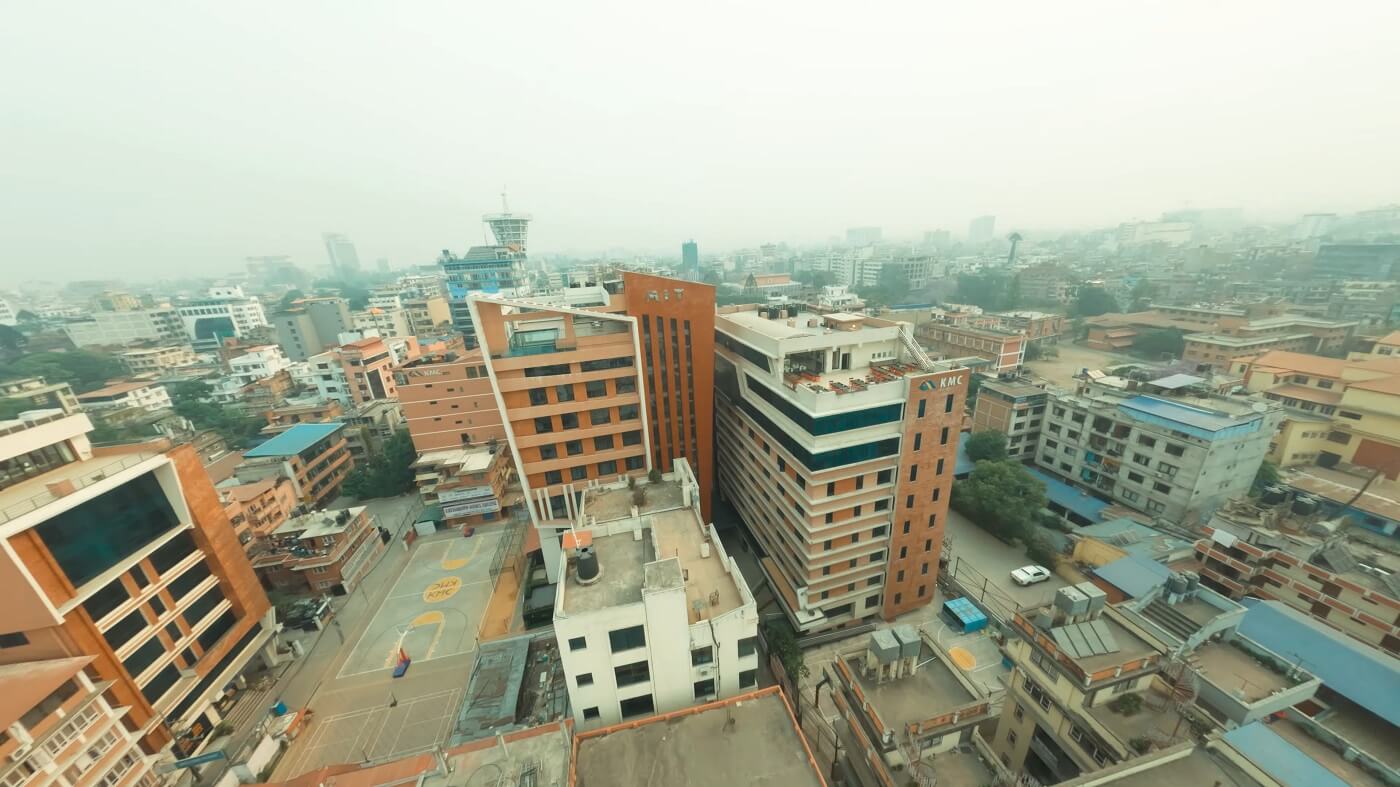
Program overview
KMC Bagbazar runs the BBS program within TU’s academic structure, so the core curriculum and annual examinations follow TU/FOM requirements. The program begins with foundational subjects (business English, statistics, economics, accounting, management) and moves toward applied areas such as business law, taxation, financial management, strategy, and entrepreneurship.
TU structure you should know
Duration and course load
-
Duration: Four academic years (annual system)
-
Graduation requirement: Successful completion of 19 courses totaling 1950 marks, plus a Final Project of 50 marks (total 2000).
Teaching days and class hours
TU sets minimum academic requirements such as:
-
At least 150 teaching days per academic year (excluding admissions and annual exams)
-
A 100-mark paper typically includes 150 lecture sessions (50 minutes each), with additional hours for practical work where applicable
Attendance and exam eligibility
To appear in TU annual exams, TU requires:
-
Minimum 70% attendance in classes actually held
-
Progression rule: students cannot sit second-year final exams without first appearing in first-year finals
Concentration area in the final year
A major strength of TU’s BBS is the final-year concentration, where students focus on one functional area. TU states FOM offers four streams of concentration courses:
-
Accounting
-
Finance
-
Management
-
Marketing
KMC may offer one or more streams depending on faculty and cohort demand, so students should confirm the available concentration options for their intake before final-year selection.
Final Project: what it involves
TU makes the Final Project a required component in the fourth year. Key elements include:
-
Fieldwork exposure: students spend four weeks studying/learning from an organization during the time fixed by the campus/college
-
Project report + presentation: report submitted in the format prescribed by FOM; students may be asked to present to class/faculty
-
Evaluation: by a team of external and internal examiners appointed by the campus/college research committee; viva-voce conducted by the research committee
This is the point in the program where classroom learning is expected to translate into structured inquiry, evidence-based writing, and professional communication.
How students learn
TU encourages campuses to use teaching methods that reflect Nepal’s real business and public-sector environment—combining lectures with:
-
group discussions
-
problem-solving exercises
-
guest lectures
-
practical work and project work
-
case-based learning where possible
At KMC Bagbazar, students commonly experience learning beyond lecture-only formats (presentations, discussions, project work, and campus engagement), aligned with that TU direction.
Admission: what typically applies at KMC
TU’s curriculum notes that applicants must have completed 10+2 or equivalent from a board/university recognized by TU, and campuses may set additional entry requirements.
KMC’s screening approach (as published)
KMC’s BBS page states that BBS does not require a TU entrance exam, but KMC may conduct presentations and interviews to assess suitability.
(Colleges sometimes also use an internal written test as part of screening; confirm the exact process for the current intake directly with KMC.)
Fees and scholarships (what KMC publishes)
Fees (published by KMC for BBS)
KMC’s published BBS fee outline includes:
-
Registration fee: NPR 8,000 (first year)
-
Annual fee: NPR 24,000 per year
-
Tuition fee: NPR 5,000 per month (12 months)
Because fee policies can change by intake, treat these as reference points and verify before admission.
Scholarship scheme (published by KMC)
KMC also publishes scholarship ranges based on NEB CGPA (examples shown on its BBS page), including:
-
CGPA 3.8–4.0: waiver on annual & monthly fee
-
CGPA 3.62–3.79: partial waiver
-
CGPA 3.25–3.61: partial waiver
-
CGPA 2.8–3.24: partial waiver
KMC also notes that some scholarship rules apply for a limited term and may continue based on periodic results.
Career scope after BBS
BBS builds a general business foundation, so graduates typically move toward roles such as:
-
Accounting and finance support roles (banks, finance companies, corporate accounts)
-
Marketing, sales, and customer operations
-
HR and administrative roles
-
Business operations and supply chain support
-
Entry-level management trainee roles
-
Entrepreneurship (small business, family business operations, startups)
For students planning further study, TU positions BBS as a foundation for higher education in management-related fields.
Quality signals at the institution level (brief)
-
UGC QAA status: UGC’s QAA receiving list includes Kathmandu Model College, Kathmandu with accreditation dated March 28, 2023, valid until March 27, 2028. (University Grant Commission Nepal)
-
National Education Day 2080 recognition: independent reporting from National Education Day 2080 coverage lists Kathmandu Model College among private college award recipients.
Who benefits most from BBS at KMC
This program tends to fit students who want:
-
a broad business degree under TU with strong fundamentals
-
steady improvement in communication, analysis, and managerial thinking
-
a structured fourth-year concentration + project work experience
Contact Details
Contact Kathmandu Model College's administrative office for detailed information on the Bachelor of Business Studies (BBS) course, including fees, scholarships, facilities, counseling, eligibility criteria, etc.
Bagbazar, Kathmandu, Nepal
Phone: : +977-1-5327447, +977-1-5358983, +977-9847692039
Email: info@kmcen.edu.np
Website: www.kmcen.edu.np
Course Details
- Course TypeBBS
- LevelBachelor Degree
- Duration4 Years
- Affiliated To Tribhuvan University (TU)
- Study ModeFull Time
- Total Seats100
- MediumEnglish
- RecognitionUGC Approved.
-
Offered At
Kathmandu Model College (KMC)
Bagbazar, Kathmandu
Other Courses at Kathmandu Model College (KMC) 9
Latest Updates & Notices
Reviews
Questions & Discussions
Contact Kathmandu Model College (KMC), Kathmandu
- AddressBagbazar, Kathmandu, Nepal
- Phone+977-1-5327447
- Phone+977-1-5358983
- Phone+977-9847692039
- Emailinfo@ktmmodelcollege.edu.np
- Websitekmcen.edu.np
- Contact personKMC Bagbazar, Kathmandu