Bachelor of Business Management (BBM)
- Bachelor Degree
- BBM
- Tribhuvan University (TU)
- Duration4 Years
- Total Seats44
- Study ModeFull Time
- MediumEnglish
About Bachelor of Business Management (BBM)
Bachelor of Business Management (BBM) at Kathmandu Model College, Bagbazar
Bachelor of Business Management (BBM), Kathmandu Model College (KMC Bagbazar), Kathmandu is a Tribhuvan University (TU) Faculty of Management program built to develop business knowledge with strong focus on entrepreneurship, leadership, communication, and analytical decision-making.
TU describes BBM as an industry-based management course designed to produce middle-level managerial manpower and prepare graduates for changing national and global business environments.
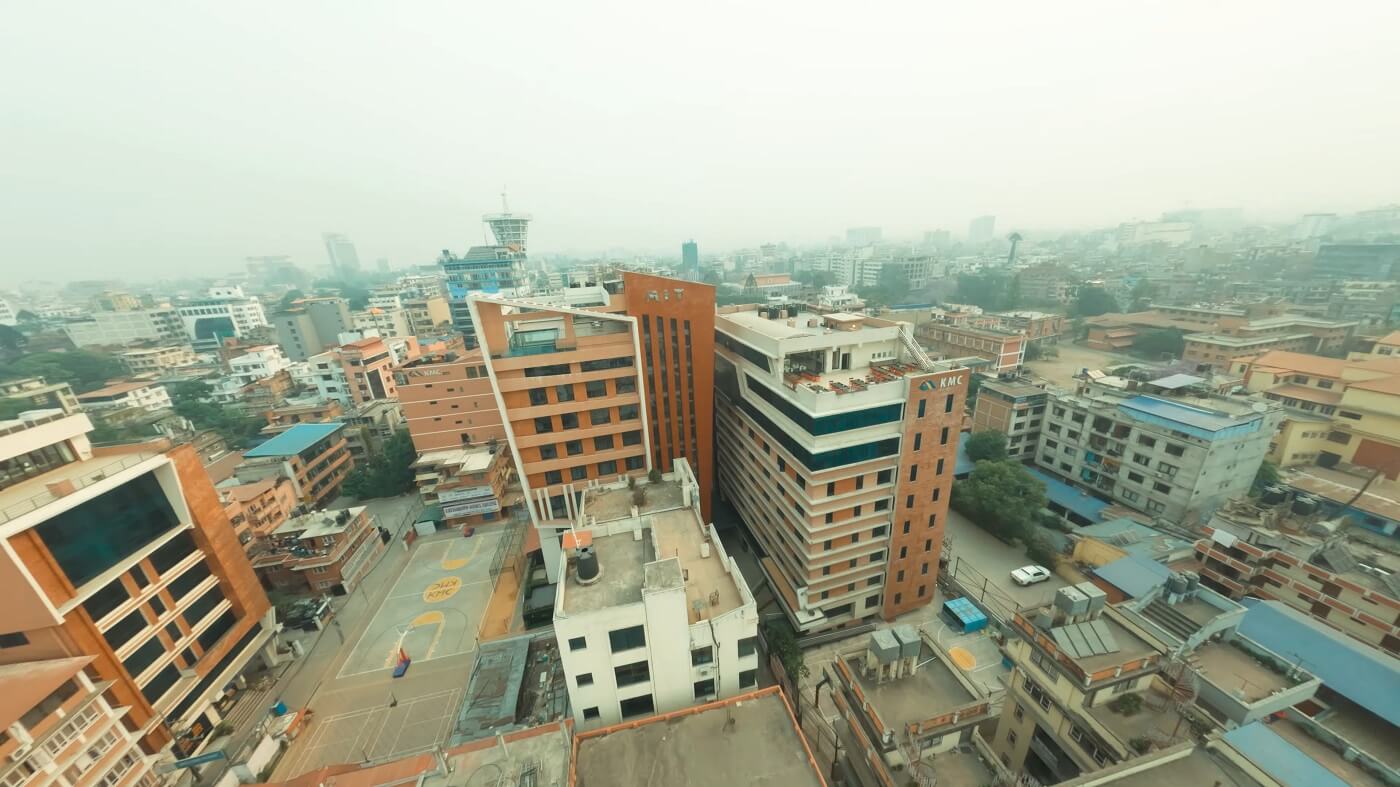
Program Highlights
College: Kathmandu Model College (KMC Bagbazar), Bagbazar, Kathmandu
University/Faculty: Tribhuvan University, Faculty of Management
Duration: Four years, eight semesters
Total workload: One hundred twenty credit hours )
Teaching approach (TU): Student-centered learning through interactive lectures, presentations, case studies, and projects
What the BBM program is designed to build
TU’s BBM curriculum frames business education around practical management capability and entrepreneurship. It aims to help students:
-
develop creative thinking, leadership, communication, and decision-making skills
-
understand entrepreneurship and innovation, and manage business operations in a dynamic environment
-
prepare for professional life as business managers and entrepreneurs
In practice, this means your learning is not limited to theory. The course structure expects regular classroom engagement (presentations, group work, case analysis, and project tasks), which is also reflected in TU’s evaluation model.
Teaching, seminar, and practicum expectations
TU states that BBM uses a student-centered pedagogy, with the instructor selecting methods appropriate to each course (interactive lectures, presentations, case studies, and projects).
The curriculum also allows seminar and practicum components to be conducted based on Faculty of Management guidelines and evaluation criteria.
For students, the practical takeaway is clear: you should expect consistent participation, not only end-term exam preparation.
Project report writing or internship
TU’s BBM curriculum requires a capstone at the end of the eighth semester. Students either:
-
complete a research assignment and submit a Research Project Report (supervised by a faculty member), or
-
complete an internship attachment (eight weeks) and submit an internship/project report in the prescribed format.
Project report evaluation:
-
Written report: seventy percent
-
Presentation: thirty percent
Internship evaluation:
-
Organizational evaluation: twenty-five percent
-
Written report: fifty percent
-
Presentation: twenty-five percent
TU also notes that the internship carries weight equivalent to six credit hours, and the report must be submitted by the end of the eighth semester.
Attendance, assessment, and exam readiness expectations
TU’s BBM curriculum sets an attendance threshold: students who fail to attend eighty percent of classes are not allowed to appear in semester-end examinations.
Assessment is described as a mix of:
-
in-semester (internal) evaluation, generally forty percent
-
semester-end examination, sixty percent
The curriculum also explains that internal evaluation includes classroom activities and project/assignment work (and related components defined in the document).
Because TU documents sometimes list multiple eligibility thresholds for appearing in semester exams (based on internal performance), students should follow the current Faculty of Management guidance used by their college for the exact internal requirements in practice.
Eligibility and admission process (TU CMAT route)
Minimum academic eligibility (TU BBM curriculum):
Applicants must have completed twelve-year schooling (or equivalent) recognized by TU, and must meet minimum grade/division requirements (including D+ in each subject in grade eleven and twelve with CGPA one point eight or above, or second division in ten plus two/PCL/equivalent), along with completing the application procedure.
Entrance test:
Eligible applicants must sit for the Central Management Admission Test (CMAT) conducted by TU Faculty of Management.
CMAT format (as stated in the BBM curriculum):
-
one hundred objective questions
-
four areas: verbal ability, quantitative ability, logical reasoning, general awareness
-
twenty-five questions per section, total one hundred marks
CMAT threshold for interview:
TU’s BBM curriculum states students must secure a minimum of forty percent in CMAT to qualify for the interview.
What KMC Bagbazar adds around the TU BBM framework
KMC Bagbazar positions its learning environment around facilities and student-support units intended to connect coursework with skill-building and career preparation.
-
Career Counseling, Placement & Tracing Cell (CPTC): KMC describes this unit as providing academic, career, and psycho-social counseling, tracking graduates, and supporting job placement and self-employment readiness.
-
Research Management Cell (RMC): KMC describes an RMC that supports research culture through research projects, workshops, and fieldwork-related support.
-
Student Quality Circle (SQC): KMC describes student-led small groups that meet weekly to discuss educational quality concerns and solutions.
-
Learning resources and facilities: KMC lists resources such as library access, labs, classrooms, Wi-Fi and IT services including a Learning Management System and an electronic management information system, plus incubation/ideation lab and seminar/auditorium spaces.
These structures matter for BBM students because TU’s pedagogy and evaluation already emphasize active learning, communication, teamwork, and applied problem-solving—not only final exams.
Scholarships (what KMC publicly states)
KMC states that it provides scholarships based on merit, financial need, or program-specific criteria, and advises students to check eligibility criteria and consult the admission office for details.
KMC’s BBM-related page also publishes examples of scholarship provisions (such as support tied to academic performance, including recognition for university toppers and high GPA performers), but students should confirm the currently active scheme and terms with the college for their intake year.
Quality signals relevant for a student decision
-
UGC QAA status: The University Grants Commission lists “Kathmandu Model College, Kathmandu” as QAA accredited on March 28, 2023 (12/14/2079 BS), valid until March 27, 2028 (12/13/2084 BS).
-
Publicly reported award: KMC reports receiving a “Best Campus Award 2080” from the Government of Nepal, Ministry of Education, Science and Technology on the occasion of National Education Day 2080.
Career directions after BBM
BBM is commonly used as a foundation for both employment and entrepreneurial pathways, especially because the TU curriculum explicitly targets entrepreneurship, leadership, communication, and operational decision-making.
Typical directions include:
-
entrepreneurship and small business/startups
-
business development and sales
-
marketing and customer strategy
-
operations and supply chain support roles
-
human resource support roles
-
banking, finance, and general management tracks (role depends on skills and experience)
Contact Details
Contact Kathmandu Model College's administrative office for detailed information on the Bachelor of Business Management (BBM) course, including fees, scholarships, facilities, counseling, eligibility criteria, etc.
Bagbazar, Kathmandu, Nepal
Phone: : +977-1-5327447, +977-1-5358983, +977-9847692039
Email: info@kmcen.edu.np
Website: www.kmcen.edu.np
Course Details
- Course TypeBBM
- LevelBachelor Degree
- Duration4 Years
- Affiliated To Tribhuvan University (TU)
- Study ModeFull Time
- Total Seats44
- MediumEnglish
- RecognitionUGC Approved
-
Offered At
Kathmandu Model College (KMC)
Bagbazar, Kathmandu
Other Courses at Kathmandu Model College (KMC) 9
Latest Updates & Notices
- 23 Feb 26 Kathmandu Model College (KMC) Secures Top Result in TU BBA 2nd Semester Exam
- 07 Feb 26 BBA and BBM Students Present MVPs and Business Plans at KMC
- 07 Feb 26 KMC Concludes Four-Day IJCC 2026 Conference
- 07 Dec 25 12th IJCC 2026 at Kathmandu Model College
- 04 Aug 25 Festa De Kathmandu 2025 Held at KMC College, Bagbazar
- 02 Aug 25 Kathmandu Model College Marks Anti-Trafficking Day
Reviews
Questions & Discussions
Contact Kathmandu Model College (KMC), Kathmandu
- AddressBagbazar, Kathmandu, Nepal
- Phone+977-1-5327447
- Phone+977-1-5358983
- Phone+977-9847692039
- Emailinfo@ktmmodelcollege.edu.np
- Websitekmcen.edu.np
- Contact personKMC Bagbazar, Kathmandu