



The Bachelor of Science in Laboratory Medicine (BSc Laboratory Medicine) at Kathmandu University School of Medical Sciences (KUSMS) is a four-academic-year undergraduate health-science program under Kathmandu University.
The course focuses on laboratory-based investigation and diagnostic processes, including the performance and analysis of medical laboratory tests, interpretation of laboratory results, use of automated laboratory systems, and Total Quality Laboratory Management.
Admission follows the Medical Education Commission framework for bachelor-level medical and health-professional education, while curriculum, examinations, academic requirements, and degree award follow Kathmandu University rules and regulations.
| Item | Details |
|---|---|
| Course | Bachelor of Science in Laboratory Medicine |
| Common form | BSc Laboratory Medicine / B.Sc. Lab. Med. |
| Level | Bachelor |
| Institution | Kathmandu University School of Medical Sciences |
| University | Kathmandu University |
| Location | Dhulikhel, Kavrepalanchok, Nepal |
| Duration | 4 academic years |
| Reference seats | 15 |
| Eligibility | According to applicable MEC requirements |
| Entrance | MECEE-BL |
| Selection | According to applicable MEC guidelines |
| Main academic area | Clinical laboratory investigation and diagnostic processes |
| Degree award | Kathmandu University |
| Professional regulation | Applicable health-professional licensing and registration requirements |
BSc Laboratory Medicine is one of the undergraduate health-science programs offered at Kathmandu University School of Medical Sciences (KUSMS).
KUSMS is the School of Medical Sciences of Kathmandu University in Dhulikhel, Kavrepalanchok. Its wider academic setting includes medicine, dentistry, nursing, midwifery, physiotherapy, laboratory medicine, medical imaging, public health, and postgraduate medical and health-science education.
Laboratory Medicine entered the KUSMS academic development sequence in 2019. The program is distinct from Medical Imaging Technology: laboratory medicine centers on laboratory-based investigation and diagnostic processes, whereas medical imaging follows a separate academic route concerned with imaging technologies used in clinical diagnosis.
The BSc Laboratory Medicine course is structured for students preparing to work with clinical laboratory testing, laboratory result interpretation, diagnostic laboratory equipment, and laboratory quality systems.
Duration: 4 academic years
BSc Laboratory Medicine is a four-academic-year bachelor's degree.
The confirmed course information establishes the overall duration rather than a detailed year-by-year or semester-by-semester curriculum. The academic sequence, assessment requirements, progression, and degree completion operate within the applicable Kathmandu University framework.
Students considering the program should therefore plan for four academic years of university study and distinguish that duration from any professional licensing or registration requirements that apply after completion.
Laboratory Medicine is concerned with laboratory investigation used in the diagnosis and management of disease.
The course prepares students to develop abilities associated with performing laboratory tests, examining and interpreting laboratory results, working with equipment used in clinical laboratories, and understanding laboratory quality management.
Its academic direction includes:
Performance of medical laboratory tests
Analysis of laboratory test findings
Interpretation of laboratory results
Operation of automated laboratory systems
Care and handling of laboratory analyzers
Understanding of Total Quality Laboratory Management
Application of laboratory processes within diagnostic services
These areas place laboratory work at the center of the degree. BSc Laboratory Medicine should not be confused with a general biological science degree or with Medical Imaging Technology simply because all of them involve scientific and technical study.
An important part of the program is preparation for laboratory testing connected with disease diagnosis and management.
Clinical laboratories generate information through testing and analysis. Within the BSc Laboratory Medicine program, students are prepared to perform different laboratory tests and interpret their results as part of the diagnostic laboratory process.
The course therefore involves both technical laboratory activity and the interpretation of laboratory findings. These are connected areas: performing a test correctly and understanding the resulting laboratory information both form part of the intended graduate preparation.
The program does not reduce laboratory medicine to the operation of machines. It also includes knowledge required to understand results and quality-related responsibilities within a laboratory environment.
The program includes preparation for working with automated equipment used in clinical laboratories.
The BSc Laboratory Medicine course refers specifically to robotic analyzers and software-supported laboratory systems. Graduates are expected to develop the ability to operate, handle, and care for sophisticated analyzers used in clinical laboratory work.
This technological component is one reason the course combines health science with a technical laboratory environment. Students encounter laboratory testing alongside the instruments and systems through which many laboratory processes are carried out.
The involvement of laboratory professionals, doctors, researchers, biomedical engineers, and academic faculty within the program setting also reflects the combination of biological, diagnostic, and technical knowledge associated with laboratory medicine.
Total Quality Laboratory Management is another stated area of preparation within the program.
Quality management in a laboratory is connected with how laboratory processes are organized, controlled, and maintained. In the BSc Laboratory Medicine course, knowledge and skills related to Total Quality Laboratory Management sit alongside test performance, result interpretation, and equipment handling.
This means the academic scope extends beyond completing an individual laboratory procedure. Students are also introduced to the wider management and quality context in which diagnostic laboratory work takes place.
The exact subject titles, credit distribution, or year-wise placement of quality-management study are not assigned here because the confirmed course information does not establish those details.
Eligibility: According to the applicable requirements of the Medical Education Commission (MEC).
KUSMS places BSc Laboratory Medicine eligibility under the MEC framework.
This means applicants enter through the eligibility provisions applicable to the program under Nepal's regulated bachelor-level medical and health-professional education system.
Kathmandu University academic requirements also govern the program after admission. Entrance eligibility and university academic progression are therefore related but separate parts of the student's pathway.
Admission to BSc Laboratory Medicine follows the Medical Education Common Entrance Examination for Bachelor Level, commonly known as MECEE-BL.
The entrance examination is conducted through the Medical Education Commission (MEC), Government of Nepal. Selection follows the applicable MEC guidelines.
The admission framework covers matters connected with:
Eligibility
MECEE-BL entrance examination
Merit-based selection
Matching procedures
Seat allocation
Scholarship provisions
Admission procedures
Applicable MEC rules and code of conduct
MECEE-BL belongs to the admission stage. Academic examinations after enrollment are part of the Kathmandu University degree program.
The BSc Laboratory Medicine admission pathway combines the Medical Education Commission system with Kathmandu University academic requirements.
A student moves through the applicable stages of:
Meeting the eligibility requirements for BSc Laboratory Medicine.
Appearing in MECEE-BL.
Taking part in the applicable MEC selection and matching process.
Receiving placement according to the prevailing seat-allocation framework.
Completing the institutional admission process.
Entering the four-year Kathmandu University academic program.
After enrollment, curriculum, academic assessment, examinations, progression, and degree completion are governed by Kathmandu University.
Reference seats: 15
The finalized KUSMS program context carries a reference intake of 15 seats for BSc Laboratory Medicine.
The figure should be treated as a reference rather than permanent annual capacity. Medical and health-professional education seats are determined within the Medical Education Commission framework and may vary according to the seat determination applicable to an admission cycle.
Scholarship seat distribution and admission categories also operate within MEC rules. A program can continue as an academic offering even when its seat distribution changes between admission cycles.
BSc Laboratory Medicine follows the academic rules and regulations of Kathmandu University.
Kathmandu University governs the academic program after enrollment, including curriculum, examinations, progression, and degree award. MEC has a separate role in regulated entrance, selection, matching, and admission.
| Stage | Governing framework |
|---|---|
| Eligibility and entrance | Medical Education Commission requirements |
| Selection and matching | Medical Education Commission |
| Curriculum | Kathmandu University |
| Academic examinations | Kathmandu University |
| Degree award | Kathmandu University |
| Professional entry | Applicable professional council requirements |
The four-year course description identifies laboratory testing, interpretation of results, automated analyzers, and Total Quality Laboratory Management as important areas of graduate preparation. A detailed subject list is not added beyond those confirmed academic areas.
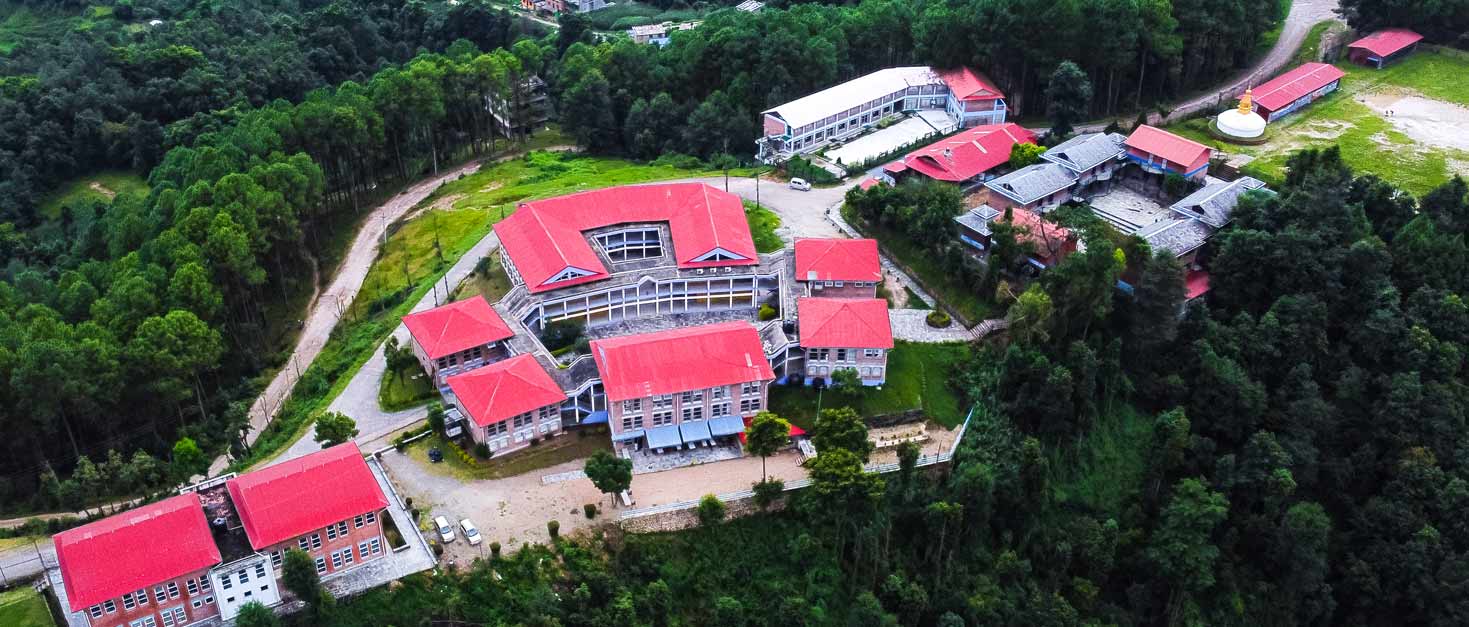
KUSMS operates through a basic-science site at Chaukot in the Panauti area and a university-hospital setting in Dhulikhel.
The basic-science environment includes laboratories, lecture halls, Problem-Based Learning classrooms, audio-visual resources, and a library. Dhulikhel Hospital serves as the university hospital within the Kathmandu University–Dhulikhel Hospital collaboration.
Laboratory facilities are particularly relevant to a course centered on diagnostic laboratory processes, although the exact laboratories, practical schedule, and locations used specifically by BSc Laboratory Medicine students depend on the academic requirements of the program.
The wider institutional environment places laboratory medicine alongside medical, dental, nursing, physiotherapy, and imaging education without making these courses academically identical.
The confirmed program objectives support several specific areas of skill development.
Students are prepared to perform a range of laboratory tests used within clinical laboratory work.
Correct testing is central to the program because laboratory investigation provides information used in disease diagnosis and management.
The course includes preparation for interpretation of laboratory results.
This is distinct from simply operating equipment. Students are expected to connect laboratory procedures with the information produced by those procedures.
Students develop familiarity with automated and robotic analyzers used in clinical laboratories.
The intended preparation includes both operating such systems and taking appropriate care of the equipment.
Knowledge and skills in Total Quality Laboratory Management form another part of the program's stated graduate preparation.
Together, these areas show that the course combines laboratory procedures, analytical interpretation, technical equipment, and quality-related responsibilities.
KUSMS offers both BSc Laboratory Medicine and BSc Medical Imaging Technology, but they prepare students for different forms of diagnostic work.
Laboratory Medicine is centered on laboratory-based investigation, medical laboratory testing, interpretation of results, laboratory analyzers, and quality management.
Medical Imaging Technology, by comparison, is associated with radiological and imaging techniques used for clinical diagnosis.
Students deciding between the programs should therefore consider the type of work involved. An interest in laboratory testing, specimen-based investigation, analytical processes, and laboratory equipment points toward a different academic environment from one focused on diagnostic imaging.
Similar degree level and duration do not make the two programs interchangeable.
BSc Laboratory Medicine is a health-professional education pathway. Completion of the university degree and entry into regulated professional practice are separate stages.
Graduates must meet the licensing examination and registration requirements of the respective professional council before entering professional practice where those requirements apply.
Students researching allied-health professional regulation can refer to the Nepal Health Professional Council (NHPC) for the regulatory framework relevant to health-professional categories.
This professional stage comes after completion of the Kathmandu University academic requirements. Admission through MEC, graduation from Kathmandu University, and professional licensing should therefore be treated as separate parts of the pathway.
Laboratory Medicine also provides an academic base connected with laboratory science and health-science study.
The broader KUSMS postgraduate public-health eligibility structure recognizes laboratory science among the health-science bachelor's backgrounds that may enter MSc Public Health when the other stated requirements are met.
Postgraduate admission is a separate process with its own eligibility, professional registration, experience, and entrance conditions. Completion of BSc Laboratory Medicine does not by itself guarantee entry to a particular master's program.
Students planning further study should therefore assess postgraduate options according to the qualification requirements of the exact program they intend to pursue.
BSc Laboratory Medicine may fit students whose interest lies in diagnostic laboratory science rather than direct medical, nursing, physiotherapy, dental, or imaging practice.
The course is particularly connected with students interested in:
Medical laboratory testing
Analytical laboratory work
Interpretation of laboratory findings
Diagnostic processes
Laboratory instruments and automated analyzers
Laboratory quality management
Health science combined with technical laboratory work
The decision to study the course should take into account the four-year academic commitment, MECEE-BL admission pathway, laboratory-centered nature of the program, Kathmandu University academic requirements, and professional regulatory pathway after graduation.
BSc Laboratory Medicine is a four-year undergraduate health-science program at Kathmandu University School of Medical Sciences under Kathmandu University. It focuses on laboratory testing, diagnostic processes, result interpretation, laboratory analyzers, and laboratory quality management.
The program has a duration of four academic years.
Its main areas include medical laboratory testing, analysis and interpretation of results, handling of automated laboratory analyzers, and Total Quality Laboratory Management.
Eligibility follows the applicable requirements of the Medical Education Commission.
Admission follows the Medical Education Common Entrance Examination for Bachelor Level, or MECEE-BL.
The Medical Education Commission, Government of Nepal, conducts the entrance examination, and selection follows applicable MEC guidelines.
The finalized KUSMS program context carries a reference intake of 15 seats. Seat determination remains subject to the applicable MEC framework.
Kathmandu University awards the degree. KUSMS is the university's School of Medical Sciences.
Yes. The program includes preparation for operating, handling, and caring for automated and robotic analyzers used in clinical laboratories.
Yes. Total Quality Laboratory Management is identified as part of the knowledge and skill development associated with the program.
No. Laboratory Medicine focuses on laboratory-based diagnostic investigation and testing, while Medical Imaging Technology is a separate field centered on diagnostic imaging technologies.
Graduates entering regulated professional practice must meet the applicable licensing examination and registration requirements of the relevant professional council.






