



The MSc in Public Health (Epidemiology/Global Health) (MSc PH) at Kathmandu University School of Medical Sciences (KUSMS) is a two-and-a-half-year postgraduate program under Kathmandu University. It is organized across five semesters, with a compulsory six-month internship in the fifth semester.
Students follow either the Epidemiology or Global Health track after studying common public health, epidemiology, biostatistics, research, health systems, and community-health components.
The course also includes practicum or project-management work, independent study, thesis research, and internship. Admission is conducted through the Medical Education Commission postgraduate entrance and selection framework.
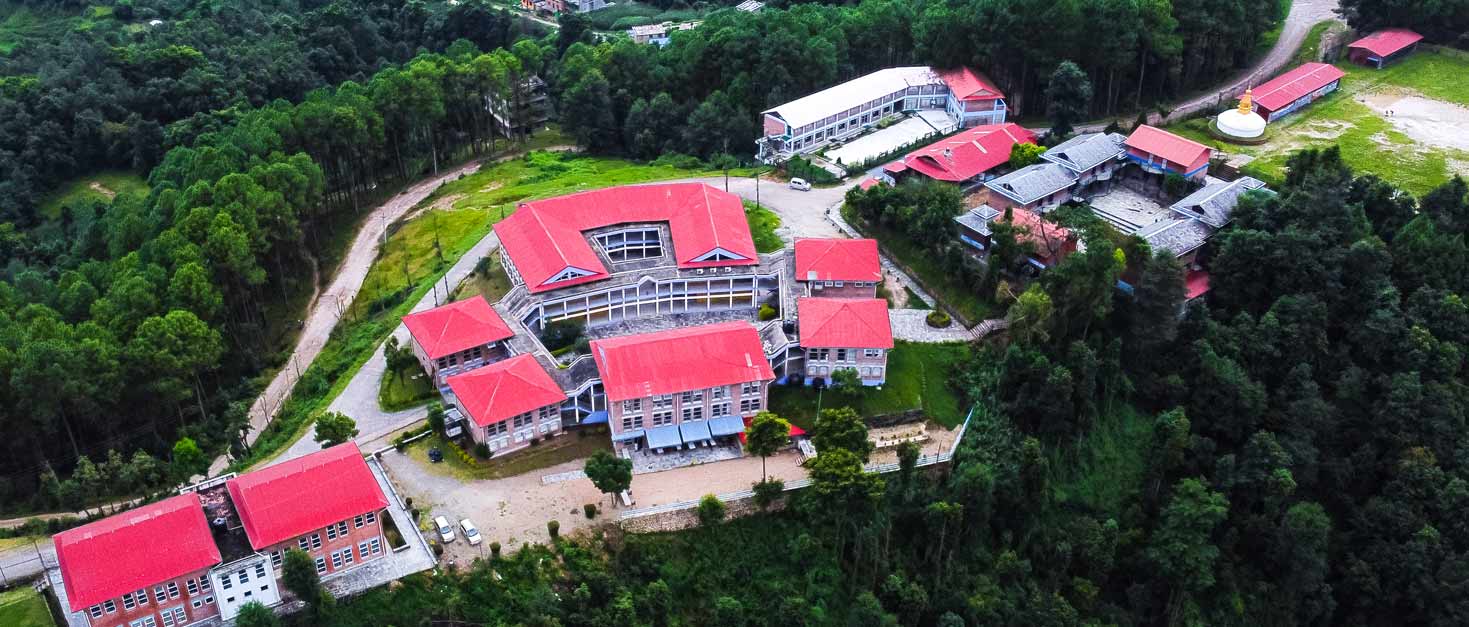
| Item | Details |
|---|---|
| Course | Master of Science in Public Health (MSc PH) |
| Tracks | Epidemiology / Global Health |
| Level | Master's degree |
| Institution | Kathmandu University School of Medical Sciences |
| University | Kathmandu University |
| Location | Dhulikhel, Kavrepalanchok, Nepal |
| Duration | 2.5 years |
| Academic structure | 5 semesters |
| Final semester | Compulsory 6-month internship |
| Reference seats | 15 |
| Minimum qualifying score | 50% in an eligible health-science bachelor's degree |
| Work experience | Based on the duration of the qualifying bachelor's degree |
| Professional registration | Registration with the respective professional council |
| Entrance | MECEE-PG framework |
| Entrance authority | Medical Education Commission |
| Research component | Thesis |
| Degree award | Kathmandu University |
MSc Public Health forms part of the postgraduate health-science education offered at Kathmandu University School of Medical Sciences (KUSMS).
KUSMS is the School of Medical Sciences of Kathmandu University in Dhulikhel. The MSc PH program has two academic directions: Epidemiology and Global Health.
The program is designed to develop advanced public health knowledge and practical abilities for designing and carrying out public health interventions, conducting research, and contributing to education within relevant areas of expertise. Its scope covers public health concerns at both national and global levels.
The two tracks share a substantial common foundation before becoming more specialized in the third semester. Both conclude with thesis work followed by a compulsory internship.
Duration: Two and a half years
The MSc PH program consists of five semesters. The fifth semester is a compulsory six-month internship.
| Semester | Main stage | Track relationship |
|---|---|---|
| First | Public health, epidemiology, biostatistics and data-analysis foundation | Common structure |
| Second | Research, health systems, qualitative methods and public health subject areas | Common structure |
| Third | Advanced specialization | Epidemiology or Global Health |
| Fourth | Thesis | Both tracks |
| Fifth | 6-month internship | Both tracks |
The structure gives students a common base in public health and research before the curriculum separates into advanced Epidemiology and Global Health study.
The program uses several forms of teaching and academic engagement rather than relying on one classroom method.
These include:
Problem-Based Learning
Didactic lectures
Journal clubs
Online learning
Seminars
Workshops
The academic setting is also connected with rural community-based health programs associated with Dhulikhel Hospital Kathmandu University Hospital, ongoing research activities, and collaborative academic work.
The combination is relevant to the course structure because students move from classroom and research-method learning into practicum, independent study, thesis work, and internship.
Students in the Epidemiology and Global Health tracks begin with the same first-semester subjects.
Basic Concept in Public Health I
Basic Concept in Public Health II
Epidemiology I
Biostatistics I
Epidemiology II
Biostatistics II
Health Education and Health Promotion
Recent Advances in Public Health
Data Analysis and Statistical Software Usages
The first semester establishes a quantitative and public-health foundation. Epidemiology and biostatistics are introduced in two stages, while students also study health promotion and the use of statistical software for data analysis.
This common semester means students in both tracks begin with the same grounding before moving toward track-specific advanced study.
The second semester continues as a common component for both Epidemiology and Global Health.
Introduction to Research Methodology
Proposal Writing and Scientific Communication
Social, Behaviour, Population Science and Ethics in Health
Health System and Public Health Planning (National and International)
Qualitative Research Method
Environmental and Occupational Health
Community-orientated Health Practice
Communicable Diseases*
Non-communicable Diseases*
Maternal, Child and Geriatric Health*
Gender and Equity Issues in Public Health*
Monitoring and Evaluation in Public Health*
Mental Health Issues in Public Health*
Literature Search and Management
Subjects marked with an asterisk are identified as electives.
This semester broadens the program from epidemiology and statistics into research design, scientific communication, qualitative research, health systems, public health planning, community practice, environmental and occupational health, literature management, and selected population-health issues.
The research foundation established here is also relevant to the thesis stage in the fourth semester.
The Epidemiology track concentrates on the use of epidemiological methods to investigate public health questions, analyze data, assess risk and preventive factors, evaluate interventions, and support public health programs and policies.
Its objectives include developing the ability to work with existing and newly collected data, choose suitable study designs, interpret epidemiological findings, review scientific literature, and communicate the methods and results of epidemiological investigations.
Students are prepared to work with:
Existing public health data when setting investigation priorities
Measurement instruments for collecting health data
Public health status and priority assessment
Intervention evaluation
Study-design selection
Risk and preventive factors
Data collection, management and analysis using software
Interpretation of epidemiological results
Scientific literature review and synthesis
Epidemiological investigation reporting
Public health programs and policy applications
The emphasis is on moving from a public health question to an appropriate investigation and then interpreting the findings within their scientific, social, and public-health context.
The third semester is where the Epidemiology curriculum becomes clearly differentiated from Global Health.
Advanced Epidemiology
Advanced Biostatistics
Systematic Review and Meta Analyses
Epidemiology Seminars
Independent Study
Practicum
These subjects build directly on the epidemiology, biostatistics, data analysis, and research-method foundation of the first two semesters.
Advanced Epidemiology and Advanced Biostatistics extend the methodological part of the degree, while Systematic Review and Meta Analyses introduces structured synthesis of research evidence.
Epidemiology Seminars and Independent Study provide additional academic work within the specialization, while the Practicum introduces an applied component before the thesis semester.
The Epidemiology track is structured around practical use of epidemiological reasoning and research.
Graduates are expected to be able to identify gaps in public health knowledge or programs and formulate suitable aims and objectives for investigation. They are also expected to select study designs while considering the advantages and limitations attached to those designs.
Another major area is data. The program addresses the use of software to collect, manage, and analyze information, identify associations, and examine public health problems or possible responses.
Interpretation is treated as more than reporting numerical results. Students are expected to relate epidemiological findings to other research, consider possible biological or social mechanisms, recognize limitations, and assess public health implications.
The track also includes critical review of scientific literature and communication of the rationale, methods, findings, and interpretation of epidemiological investigations.
The Global Health track examines public health issues across national and international settings.
Its objectives include evidence-based health promotion and disease prevention, analysis of communicable and non-communicable disease patterns, use of health information systems, evaluation of health interventions, health systems analysis, implementation science, and consideration of health inequity.
The track also considers how historical, political, and economic factors shape health and health-care systems.
The academic objectives cover:
Evidence-based health promotion and disease prevention
Health project management and implementation
Teamwork and participation
Communicable and non-communicable disease patterns
Morbidity and mortality across population groups
Health-service and health-program design
Surveillance and health information systems
National registries, surveys and administrative data
Quantitative and qualitative assessment of interventions
Health inequity
Research and education capacity
Implementation science
Program evaluation
Health systems
Scientific planning and evaluation of interventions
The Global Health track therefore combines population health with program implementation, policy, management, health financing, systems analysis, and evaluation.
The third semester shifts from the common public-health curriculum into subjects specific to Global Health.
Introduction to Global Health
Implementation Science in Global Health
Leadership and Health Management
Health Policy
Health Financing and Economic Evaluation
Global Health Seminar
Independent Study
Project Management Practicum
The semester places implementation and health-system questions alongside policy, leadership, financing, economic evaluation, and project management.
The Project Management Practicum adds an applied component before students move into their thesis semester.
A major part of the Global Health objectives is the use of health information for planning and monitoring.
Students are expected to work with information from sources such as:
Surveillance systems
National registries
Surveys
Administrative data
The purpose is to use such information when planning, carrying out, and monitoring health programs and disease status.
The curriculum also develops quantitative and qualitative approaches to assessing health interventions. This connects with the common second-semester training in research methodology and qualitative research.
The Global Health specialization includes direct study of Health Policy and Health Financing and Economic Evaluation.
Students also study Leadership and Health Management and Implementation Science in Global Health during the same semester.
These areas align with the program objective of examining how historical, political, and economic factors influence health and health-care systems.
Rather than treating population health separately from health systems, the track brings disease patterns, intervention design, implementation, policy, financing, and system-level analysis into the same postgraduate curriculum.
The fourth semester is devoted to the thesis for both the Epidemiology and Global Health tracks.
Research preparation begins earlier in the degree through:
Epidemiology
Biostatistics
Data Analysis and Statistical Software Usages
Introduction to Research Methodology
Proposal Writing and Scientific Communication
Qualitative Research Method
Literature Search and Management
Track-specific advanced study
The thesis follows this methodological preparation and forms the principal research component of the fourth semester.
For Epidemiology students, the preceding semester includes Advanced Epidemiology, Advanced Biostatistics, Systematic Review and Meta Analyses, and Practicum.
For Global Health students, it follows Implementation Science, Health Policy, Health Financing and Economic Evaluation, and Project Management Practicum.
The fifth semester consists of a compulsory six-month internship.
The internship is part of the two-and-a-half-year program structure rather than an additional activity after completion of the degree coursework.
Its placement after the thesis semester means students reach the internship after completing the common public-health foundation, track specialization, applied study, and thesis stage.
Eligibility: Applicants must hold a minimum three-year bachelor's degree in an eligible health-science field with at least 50% marks.
Eligible academic backgrounds include:
Public Health
Nursing
Physiotherapy
Laboratory Science
Optometry
Imaging Technology
Pharmacy
Human Biology
MBBS
BDS
Equivalent Health Sciences degree
Applicants must also be registered with their respective professional council.
The program sets different experience requirements according to the duration of the qualifying bachelor's degree:
| Qualifying bachelor's degree | Required experience |
|---|---|
| Three-year bachelor's degree | At least 3 years |
| Four-year bachelor's degree | At least 1 year |
The required work experience must be in a health-related area.
This makes MSc PH a postgraduate program intended for applicants who bring both an eligible health-science academic background and relevant professional experience.
Admission to MSc PH is conducted through the Medical Education Commission (MEC), Government of Nepal.
Entrance framework: MECEE-PG
The entrance examination is conducted by MEC, and selection follows the applicable MEC guidelines.
The broader postgraduate admission framework covers the applicable provisions governing entrance, selection, matching, seat allocation, scholarships, and admission procedures.
Once admitted, students enter the Kathmandu University academic system for curriculum, assessment, thesis, internship, examinations, and degree completion.
Reference seats: 15
The finalized KUSMS program context carries 15 reference seats for MSc in Public Health (Epidemiology/Global Health).
Seat numbers in regulated medical and health-science education are determined through the MEC system. The reference figure should therefore be read as a program reference rather than permanent intake capacity.
The applicable seat allocation, scholarship provisions, matching process, and admission arrangements follow the MEC framework for the relevant postgraduate admission cycle.
The MSc PH course operates under Kathmandu University academic rules and regulations.
| Academic stage | Governing framework |
|---|---|
| Entrance and selection | Medical Education Commission |
| Curriculum | Kathmandu University |
| Academic examinations | Kathmandu University |
| Thesis | Kathmandu University academic program |
| Internship | Part of the Kathmandu University course structure |
| Degree award | Kathmandu University |
MEC entrance and Kathmandu University examinations have different functions. The entrance examination controls entry into the regulated admission process, while university assessment forms part of the student's postgraduate academic work after enrollment.
The two tracks share their first two semesters, thesis semester, and compulsory internship. Their main academic distinction appears in the third-semester specialization.
The Epidemiology track concentrates more heavily on:
Advanced epidemiological methods
Advanced biostatistics
Systematic review and meta-analysis
Epidemiological investigation
Data analysis and interpretation
Practicum
Application of epidemiology to programs and policy
The Global Health track concentrates more heavily on:
Global health issues
Implementation science
Leadership and health management
Health policy
Health financing
Economic evaluation
Project management
Health systems and intervention implementation
Neither track is presented as superior to the other. The choice depends on whether a student's postgraduate interest is closer to epidemiological investigation and advanced analytical methods or to global health programs, implementation, policy, management, and health systems.
The program may be relevant to health-science graduates who already have professional experience and want postgraduate study centered on population health, research, program evaluation, epidemiology, global health, or health systems.
The Epidemiology track is more closely aligned with students interested in study design, data analysis, epidemiological investigation, evidence synthesis, and application of epidemiological findings.
The Global Health track is more closely aligned with interests in implementation science, health policy, health management, financing, program evaluation, and health systems across national and global settings.
Both tracks require substantial engagement with research and culminate in a thesis and compulsory internship.
MSc in Public Health is a postgraduate program at Kathmandu University School of Medical Sciences with two tracks: Epidemiology and Global Health.
The program takes two and a half years and is divided into five semesters.
Yes. The fifth semester consists of a compulsory six-month internship.
Yes. The fourth semester is devoted to the thesis in both the Epidemiology and Global Health tracks.
Applicants need at least 50% in an eligible health-science bachelor's degree.
Eligible backgrounds include public health, nursing, physiotherapy, laboratory science, optometry, imaging technology, pharmacy, human biology, MBBS, BDS, and equivalent health-science degrees.
Yes. Three-year bachelor's degree holders require at least three years of health-related work experience, while four-year bachelor's degree holders require at least one year.
Yes. Applicants must be registered with their respective professional council.
Admission follows the MECEE-PG framework administered by the Medical Education Commission.
No. Both tracks share the first and second semesters. Track-specific specialization becomes prominent in the third semester.
The third semester includes Advanced Epidemiology, Advanced Biostatistics, Systematic Review and Meta Analyses, Epidemiology Seminars, Independent Study, and Practicum.
The third semester includes Introduction to Global Health, Implementation Science in Global Health, Leadership and Health Management, Health Policy, Health Financing and Economic Evaluation, Global Health Seminar, Independent Study, and Project Management Practicum.
Kathmandu University awards the degree. KUSMS is Kathmandu University's School of Medical Sciences.






