The Bachelor of Science in Nursing (BSc Nursing) at Kathmandu University School of Medical Sciences (KUSMS) is a four-academic-year undergraduate nursing program under Kathmandu University. The program prepares nursing graduates to work independently and with multidisciplinary health teams in the care of individuals, families, groups, and communities.
Its stated scope covers preventive, promotive, curative, and rehabilitative aspects of health, with nursing practice linked to a holistic approach and primary health care perspective.
Admission follows the Medical Education Commission framework for bachelor-level nursing education, while curriculum, examinations, academic requirements, and degree award follow Kathmandu University rules and regulations.
| Item | Details |
|---|---|
| Course | Bachelor of Science in Nursing (BSc Nursing) |
| Level | Bachelor |
| Institution | Kathmandu University School of Medical Sciences |
| University | Kathmandu University |
| Location | Dhulikhel, Kavrepalanchok, Nepal |
| Duration | 4 academic years |
| Reference seats | 60 |
| Entrance | MECEE-BL under the MEC framework |
| Eligibility | Applicable MEC and Kathmandu University requirements |
| Academic regulation | Kathmandu University |
| Degree award | Kathmandu University |
| Professional council | Nepal Nursing Council |
| Nursing contact | nursingschool@kusms.edu.np |
BSc Nursing is one of the undergraduate nursing programs offered at Kathmandu University School of Medical Sciences (KUSMS).
KUSMS is the School of Medical Sciences of Kathmandu University and is based in Dhulikhel, Kavrepalanchok. Its institutional setting developed through collaboration between Kathmandu University and Dhulikhel Hospital.
Within this setting, BSc Nursing is structured as a four-year university program. Its purpose is centered on nursing care across the individual, family, group, and community levels and on preparing graduates to work independently or in collaboration with members of a multidisciplinary health team.
The program forms part of the wider KUSMS nursing portfolio, which also includes Bachelor in Nursing Science and postgraduate nursing study. BSc Nursing and BNS are separate academic routes and should not be treated as interchangeable simply because both are four-year nursing programs.
Duration: 4 academic years
The BSc Nursing program is completed over four academic years.
The confirmed course information establishes the overall program duration but does not set out a complete year-by-year or semester-by-semester subject list. The academic curriculum, assessment requirements, and progression conditions operate under the applicable Kathmandu University framework.
Students considering the program should therefore view the four years as the complete university study period attached to the BSc Nursing qualification rather than assume a subject sequence from another nursing program.
The BSc Nursing program is intended to prepare graduates who can provide nursing care independently and as part of a multidisciplinary health team.
Its stated scope covers care for:
Individuals
Families
Groups
Communities
The program addresses nursing in relation to:
Preventive aspects of health
Promotive aspects of health
Curative aspects of health
Rehabilitative aspects of health
The nursing approach also incorporates the human healing process, a holistic perspective, and a primary health care perspective. These principles are connected with nursing practice, education, administration, and research.
This gives the program a broader academic purpose than preparing students for one particular care setting. Nursing is approached across different levels of health care and across several professional functions associated with the discipline.
The course purpose places both individual care and wider family, group, and community health within the BSc Nursing pathway.
That distinction is relevant because the nursing role presented in the program is not confined to care of an individual patient. Students are prepared within an academic framework that also recognizes family, group, and community dimensions of health.
Preventive, promotive, curative, and rehabilitative care are included within the same nursing framework. These terms represent different parts of health care rather than separate BSc Nursing qualifications.
The program also connects nursing with primary health care. This places nursing practice within a perspective that considers health needs beyond treatment alone and includes prevention, health promotion, care, and rehabilitation.
The academic purpose of BSc Nursing extends into four identified areas:
| Area | Program context |
|---|---|
| Nursing practice | Application of nursing knowledge in health-care settings |
| Nursing education | Nursing-related educational responsibilities |
| Nursing administration | Administrative functions within nursing |
| Research | Research as part of the broader nursing discipline |
These areas describe the scope in which graduates are expected to function rather than guaranteeing a particular job or position after graduation.
The inclusion of education, administration, and research also distinguishes university nursing education from a course concerned only with bedside procedures. The program places nursing within a professional framework that combines care, teamwork, health promotion, organization, and academic development.
Eligibility: According to the applicable Medical Education Commission requirements.
The BSc Nursing eligibility framework follows the requirements established by the Medical Education Commission for the relevant bachelor-level admission process. KUSMS does not establish a separate permanent eligibility formula outside that framework.
Kathmandu University academic requirements also apply to the program. Applicants therefore enter through the applicable national medical education admission system and, once admitted, study within the university's academic regulations.
The exact eligibility conditions used for admission belong to the applicable MEC process rather than being treated as fixed evergreen requirements on the course page.
Admission to BSc Nursing follows the Medical Education Common Entrance Examination for Bachelor Level, commonly referred to as MECEE-BL.
The entrance test is conducted by the Medical Education Commission (MEC), Government of Nepal. Selection is carried out according to the applicable MEC guidelines.
The admission framework includes the relevant requirements governing:
Bachelor-level medical education entrance
Eligibility
Entrance examination
Selection
Seat allocation
Matching procedures
Scholarship provisions
Admission procedures
Applicable MEC rules and code of conduct
MECEE-BL belongs to the admission stage. It is separate from the academic examinations that students complete after joining the BSc Nursing program.
The BSc Nursing admission pathway combines the Medical Education Commission admission system with Kathmandu University academic requirements.
A student entering the course proceeds through the applicable MEC eligibility, entrance, selection, matching, and admission process before beginning study at KUSMS.
The general pathway can be understood as:
Meet the applicable BSc Nursing eligibility requirements.
Participate in MECEE-BL.
Complete the applicable MEC selection and matching process.
Receive placement within the prevailing seat-allocation system.
Complete the institutional admission requirements.
Enter the Kathmandu University BSc Nursing academic program.
Once enrolled, the student's academic progress is governed by Kathmandu University rather than by the entrance examination itself.
Reference seats: 60
The KUSMS BSc Nursing program has a reference intake of 60 seats within the finalized KUSMS program information.
The reference number should not be interpreted as a permanently fixed intake. Medical and nursing education seats are subject to determination through the Medical Education Commission framework, and seat allocation can vary from one admission cycle to another.
The same distinction applies to category distribution. The total program figure and the allocation of seats under different admission or scholarship categories are separate matters within the MEC system.
For an evergreen course profile, the seat figure therefore serves as a reference to the stated KUSMS program intake rather than a permanent guarantee of the number available in every admission cycle.
Scholarship provisions for BSc Nursing operate through the Medical Education Commission framework under the Government of Nepal.
KUSMS has nursing scholarship participation within the broader MEC-administered medical education system. The applicable scholarship category, allocation, seat distribution, and admission procedure are governed through the prevailing MEC process.
Scholarship admission remains part of the regulated admission framework rather than a separate academic version of BSc Nursing. Students admitted under different categories follow the same university program, subject to the academic regulations applicable to the degree.
The BSc Nursing curriculum follows Kathmandu University rules and regulations.
Kathmandu University governs the academic side of the program, including:
Curriculum
Academic requirements
Examinations
Academic progression
Completion requirements
Degree award
The Medical Education Commission has a different function. MEC governs the applicable entrance and selection framework, while Kathmandu University governs academic study after admission.
| Stage | Governing framework |
|---|---|
| Eligibility and entrance | Medical Education Commission requirements |
| Selection and matching | Medical Education Commission |
| Academic curriculum | Kathmandu University |
| Academic examinations | Kathmandu University |
| Degree award | Kathmandu University |
| Professional licensing | Nepal Nursing Council requirements |
This separation helps students distinguish an entrance qualification from the university course itself. Passing MECEE-BL provides a route into the regulated admission process; it does not replace the academic requirements students must complete after enrollment.
The BSc Nursing program places nursing care within a holistic and primary health care perspective.
The stated approach includes the human healing process and recognizes nursing responsibilities across prevention, health promotion, treatment-related care, and rehabilitation. It also places the nurse within a multidisciplinary health team while retaining the capacity for independent nursing functions.
This combination is important to the academic identity of the course. Nursing is presented as a discipline involving direct care as well as education, administration, teamwork, and research.
The course description does not provide a complete subject-by-subject curriculum, so these confirmed areas should be used to understand the program's academic direction rather than as substitutes for an official curriculum structure.
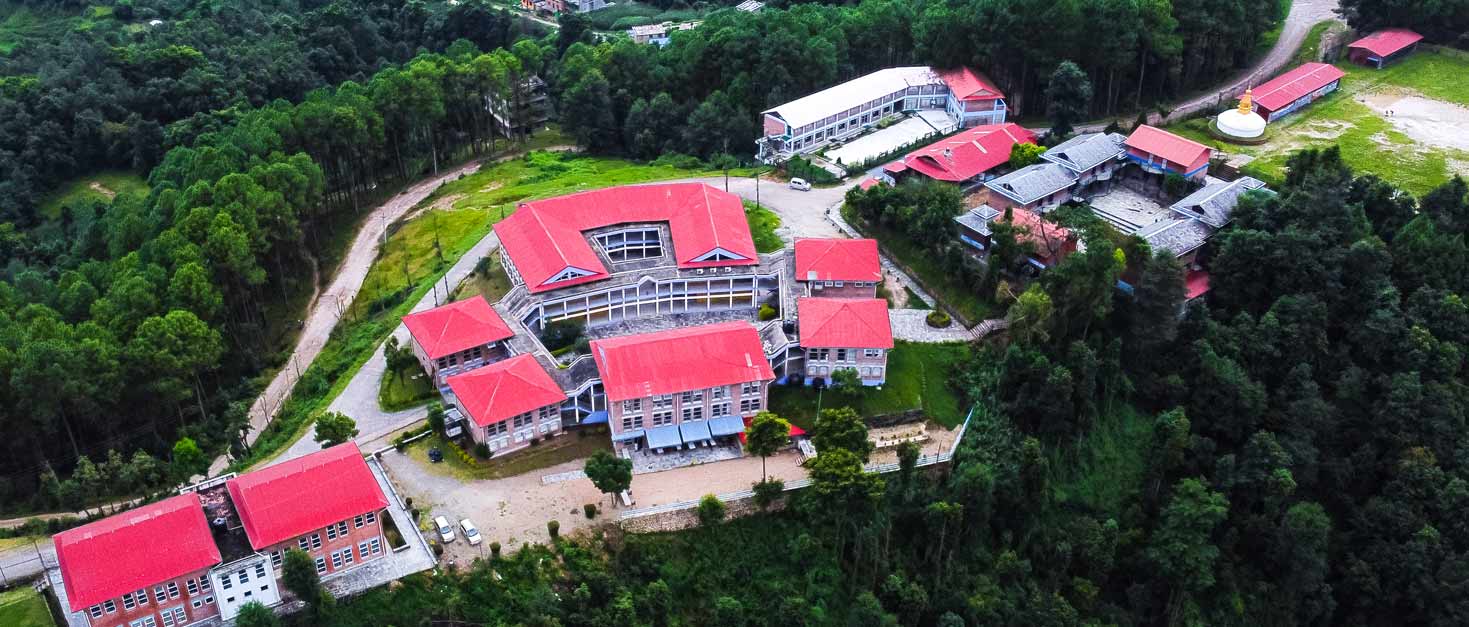
KUSMS has academic facilities at Chaukot in the Panauti area and a university-hospital setting in Dhulikhel.
The basic-science site contains laboratories, lecture halls, Problem-Based Learning classrooms, audio-visual facilities, and library resources. Dhulikhel Hospital serves as the university hospital within the Kathmandu University and Dhulikhel Hospital collaboration.
These facilities belong to the wider KUSMS academic environment. The exact sites, departments, clinical areas, and facilities used during BSc Nursing study depend on the requirements of the nursing curriculum.
The two-site arrangement also means that KUSMS references can include Chaukot, Panauti, and Dhulikhel while referring to connected parts of the same School of Medical Sciences.
BSc Nursing examinations follow the applicable rules and regulations of Kathmandu University.
The entrance examination and university examinations have separate purposes. MECEE-BL is used for bachelor-level admission, while university examinations form part of academic study after enrollment.
Degree award: Kathmandu University
Students complete the academic requirements of the four-year BSc Nursing program under the Kathmandu University system before receiving the degree.
Graduation from the BSc Nursing program and entry into professional nursing practice are separate stages.
After completing the course, graduates must meet the applicable licensing examination and registration requirements of the Nepal Nursing Council before entering the nursing profession.
The complete pathway therefore involves:
Admission through the applicable MEC process
Completion of the Kathmandu University BSc Nursing program
Fulfilment of university examination and degree requirements
Applicable Nepal Nursing Council licensing and registration
A university qualification confirms completion of the academic program. Professional practice remains subject to the requirements of the nursing regulatory body.
KUSMS offers both BSc Nursing and Bachelor in Nursing Science (BNS), but they should be read as distinct programs.
Both have a duration of four academic years and both operate within MEC-linked admission arrangements. Their similar level and duration do not make them the same nursing pathway.
The BSc Nursing description emphasizes care of individuals, families, groups, and communities across preventive, promotive, curative, and rehabilitative health, together with nursing practice, education, administration, and research.
Applicants should therefore use the exact program name when considering eligibility, admission, curriculum, and professional planning.
KUSMS also offers MSc in Nursing at postgraduate level.
The MSc Nursing pathway is separate from the undergraduate degree and has its own admission requirements. BSc Nursing graduates can form part of the eligible academic background for postgraduate nursing study, subject to the applicable qualification, professional registration, experience, and entrance requirements attached to the master's program.
This means completion of BSc Nursing can precede postgraduate nursing education, but admission to a master's program is not automatic.
BSc Nursing is intended for students pursuing university-level nursing education and preparing for a regulated nursing profession.
The program may suit students interested in nursing care across individual, family, group, and community settings and in an academic pathway that includes preventive, promotive, curative, and rehabilitative perspectives.
Students should also be prepared for a four-year university course, a regulated entrance and admission process, Kathmandu University academic requirements, and professional licensing requirements after graduation.
The course also places value on working both independently and within multidisciplinary health teams, which is part of the stated purpose of the BSc Nursing program.
Institution: Kathmandu University School of Medical Sciences (KUSMS)
Course: Bachelor of Science in Nursing (BSc Nursing)
Location: Dhulikhel, Kavrepalanchok, Nepal
Nursing Email: nursingschool@kusms.edu.np
General Phone: +977-011-490577
General Email: info@kusms.edu.np
BSc Nursing is a four-academic-year undergraduate nursing program offered by Kathmandu University School of Medical Sciences under Kathmandu University.
The program has a duration of four academic years.
The program prepares nursing graduates to work independently or with multidisciplinary health teams in caring for individuals, families, groups, and communities across preventive, promotive, curative, and rehabilitative aspects of health.
Admission follows the Medical Education Common Entrance Examination for Bachelor Level, or MECEE-BL, under the Medical Education Commission framework.
The Medical Education Commission, Government of Nepal, conducts the entrance examination, and selection follows applicable MEC guidelines.
Eligibility follows the applicable Medical Education Commission requirements together with Kathmandu University academic regulations.
Kathmandu University awards the degree. KUSMS is Kathmandu University's School of Medical Sciences.
Yes. The course purpose includes care of individuals, families, groups, and communities and covers preventive, promotive, curative, and rehabilitative aspects of health.
The stated program scope connects nursing with practice, education, administration, and research.
No. BSc Nursing and Bachelor in Nursing Science are separate undergraduate nursing programs at KUSMS, although both are four academic years in duration.
Graduates entering professional nursing practice must meet the applicable licensing examination and registration requirements of the Nepal Nursing Council.
KUSMS offers MSc Nursing as a separate postgraduate program. Admission to the master's program follows its own qualification, professional registration, experience, and entrance requirements.