Bachelor in Information Technology (BIT) at Khwopa Engineering College is a four-year bachelor's program affiliated with Purbanchal University. KhEC offers the program under the Faculty of Science and Technology with an enrollment capacity of 48 students.
The curriculum runs across eight semesters and combines programming, mathematics, computer systems, web technology, databases, networking, data communication, software engineering, management, research, electives, and sustained project work. Project courses appear throughout the program rather than being limited to the final year, ending with an Application Project in the eighth semester.
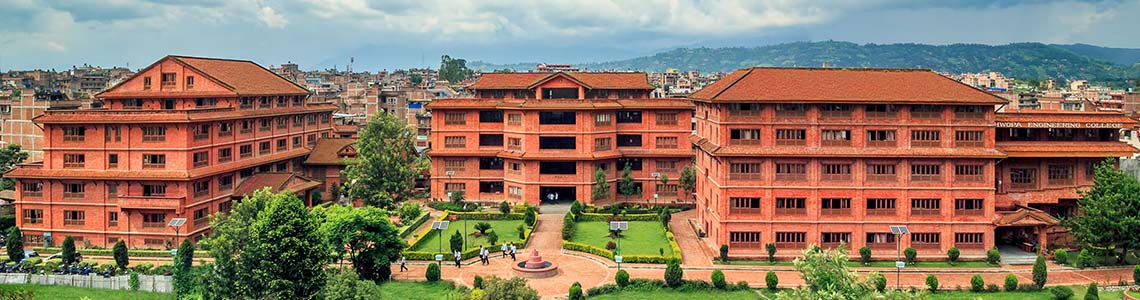
Course: Bachelor in Information Technology (BIT)
College: Khwopa Engineering College (KhEC)
Location: Libali, Bhaktapur-8, Nepal
Affiliation: Purbanchal University
Faculty: Faculty of Science and Technology
Level: Bachelor's
Duration: 4 years
Academic Structure: 8 semesters
Seats: 48
Total Fee: NRs. 4,40,000
Admission: Entrance examination, merit list, and college interview
Academic Components: Theory, tutorials, practical work, projects, research methodology, electives, and an Application Project
BIT at KhEC follows the Purbanchal University curriculum. The course begins with mathematics, computing fundamentals, programming, communication, management, and basic electrical concepts before moving into data structures, computer organization, web technology, databases, operating systems, networks, software engineering, artificial intelligence, and other advanced areas.
The structure also keeps management-oriented subjects within the degree. Principles of Management appears in the first semester, Financial Management & Accounting in the second, Marketing Management in the fourth, Management Information System in the seventh, and Software Project Management in the final semester.
| Semester | Courses | Credits |
|---|---|---|
| I | Mathematics-I; Fundamentals of Information Technology; Technical Communication (English); Basic Electrical System & Circuit; Principles of Management; Computer Programming-I; Project-I | 19 |
| II | Mathematics-II; Electronics Devices & Circuits; Digital Logic; Object Oriented Programming in C++; Project-II; Financial Management & Accounting | 17 |
| III | System Analysis & Design; Microprocessor & Assembly Language; Data Structure & Algorithm; User Interface Design; Project-III; Numerical Methods | 17 |
| IV | Communication System; Computer Organization; Web Technology-I; Database Management System; Project-IV; Discrete Mathematics; Marketing Management | 19 |
| V | Probability & Statistics; Society & Ethics in IT; Data Communication; Web Technology-II; Computer Graphics; Operating System; Project-V | 18 |
| VI | Embedded System Programming; Computer Network; Data Mining & Data Warehousing; Advance Object-Oriented Programming; Project-VI; Research Methodology | 17 |
| VII | Artificial Intelligence; Network Programming; Software Engineering; MIS; Elective I; Project-VII | 18 |
| VIII | E-commerce; Wireless Communication System; Software Project Management; Elective II; Application Project | 16 |
The first two semesters establish computing, programming, mathematics, communication, electronics, and management foundations. By the third and fourth semesters, students move into data structures, microprocessors, interface design, numerical methods, computer organization, web technology, database management, and discrete mathematics.
The fifth and sixth semesters cover data communication, web technology, graphics, operating systems, embedded system programming, computer networks, data mining and warehousing, advanced object-oriented programming, and research methodology.
In the fourth year, the curriculum includes Artificial Intelligence, Network Programming, Software Engineering, Management Information System, E-commerce, Wireless Communication System, Software Project Management, electives, and advanced project work.
Project work is built into the BIT curriculum from the first semester. Students progress through Project-I to Project-VII before completing an Application Project in semester VIII.
The nature of the projects changes as technical study advances. Project-II involves software development in an object-oriented language, with students working through topic selection, requirements, algorithms, coding, implementation, documentation, and presentation. Project-III is connected with visual programming, while Project-V focuses on developing a web-based application using server-side scripting.
Later project courses involve software engineering practices, relational database systems, object-oriented programming, written reports, presentations, documentation, and viva-based assessment. The final semester includes a four-credit Application Project.
The seventh semester provides an Elective I component. The available subjects include:
GIS
Multimedia System
Cloud Computing
Distributed Processing
Theory of Computation
Internet and Intranet
Simulation and Modeling
Elective II in semester VIII includes options such as Remote Sensing, Multimedia Communication, E-Governance, System Administration, Design and Analysis of Algorithm, Network Security and Cryptography, and Image Processing and Pattern Recognition.
For the intake effective from 2082-2083, applicants to BIT must meet one of the stated Purbanchal University academic routes.
Applicants who have completed +2 or equivalent require a minimum D grade in each subject, D+ under the old grading system, with an aggregate GPA of at least 2.0.
Other eligible routes include:
Intermediate with at least 45 percent and 100 marks in Mathematics or Computer Science.
A three-year Diploma in any stream.
A Level with at least an E grade in each subject or 45 percent in aggregate.
BIT falls under the Faculty of Science and Technology admission procedure at KhEC.
Eligible applicants complete the required Purbanchal University and college entrance applications and sit for the entrance examination. Applicants must pass the entrance examination before being considered through the entrance result and college merit list.
Candidates included in the merit list attend an interview conducted by the college. Successful candidates can then complete admission according to the available seats. The admission procedure provides around two to three days after interview for submission of the admission fee, with seats filled under the stated first-come-first-basis procedure.
The total fee for BIT at Khwopa Engineering College for is NRs. 4,40,000.
The stated amount excludes registration and examination fees charged by Purbanchal University and other applicable external institutions or bodies.
An NRs. 15,000 deposit is collected at admission. The deposit is refundable only after successful completion of the course. Foreign students are charged an additional 50 percent of the total semester fees, together with other applicable fees under Purbanchal University regulations.
BIT is included in the KhEC scholarship scheme for BE, B.Arch., BIT, and BCA-IT students admitted in .
Merit-based and reserved scholarships follow Purbanchal University scholarship policy. First-semester scholarships based on +2 academic performance range from 10 percent to 50 percent of the total semester fee, depending on the student's CGPA or percentage.
A 10 percent first-semester scholarship is also available for eligible students who completed +2 from public, government, or community schools. Other provisions cover a limited number of economically disadvantaged students, single-parent students, differently-abled students, and students with notable national or international sports achievements.
A student is eligible for only one scholarship. Where more than one category applies, the higher-value scholarship is awarded.
The curriculum gives students repeated academic and practical exposure to areas including:
C and C++ programming
Object-oriented programming
Data structures and algorithms
Web technology
Database management
Computer organization
Operating systems
Data and computer communication
Computer networks
Embedded system programming
Data mining and data warehousing
Software engineering
Artificial intelligence
Network programming
Management information systems
E-commerce
Software project management
Research methodology
Practical sessions accompany a number of technical subjects, while the continuing project sequence requires students to work with software development, documentation, presentations, and application development.
BIT students study within KhEC's Department of Information Technology. The wider college facilities include laboratories, a library with course and reference books, multipurpose halls, sports facilities, a cafeteria, and transportation services.
The college also has a Research and Development Unit, while Research Methodology forms part of the BIT sixth-semester curriculum.
Yes. Bachelor in Information Technology at Khwopa Engineering College is affiliated with Purbanchal University.
The BIT program runs for four years across eight semesters.
The enrollment capacity for BIT is 48 students.
Yes. Applicants must pass the applicable entrance examination. Admission then proceeds through the entrance result, college merit list, interview, and final admission process.
For +2 or equivalent, applicants require at least a D grade in each subject, D+ under the old grading system, and an aggregate GPA of at least 2.0. Other stated routes include Intermediate, A Level, and a three-year Diploma under the applicable criteria.
Yes. Project work runs throughout the curriculum, from Project-I through Project-VII, followed by an Application Project in semester VIII.
Yes. BIT students are included in the scholarship provisions covering university-policy scholarships, academic-performance scholarships, eligible public or community-school graduates, disadvantaged students, and sports achievement categories.