



ME Earthquake at Khwopa Engineering College is a two-year postgraduate engineering program affiliated with Purbanchal University. KhEC offers the program through its PG Department of Earthquake Engineering at Libali, Bhaktapur-8, Nepal.
The program has an enrollment capacity of 20 students. Its academic focus is centered on earthquake and structural engineering, particularly structural dynamics, soil dynamics, earthquake-resistant structural design, earthquake hazard, risk assessment, risk prediction, and risk management. Coursework is combined with research, analytical study, field visits, and practical training.
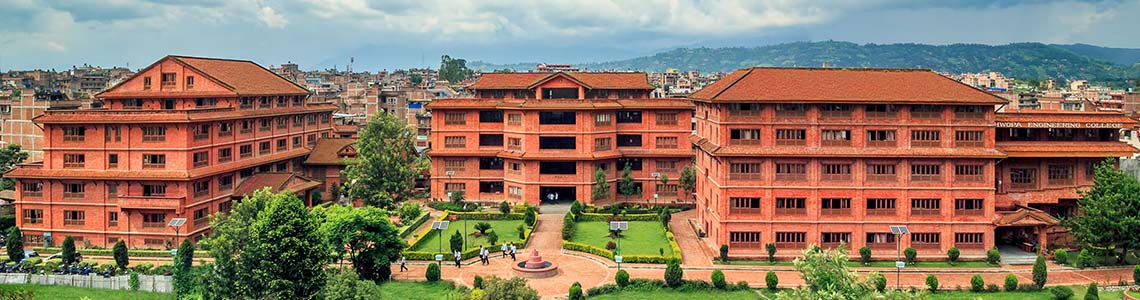
Course: Master of Engineering in Earthquake
Common Name: ME Earthquake
College: Khwopa Engineering College (KhEC)
Location: Libali, Bhaktapur-8, Nepal
Affiliation: Purbanchal University
Level: Master's
Duration: 2 years
Seats: 20
Department: PG Department of Earthquake Engineering
Eligibility: Bachelor in Civil Engineering or equivalent with minimum 50% marks or C+ grade with CGPA 2.40 in aggregate
Entrance Examination: Purbanchal University entrance examination
Entrance Marks: 100
Total Fee : NRs. 3,92,000
Academic Focus: Structural dynamics, soil dynamics, earthquake-resistant design, earthquake hazard, risk assessment, and related research
Learning Components: Coursework, analytical study, research, field visits, and practical training
ME Earthquake is an advanced engineering program intended for graduates with a Civil Engineering background who want to study the behavior of structures and soils under earthquake-related loading in greater depth.
The course gives particular attention to structural dynamics and soil dynamics. It also addresses the analysis of structures during earthquake motion and the principles involved in earthquake-resistant structural design.
Another major part of the program is the study of earthquake hazard and risk. Probability and statistics are incorporated into the academic approach to support work involving earthquake hazard, risk prediction, risk assessment, and risk management.
Rather than treating earthquakes only as a structural design problem, the program brings together structural behavior, soil response, hazards, risk, analytical methods, and research within an earthquake engineering framework.
The available academic framework identifies several central areas of study rather than providing a complete semester-by-semester subject list.
The principal areas include:
Structural dynamics
Soil dynamics
Earthquake engineering
Structural engineering
Earthquake-resistant design of structures
Earthquake hazard
Risk assessment
Risk prediction
Risk management
Probability and statistics applied to earthquake-related analysis
Research in earthquake and structural engineering
The program also incorporates theoretical study, analytical work, field visits, and practical training within its postgraduate engineering approach.
Structural dynamics is one of the main academic areas of the program. It deals with the dynamic behavior of structures rather than limiting analysis to static loading conditions.
Within ME Earthquake, this area is connected specifically with understanding structural behavior during earthquake motion. The course places structural dynamics alongside earthquake-resistant design, making the response of structures under seismic action a central part of postgraduate study.
The entrance syllabus also reflects the importance of structural fundamentals. Applied Mechanics, Strength of Materials, and Theory of Structure together account for a significant part of the Purbanchal University entrance examination for the program.
Soil dynamics is another core focus of ME Earthquake.
Earthquake response is studied not only through structural behavior but also through the behavior of soil and foundation systems. This is reflected in both the program's stated academic focus and the entrance examination, which includes Engineering Geology, Soil Mechanics, and Foundation Engineering.
The combination of structural dynamics and soil dynamics gives the course an academic base that connects above-ground structural behavior with ground and foundation conditions.
The program includes advanced study connected with the earthquake-resistant design of structures.
Its academic direction is concerned with understanding structural behavior during earthquake motion and applying that understanding to structural design. Concrete, steel, timber, and reinforced concrete structures also appear within the entrance syllabus, reflecting the structural engineering foundation expected before postgraduate study begins.
This emphasis makes prior Civil Engineering preparation important because postgraduate study builds on mechanics, strength of materials, structural analysis, geotechnical engineering, foundation engineering, and structural design concepts.
Earthquake hazard and risk form another distinct part of the program.
The academic scope includes earthquake hazard, risk prediction, risk assessment, and risk management. Probability and statistical methods are connected with these areas as part of the program's research-oriented approach.
This means the degree covers more than the response of an individual structure. It also includes analytical approaches used to examine earthquake hazards and risks within the broader field of earthquake engineering.
Research is explicitly included in the program's objectives.
Students are expected to engage with research in areas such as structural dynamics, soil dynamics, earthquake hazard, and risk assessment. The academic approach combines theoretical foundations with analytical study, coursework, field visits, and practical training.
KhEC also has a Research and Development Unit that has operated since 2006. The unit supports faculty and student research, student projects, research-related training, seminars, workshops, technical publication, and links with external organizations on research matters.
The postgraduate Earthquake Engineering program therefore sits within both a specialized academic department and the college's wider research structure.
The current Purbanchal University minimum eligibility requirement for Master of Engineering in Earthquake requires candidates to have passed Bachelor in Civil Engineering or an equivalent qualification.
Applicants must have at least:
50% marks in aggregate; or
C+ grade with a minimum CGPA of 2.40 in aggregate.
The program is therefore specifically directed toward applicants with the Civil Engineering academic foundation required for postgraduate work in structural dynamics, soil dynamics, structural engineering, and earthquake-resistant design.
Admission requires applicants to sit for the Purbanchal University entrance examination for Master of Engineering in Earthquake.
The entrance examination carries 100 marks.
| Entrance Area | Marks |
|---|---|
| Aptitude | 30 |
| Mathematics | 15 |
| Applied Mechanics and Strength of Materials | 15 |
| Theory of Structure | 10 |
| Engineering Geology, Soil Mechanics and Foundation Engineering | 15 |
| Concrete Technology, Steel and Timber Structure, and RCC | 15 |
The examination therefore combines aptitude and mathematics with core Civil Engineering subjects that are directly related to structural and earthquake engineering study.
The Civil Engineering component of the entrance examination covers several areas that applicants are expected to have encountered during their bachelor's degree.
Applied Mechanics includes statics and dynamics and is combined with Strength of Materials for 15 marks.
Theory of Structure carries 10 marks.
Engineering Geology, Soil Mechanics, and Foundation Engineering together carry 15 marks, while Concrete Technology, Steel and Timber Structure, and RCC account for another 15 marks.
Aptitude carries the largest individual share at 30 marks, while Mathematics carries 15 marks.
Admission to ME Earthquake is tied to the Purbanchal University entrance examination and merit-based selection.
Applicants must first meet the academic eligibility requirement for the master's program and participate in the entrance examination. The Earthquake Engineering admission provisions specify selection for registration on a merit basis through the university entrance process.
KhEC's broader Faculty of Engineering admission system uses the Purbanchal University entrance result for merit listing and includes a college interview or aptitude stage for listed applicants.
The program has 20 seats.
The total fee for ME Earthquake at Khwopa Engineering College is NRs. 3,92,000.
The listed amount excludes registration and examination fees levied by Purbanchal University and charges imposed by other applicable external institutions or bodies.
An admission deposit of NRs. 15,000 is collected at enrollment. The deposit is refundable only after successful completion of the course.
For foreign students, an additional 50% of the total semester fees applies along with other applicable fees under Purbanchal University regulations.
ME Earthquake is administered through the PG Department of Earthquake Engineering at KhEC.
The department's postgraduate academic direction covers earthquake engineering and structural engineering with particular emphasis on structural dynamics, soil dynamics, structural behavior during earthquake motion, earthquake-resistant design, hazard, and risk.
Its stated objectives include supporting research in structural dynamics, soil dynamics, earthquake hazard, and risk assessment and providing advanced study through coursework, analytical work, field visits, and practical training.
The program also aims to strengthen technical and managerial preparation within earthquake and structural engineering while maintaining a research-oriented postgraduate environment.
The wider Civil Engineering academic setting at KhEC includes structural engineering, material testing, surveying, water resources, and computer facilities.
Structural Engineering resources include equipment used for work involving beam bending, column buckling, frames, trusses, arches, and related structural behavior. Material Testing resources include testing equipment used in construction materials, concrete, soil, foundations, transportation engineering, and reinforced concrete study.
These resources form part of the broader engineering environment in which the postgraduate Earthquake Engineering department operates.
ME Earthquake is intended for Civil Engineering graduates who want deeper academic preparation in earthquake and structural engineering.
The program's stated orientation includes research in structural dynamics, soil dynamics, earthquake hazard, and risk assessment. It also emphasizes advanced knowledge through theoretical study, analytical work, field visits, and practical training.
Its postgraduate focus can support academic or professional development connected with earthquake engineering, structural engineering, earthquake-resistant structural design, hazard analysis, risk assessment, and research. Actual professional opportunities depend on an individual's qualifications, experience, technical competence, applicable professional requirements, and available roles.
KhEC's general admission cancellation provisions apply according to the timing of withdrawal.
Students cancelling admission within 15 days from the commencement of classes are eligible for a refund of 100% of the semester fee, excluding the deposit.
For cancellation after 15 days but within 30 days, 50% of the semester fee is refundable, excluding the deposit.
No refund is issued for cancellation after 30 days from the commencement of classes.
Students discontinuing their studies must formally withdraw from the college. From subsequent semesters, once the semester fee or credit bill has been generated in the college ERP system, outstanding bills must be cleared before admission cancellation is processed.
The deposit is not refunded when a student cancels admission or withdraws from the program.
Yes. Master of Engineering in Earthquake at Khwopa Engineering College is affiliated with Purbanchal University.
The program has a duration of two years.
The enrollment capacity is 20 students.
Applicants must have passed Bachelor in Civil Engineering or equivalent with at least 50% marks or C+ grade with a minimum CGPA of 2.40 in aggregate.
Yes. Applicants must sit for the Purbanchal University entrance examination for Master of Engineering in Earthquake.
The 100-mark examination covers Aptitude, Mathematics, Applied Mechanics and Strength of Materials, Theory of Structure, Engineering Geology, Soil Mechanics and Foundation Engineering, and Concrete Technology, Steel and Timber Structure, and RCC.
The program focuses on structural dynamics, soil dynamics, earthquake and structural engineering, earthquake-resistant structural design, earthquake hazard, risk prediction, risk assessment, risk management, and related research.
Yes. Research in structural dynamics, soil dynamics, earthquake hazard, and risk assessment is part of the program's academic objectives. Coursework is also combined with analytical study, field visits, and practical training.
The total fee is NRs. 3,92,000. Purbanchal University registration and examination charges and other applicable external fees are excluded.
Yes. KhEC collects an NRs. 15,000 deposit at admission. It is refundable only after successful completion of the course.






