MSc in Urban Design in Conservation at Khwopa Engineering College is a two-year postgraduate program affiliated with Purbanchal University. The program is offered through the Urban Design and Conservation Department at KhEC in Libali, Bhaktapur-8, Nepal.
The program has an enrollment capacity of 20 students and a 60-credit curriculum spread across four semesters. Its academic focus brings together urban design, conservation, built heritage, construction materials and technology, disaster management, urban development, environmental psychology, cultural resource management, urban growth, real estate development, design studios, field study, research methodology, and thesis work.
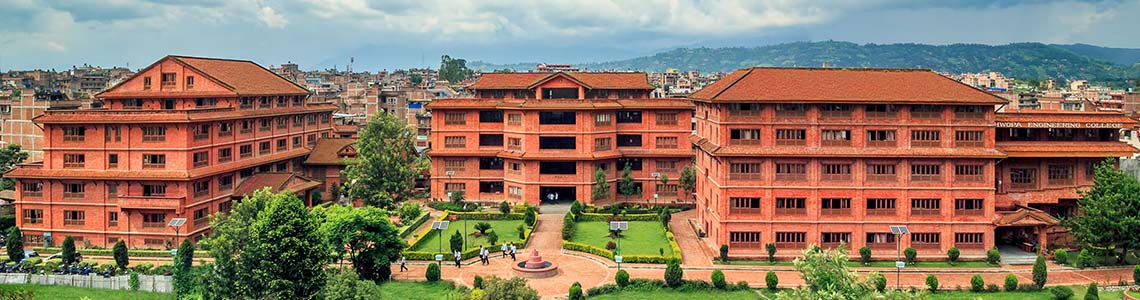
Course: MSc in Urban Design in Conservation
College: Khwopa Engineering College (KhEC)
Location: Libali, Bhaktapur-8, Nepal
Affiliation: Purbanchal University
Level: Master's
Duration: 2 years
Academic Structure: 4 semesters
Total Credits: 60
Seats: 20
Total Fee: NRs. 3,92,000
Eligibility: Bachelor in Civil Engineering, Architecture, or equivalent with at least 50% marks or C+ grade with CGPA 2.40 in aggregate
Admission: Purbanchal University entrance examination and college interview
Entrance Examination: 100 marks
Major Academic Components: Urban design, conservation, design studios, field study, research methodology, thesis proposal, and thesis report
Department: Urban Design and Conservation Department
The program studies urban development alongside the conservation of existing built heritage and community spaces. Its academic setting considers streets, squares, public spaces, traditional settlements, cultural activity, and historic urban form as parts of the wider urban environment.
At KhEC, Urban Design and Conservation is approached through themes of community, culture, ecology, sustainability, heritage, and the changing requirements of cities. The department also connects teaching with research involving faculty members, visiting faculty, students, and relevant agencies working on issues related to urban design and conservation.
The master's curriculum reflects that combination. Students begin with theories of urban design, history of the built environment, conservation philosophy, construction materials and conservation, and disaster management. They then move into design studios, conservation legislation, field study, cultural resource management, urban growth management, real estate development, research, and a substantial final thesis.
The program carries 15 credits in each semester, giving a total of 60 credits over four semesters.
| Semester | Courses | Credits |
|---|---|---|
| I | Theories of Urban Design; History of Built Environment; Theory and Philosophy of Conservation; Construction Technology, Material and Conservation; Disaster Management and Urban Development; Elective-I | 15 |
| II | Urban Design Principles and Processes; Conservation Management and Legislation; Environmental Psychology; Design Studio-I; Field Study; Project Design and Research Methodology; Elective-II | 15 |
| III | Cultural Resource Management; Urban Growth Management; Real Estate Development; Design Studio-II; Thesis Proposal Seminar | 15 |
| IV | Thesis Report | 15 |
The first semester establishes the theoretical and technical foundation of the program.
Theories of Urban Design introduces urban design as a central area of study, while History of Built Environment places contemporary urban questions in their historical context. Theory and Philosophy of Conservation addresses the principles underlying conservation practice.
Construction Technology, Material and Conservation connects conservation study with the physical character and treatment of the built environment. Disaster Management and Urban Development adds the relationship between urban development and disaster-related concerns.
The semester also includes Elective-I. Altogether, the first semester carries 15 credits.
The second semester shifts toward applied urban design and research work.
Urban Design Principles and Processes is accompanied by Conservation Management and Legislation and Environmental Psychology. Together, these courses extend the study of urban form into management, legal, environmental, and human dimensions.
Design Studio-I is a five-credit course, making design work a substantial component of the semester. Field Study carries two credits, while Project Design and Research Methodology introduces the research framework used for more advanced academic work.
Elective-II completes the semester, which carries 15 credits in total.
The third semester includes Cultural Resource Management, Urban Growth Management, and Real Estate Development.
These courses place heritage and conservation within wider questions of urban change, development, management, and the use of urban resources.
Design Studio-II carries five credits and continues the design-studio sequence begun in the second semester.
The semester concludes academically with a two-credit Thesis Proposal Seminar. This provides the formal transition from taught coursework and studio activity to the thesis-focused fourth semester. The semester carries 15 credits.
The fourth semester is devoted to the Thesis Report, which carries 15 credits.
This makes the thesis one-quarter of the program's total 60-credit structure. It follows Project Design and Research Methodology in the second semester and the Thesis Proposal Seminar in the third semester.
The sequence places research preparation before the final thesis rather than introducing research only at the end of the degree.
Applied study is built directly into the curriculum.
Design Studio-I in the second semester and Design Studio-II in the third semester each carry five credits. Together, the two studios account for 10 credits of the program.
The second semester also includes a two-credit Field Study. This places field-based academic work alongside urban design principles, conservation management, environmental psychology, studio work, and research methodology.
The structure is particularly relevant to a program dealing with existing cities, heritage environments, public spaces, and urban development because studio and field components sit alongside historical, theoretical, managerial, and conservation-focused courses.
Research is developed across several stages.
Project Design and Research Methodology appears in the second semester. The third semester includes a Thesis Proposal Seminar, followed by the 15-credit Thesis Report in the fourth semester.
The Urban Design and Conservation Department also undertakes research activity with faculty members, visiting faculty, students, and other relevant agencies on issues connected with urban design and conservation.
KhEC's wider Research and Development Unit has operated since 2006. The college's research work includes traditional architecture, archaeological structures, indigenous knowledge, traditional technologies, materials, and student project work, providing an institutional research setting connected with several themes found within urban conservation study.
Applicants must have completed a Bachelor in Civil Engineering, Architecture, or an equivalent qualification.
The minimum academic requirement is:
At least 50% marks in aggregate; or
C+ grade with a minimum CGPA of 2.40 in aggregate.
For applicants presenting a foreign academic certificate, an equivalence certificate and grading information for each subject, or a record showing the total percentage, must be submitted from the concerned authority.
KhEC's Urban Design and Conservation admission criteria also require candidates to qualify in the Purbanchal University entrance examination and attend the college interview.
The entrance examination for MSc in Urban Design and Conservation carries 100 marks.
| Entrance Area | Marks |
|---|---|
| Aptitude | 30 |
| Mathematics | 15 |
| Architecture | 30 |
| Civil | 25 |
The entrance structure gives the largest individual weight to Aptitude and Architecture, followed by Civil and Mathematics. Applicants must obtain the required passing result in the Purbanchal University entrance examination before proceeding through the admission process.
Admission requires both the university entrance examination and an interview conducted by Khwopa Engineering College.
Applicants who meet the academic eligibility requirements sit for the Purbanchal University entrance examination. Candidates who obtain the required passing result proceed through the applicable selection process and college interview.
KhEC's broader Faculty of Engineering admission procedure uses the Purbanchal University entrance result for merit listing, followed by a college interview or aptitude stage before final admission.
The program has 20 seats.
The total fee for MSc Urban Design and Conservation at Khwopa Engineering College for is NRs. 3,92,000.
The stated total excludes registration and examination fees levied by Purbanchal University and charges from other applicable external institutions or bodies.
An admission deposit of NRs. 15,000 is collected at enrollment. The deposit is refunded only after successful completion of the course.
For foreign students, an additional 50% of the total semester fees applies together with other applicable fees under Purbanchal University regulations.
The college's cancellation policy provides a refund of 100% of the semester fee for admission cancelled within 15 days from the commencement of classes. The deposit is excluded from the refund.
For cancellation after 15 days but within 30 days, 50% of the semester fee is refundable, again excluding the deposit.
No refund is issued for cancellation after 30 days from the commencement of classes.
Students discontinuing their studies are required to complete the formal withdrawal process. From subsequent semesters, once a semester fee or credit bill has been generated in the college ERP system, outstanding bills must be cleared before cancellation is processed.
The admission deposit is not refunded when a student cancels admission or withdraws from the program.
KhEC has a dedicated Urban Design and Conservation Department for its postgraduate work in this area.
The department connects urban development with continuity of heritage and the use of public and community spaces. Its academic perspective includes streets, squares, places for community gathering, traditional settlements, ponds, temple complexes, and cultural activity within urban environments.
The department also brings research into its academic work through faculty, visiting faculty, students, and collaboration with relevant agencies on urban design and conservation issues.
The wider college facilities include laboratories, a library with course and reference books, multipurpose halls, sports facilities, a cafeteria, and transportation services.
The program is academically structured for graduates from Civil Engineering, Architecture, or equivalent backgrounds who meet the specified eligibility threshold.
Its curriculum is particularly centered on students interested in studying the relationship between urban development and conservation through design, history, cultural resources, public space, construction materials, legislation, environmental psychology, field study, and research.
Students considering the course should also account for its postgraduate workload. The program includes two design studios, field study, research methodology, a thesis proposal seminar, and a 15-credit thesis in addition to its taught courses.
Yes. The program at Khwopa Engineering College is affiliated with Purbanchal University.
The program has a duration of two years and is organized across four semesters.
The enrollment capacity is 20 students.
The curriculum carries 60 credits. Each of the four semesters accounts for 15 credits.
Applicants need a Bachelor in Civil Engineering, Architecture, or equivalent with at least 50% marks or C+ grade with a minimum CGPA of 2.40 in aggregate.
Yes. Applicants must sit for the Purbanchal University entrance examination and complete the college interview requirement.
The 100-mark entrance examination includes Aptitude for 30 marks, Mathematics for 15, Architecture for 30, and Civil for 25.
The total fee for is NRs. 3,92,000. Registration and examination fees charged by Purbanchal University and other applicable external charges are excluded.
Yes. Design Studio-I is included in the second semester and Design Studio-II in the third semester. Each carries five credits.
Yes. The third semester includes a two-credit Thesis Proposal Seminar, and the fourth semester consists of a 15-credit Thesis Report.