Bachelor in Civil Engineering (BE Civil) at Khwopa Engineering College is a four-year bachelor's program under the Faculty of Engineering, affiliated with Purbanchal University. The program has an enrollment capacity of 96 students at KhEC in Libali, Bhaktapur-8.
The Purbanchal University course structure effective from the 2021 batch covers engineering science, construction materials, surveying, structures, geotechnical engineering, water resources, transportation, environmental and sanitary engineering, project management, practical work, field study, projects, electives, and internship.
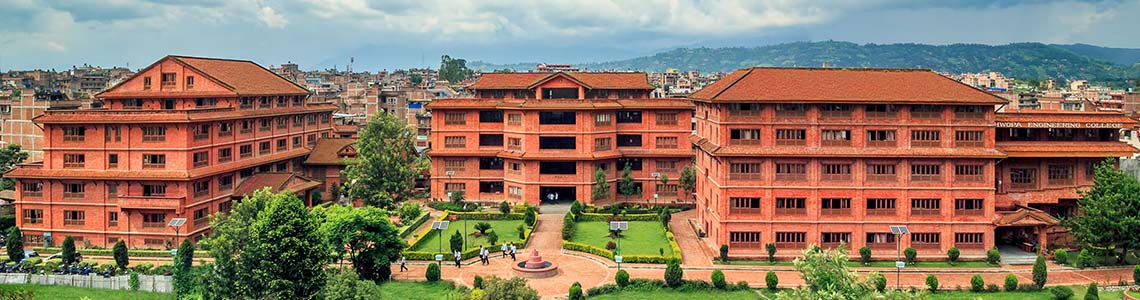
Course: Bachelor in Civil Engineering (BE Civil)
College: Khwopa Engineering College (KhEC)
Location: Libali, Bhaktapur-8, Nepal
Affiliation: Purbanchal University
Faculty: Faculty of Engineering
Level: Bachelor's
Duration: 4 years
Academic Structure: 8 semesters
Seats: 96
Curriculum: Purbanchal University course structure effective from 2021 batch
Survey Camp: Fifth semester, minimum 12 days
Internship: Eighth semester, 30 working days
Total Fee: NRs. 6,96,000
Additional Survey Camp Fee: NRs. 25,000
Admission: Purbanchal University entrance examination followed by KhEC merit list and interview/aptitude test
The BE Civil curriculum moves from mathematics, basic sciences, mechanics, materials, engineering drawing, electrical engineering, and workshop practice into the main civil engineering disciplines.
In the middle semesters, students study surveying, strength of materials, fluid mechanics, engineering geology, hydraulics, structural analysis, concrete technology, soil mechanics, water supply, transportation, hydrology, foundation engineering, irrigation, and sanitary engineering. The later semesters bring reinforced concrete design, hydropower, estimation and valuation, construction project management, safety engineering, professional practice, electives, civil engineering projects, and internship into the course.
| Semester | Subjects | Credits |
|---|---|---|
| I | Mathematics-I; Chemistry; Applied Mechanics-I (Statics); Civil Engineering Materials; Basic Electrical Engineering; Engineering Drawing-I; Workshop Technology | 19 |
| II | Mathematics-II; Physics; Applied Mechanics-II (Dynamics); Building Technology; Fundamental of Thermodynamics and Heat Transfer; Engineering Drawing II | 18 |
| III | Mathematics-III; Strength of Materials; Fluid Mechanics; Survey I; Engineering Geology; Basic Electronics Engineering; Computer Programming | 20 |
| IV | Probability & Statistics; Survey-II; Hydraulics; Theory of Structure-I; Concrete Technology and Masonry Structures; Civil Engineering Drawing; English for Technical Communication | 20 |
| V | Soil Mechanics; Survey Camp; Theory of Structure-II; Water Supply Engineering; Transportation Engineering-I; Engineering Hydrology; Design of Steel and Timber Structure | 20 |
| VI | Foundation Engineering; Irrigation Engineering; Sanitary Engineering; Transportation Engineering-II; Numerical Methods; Engineering Economics | 18 |
| VII | Design of Reinforced Concrete Structure; Hydropower Engineering; Estimation and Valuation; Civil Engineering Project I; Safety Engineering; Construction Project Management; Elective-I | 18 |
| VIII | Civil Engineering Project II; Engineering Professional Practice; Elective-II; Internship | 11 |
The first two semesters establish the mathematical, scientific, mechanical, materials, drawing, electrical, workshop, and building-technology base of the degree.
By the third and fourth semesters, the focus moves more directly into civil engineering through Strength of Materials, Fluid Mechanics, Survey I and II, Engineering Geology, Hydraulics, Theory of Structure-I, Concrete Technology and Masonry Structures, and Civil Engineering Drawing. Computer Programming and Probability & Statistics are also included during this stage.
The fifth and sixth semesters concentrate on soil and foundations, structures, water resources, transportation, and environmental services. Students take Soil Mechanics, Theory of Structure-II, Water Supply Engineering, Transportation Engineering-I and II, Engineering Hydrology, Foundation Engineering, Irrigation Engineering, and Sanitary Engineering.
In the final year, students study Design of Reinforced Concrete Structure, Hydropower Engineering, Estimation and Valuation, Safety Engineering, Construction Project Management, Engineering Professional Practice, and electives. Civil Engineering Project I begins in semester VII and is followed by Civil Engineering Project II and internship in semester VIII.
Survey Camp is a distinct two-credit course in the fifth semester. The curriculum specifies a minimum duration of 12 days for the camp. KhEC charges an additional NRs. 25,000 for the Civil Engineering Survey Camp, separate from the listed total program fee.
Civil Engineering students also take Survey I and Survey II during the third and fourth semesters. Departmental surveying resources include Auto Levels, Theodolites, Total Stations, GNSS devices, drones, and related accessories.
Field activities extend beyond surveying. Civil Engineering study at KhEC includes field visits and fieldwork connected with civil engineering materials, building construction, geological study, hydraulics, hydrology, water supply, sanitation, transportation, and elective subjects. Educational tours may include hydropower and irrigation sites according to academic requirements.
The final year includes two successive project components. Civil Engineering Project I is a one-credit seventh-semester course, followed by the three-credit Civil Engineering Project II in semester VIII.
The eighth semester also includes a three-credit internship with a specified duration of 30 working days. Engineering Professional Practice and Elective-II are part of the same final-semester structure.
Project, laboratory, field, and internship components place practical work at different points in the degree rather than concentrating it in one semester. Surveying, materials, hydraulics, structures, computer-related study, and other technical subjects also have practical components within the curriculum.
The Civil Engineering Department has resources connected with several major areas of the curriculum. Its principal laboratory areas include Structural Engineering, Material Testing, Water Resources Engineering, Surveying, and Computer Programming.
Structural Engineering resources support subjects such as Applied Mechanics, Strength of Materials, and structural analysis. Material Testing facilities are used in areas including construction materials, concrete technology and masonry structures, soil mechanics, foundation engineering, transportation engineering, and reinforced concrete structures.
Water Resources facilities support Fluid Mechanics, Hydraulics, Hydrology, and Hydropower study. Surveying resources include conventional and digital surveying instruments, while computer laboratories support Computer Programming, Numerical Methods, Surveying, Civil Engineering Drawing, and Statistics.
Students also have access to related engineering laboratories and spaces used for mechanical workshop activities, thermodynamics, chemistry and environmental engineering, physics, electrical and electronics study, communication English, and engineering drawing.
The seventh and eighth semesters each contain an elective component. The Civil Engineering Department offers electives from the Purbanchal University curriculum according to students' orientation toward particular branches of Civil Engineering.
Listed elective areas include Structural Dynamics, Earthquake Engineering, Ground Water Engineering, Environmental Impact Assessment, Solid Waste Management, Transportation Engineering, Bio-engineering, Geographical Information System, RC Bridge, Rock Engineering, and Rural Road.
These electives sit alongside the common core subjects studied throughout the degree, allowing the later semesters to include more branch-specific academic work.
The Purbanchal University minimum eligibility criteria effective from the new intake of 2082-2083 cover multiple academic routes for BE programs, including Civil Engineering.
For the 10+2 or equivalent route, applicants must have studied Mathematics, Physics, and Chemistry/Computer as prescribed 100-mark subjects across Grade 11 and Grade 12 and meet the applicable minimum C-grade conditions.
Three-year Engineering Diploma, NEB Technical 9-12, or equivalent pathways are also covered by the eligibility provisions. For the related engineering diploma route, the stated minimum is 2.0 CGPA out of 4 or 45 percent. A Level applicants must meet the prescribed subject requirements in Mathematics, Physics, and Chemistry/Computer with the applicable minimum grades.
Admission to BE Civil requires applicants to pass the entrance examination conducted under the Purbanchal University Faculty of Engineering.
The bachelor's-level engineering entrance examination carries 100 marks. Its subject distribution is:
Mathematics: 40 marks
Physics: 30 marks
Chemistry: 20 marks
English: 10 marks
The entrance procedure sets a minimum of 33 percent for passing the bachelor's-level entrance examination. Bachelor in Civil Engineering is among the engineering programs covered by this entrance structure.
Eligible BE Civil applicants complete the Purbanchal University online entrance application and sit for the university entrance examination. Applicants must pass the entrance examination before proceeding through the college admission process.
KhEC prepares its merit list according to the entrance result published by Purbanchal University. Applicants included in the college merit list attend an interview/aptitude test conducted by KhEC. Successful applicants are then eligible to complete admission.
The stated procedure allows around two to three days after the interview for payment of the admission fee, subject to seat availability. Available seats are filled under the stated first-come-first-basis admission procedure.
The total fee for BE Civil at Khwopa Engineering College for is NRs. 6,96,000. An additional NRs. 25,000 is charged for the Survey Camp.
The listed program fee excludes registration and examination fees charged by Purbanchal University and charges levied by other applicable external institutions or bodies.
A deposit of NRs. 15,000 is collected at the time of admission. The deposit is refundable only after successful completion of the course. Foreign students are charged an additional 50 percent of the total semester fees along with other applicable charges under Purbanchal University regulations.
For admission cancellation before the Survey Camp begins, the Survey Camp fee is refundable. The general withdrawal provisions provide a refund of 100 percent of the semester fee for cancellation within 15 days of class commencement, excluding the deposit, and 50 percent for cancellation after 15 days and within 30 days. No refund is issued after 30 days from the start of classes, and the deposit is not refunded in the event of admission cancellation or withdrawal.
BE Civil students admitted in fall under the KhEC scholarship scheme for BE, B.Arch., BIT, and BCA-IT programs. Merit-based and reserved scholarships follow Purbanchal University scholarship policy.
First-semester scholarships linked to +2 academic performance are structured as follows:
50 percent of the total first-semester fee for a minimum CGPA of 3.90 out of 4.0 or 96 percent and above.
40 percent for CGPA 3.80-3.89 or 92 percent to below 96 percent.
30 percent for CGPA 3.60-3.79 or 84 percent to below 92 percent.
20 percent for CGPA 3.40-3.59 or 76 percent to below 84 percent.
10 percent for CGPA 3.20-3.39 or 68 percent to below 76 percent.
Students who completed +2 from public, government, or community schools are covered by a 10 percent scholarship on the total first-semester fee under the stated conditions. Community-school graduates must submit the specified certification from the Head of the Education Section of the respective local government based on the recommendation of the Principal or Campus Chief.
The scheme also includes a limited scholarship category for economically disadvantaged students, single-parent students, and differently-abled students, subject to evidence and socioeconomic assessment. A separate provision covers notable national or international sports achievements.
A student may receive only one scholarship. When a student meets more than one category, the higher-value scholarship applies.
Yes. Bachelor in Civil Engineering at Khwopa Engineering College is affiliated with Purbanchal University and follows the Faculty of Engineering academic structure.
BE Civil has a duration of four years and is organized across eight semesters.
The enrollment capacity for BE Civil is 96 students.
The total fee for is NRs. 6,96,000, with an additional NRs. 25,000 for the Survey Camp. Purbanchal University registration and examination fees and other applicable external charges are excluded.
Yes. Survey Camp is a two-credit course in the fifth semester, with a minimum duration of 12 days.
Yes. The eighth semester includes a three-credit internship lasting 30 working days.
Yes. Applicants must pass the Purbanchal University engineering entrance examination. KhEC then prepares its merit list from the university entrance result, followed by an interview/aptitude test for listed applicants.
The 100-mark entrance structure assigns 40 marks to Mathematics, 30 to Physics, 20 to Chemistry, and 10 to English. The bachelor's-level passing requirement is 33 percent.
Yes. BE Civil is included in the scholarship provisions covering Purbanchal University merit and reserved categories, +2 performance-based scholarships, eligible public or community-school graduates, disadvantaged students, and sports achievement categories.