



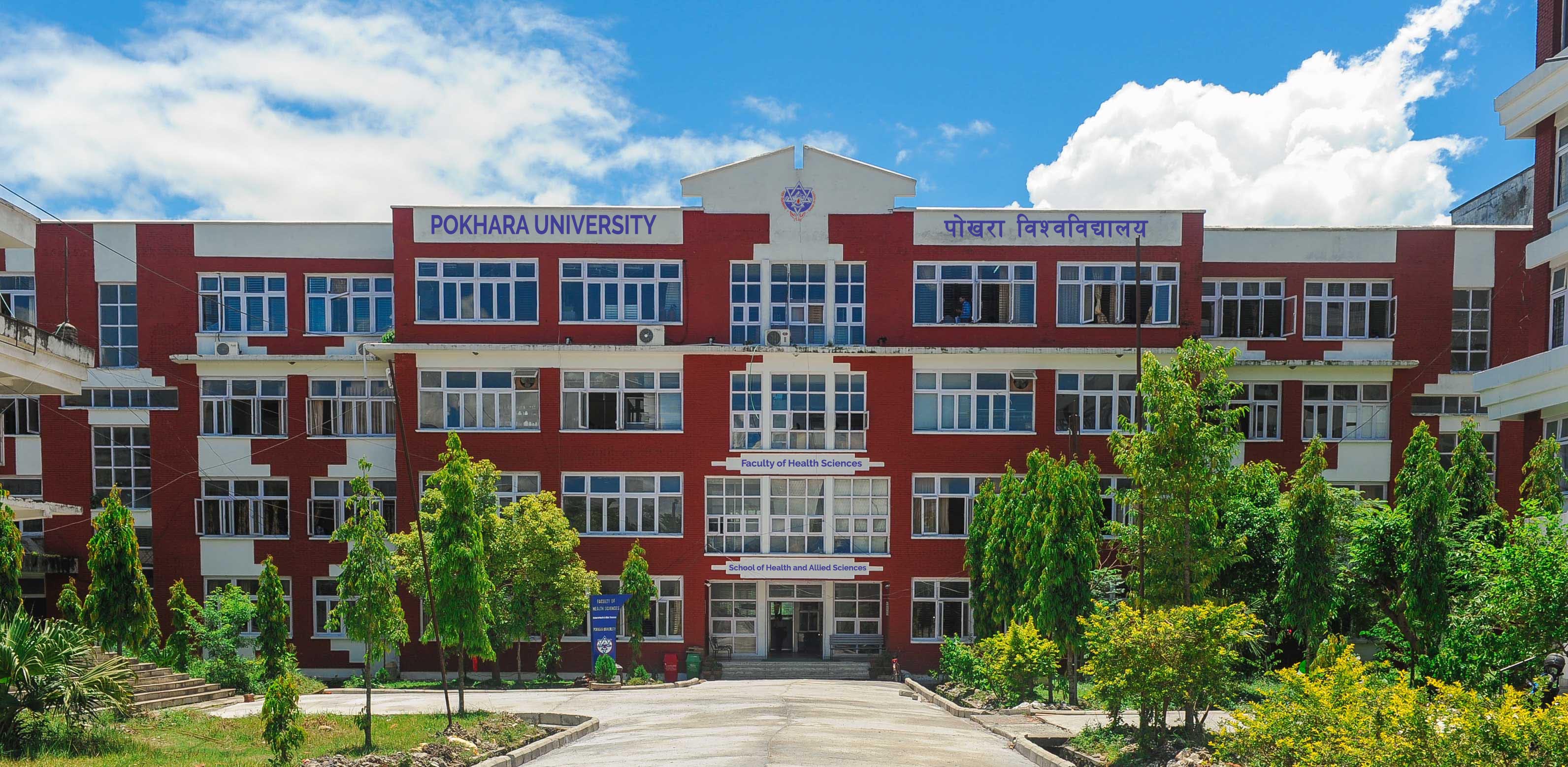
Bachelors of Optometry (B.Optom) is an undergraduate health-science program offered through the Pokhara University School of Health and Allied Sciences under the Faculty of Health Sciences of Pokhara University. The School is located at Dhungepatan, Pokhara-30, Kaski.
Optometry is included among the bachelor-level disciplines available within Pokhara University's Faculty of Health Sciences. The current seat allocation for the program is 20. Admission falls under the Medical Education Commission's bachelor-level entrance and selection framework, with seats, scholarship provisions, fees, and admission arrangements subject to the rules applicable to each admission cycle.
| Particular | Details |
|---|---|
| Course | Bachelors of Optometry (B.Optom) |
| Level | Undergraduate |
| University | Pokhara University |
| Institution | School of Health and Allied Sciences |
| Faculty | Faculty of Health Sciences |
| Location | Dhungepatan, Pokhara-30, Kaski |
| Current Seat Allocation | 20 seats |
| Entrance | MECEE-BL |
| Admission Authority | Medical Education Commission (MEC), Nepal |
| Professional Entry | Subject to the respective professional council licensing requirements |
The 20-seat figure is linked to MEC seat determination and should not be treated as a permanent intake. Seat numbers may change from one academic year to another.
B.Optom forms part of the health-professional education offered within Pokhara University's Faculty of Health Sciences. The Faculty includes undergraduate study across pharmaceutical sciences, medical laboratory science, public health, nursing, physiotherapy, medical microbiology, medical biochemistry, and optometry.
Students enrolled through SHAS study within the University's health-science academic environment at Dhungepatan. The School combines classroom-based education with practical activities, laboratories, seminars, projects, research work, field exposure, and other forms of applied learning according to individual program requirements.
The wider academic setting also includes Pokhara University's central library, high-speed internet, electronic learning resources, administrative services, and student-support facilities.
Admission to Bachelors of Optometry follows the prevailing bachelor-level health-professional education admission system of the Medical Education Commission (MEC), Nepal.
Applicants seeking admission must follow MECEE-BL and the admission rules applicable to the relevant academic cycle. The School's undergraduate admission process is tied to the national entrance examination conducted through MEC, with selection based on merit within the seats defined for the program.
The admission framework covers areas such as:
Entrance examination and merit-based selection
Seat determination
Scholarship provisions
Applicable fee arrangements
Admission procedures and timelines
Completion of university and School admission formalities
The School's general admission procedure places the national MEC entrance examination before institutional admission and uses merit order within the defined seats for selection.
MEC decisions for the admission year take priority over earlier seat, fee, scholarship, and procedural arrangements.
The current allocation for Bachelors of Optometry at SHAS is 20 seats.
Because health-professional seats are determined within the MEC system, this number may vary between academic cycles. Applicants should therefore treat 20 seats as the stated allocation for the current course information rather than a fixed capacity for every future intake.
The same cycle-based approach applies to admission categories and scholarship distribution.
The School of Health and Allied Sciences has developed as a multidisciplinary constituent school of Pokhara University. Its academic areas include pharmacy, laboratory sciences, public health, nursing, physiotherapy, optometry, medical imaging, medical biochemistry, and medical microbiology.
Teaching across the School uses several methods according to the requirements of the particular discipline. These include classroom instruction, seminars, laboratory activities, practical sessions, field visits, projects, research, and problem-based or inquiry-based learning.
This setting allows B.Optom students to study within a broader health-science environment rather than within a separate institution devoted to a single discipline.
Students at SHAS have access to Pokhara University's central library within the academic complex.
The library contains textbooks and reference materials supporting programs taught by the School. Its academic resources include:
Printed textbooks and reference materials
Computers
Electronic resources
Continuous high-speed internet access
The library operates from 6:00 to 18:00.
These facilities support regular study as well as seminar preparation, assignments, projects, and research-related academic work.
Health-professional education at SHAS includes practical and clinical learning where required by the respective program. The School also arranges transportation for students attending specified hospital practical classes and program-organized field visits.
At Faculty level, Pokhara University is establishing a 100-bed multidisciplinary Pokhara University Teaching Hospital (PUTH) for purposes that include clinical practice, clerkship, and internship across relevant health-science education.
The teaching hospital should be understood as a developing Faculty facility rather than as a completed service already available for every component of B.Optom study.
Pokhara University provides a girls' hostel adjacent to the academic complex. Accommodation is available to female students under university management at a nominal charge.
Students also have access to the School's administrative and accounts sections. These sections handle institutional procedures connected with registration, payments, financial administration, and other student-related processes.
For daily travel, students generally use local public bus services. Institutional transportation is primarily associated with scheduled practical classes and field-based academic activities.
Bachelors of Optometry is part of Nepal's health-professional education framework. Completing the academic degree and entering regulated professional practice are separate stages.
After completing the program, graduates must satisfy the licensing requirements of the respective professional council, including the applicable licensing examination, before entering professional practice.
Students approaching graduation need to follow the council rules and licensing procedures applicable at that time because professional requirements can be revised independently of the university curriculum.
B.Optom is specifically included among the bachelor's qualifications accepted for Master of Public Health admission at Pokhara University.
The listed MPH entry qualifications include B.Optom alongside MBBS, BDS, BPH, nursing degrees, B.Sc. MLT/BMLT, BAMS, B.Pharm, B.Sc. MIT, BASLP, BPT, or equivalent qualifications.
For MPH admission, applicants must also be registered with the respective professional council of their country and meet the MEC entrance and recommendation requirements.
This gives B.Optom graduates a defined postgraduate route into public-health study within the academic options identified by Pokhara University.
Students planning to apply for Bachelors of Optometry should consider the course together with the regulatory requirements surrounding health-professional education.
The most important admission-cycle factors are the MECEE-BL schedule, current seat allocation, merit process, scholarship provisions, applicable fees, and MEC admission procedures.
The current 20-seat figure can be revised in a later admission year. Applicants should therefore work with the MEC rules and calendar for the exact cycle in which they intend to seek admission.
Professional licensing should also be considered as part of long-term academic planning. Graduation provides the academic qualification, while professional entry requires compliance with the respective council's licensing rules.
Yes. Optometry is included among the bachelor-level health-science programs of Pokhara University's Faculty of Health Sciences, with the program offered through the School of Health and Allied Sciences.
The program is offered at Pokhara University School of Health and Allied Sciences, located at Dhungepatan, Pokhara-30, Kaski.
The current allocation is 20 seats. The number is subject to MEC seat determination and can change between admission cycles.
Bachelor-level admission follows MECEE-BL under the prevailing Medical Education Commission admission framework.
Yes. Admission to undergraduate health-professional programs at SHAS follows the MEC entrance and merit system within the seats assigned to the program.
Scholarship provisions and seat allocation are handled under the prevailing MEC rules for the relevant admission cycle.
Yes. Graduates must meet the licensing requirements of the respective professional council before entering regulated professional practice.
Yes. B.Optom is among the bachelor's qualifications accepted for MPH admission, subject to the applicable professional registration and MEC entrance requirements.






