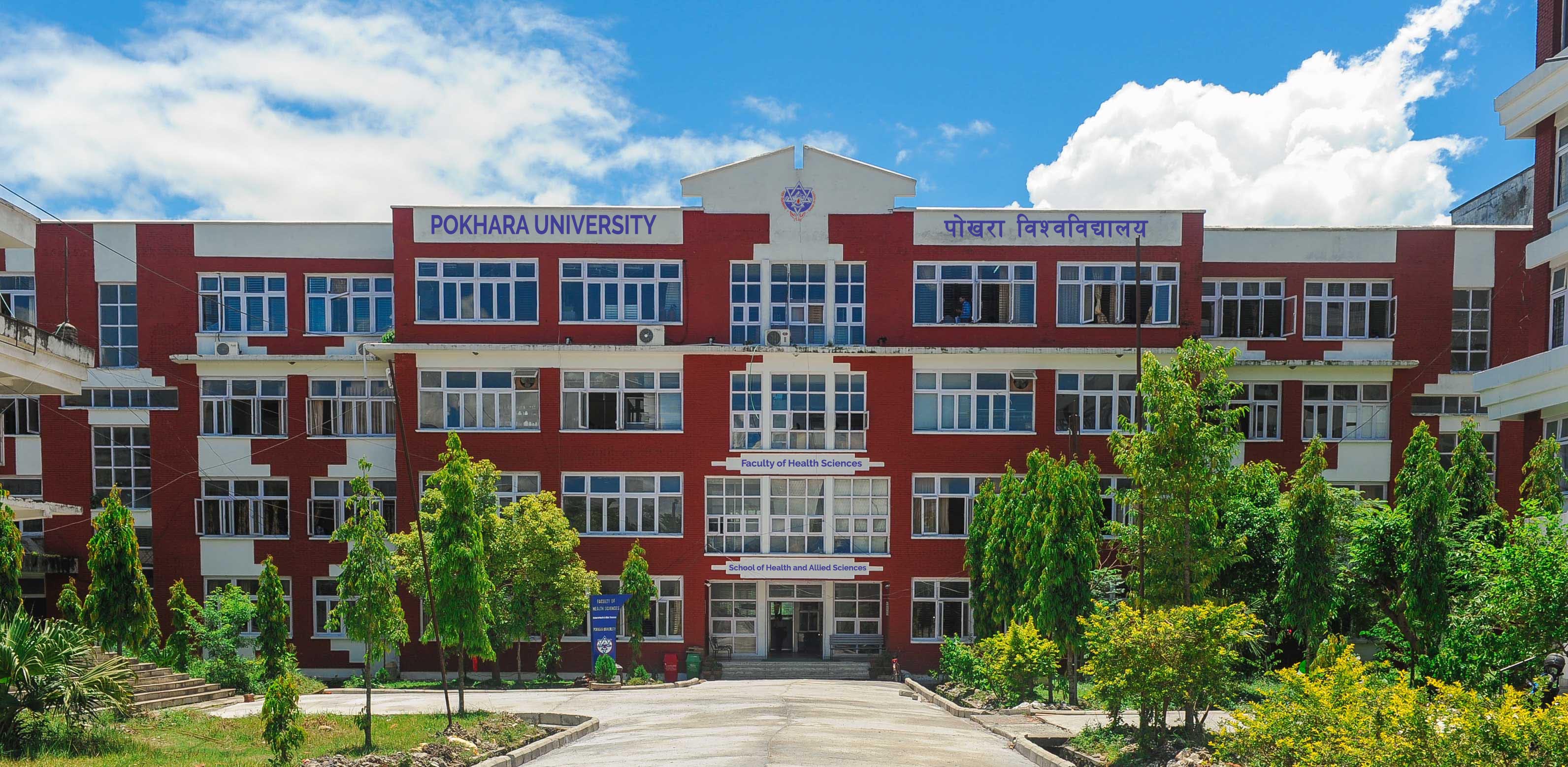
Master of Science in Medical Microbiology (M.Sc. MM) is a three-year postgraduate medical sciences program offered by the Pokhara University School of Health and Allied Sciences under Pokhara University. The School is located at Dhungepatan, Pokhara-30, Kaski.
The program carries 98 credit hours across six semesters. It covers bacteriology, parasitology, mycology, virology, immunology, microbial biochemistry, molecular microbiology, public health microbiology, infectious disease epidemiology, diagnostic microbiology, bioinformatics, research methods, and laboratory management. Students complete laboratory courses from the first semester, move into hospital-based postings during the second year, and undertake extended hospital laboratory practice and a nine-credit thesis in the third year.
| Particular | Details |
|---|---|
| Course | Master of Science in Medical Microbiology (M.Sc. MM) |
| Level | Postgraduate |
| University | Pokhara University |
| Institution | School of Health and Allied Sciences |
| Location | Dhungepatan, Pokhara-30, Kaski |
| Duration | 3 years |
| Academic Structure | 6 semesters |
| Total Credits | 98 |
| Listed Intake | 5 seats |
| Entrance | MECEE-PG |
| Program Fee | NPR 757,830 |
| Main Components | Theory, laboratory work, hospital postings, research and thesis |
| Thesis | 9 credits |
SHAS has offered graduate programs in Medical Microbiology and Medical Biochemistry since 2019. MSc Medical Microbiology has a listed intake of five students. The seat allocation remains subject to Medical Education Commission determination and may change between admission cycles.
Medical microbiology deals with microorganisms associated with human health and disease and with laboratory methods used to investigate them. The MSc curriculum approaches the subject through several branches of microbiology rather than treating it as a single laboratory subject.
Students begin with Human Anatomy and Physiology, Microbial Biochemistry, Immunology, General Medical Microbiology, Medical Biotechnology and Instrumentation, and Systemic Bacteriology. The second semester expands into Systemic Bacteriology II, Systemic Parasitology, Pharmaceutical Microbiology, Systemic Mycology, Systemic Virology, and Recent Advances and Molecular Microbiology.
During the second year, the course moves toward public health, epidemiology, diagnostic laboratory work, bioinformatics, research, and laboratory management. Hospital-based postings are introduced at this stage.
The third year is devoted mainly to hospital laboratory practice and thesis research.
Applicants may enter MSc Medical Microbiology with a bachelor's degree in a related subject or one of the specified health-science qualifications.
Eligible academic backgrounds include:
Bachelor's degree in a related subject
B.Sc. MLT
BMLT
B.Sc. Laboratory Medicine
BDS
MBBS
Equivalent qualification
Candidates must also participate in the entrance examination and recommendation process conducted under the Medical Education Commission framework.
Admission to MSc Medical Microbiology follows the postgraduate medical education framework of the Medical Education Commission (MEC), Nepal.
Applicants proceed through the MECEE-PG admission system. The process includes:
Meeting the required bachelor's-level academic qualification
Appearing for the applicable MECEE-PG entrance examination
Qualifying through the MEC merit process
Receiving admission within the seats determined for the program
Completing Pokhara University and SHAS admission formalities
The current intake is five seats. Seat distribution, scholarship provisions, fees, entrance procedures, and admission arrangements are governed by the prevailing MEC rules and calendar for the relevant admission cycle.
The curriculum is organized across six semesters and totals 98 credit hours. The first year is heavily laboratory-based, the second year combines advanced microbiology with hospital postings and research preparation, and the third year concentrates on hospital laboratory practice and thesis work.
| Semester | Main Academic Areas | Credits |
|---|---|---|
| I | Anatomy and Physiology, Microbial Biochemistry, Immunology, General Medical Microbiology, Medical Biotechnology and Instrumentation, Systemic Bacteriology I, laboratories | 24 |
| II | Systemic Bacteriology II, Parasitology, Pharmaceutical Microbiology, Mycology, Virology, Molecular Microbiology, laboratories | 24 |
| III | Medical Entomology, Bioinformatics, Public Health Microbiology, Infectious Disease Epidemiology, Research Methodology, Biostatistics, hospital postings | 17 |
| IV | Systemic and Diagnostic Microbiology I and II, Clinical Pharmacology, Laboratory Management, Emerging and Re-emerging Diseases, diagnostic laboratory postings | 15 |
| V | Hospital Based Laboratory Practices I, Thesis | 13 |
| VI | Hospital Based Laboratory Practices II | 5 |
The first year establishes the scientific and laboratory base of the program.
Semester I includes Human Anatomy and Physiology alongside Microbial Biochemistry and Immunology. General Medical Microbiology introduces the broader discipline, while Medical Biotechnology and Instrumentation adds laboratory technology and instrumentation to the course.
Systemic Bacteriology I begins the detailed study of bacteria during the same semester.
Each of the six main subjects has a corresponding one-credit laboratory course, producing a semester total of 24 credits.
Semester II becomes more microbiology-specific. Systemic Bacteriology II continues bacteriology, while Systemic Parasitology, Pharmaceutical Microbiology, Systemic Mycology, and Systemic Virology cover major groups and applications within microbiology.
Recent Advances and Molecular Microbiology introduces molecular-level study and developments within the discipline.
As in the first semester, every three-credit theory subject is accompanied by a one-credit laboratory course. The second semester also totals 24 credits.
The second year changes the balance of study by combining advanced academic subjects with hospital-based laboratory postings.
Semester III includes Applied Medical Entomology, Bioinformatics, Public Health Microbiology, Infectious Disease Epidemiology, Research Methodology, and Biostatistics.
These subjects broaden the course beyond organism-specific microbiology. Public Health Microbiology connects laboratory science with population health, while Infectious Disease Epidemiology introduces the study of patterns and distribution of infectious diseases.
Research Methodology and Biostatistics provide preparation for the thesis. Bioinformatics adds a computational component to biological and microbiological study.
Two hospital-based practice postings are included during the semester. Semester III carries 17 credits.
Semester IV moves further into laboratory diagnosis and clinical application.
Students study:
Systemic and Diagnostic Microbiology I
Systemic and Diagnostic Microbiology II
Clinical Pharmacology
Laboratory Management
Emerging and Re-emerging Diseases
Two practical postings accompany Systemic and Diagnostic Microbiology.
The inclusion of Laboratory Management adds an organizational component to the scientific curriculum, while Emerging and Re-emerging Diseases connects microbiology with changing patterns of infectious disease.
The semester carries 15 credits.
Hospital laboratory exposure begins during the second year and becomes the main academic activity in the final year.
Semester III contains two hospital-based practice postings. Semester IV follows with postings in Systemic and Diagnostic Microbiology.
The third year then includes:
Hospital Based Laboratory Practices I – 4 credits
Hospital Based Laboratory Practices II – 5 credits
This progression gives students repeated contact with practical laboratory work after completing the major bacteriology, parasitology, mycology, virology, immunology, molecular microbiology, epidemiology, and diagnostic microbiology subjects.
The practical structure also reflects the wider work of the Medical Laboratory Technology, Microbiology and Biochemistry department, where laboratory investigation is connected with the detection, diagnosis, monitoring, treatment support, and prevention of disease.
Research is introduced before the thesis year.
Semester III includes Research Methodology and Biostatistics, giving students formal preparation in research design and quantitative methods. Bioinformatics is studied in the same semester.
The fifth semester includes a nine-credit thesis, which is the largest single course component in the MSc Medical Microbiology curriculum.
The thesis runs alongside Hospital Based Laboratory Practices I. Hospital Based Laboratory Practices II then continues into Semester VI.
This structure connects postgraduate research with the laboratory and diagnostic subjects studied throughout the first two years.
The curriculum covers several interconnected areas of medical microbiology:
Bacteriology
Parasitology
Mycology
Virology
Immunology
Microbial Biochemistry
Medical Biotechnology and Instrumentation
Molecular Microbiology
Pharmaceutical Microbiology
Medical Entomology
Public Health Microbiology
Infectious Disease Epidemiology
Bioinformatics
Diagnostic Microbiology
Emerging and Re-emerging Diseases
Clinical Pharmacology
Research Methodology
Biostatistics
Laboratory Management
The sequence moves from fundamental and organism-based microbiology toward diagnostic, epidemiological, public-health, research, and laboratory-management applications.
The updated fee structure gives the following amount for MSc Medical Microbiology:
| Fee Component | Amount |
|---|---|
| MSc Medical Microbiology Program Fee | NPR 757,830 |
| Security Deposit | NPR 10,000 refundable |
| FSU Fee | NPR 1,000 |
The security deposit and FSU fee are separate from the program fee.
Medical education fees are governed by the applicable MEC framework. Fee decisions for a later admission cycle may differ from the amount stated for the current program information.
The Medical Microbiology program is linked with clinical laboratory science, research, medical education, and microbiological investigation in health settings.
The graduate programs in Medical Microbiology and Medical Biochemistry are directed toward preparing laboratory scientists for academic, clinical laboratory, and research-related work. Their departmental context includes hospitals, medical colleges, health institutes, and medical research.
Graduates may therefore consider work connected with:
Clinical and diagnostic microbiology laboratories
Hospitals and health institutes
Medical colleges
Academic teaching
Microbiology research
Health and laboratory research institutions
These are possible professional settings rather than guaranteed employment outcomes. Entry depends on professional requirements, experience, individual competence, available positions, and institutional recruitment conditions.
MSc Medical Microbiology falls within health-professional education regulated through the prevailing medical education system.
After completing the academic program, graduates entering a regulated professional field must meet the licensing requirements of the respective professional council. The licensing examination and professional rules in force at the time of professional entry apply separately from completion of the Pokhara University degree.
The program may suit graduates with a background in laboratory science, medicine, dentistry, or a related biological and health-science field who want advanced study centered on microorganisms, infectious disease, diagnostic laboratory work, and research.
Students should be prepared for a substantial practical commitment. The first year contains 12 laboratory courses, the second year includes hospital and diagnostic laboratory postings, and the third year is built around extended hospital laboratory practice and thesis research.
The curriculum also requires engagement with epidemiology, biostatistics, molecular microbiology, biotechnology, bioinformatics, clinical pharmacology, and laboratory management alongside the major microbiology disciplines.
The program runs for three years across six semesters.
The complete curriculum carries 98 credit hours.
The listed intake is five seats. Seat allocation is subject to MEC determination for the applicable admission cycle.
Applicants may qualify with a bachelor's degree in a related subject, B.Sc. MLT, BMLT, B.Sc. Laboratory Medicine, BDS, MBBS, or an equivalent qualification.
Admission follows the postgraduate MEC entrance framework through MECEE-PG.
The program fee is NPR 757,830. A refundable security deposit of NPR 10,000 and an FSU fee of NPR 1,000 are listed separately.
Yes. Hospital-based postings begin during the second year, followed by Hospital Based Laboratory Practices I and II in the third year.
Yes. Semester V includes a nine-credit thesis.
The curriculum includes bacteriology, parasitology, mycology, virology, immunology, pharmaceutical microbiology, molecular microbiology, public health microbiology, and systemic and diagnostic microbiology.