



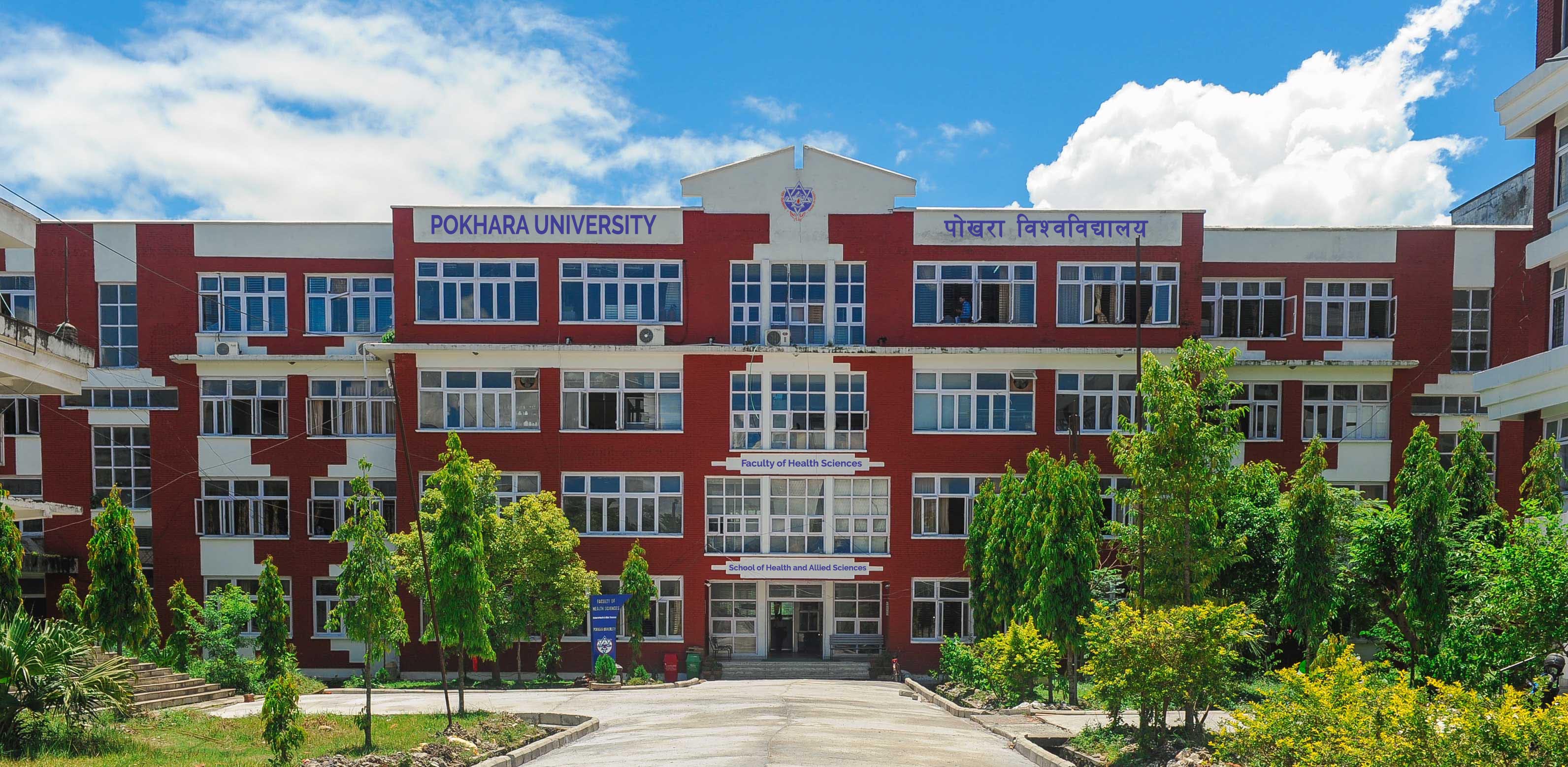
Bachelor of Physiotherapy (BPT) is a four-and-a-half-year undergraduate health-science program offered by the Pokhara University School of Health and Allied Sciences under Pokhara University. The School is located at Dhungepatan, Pokhara-30, Kaski.
The program is structured across nine semesters and carries 167 credit hours. Students study biomedical sciences, biomechanics, exercise therapy, electrotherapy, clinical medicine, musculoskeletal and neurological physiotherapy, cardiopulmonary rehabilitation, pediatrics, sports physiotherapy, community physiotherapy, women's health, geriatrics, research, and clinical decision-making.
Clinical education begins before the final year and increases as students progress. The ninth semester includes a six-month compulsory rotatory internship together with completion of the research project through thesis and defense.
| Particular | Details |
|---|---|
| Course | Bachelor of Physiotherapy (BPT) |
| Level | Undergraduate |
| University | Pokhara University |
| Institution | School of Health and Allied Sciences |
| Location | Dhungepatan, Pokhara-30, Kaski |
| Duration | 4.5 years |
| Academic Structure | 9 semesters |
| Total Credits | 167 |
| Current Seat Allocation | 20 seats |
| Entrance | MECEE-BL |
| Listed Program Fee | NPR 777,000 |
| Final Training | Six-month rotatory compulsory internship |
The current seat allocation and fee operate within the prevailing Medical Education Commission framework and may change in later admission cycles.
BPT combines the study of the human body with movement science, physical assessment, therapeutic exercise, rehabilitation, clinical reasoning, and patient-centered physiotherapy practice.
Students begin with anatomy, physiology, biochemistry, microbiology, clinical immunology, pathology, pharmacology, behavioral sciences, and an introduction to physiotherapy. These subjects establish the biological and clinical foundation required before students move into assessment and treatment-related coursework.
Biomechanics is introduced in the second semester and develops further during the third semester. Exercise physiology, exercise prescription, assessment skills, and exercise therapy also enter the curriculum at this stage.
The later semesters increasingly concentrate on clinical physiotherapy. Students study musculoskeletal, neurological, cardiopulmonary, pediatric, community, sports, women's health, geriatric, industrial, and other physiotherapy areas before completing the final internship and thesis.
The BPT program is designed around clinical assessment, evidence-based practice, rehabilitation, and research.
Its academic objectives include preparing students to:
Assess and interpret patient conditions relevant to physiotherapy
Plan and apply physiotherapy using a patient-centered approach
Develop knowledge of physiotherapy, biomedical sciences, and psychosocial sciences
Build clinical reasoning and decision-making skills
Apply evidence-based treatment principles
Develop competence for physiotherapy practice
Contribute to research and scientific work related to physiotherapy
Research is not separated from professional study. Scientific evidence, biostatistics, evidence-based practice, research methodology, protocol development, thesis work, and defense appear at different points in the curriculum.
Applicants seeking BPT admission must qualify for the Common Entrance Examination of Bachelor Level in Health Professional Education conducted by the Medical Education Commission.
The stated academic routes include:
10+2 Science with Physics, Chemistry, and Biology with at least 50% aggregate marks or GPA 2.4 or equivalent; or
An equivalent certificate-level qualification, including systems such as A-Level, meeting an equivalent academic standard.
Candidates must pass the MEC bachelor-level common entrance examination and be successful and recommended through the applicable admission system.
BPT admission is handled through the bachelor-level health-professional admission framework of the Medical Education Commission (MEC), Nepal.
The admission process includes:
Meeting the prescribed academic eligibility
Appearing for MECEE-BL
Qualifying through the national common entrance examination
Merit-based selection within the allocated seats
Completing the required university and School admission formalities
The current BPT allocation is 20 seats.
MEC rules govern seat determination, merit, scholarship provisions, fee arrangements, admission procedures, and the applicable academic calendar. The number of seats assigned to BPT may therefore vary from one intake to another.
The program carries 167 credits over nine semesters. Its structure moves gradually from basic medical sciences to physiotherapy assessment, treatment, specialty practice, clinical education, research, and internship.
| Semester | Main Academic Areas | Credits |
|---|---|---|
| I | Anatomy, Physiology, Biochemistry, Microbiology, Clinical Immunology, Introduction to Physiotherapy, laboratory and practical work | 17 |
| II | Anatomy, Physiology, Biomechanics, Pathology, Pharmacology, Behavioral Sciences, First Aid, practical work | 20 |
| III | Neuroanatomy, Neurophysiology, Biomechanics, Exercise Physiology, Exercise Prescription, Assessment Skills, Exercise Therapy | 15 |
| IV | Biostatistics, Scientific Evidence, Health Promotion, Community Medicine, Electrotherapy, Exercise Therapy, Clinical Education | 15 |
| V | Orthopedics, Neurology, Musculoskeletal and Neurological Physiotherapy, Assistive Devices, Evidence-Based Practice, Clinical Education | 22 |
| VI | Clinical Medicine and Surgery, Cardiopulmonary Physiotherapy, Pediatrics, Mental Health, practical and clinical education | 18 |
| VII | Advanced Musculoskeletal and Neurological Physiotherapy, Sports Medicine, Hospital Management, Research Methodology, Clinical Education | 23 |
| VIII | Cardiopulmonary, Community, Women's Health, Palliative Care, Geriatric and Industrial Physiotherapy, Clinical Education | 20 |
| IX | Six-month Rotatory Internship, Research Project, Thesis and Defense | 17 |
The first three semesters establish the scientific basis of physiotherapy.
Anatomy is studied across several courses covering the upper extremity, lower extremity, pelvis, thorax, abdomen, endocrine and reproductive systems, neuroanatomy, head and neck, and spine.
Physiology develops alongside anatomy, while biochemistry, microbiology, clinical immunology, pathology, and pharmacology add the medical-science background needed for later clinical subjects.
Biomechanics begins with basic concepts and the upper extremity before moving into the lower extremity, spine, and temporomandibular joint.
By Semester III, students are also studying exercise physiology, exercise prescription, assessment skills, and exercise therapy.
Semester IV represents a transition into more direct physiotherapy practice.
Students study Biostatistics and Introduction to Scientific Evidence, Health Promotion and Community Medicine, and Electrotherapy Including Pain Management.
Practical work includes scientific evidence and health promotion, assessment skills and exercise therapy for the spine, pelvis, and temporomandibular joint, and electrotherapy.
Clinical Education 1 also begins in this semester.
This progression means students enter supervised clinical education after completing foundational anatomy, physiology, biomechanics, exercise science, and introductory physiotherapy coursework.
Semester V introduces major clinical physiotherapy areas.
Students study:
Clinical Orthopedics and Traumatology
Clinical Neurology and Neurosurgery
Basic Musculoskeletal Physiotherapy
Basic Neurological Physiotherapy
Application of Assistive and Adaptive Devices
Evidence-Based Practice and Clinical Decision Making
Practical courses accompany musculoskeletal and neurological physiotherapy.
Clinical Education 2 covers assistive and adaptive devices, while Clinical Education 3 concentrates on musculoskeletal and neurological physiotherapy and carries six credits.
These subjects establish a connection between medical diagnosis, physiotherapy assessment, rehabilitation planning, therapeutic techniques, and clinical reasoning.
Semester VI broadens clinical study beyond musculoskeletal and neurological rehabilitation.
Clinical Medicine and Surgery is combined with Basic Physiotherapy in Cardiopulmonary and Internal Disorders, Physiotherapy in Pediatrics, and Physiotherapy in Mental Health and Alternative Medicine.
Practical work covers cardiopulmonary and internal disorders as well as pediatric physiotherapy.
Clinical Education 4 carries six credits and covers physiotherapy in cardiopulmonary and internal disorders together with pediatric physiotherapy.
Semester VII develops several areas introduced earlier.
Students take Advanced Musculoskeletal Physiotherapy, Sports Medicine and Physiotherapy, and Advanced Neurological Physiotherapy.
Hospital Management and Entrepreneurship and Research Methodology are also included. A research protocol is prepared as part of the research project, while clinical education covers musculoskeletal, neurological, and sports-related physiotherapy.
Clinical Education 5 carries eight credits, reflecting the increasing emphasis on applied training in the later stages of the program.
Semester VIII extends BPT into additional rehabilitation settings and patient groups.
The semester includes:
Advanced Cardiopulmonary Physiotherapy and Internal Disorders
Community Physiotherapy, Disability and Disaster Management
Physiotherapy in Women's Health and Palliative Care
Geriatric and Industrial Physiotherapy
Practical classes accompany these areas.
Clinical Education 6 carries nine credits and includes cardiopulmonary physiotherapy, women's health, and community physiotherapy.
The curriculum therefore exposes students to physiotherapy across hospitals, communities, age groups, rehabilitation needs, and specialty areas before the final internship.
Semester IX completes the program through two major components.
The six-month rotatory internship carries 12 credits. It follows the clinical education completed throughout earlier semesters and places the internship at the end of the academic sequence.
Students also complete the Research Project through Thesis and Defense, worth five credits.
Research preparation begins earlier through biostatistics, scientific evidence, evidence-based practice, clinical decision-making, and Research Methodology. The protocol presentation in Semester VII leads into the final research work completed in Semester IX.
The listed MEC fee for Bachelor of Physiotherapy is NPR 777,000.
| Fee Component | Amount |
|---|---|
| BPT Program Fee | NPR 777,000 |
| Security Deposit | NPR 10,000 refundable |
| FSU Fee | NPR 1,000 |
The security deposit and FSU fee are listed separately from the program fee.
Fee arrangements remain subject to the prevailing MEC framework and applicable Pokhara University requirements for the admission cycle.
BPT teaching uses more than lectures. The academic methods identified for the program include:
Seminars
Group discussions
Project assignments
Field visits
Case presentations
Class presentations
Laboratory work
Practical sessions
Clinical education
Research work
This format reflects the structure of a course in which students must connect biomedical knowledge with assessment, clinical reasoning, treatment planning, rehabilitation, and patient interaction.
The program identifies several settings in which physiotherapy graduates may pursue professional or academic opportunities.
These include:
Academic education and research
Community-based rehabilitation centers
Hospitals
Physiotherapy clinics
Sports and fitness centers
Geriatric centers
Mental health institutions
Sports settings
Industrial settings
Hospital-based areas identified within the program include musculoskeletal, neurological, cardiopulmonary, women's health, geriatric, and pediatric physiotherapy.
These represent possible fields of work rather than guaranteed employment outcomes. Entry depends on professional requirements, available positions, individual competence, and the conditions set by the employing organization.
Completing the BPT degree and entering regulated professional practice are separate stages.
Graduates must meet the licensing requirements of the respective professional council before entering the profession. Licensing rules and examination requirements applicable at the time of graduation govern professional entry.
Bachelor of Physiotherapy is a four-and-a-half-year program structured across nine semesters.
Students complete 167 credit hours, including coursework, laboratory work, practical classes, clinical education, research, and internship.
The current listed intake is 20 seats. MEC may revise the seat allocation for later admission cycles.
Applicants must pass the Common Entrance Examination of Bachelor Level in Health Professional Education conducted through MEC, commonly referred to as MECEE-BL.
The listed program fee is NPR 777,000. A refundable security deposit of NPR 10,000 and an FSU fee of NPR 1,000 are listed separately.
Yes. Clinical education begins during the course and increases through the later semesters, covering musculoskeletal, neurological, cardiopulmonary, pediatric, women's health, community, and related physiotherapy areas.
Yes. Semester IX includes a six-month rotatory compulsory internship worth 12 credits.
Yes. Students study scientific evidence, biostatistics, evidence-based practice, clinical decision-making, and research methodology before completing a research project, thesis, and defense.






