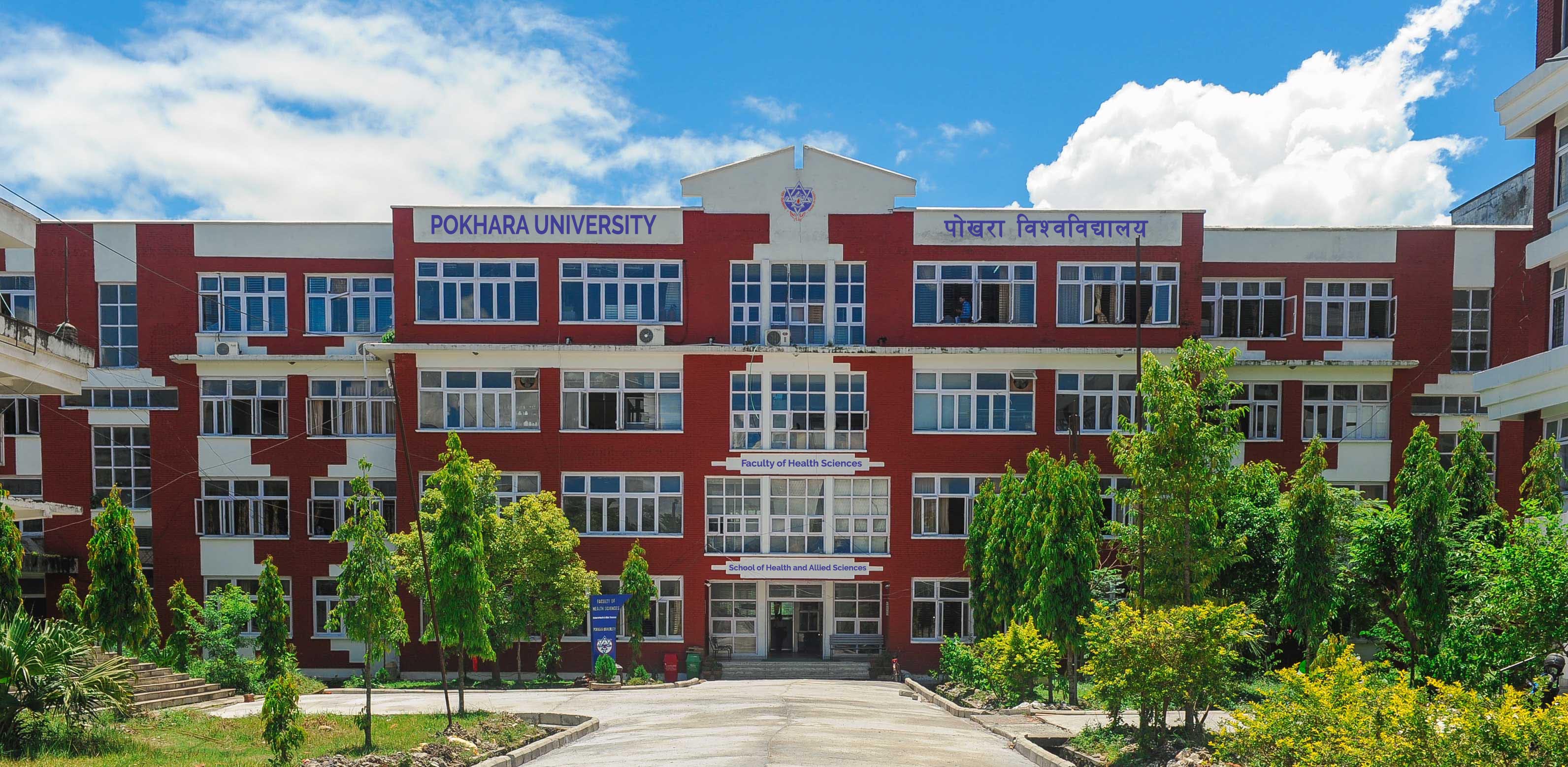
Bachelor of Nursing Science (BNS) in Oncology is an undergraduate nursing program offered through the Pokhara University School of Health and Allied Sciences, Faculty of Health Sciences, under Pokhara University. The School is located at Dhungepatan, Pokhara-30, Kaski.
The BNS curriculum is arranged over three academic years. It is designed for candidates who have already completed Proficiency Certificate Level (PCL) Nursing. Students first study basic sciences, nursing concepts, medical-surgical nursing, and community health nursing. The second year introduces several nursing specialties, including Oncology Nursing I, while the third year allows advanced study in Gerontology Nursing, Psychiatric Nursing, or Oncology Nursing. Students choosing the oncology pathway complete both theory and practical study in Oncology Nursing alongside research, biostatistics, leadership, and management.
| Particular | Details |
|---|---|
| Course | Bachelor of Nursing Science (BNS) in Oncology |
| Level | Undergraduate |
| University | Pokhara University |
| Institution | School of Health and Allied Sciences |
| Faculty | Faculty of Health Sciences |
| Location | Dhungepatan, Pokhara-30, Kaski |
| Academic Structure | 3 academic years |
| Entry Qualification | PCL Nursing with at least 50% aggregate |
| Entrance Framework | MECEE-BL under prevailing MEC rules |
| Intake | 20 seats |
| 2025 BNS Program Fee | NPR 518,000 |
| Specialized Area | Oncology Nursing |
| Professional Council | Nepal Nursing Council |
The 20-seat intake is subject to Medical Education Commission determination and may change between admission cycles.
The BNS program builds on prior nursing education rather than beginning with general nursing preparation from the secondary-school level. Applicants enter after completing PCL Nursing, which makes the course different from B.Sc. Nursing in terms of its admission route.
Oncology is introduced formally during the second year through Oncology Nursing I theory and practical courses. During the third year, students can continue into the oncology specialty through Oncology Nursing theory and practical study.
The oncology component deals with nursing care related to cancer, including the biology of cancer, cancer treatment, symptom management, and patient care in oncology settings.
The wider BNS curriculum remains important even for students following the oncology pathway. Nursing Concepts and Principles, Medical Surgical Nursing, Community Health Nursing, Gerontology Nursing, Psychiatric Nursing, Obstetric and Gynaecological Nursing, Child Health Nursing, Educational Science, research, biostatistics, leadership, and management are all incorporated into the program.
Candidates seeking admission to the Bachelor of Nursing Sciences program must have passed the Proficiency Certificate Level (PCL) Nursing program with at least 50% aggregate marks.
This entry route means BNS is intended for students who already hold a nursing qualification at PCL level.
Admission to nursing bachelor-degree education follows the prevailing rules and procedures of the Medical Education Commission (MEC), Nepal, including the applicable bachelor-level entrance framework.
MEC provisions governing the relevant admission cycle may cover entrance procedures, merit, seat allocation, scholarships, fees, code of conduct, and other admission requirements.
BNS admission falls within the bachelor-level medical and nursing education framework. Applicants must follow the MECEE-BL process applicable to the program and admission year.
The admission process involves:
Meeting the PCL Nursing academic eligibility requirement
Participating in the applicable MEC bachelor-level entrance process
Meeting the merit requirements for the admission cycle
Securing a place within the seats determined for the program
Completing Pokhara University and SHAS admission formalities
Seat numbers are not permanent. The 20-seat figure applies to the program information for the relevant cycle and may be revised through later MEC decisions.
The same caution applies to scholarship distribution, fees, admission schedules, and procedural requirements.
The curriculum runs for three academic years and combines theory with substantial practical study. The first year establishes the academic foundation, the second year exposes students to major nursing specialties, and the third year allows concentrated study in Gerontology, Psychiatric, or Oncology Nursing alongside research and management.
| Year | Main Academic Areas | Equivalent Credits |
|---|---|---|
| First Year | Basic Sciences, Nursing Concepts, Medical Surgical Nursing, Community Health Nursing, Sociology and Psychology, English | 60 |
| Second Year | Gerontology, Psychiatric, Oncology, Obstetric and Gynaecological, Child Health Nursing, Educational Science | 56 |
| Third Year | Gerontology/Psychiatric/Oncology specialty, Research and Biostatistics, Leadership and Management | 58 |
The course structure therefore carries 174 equivalent credit hours across the three years.
The first year provides the academic base required before students enter the specialty-focused stages of BNS.
Subjects include:
Basic Sciences I
Basic Sciences II
Basic Sciences III
Basic Sciences practical
Nursing Concept and Principles
Medical Surgical Nursing theory
Medical Surgical Nursing practical
Community Health Nursing theory
Community Health Nursing practical
Health Sociology and Psychology
English
Computer Science as a non-credit course
Community Health Nursing practical carries a substantial practical component, while Medical Surgical Nursing also combines theoretical and clinical study.
The first-year structure therefore strengthens core nursing knowledge while adding basic science, social science, communication, and community-health perspectives.
The second year exposes students to several distinct areas of nursing rather than requiring immediate concentration on one specialty.
Students study:
Gerontology Nursing I
Psychiatric Nursing I
Oncology Nursing I
Obstetric and Gynaecological Nursing
Child Health Nursing
Educational Science
Each major clinical nursing area includes practical work.
Oncology Nursing I carries both a theory course and a practical course. The theory component is allocated 50 hours, while the practical component carries 150 hours. Each component forms a defined part of the second-year curriculum.
This stage allows students to study oncology alongside gerontology, mental health, women's health, child health, and nursing education before undertaking their third-year specialty.
The third year is where the oncology pathway becomes more concentrated.
Students select advanced study from one of three nursing areas:
Gerontology Nursing
Psychiatric Nursing
Oncology Nursing
For students following the oncology pathway, Oncology Nursing theory is allocated 150 hours and 9 equivalent credit hours. Oncology Nursing practical is allocated 450 hours and 15 equivalent credit hours.
This makes practical specialty work a substantial part of the final-year oncology component.
The remaining third-year courses apply alongside the chosen specialty:
Research and Biostatistics theory
Research and Biostatistics practical
Leadership and Management theory
Leadership and Management practical
Research and Biostatistics provide an academic basis for examining nursing questions systematically, while Leadership and Management addresses responsibilities connected with the organization and management of nursing services.
The third year totals 58 equivalent credit hours.
Oncology nursing centers on the nursing needs of people receiving care for cancer.
The program's oncology description includes study related to:
Biology of cancer
Cancer treatment
Symptom management
Nursing care for patients in oncology settings
The practical component is particularly significant because oncology nursing requires students to connect nursing knowledge with patient care.
The course does not isolate oncology from general nursing. Medical-surgical nursing, community health, psychiatric nursing, gerontology, women's health, child health, education, research, and management remain part of the broader BNS preparation.
The final year adds subjects that extend beyond direct clinical nursing.
Research and Biostatistics includes both theory and practical study. The practical component carries 300 hours and 10 equivalent credit hours.
Leadership and Management also includes theory and practical work. The practical component carries 300 hours and 10 equivalent credit hours.
These subjects add research and organizational dimensions to the clinical specialty component. Students following Oncology Nursing therefore complete the degree with academic work covering specialty nursing, research, quantitative study, leadership, and management.
For the 2025 fee structure, BNS has the following charges:
| Fee Component | Amount |
|---|---|
| BNS Program Fee | NPR 518,000 |
| Security Deposit | NPR 10,000 refundable |
| FSU Fee | NPR 1,000 |
The security deposit and FSU fee are separate from the BNS program fee.
Medical education fees are subject to the prevailing MEC framework. Applicants entering in a later academic year should follow the fee structure applicable to their own admission cycle.
Practical learning runs throughout the BNS curriculum.
The first year includes practical study in basic sciences, medical-surgical nursing, and community health nursing. The second year adds practical courses in gerontology, psychiatric nursing, oncology nursing, obstetric and gynaecological nursing, child health nursing, and educational science.
Students taking Oncology Nursing as their third-year specialty complete an extensive advanced oncology nursing practical component.
SHAS also has a simulation laboratory within its nursing learning environment, supporting demonstration and practice activities associated with nursing education.
Nursing is a regulated profession. Academic completion of BNS and professional entry are separate requirements.
After completing the degree, graduates must meet the licensing requirements of the Nepal Nursing Council, including the applicable licensing examination before entering professional nursing practice.
Council rules and examination arrangements may change, so the requirements applying at the time of graduation govern professional entry.
BNS graduates may consider nursing work across several areas. The nursing program identifies fields such as:
General nursing practice
Medical surgical nursing
Pediatric nursing
Community health nursing
Psychiatric nursing
Gerontology nursing
School health nursing
Industrial nursing
Obstetrical and gynecological nursing
Advanced nursing practice
For students following the oncology pathway, oncology nursing adds a specialized area connected with cancer treatment, symptom management, and patient care in oncology settings.
Career outcomes depend on licensing, qualifications, available positions, experience, institutional requirements, and recruitment procedures.
BNS is among the nursing qualifications accepted for Master of Public Health (MPH) admission at Pokhara University.
MPH admission also requires registration with the respective professional council and successful participation in the applicable MEC entrance and recommendation process.
The BNS course structure runs for three academic years.
Applicants must have passed PCL Nursing with at least 50% aggregate marks.
The program carries a 20-seat intake figure for the relevant admission cycle. MEC may revise seat allocation in later cycles.
For the 2025 fee structure, the BNS program fee is NPR 518,000. A refundable security deposit of NPR 10,000 and FSU fee of NPR 1,000 are separate.
Oncology Nursing I is studied in the second year through both theory and practical courses.
Yes. The third-year BNS structure allows specialization in Gerontology Nursing, Psychiatric Nursing, or Oncology Nursing.
Yes. Third-year students study Research and Biostatistics through both theory and practical components.
Yes. Graduates must meet the applicable Nepal Nursing Council licensing requirements before entering regulated nursing practice.