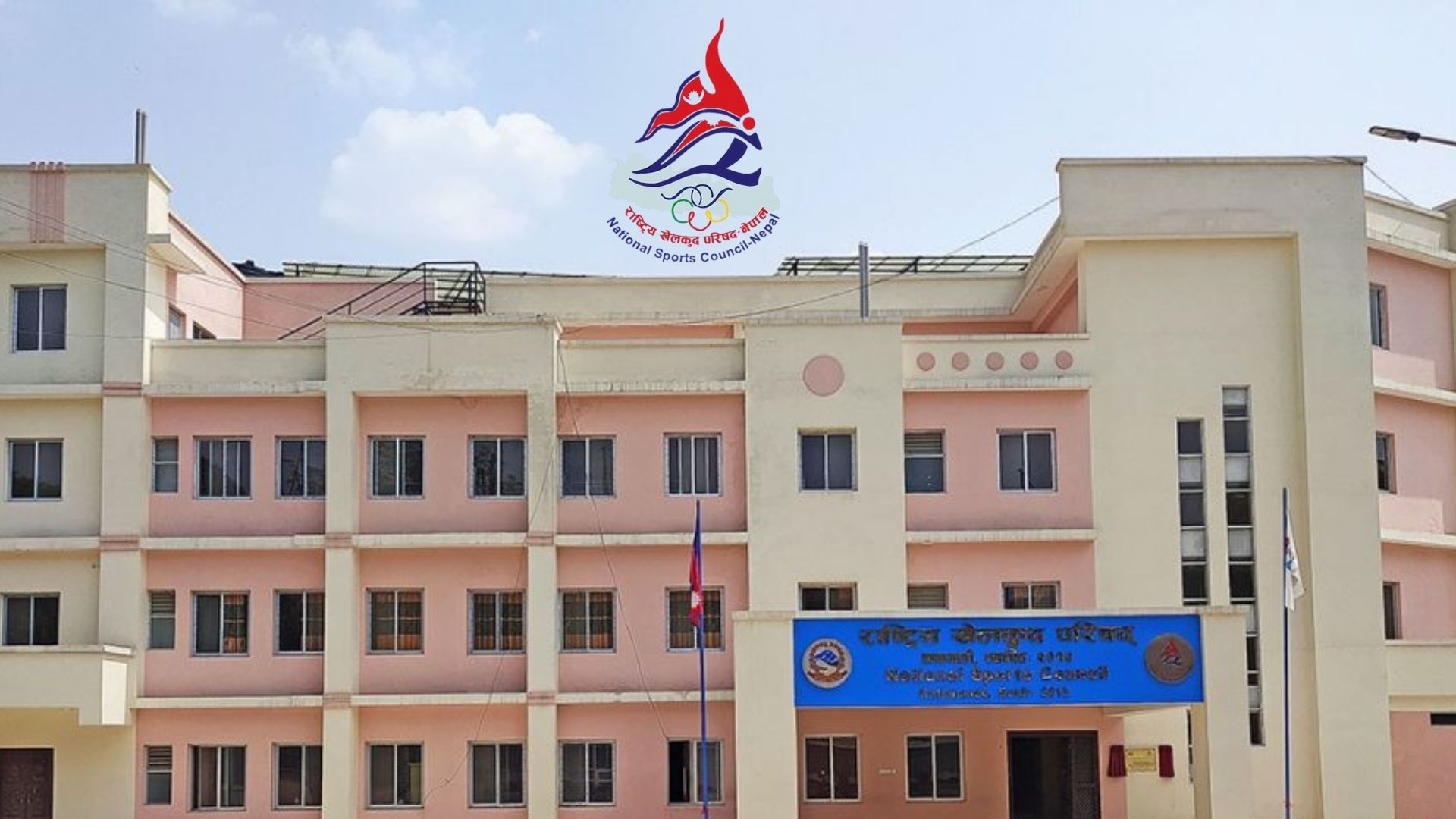
The National Sports Council (Rastriya Khelkud Parishad), commonly known as “Rakhep,” is an executive and regulatory body that serves as a backbone of Nepal’s sports sector. While the name is often heard only in news coverage or competition results, it represents a large administrative system operating within a state legal framework.
As a student, researcher, or stakeholder, you should understand Rakhep not merely as an office that “runs games,” but as the primary executive support body responsible for implementing the state’s sports policies.
This section clarifies the institution’s formal identity so that there is no confusion about its name, logo, or contact details.
Official Nepali Name: राष्ट्रिय खेलकुद परिषद, नेपाल (राखेप) Rastriya Khelkud Parishad, Nepal (Rakhep)
Official English Name: National Sports Council, Nepal (NSC)
Common Short Name: Rakhep (RaKhePa) or NSC
Constitutional Status: Autonomous body under the Government of Nepal (GoN)
Parent Ministry: Ministry of Youth and Sports (MoYS)
Relationship: The ministry provides policy direction, while Rakhep is responsible for implementation. It is not a full government department, but an autonomous council established by the government.
Below are essential details for service users. Verify these before visiting the office.
Head Office: Tripureshwor, Kathmandu (Dasharath Stadium परिसर)
Phone Numbers: +977-01-4261894, 4261359
Official Website: nsc.gov.np
Official Email: info@nsc.gov.np
Office Hours: 10:00 AM to 5:00 PM (from Kartik 15 to Magh 15: until 4:00 PM)
Service Closed Days: Saturday and public holidays
Break Time: 1:30 PM to 2:00 PM
Map/Location: From Tripureshwor Chowk toward Teku, on the left side, exactly opposite the World Trade Center; enter through the stadium’s main gate.
Note: Rakhep’s logo includes symbols reflecting Nepal’s national flag, mountains, and sporting spirit. Its use for business purposes without permission (for example, jersey sales or advertising) is not allowed.
Nepal’s sports history is not only a collection of dates. It is an institutional journey—from a basic government “office” to a modern, technology-oriented regulatory body. For students, researchers, and Public Service Commission (Lok Sewa) candidates, the key milestones of Rakhep are presented below in chronological order.
This period marks the formal beginning of organized sports in Nepal.
2015 BS (1958 AD): The then government began its first official initiative to promote sports activities under the Ministry of Health and Sports.
2017 BS (1960 AD) – Establishment Year: Formal establishment of the National Sports Council (although it took a few years to provide a full legal framework).
2021 BS (1964 AD): Promulgation of the National Sports Council Act, 2021. This provided the institution with legal status and autonomy. During this period, sports were largely centered under the patronage of the royal palace and the security forces (army/police).
2029–2030 BS: The first structured efforts began toward a systematic sports policy and expansion into districts.
This decade can be regarded as a “golden period” for sports infrastructure development in Nepal.
2038 BS (1981 AD): Historic launch of the “Brihat Rashtriya Khelkud” (First National Games). Held at Dasharath Stadium in Kathmandu, it helped bring sports closer to the public.
2040 BS (1983 AD): The “Second National Games” held in Pokhara, a major step in expanding sports beyond the Kathmandu Valley.
2041 BS (1984 AD): Nepal hosted its first international event—the First South Asian Federation Games (SAF Games). For this, Dasharath Stadium received modern parapets, and covered halls were constructed or upgraded.
2042 BS (1985 AD): Third National Games held in Birgunj.
With political change, efforts grew to make sports more people-centered.
2048 BS (1992 AD): After the restoration of democracy, the Sports Development Act, 2048 came into force to address the need for a new law. This brought Rakhep under a democratic government framework and granted more authority to District Sports Development Committees.
2055 BS (1999 AD): The “Fourth National Games” held in Nepalgunj (after a long gap).
2056 BS (1999 AD): The 8th South Asian Federation Games (8th SAF Games) were held in Kathmandu on a grand scale. Nepal achieved historic success by winning 31 gold medals and finishing second overall. An international-standard swimming pool and a shooting range were constructed in Satdobato.
Due to political instability, sports slowed, but some structural work continued.
2065 BS (2009 AD): The “Fifth National Games” held in Kathmandu, the first National Games after the establishment of the republic.
2068 BS (2012 AD): The “Sixth National Games” held in Sudurpashchim (Dhangadhi/Mahendranagar). This period laid the foundation for sports infrastructure in Sudurpashchim.
2072 BS (2015 AD): Promulgation of the Constitution of Nepal 2072. Sports were included within citizens’ fundamental rights and the state’s directive principles.
This phase reflects a journey toward good governance, decentralization, and digitization.
2076 BS (2019 AD): Historic hosting of the 13th South Asian Games (13th SAG).
Hosted across three cities: Kathmandu, Pokhara, and Janakpur.
Nepal made history by winning 51 gold medals.
Dasharath Stadium and Pokhara Stadium were rebuilt/modernized.
2077 Ashar 17 (July 1, 2020): Authentication and enforcement of the National Sports Development Act, 2077.
Repealed the old 2048 Act.
Established a provision for appointing the Member Secretary through a “competitive” process.
Clarified the division of authority with provinces and local levels.
2079 BS (2022 AD): The “Ninth National Games” concluded in Gandaki Province (Pokhara).
2080 BS (2024 AD): Preparations began for the “Tenth National Games” in Karnali Province, along with the start of building a modern stadium in Karnali.
Present: Rakhep is currently in a full implementation phase of “sports e-governance” (online registration, digital records) and the federal structure (provincial coordination).
Many service users complain that “the officer did not do it,” but it is necessary to understand what the law allows and what it does not. Rakhep does not operate on an individual’s personal orders; it functions based on an Act passed by Parliament.
The primary law governing Rakhep is the National Sports Development Act, 2077.
Authentication Date: 2077/03/17 (July 1, 2020)
Repealed Law: This Act repealed the earlier Sports Development Act, 2048. If you are using an old book or website, be cautious, as the older rules are no longer applicable.
Under the law, it is important to be clear about what Rakhep can and cannot do.
Do’s (what it can do):
Organize national sports competitions.
Register, renew, and regulate sports associations.
Construct and preserve sports infrastructure (stadiums, covered halls).
Approve selection criteria for athletes/teams participating in international competitions.
Support the advancement of athletes and coaches.
Don’ts (what it cannot do):
Directly interfere in the autonomy of the Olympic Committee (although coordination is necessary).
Run the daily administration of district and provincial sports bodies (under the new Act, these bodies may function under provincial laws, with coordination maintained with Rakhep).
Why does Rakhep exist? This section explains its purpose in practical terms.
Mission: “To develop and expand sports to prepare healthy, capable, and disciplined citizens and to enhance the nation’s pride in the international arena.”
In simple terms, Rakhep’s responsibility is to identify hidden talent across the country, provide training, and prepare athletes to compete and win medals on the global stage.
The National Sports Development Act, 2077 does not limit NSC to merely “making people play.” It is Nepal’s sports regulator, executive body, and guardian institution. If you are connected to the sports sector in any capacity, your concerns typically fall within these six pillars.
This is Rakhep’s most visible function and the one directly connected to the public. It includes a multi-layer structure:
Grassroots level: School-level competitions such as the “President Running Shield” form the foundation. Through local governments and District Sports Development Committees, Rakhep provides financial and policy leadership to identify emerging talent from thousands of schools nationwide.
National Games: Often described as “Nepal’s Olympics,” this event is held every two years. Rakhep is responsible for managing thousands of athletes, coaches, and referees, including accommodation, transportation, and security. Rakhep also prepares budgets worth crores and develops the necessary procedures for implementation.
Selection competitions: Open or closed selection events for international participation are conducted under Rakhep’s technical oversight to maintain fairness.
Sports development in Nepal is not done by Rakhep alone. Around 200+ national sports associations are active, including football (ANFA), cricket (CAN), karate, volleyball, and more. Keeping these associations on track is a major administrative responsibility.
Legitimacy and registration: When a new sport enters Nepal, Rakhep can approve or deny registration after assessing justification.
Compliance monitoring: Rakhep checks whether associations hold regular Annual General Meetings (AGM) and whether audits are transparent.
Dispute resolution: If factionalism or leadership disputes arise within an association, Rakhep may mediate and, if necessary, apply legal measures (such as forming an ad-hoc committee). The core purpose is to ensure accountability to the state.
Dasharath Stadium, Pokhara Stadium, and Chyasal Ground are legally owned by Rakhep as national-pride projects.
Construction and planning: Through the government’s capital budget, Rakhep’s engineering unit develops master plans for what to build and where. Policies such as “one province, one stadium” are implemented through this mechanism.
Maintenance: Regular maintenance is one of the biggest challenges. Budget management and procurement/contract processes for maintenance can be complex.
Operational permissions: Decisions on who can use a stadium or covered hall, what the tariff will be, and what security protocols apply fall within this jurisdiction.
Athletes and coaches are the “software” of sports. Infrastructure alone is not sufficient; there must be qualified trainers and trained athletes.
Coach management: Hundreds of permanent and contract coaches are deployed across districts. The Training and Coaching Department manages transfers, promotions, and performance evaluations.
Closed camps: For national team preparation, Rakhep runs residential camps and manages arrangements related to diet, nutrition, and fitness.
Talent hunt: Running special training camps to develop raw rural talent into national-level athletes is a key technical responsibility.
When athletes represent the country internationally, it is also a form of sports diplomacy.
State representation: For participation in the Olympics, Asian Games, or SAG Games, Rakhep provides government-side approvals and manages required budgets (air tickets, allowances, kits).
Tripartite coordination: Rakhep acts as a bridge between the Ministry of Youth and Sports (government) and the Nepal Olympic Committee (representing international bodies). This includes tasks such as visa recommendations (No Objection Letters), athlete insurance, and security arrangements.
This is comparatively less practiced in Nepal but is essential for modern sports. Rakhep is gradually prioritizing it.
Medical support: Facilitating treatment for injured athletes, physiotherapy services, and health checks for national teams.
Anti-doping efforts: Raising awareness against prohibited substances and collaborating with NADA for sample testing.
Records and history: Maintaining institutional records such as athlete performance milestones, number of grounds by district, and Nepal’s international medal history is an intellectual responsibility.
Who makes decisions in Rakhep? Many service users approach either the minister or the member secretary without understanding the hierarchy. This section clarifies the structure.
Under the new Act, 2077, the board structure has been streamlined.
Chairperson: The Minister of Youth and Sports (a policy-level role; the minister is not directly involved in daily operations)
Vice-Chairperson: A person appointed by the government
Member Secretary: The most powerful executive position. The member secretary performs a CEO-like role, and key administrative, financial, and managerial decisions are made through this office.
Who handles your work? For around 90% of administrative matters, your coordination is with the member secretary or departmental heads authorized by the member secretary. The minister is relevant mainly for policy-level grievances.
Seven-member executive committee: Because the full board cannot always meet, this committee, coordinated by the member secretary, takes urgent decisions.
Selection committee: For appointing coaches or staff.
Technical committee: For disputes related to rules and results.
Information officer: Rakhep appoints a public information officer. You can request budgets or decisions using the Right to Information (RTI).
Spokesperson: The person responsible for presenting official positions to the media.
Without knowing “which room handles my work,” visitors can get lost within the large Rakhep premises.
Sports Development Department: Organizing competitions and regulating associations.
Training and Coaching Department: Coach duty management, transfers, and athlete training.
Administration Department: Staff management, recommendation letters, registration/dispatch.
Finance Section: Payments, budget release, and audits.
Infrastructure Construction and Maintenance Section: Maintenance of stadiums and sports venues.
Rakhep is not limited to Kathmandu.
Provincial sports councils: In all seven provinces (for example, Gandaki Province Sports Council, Pokhara). Under the new system, they are becoming more autonomous.
District Sports Development Committees: In all 77 districts. Local competitions and district-level sports verification are handled here.
Departments: Nepal Police, Nepal Army, and Armed Police Force have their own sports departments that coordinate with Rakhep.
This is the most important section of this article. It explains how citizens, athletes, and associations can access services from Rakhep, presented step-by-step.
Rakhep provides official recognition to national athletes.
Eligible athletes: Those who have played national competitions or have special capability.
Process:
Obtain a recommendation from the relevant sports association (for example, ANFA for football, CAN for cricket).
Submit an application to the District Sports Development Committee.
Submit required documents: citizenship certificate, passport-size photo, competition certificate, and association recommendation.
The card is issued through Rakhep’s administration or sports development department.
Benefits: Discount at government hospitals, travel priority (in some cases), and eligibility as a basis for state recognition.
If you are going to play internationally, Rakhep approval is mandatory.
Steps:
Letter from the sports association.
Registration at Rakhep Sports Development Department.
Ministry approval (for visa purposes).
If a new sport enters Nepal (for example, e-sports, pickleball), an association must be registered.
Criteria: The sport must be internationally recognized, and a constitution must be prepared.
Fee: Prescribed government fee (bank voucher).
Process:
Application submission.
Review by the constitution study committee.
Approval by board meeting.
Issuance of registration certificate.
Most disputes and problems arise here.
Timing: Within the prescribed period after the end of the fiscal year.
Required documents (checklist):
Audit report (mandatory).
AGM minutes and decisions.
Annual progress report (which competitions were conducted).
Tax clearance certificate.
Rule: If renewal is not completed for 2–3 years or if disputes persist, Rakhep may dissolve the association and form an ad-hoc committee.
Stadiums can be rented for sports, concerts, or large gatherings, but not for weddings or private parties.
Priority order:
National sports events.
Association competitions.
Other programs.
Process:
Inquire with the administration department about date availability.
Submit an application describing the nature of the program.
Deposit the security amount and rental fee in the bank.
Sign the agreement letter (including responsibility for waste management and damage).
Paper procedures and real-life practice can differ. Common issues and practical solutions when dealing with Rakhep are listed below.
Situation: You traveled from far away, but the member secretary or department head is in a meeting.
Solution:
Meetings are usually frequent from 11:00 AM to 3:00 PM.
Try to arrive by 10:30 AM, or attempt to meet after 3:30 PM.
Ensure your application is formally registered at the registration section and collect the registration/token number. Even if the officer is absent, a registered file can enter the process.
Situation: There was unfairness in athlete selection, or the association refused to recommend you.
Solution: Submit a written complaint directly to Rakhep’s grievance-handling officer or the sports development department. Verbal claims are not entertained. Attach evidence of unfairness (result sheet, video, etc.) with the application.
Solution: Government websites may not always be updated. Photos of Rakhep’s notice board are often shared on social media pages or by sports journalists. Cross-check reliable sports media (for example, OnlineKhabar Sports, HamroKhelkud, Setopati Sports) and the official Facebook page.
This section is sensitive and important for young athletes and guardians. Sports is not only enjoyment; there are risks as well.
Protecting children and women athletes is a priority for Rakhep.
Sexual harassment: If any misconduct occurs by a coach or official, Rakhep follows a zero-tolerance approach. Complaints can be filed in parallel with the police and Rakhep’s judicial committee.
Closed camp rules: In camps with women athletes, a woman manager must be mandatory. Guardians should ensure this before sending children.
The use of performance-enhancing substances is prohibited in Nepal as well. Rakhep supports the work of the National Anti-Doping Agency (NADA).
Caution: Do not take any medicine without a doctor’s advice. Urine testing may occur during competitions. If doping is confirmed, a ban of up to four years may apply.
Under Nepal’s law (Muluki Criminal Code), match fixing is a “crime against the state.” If you receive such a proposal, report it confidentially to the police CIB or to Rakhep.
How are budgets and financial support distributed in sports?
Rakhep, or other bodies on Rakhep’s recommendation, provide various scholarships.
Athlete incentives: International medal winners receive government-prescribed cash prizes through Rakhep’s recommendation and a ministry-level cabinet proposal. Completing this process can take 6 months to 1 year (patience is required).
Olympian allowance: There is a provision of a monthly allowance for athletes participating in the Olympics.
Rakhep’s budget appears in the “Red Book.” Its audit is conducted by the Office of the Auditor General. There is a provision that the annual report must be made public through the library or the website.
Rakhep cannot do everything alone. Understanding this ecosystem helps you decide whom to contact.
Ministry of Youth and Sports: For policy and large budgets (parent body).
Nepal Olympic Committee (NOC): For Olympics, Asian Games, and international relations (non-governmental and autonomous).
National sports associations: For sport-specific technical matters, team selection, and leagues (your first point of contact).
Rakhep (NSC): For oversight of all, infrastructure, and government support.
Example: If you need an Olympic scholarship, you should go to the NOC. If you want to play in national competitions, you should coordinate with Rakhep (or the district committee) and the relevant association.
Complete this checklist before reaching the office:
Time: Between 10:30 AM and 3:00 PM (best time).
Dress: Formal or decent (government office code).
Identification: Carry citizenship or an official ID card (required for gate pass).
Documents: Carry all original documents and at least two sets of photocopies.
Application: Prepare an application on the relevant subject (handwritten or typed). A Rs. 10/20 postal stamp may be required.
Patience: Government processes can take time. Communicate politely without anger.
Rakhep does not directly recruit athletes from home. You must first compete in district-level events such as the President Running Shield or district sports competitions. If you perform well, you progress through provincial selection to the National Games. Based on performance there, the association may call you to the national camp. Start by contacting your District Sports Development Committee or a local club.
Rakhep rarely provides equipment directly to clubs. However, you can submit an application with recommendation through the District Sports Development Committee for equipment distributed annually. Do not expect too much, as the budget is limited.
You must pass the “Level-1” coaching course run by the relevant sports association. Rakhep occasionally opens vacancies for assistant coaches through a process similar to Public Service Commission procedures.
Disclaimer: This information is for informational purposes only. For legal processes or case-related matters, consult a qualified lawyer or the relevant official body. This is not an official government document, but a support guide prepared by an expert.

.png)

.jpg)