About Nepal Army
Nepal Army (Nepali Sena)
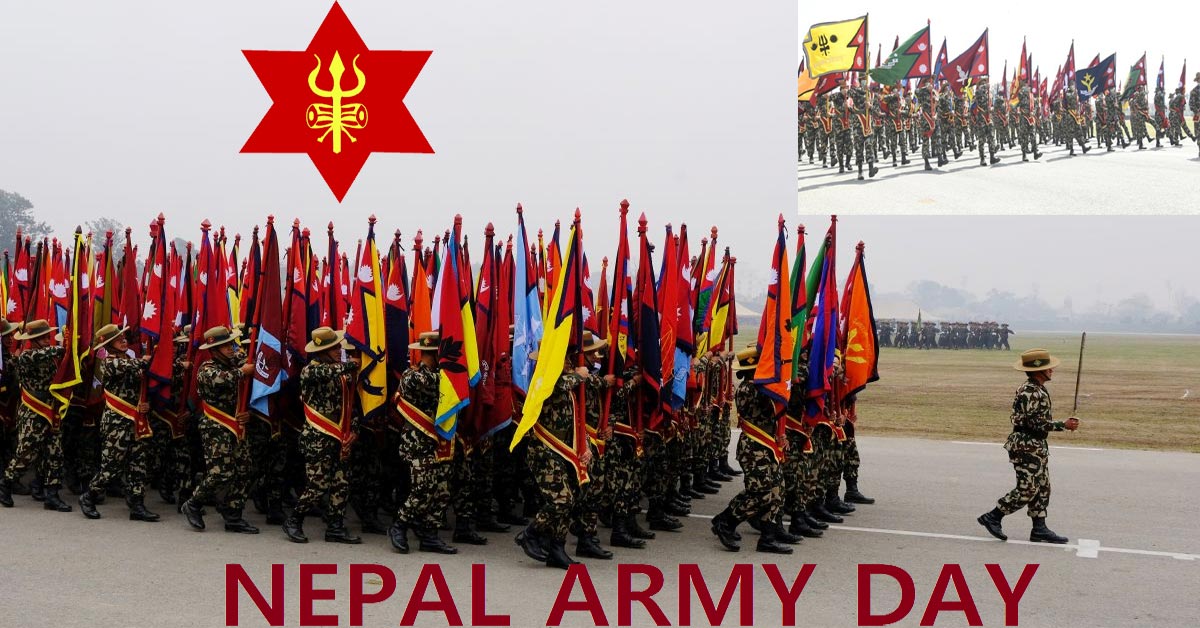
Nepal Army (Nepali Sena - नेपाली सेना) is one of Nepal’s oldest national institutions, with roots that trace back to the country’s early state formation and later unification. Often regarded as among the oldest armies in South Asia, it developed in close connection with Nepal’s unification under King Prithvi Narayan Shah.
The head office of the Nepal Army (Jangi Adda) is located in Bhadrakali, Kathmandu. In addition, its headquarters and formations are distributed across the country, including Pritana headquarters in Itahari, Hetauda, Valley (Singh Durbar), Pokhara, Surkhet, and Dipayal, as well as Bahini, Gana, and Gulm units in various regions.
From the beginning of its history to the present, the Nepal Army has operated under the orders of the Government of Nepal and is widely recognized for discipline, loyalty, patriotism, and duty to the nation.
The Nepal Army is not only a military organization; it is closely linked to Nepal’s unification, existence, and sovereignty. With the guiding spirit of “Organizational strength, national pride,” it has continued to contribute to national security, development works, nature conservation, disaster response, and international peacekeeping.
This profile will present the Nepal Army’s historical evolution, constitutional status, organizational structure, and the complex challenges it faces in the 21st century.
Quick Highlights
-
Nepal Army (Nepali Sena) is one of Nepal’s oldest national institutions, historically linked to national unification, sovereignty, and state continuity.
-
Its central headquarters (Jangi Adda) is located in Bhadrakali, Kathmandu, with formations and units positioned across the country.
-
The article traces key historical phases: early foundations, Shah-era unification, Nepal–British war and the Sugauli Treaty, Rana-era restructuring, and post-1951 modernization.
-
Five historic battalions are identified as major milestones: Srinath, Kalibaksh, Purano Gorakh, Varddhawani, and Sabuj.
-
Nepal’s peacekeeping role is highlighted, beginning in 1958 with the deployment of military observers to Lebanon and expanding to wider UN missions.
-
The constitutional basis is explained, referencing the Constitution of Nepal (2072), Part 28, Article 267, including the President as Supreme Commander and mobilization through constitutional mechanisms.
-
Organizational leadership is outlined: the Chief of the Army Staff (COAS) leads professional military operations, with the Army Headquarters as the strategic and administrative center.
-
A major structural reform is included: the shift from the Pritana system to a four-command structure (implemented from 2078 B.S.) based on federal and river-basin considerations.
-
Multi-dimensional roles are covered: national and border security, UN peacekeeping, disaster response, wildlife and protected area security, and national development works (including strategic road projects and Fast Track responsibility).
-
Career pathways are summarized across three streams: Officer Cadet, general service/soldiers, and technical services (health, engineering, IT, aviation, legal, and music services).
-
The selection process is presented as multi-stage: physical screening, efficiency tests, medical checks, written exam, and psychological/leadership assessments for officer candidates (TO, GT, IO).
-
Welfare and social security provisions are noted: education support through welfare funds, health services, housing/rations, pension, and concessional loans.
1. Historical Background: From Unification to Modernization
The history of the Nepal Army is not merely a list of military victories; it is a saga of the Nepali nation’s identity, courage, and the defense of existence. The role played by the Nepal Army in establishing Nepal as an independent and sovereign nation on South Asia’s geopolitical map is incomparable. This historical period needs to be analyzed mainly by dividing it into four parts: the pre-unification situation, the Shah-era unification campaign, the Rana-era military structure, and the transformation of the modern era.
Studying the history of the present Nepal Army, it seems that the reign of Dravya Shah, the king of Gorkha, should be considered significant. He appointed Bhagirath Pant as the army chief in Ligligkot of Gorkha in 1559 AD (1616 AD) and built the first military unit under his leadership. This seems to be the first military operation in military history. During the war, King Prithvinarayan Shah defeated Mir Qasim's army in 1762 AD (1819 BS) and started the military organization in the same year by naming it "Company" (Gulm) from the Western style. This was the first military company in the history of modern Nepal.
Not only that, Kavil Srinath, Old Gorakh, Kali Baksh (Kalibox), Vardwani and Sabuj companies were formed to use the same weapons. The formation of these five companies is considered an important event in the country's military history. Later, General Bhimsen Thapa made some changes in the then military organization. He formed a "platoon" commanded by the colonel like the current regiment and a "compu" commanded by the general like the current force. He also seems to have set up a battlefield and, to some extent, a barracks.
The Rana period is also considered significant for the organizational development of the Nepal Army. After his visit to Europe, Jung Bahadur made changes in the military organization as in other areas. By the end of the Rana period, the Nepal Army had developed organizations such as companies, regiments, battalions, brigades and divisions. After the political change of 1951, in the next year 1952 (2009 BS), when the Indian military mission came to Nepal, the Nepalese army was reorganized and a new type of training was started. In this context, along with the political changes that have taken place since 1951 BS (2007 BS), there has been a novelty in the organization and naming of the Nepal Army.
A brief history of the organs of the Nepal Army, based on various published / unpublished materials, in addition to the materials provided to the author by the head of the Shree Sainik Museum, Camp, Kathmandu as the main source of written descriptions from 233 organs (including bases/offices) in the Nepal Army. In this chapter, an attempt has been made to give as much factual information as possible about the various headquarters of the Nepal Army, 17 bases, 90 battalions, and 40 battalions as well as various offices/organizations of the army.
In this regard, as provided by the Military Museum, the names of the past and present heads of the Pritana, Bahini, Gana, Gulma, and Badi have also been given. Apart from giving general information about the establishment, naming motto, formation/reorganization of these organizations, their wars with external forces, their contribution to peace in the international arena, their role in maintaining peace and order in the country, various aspects of country development/construction (social, religious, cultural, Contributions to natural disasters have been discussed as much as possible.
The Nepal Army has played a major role in establishing peace even in some of the most remote and unfavorable places. In particular, the role of war-torn African countries in maintaining peace at the local level is commendable. Even at the risk of their lives, Nepali soldiers are efficiently involved in the UN Mission.
1.1 Pre-Unification Military Traditions and Foundations
The roots of Nepal’s military history extend back to the Licchavi and Malla periods. The presence of military posts such as “Bhat” and “Mahapratikar” during the Licchavi period confirms that a structured military system existed even then. In the Malla period, the states of the Kathmandu Valley maintained their own types of military units. However, its real birth as a modern and organized “national army” is considered to have occurred only after Prithvi Narayan Shah’s victory over Nuwakot in B.S. 1801.
1.2 Shah-Era Unification Campaign (B.S. 1801–1873)
Prithvi Narayan Shah realized the need for a disciplined and patriotic military force to unify Nepal, which was divided into many small hill states. In B.S. 1819, he established five battalions to systematize the army: Srinath, Kalibaksh, Purano Gorakh, Varddhawani, and Sabuj. These battalions still exist in the Nepal Army with pride, proving the institution’s historical continuity.
Some major features of this period were:
-
Weapons and technology: The army, initially based on bows, arrows, and khukuri, gradually began using “bharuwa guns” and “cannons” seized from Muslim and British rulers and later manufactured in Nepal.
-
Guerrilla warfare: Using the advantage of hilly geography, the Nepal Army developed proficiency in guerrilla warfare, as seen in the Battle of Sindhuligadhi (B.S. 1824), where the Gorkhali army defeated the modern British force led by Captain Kinloch.
-
Border expansion: Under the leadership of brave warriors such as Amar Singh Thapa, Bhakti Thapa, and Balbhadra Kunwar, the Nepal Army expanded Nepal’s borders to the Sutlej River in the west and the Teesta River in the east. This is considered the golden age of “Greater Nepal.”
1.3 Nepal–British War and the Sugauli Treaty (1814–1816)
In the history of the Nepal Army, the war of 1814–16 was a decisive turning point. This war was not only a border conflict; it was a clash between imperial British power and patriotic Gorkhali strength. At Nalapani fort, Balbhadra Kunwar, along with children, elderly people, and women numbering about 600, resisted more than 3,500 British troops.
Although the Sugauli Treaty after the war resulted in Nepal losing one-third of its territory, the British, impressed by Nepali soldiers’ bravery, called them “Bravest of the Brave” and began recruiting them into their own army. This internationalized Nepali military skill.
1.4 Rana-Era Military Structure and World Wars (B.S. 1903–2007)
After the rise of Jung Bahadur Rana, European methods began to influence the Nepal Army. After his visit to the United Kingdom, Jung Bahadur introduced extensive reforms in the Nepal Army’s organization, uniforms, and drills (kawaj).
First and Second World Wars: The Rana rulers sent the Nepal Army to support the British Empire. In the First World War, about 200,000 and in the Second World War, about 250,000 Nepalis fought on various fronts. This participation exposed the Nepal Army to modern warfare, communication technology, and automatic weapons.
The 1990 B.S. earthquake and military reforms of the 2000s: Internally, the army was made the main basis for the security of “Shree 3” and the operation of governance. However, during this time, the post of “Commander-in-Chief” and the foundation of a modern command structure were also established.
1.5 Post-Democracy Transition and Modernization (2007–2062)
After the revolution of 2007, the army’s role changed. The army began to be defined as a national security agency rather than remaining within the security perimeter of a single dynasty.
Establishment of military institutions: To professionalize the army, a training center was established in 2010 at Kharipati, and later various military academies were established.
Start of peacekeeping (1958 AD): After Nepal became a member of the United Nations, Nepal sent five military observers to Lebanon in 1958 and began the historic journey of “peacekeeping.” This added a new chapter to the Nepal Army’s history.
1.6 Federal Democratic Republic and a New Form (2063 to present)
After the 2062/63 people’s movement and the 2063 Comprehensive Peace Agreement, the Nepal Army underwent the biggest transformation in its history.
Name change: It was transformed from “Royal Nepal Army” to “Nepal Army” and was brought fully under the elected parliament.
Army integration: In B.S. 2069, fighters of the then CPN (Maoist) were integrated into the Nepal Army. This became a successful and original model of a “peace process” in world military history. It made the army more inclusive and democratic.
Technology and professionalism: At present, the Nepal Army is based on an advanced “command” system. With digital communication, its own air service, and engineering capabilities, the army has modernized itself to meet 21st-century challenges.
2.7 Historical Lessons and Conclusion
The historical background of the Nepal Army makes it clear that this institution has always succeeded in adapting to changing times. From Prithvi Narayan Shah’s army of “khukuri and shield” to today’s “cyber security and modern weapons,” it has never forgotten its core purpose—“the security of the nation and citizens.”
At every turning point in history—whether fighting imperial powers, fighting on world war battlefields, or ensuring a peaceful settlement of internal conflict—the Nepal Army has maintained its distinct identity. This proud history is the main source of the Nepal Army’s enduring confidence and public trust.
2. Constitutional and Legal Basis
The Constitution of Nepal (2072), Part 28, Article 267 provides clear provisions regarding the Nepal Army:
-
Supreme command: The President of Nepal is the Supreme Commander of the Nepal Army.
-
Mobilization: On the recommendation of the Council of Ministers, based on the decision of the National Security Council, the President constitutionally mobilizes the army.
-
National Security Council: Chaired by the Prime Minister, this council prepares the strategic framework for the army’s mobilization and control.
This legal arrangement defines the Nepal Army as a professional, democratically governed institution under civilian control.
3. Organizational Structure and Leadership
The backbone of any military institution is its organizational structure and leadership system. The Nepal Army’s structure is not merely a command and control mechanism; it is a unique blend of centuries of war experience, geographic requirements, and modern military science. This section discusses the tiered leadership structure, the role of the Army Headquarters, and the strategic importance of the recently implemented “command” system.
3.1 Nepal Army Rank Structure
According to the Interim Constitution of Nepal 2063, the President is the Commander-in-Chief of the Nepali Army. The President mobilizes the army on the recommendation of the National Security Council headed by the Prime Minister.
The military structure is led by the Chief Senapati Maharathi. Just below him are two Rathi. After that, in order, Uparathi, Sahayakrathi, Mahasenani, Mukhya-Senani, Senani, Saha-Senani, Upa-Senani and Sahayak-Senani are the ranks above the officer level. Below the officer is the post of Chief Subedar, Subedar Major, Jamdar, Hudda, Amaldar, and Pyutha.
Nepal Army Officer Ranks
-
Officer Cadet (अधिकृत क्याडेट)
-
Second Lieutenant (सहायक सेनानी)
-
Honourable Lieutenant (मानार्थ उप सेनानी)
-
Lieutenant (उप सेनानी)
-
Honourable Captain (मानार्थ सह-सेनानी)
-
Captain (सह-सेनानी)
-
Major (सेनानी)
-
Lieutenant Colonel (प्रमुख सेनानी)
-
Colonel (महासेनानी)
-
Brigadier General (सहायक रथी)
-
Major General (उप रथी)
-
Lieutenant General (रथी)
-
COAS General महारथी (प्रधानसेनापती)
Nepal Army Other Ranks
-
Followers (फलोअर्स)
-
Private (सिपाही)
-
Lance Corporal(प्यूठ)
-
Corporal (अमल्दार)
-
Sergeant (हुद्दा)
-
Warrant Officer Second Class (जमदार)
-
Warrant Officer First Class (सुवेदार)
-
Subedar Major (प्रमुख सुवेदार)
3.2 Supreme Leadership and Constitutional Arrangement
At the apex of the Nepal Army’s leadership, the Constitution places the President as the “Supreme Commander.” This ensures civilian supremacy over the army. However, full responsibility for military operations and professional leadership rests with the Chief of the Army Staff (COAS). The COAS is an officer of the General rank, serving as the key link between the Government of Nepal and the army.
3.3 Army Headquarters (Jangi Adda)
Located in Bhadrakali, Kathmandu, the Army Headquarters is the central administrative and strategic center of the Nepal Army. It can be considered the “brain” of the army. Its structure is divided into various departments and directorates led by Lieutenant Generals and Major Generals:
-
General Staff: Oversees operations, training, and intelligence. It prepares plans for mobilization during war or crisis.
-
Administrative and Logistics Staff: Oversees human resource management, recruitment, logistics, and welfare functions.
-
Principal Staff Officers (PSO) system: Under the COAS, specialized senior officers provide expertise in logistics, administration, peacekeeping, and related fields to strengthen decision-making.
3.4 Transformation from Pritana to the Command System
A major recent organizational change in the Nepal Army is the shift from eight “Pritana” (Divisions) to a four “Command” system. Implemented since B.S. 2078, this structure is based on federalism and Nepal’s river basin systems:
-
Eastern Command: Responsible for security and development of the Koshi river system and the eastern region.
-
Central Command: Oversees security in central Nepal within the Gandaki river system.
-
Western Command: Covers western regions under the Karnali and Mahakali river systems.
-
Valley Command: Protects the special security and strategic significance of the Kathmandu Valley.
Why was this change made? (Expert Insight):
The main objective of this restructuring is to increase efficiency. Fewer but stronger commands speed up decision-making, reduce costs, and enable effective mobilization of resources during disasters. This structure also supports modern network-centric warfare.
3.5 Tiered Military Units (Field Formations)
Under the commands, there are military units of different levels:
-
Brigade: Led by a Brigadier General; a combination of multiple battalions and companies.
-
Battalion: Led by a Lieutenant Colonel; the most important tactical unit of the army.
-
Company: Led by a Captain; operates directly in the field.
3.6 Specialized Directorates and Services
The Nepal Army is not only a fighting force. Technical and service-oriented aspects are equally important:
-
Development and Construction Directorate: Operates national pride projects (e.g., Fast Track).
-
Army Air Service: For rescue and air support.
-
Army Medical Directorate: Provides health services in both peace and war.
-
Directorate of Military Intelligence: Analyzes national security threats.
3.7 Leadership Ethos
The Nepal Army’s leadership is based on the principle of “Leading by Example.” Officers are trained not only to give orders but also to stand with soldiers in hardship and demonstrate courage at the front line. The chain of command is strictly followed, leaving no space for disorder within the institution.
3.8 Organizational Challenges and Paths for Improvement
Research indicates that although the Nepal Army’s structure is strong, improvements are needed in some areas:
-
Inter-agency coordination: The command structure needs greater flexibility to strengthen joint operations among the army, police, and armed police force.
-
Technology-friendly structure: With increasing use of cyber security and drone technology, a separate and strong “cyber command” has become essential.
-
Decentralization of resources: Delegating some administrative burden from the Army Headquarters to the command level can speed up solutions to local problems.
The Nepal Army’s organizational structure is a fine balance between traditional discipline and modern managerial skill. Its leadership system has enabled the army to work steadily even in difficult conditions. The transformation from Pritana to the command system has made the army capable of facing 21st-century challenges. This structure is not only for military mobilization; it is a reliable foundation for the integrity and prosperity of federal Nepal.
4. Multi-Dimensional Roles of the Nepal Army
The Nepal Army’s role is not limited only to border security. It works across various dimensions of nation-building:
National security and border security
The primary duty of the army is to protect Nepal’s territorial integrity. The army remains ready to prevent border infiltration and activities that threaten national security.
UN peacekeeping: a proud history
The Nepal Army’s major identity is as a “Blue Helmet.” This journey began in 1958 from Lebanon. Up to today, Nepal remains among the leading countries contributing the most personnel to UN peacekeeping missions. The Nepal Army has earned global praise by helping establish peace in conflict-affected countries such as Congo, Sudan, Haiti, Lebanon, and Mali. It has strengthened Nepal’s foreign policy and served as a form of soft power.
Disaster management
In a country like Nepal with high risk of earthquakes, floods, and landslides, the army is recognized as a first responder.
2072 earthquake: Through “Operation Sankat Mochan,” the army saved thousands of lives.
COVID-19 pandemic: The army’s role was incomparable in building holding centers, managing bodies, and supplying oxygen.
Nature and wildlife conservation
The Nepal Army is responsible for protecting national parks and reserves. It has made a major contribution to the success of the “Zero Poaching” campaign, leading to increases in rhino and tiger populations.
Development works and economic contribution
With the slogan “Nepal Army: Partner in Development,” the army has expanded road networks in remote areas.
Kathmandu–Terai Fast Track: Responsibility for this national pride project has been given to the army, confirming its managerial capability.
The army has completed the Karnali Corridor and other strategic roads.
5. Career in the Nepal Army: Service, Dignity, and Future Security
Considering Nepal’s current labor market and youth psychology, building a career in the Nepal Army is not merely taking a job; it is adopting a distinctive lifestyle and becoming part of national dignity. Career development, social prestige, and economic stability offered by the Nepal Army have made this field consistently attractive to youth.
6.1 Basic Entry Points
Entry into the Nepal Army can mainly be categorized into three levels, each demanding different educational and physical qualifications:
Officer Cadet: entry to the leadership level
To reach policy-making and command levels, “Officer Cadet” is the most prestigious entry point. The Public Service Commission conducts a fair examination.
Educational qualification: Those who have passed Plus Two (Intermediate) can compete for “Cadet,” and those who have passed a Bachelor’s degree can compete for “Direct Graduate Cadet.”
Training: Selected cadets receive rigorous military and academic training for about two to three years at the Nepal Military Academy in Kharipati, Bhaktapur. After passing out, they begin service as Second Lieutenant (Sahayak Senani). Those entering at this level remain in the career track up to Chief of the Army Staff.
General service/soldiers: backbone of the field
Youth entering from the basic Sainya rank are the backbone of the army. For this level, the minimum educational qualification is set from Grade 8 to 10. This is an excellent opportunity for physically fit youth from both rural and urban areas with a spirit of national service.
Technical service: intellectual and specialist manpower
A modern 21st-century army needs not only fighters but also skilled technicians. The Nepal Army recruits experts at the officer level in areas such as:
Army health service: doctors, nurses, and paramedics.
Engineering: civil, mechanical, and electronic engineers (especially for infrastructure development).
Information Technology (IT): cyber security, software development, and communication experts.
Air service: pilots and aeronautical engineers.
Legal and music services: judge advocates and artists for the army band.
Selection Process: Balance of Fairness and Rigor
The Nepal Army’s selection process is considered among the toughest and most transparent in the world. Direct involvement of the Public Service Commission further confirms there is no place for favoritism or nepotism. The main stages include:
-
Preliminary physical test: height, weight, chest measurement, and eyesight test.
-
Physical efficiency test: running (3000 meters and 100 meters), push-ups, sit-ups, and chin-ups.
-
Detailed medical check-up: in-depth examination of internal and external health status.
-
Written exam: conducted by the Public Service Commission, testing English, Nepali, Mathematics, and General Knowledge.
-
TO, GT, and IO (for Officer Cadet): psychological assessment through Technical Officer (TO), Group Testing (GT), and Interviewing Officer (IO) to evaluate leadership, decision-making ability, and performance under pressure.
Training and Personality Development
After entering the army, it is not an exaggeration to say a person is reborn. Military training transforms an ordinary citizen into a disciplined, dutiful, and fearless soldier.
-
Discipline: the main objective is teaching punctuality and compliance with command.
-
Warfare skills and technology: training includes operating modern weapons, map reading, and tactical planning.
-
Academic opportunities: the army provides opportunities for higher education (MA, PhD) at home and abroad and for advanced professional courses such as Command and Staff College. This makes officers skilled not only in warfare but also in diplomacy and management.
Overseas Opportunities and the United Nations
A major attraction for youth is UN peace missions.
-
Economic benefit: soldiers receive allowances as per international standards, supporting major improvements in financial status.
-
Professional experience: working shoulder to shoulder with other armies in conflict-affected countries provides invaluable experience, making Nepali soldiers globally competitive and respected.
Benefits and Social Security
The Nepal Army has developed a broad welfare system for employees and their families, rarely found in other professions in Nepal:
-
Army welfare fund: provides quality education to children of serving and ex-servicemen at subsidized rates (in army residential schools/colleges).
-
Free health services: free or subsidized treatment for soldiers and dependent family members at Shree Birendra Hospital (Chhauni) and regional military hospitals.
-
Housing and ration: housing and ration arrangements during service enable significant savings from salary.
-
Pension: after completing a specified service period (currently 16 to 20 years), there is a lifelong pension facility.
-
Concessional loans: low-interest loans through army banks and funds for house construction or business operation.
Challenges and Solutions
A military career is attractive, but also challenging.
-
Difficult field conditions: service in remote areas from mountains to the Tarai and separation from family.
-
Mental pressure: strict discipline and risky duties can create stress.
Solution: The army is expanding counseling services and family meeting facilities. Sports and recreational activities are also made an integral part of barracks life.
Why Choose the Nepal Army?
Building a career in the Nepal Army is not only about earning income. It is an opportunity to uphold the peak of self-discipline, dedication to the nation, and a legacy of bravery. The training teaches a person to remain steady in any situation in life.
If you have courage, a drive to repay your motherland, and a desire for an organized and dignified life, then the Nepal Army is the best workplace in the world for you. The job may end, but the identity of being a “soldier” and the respect society gives never ends. For youth who understand the spirit of “Service to the nation is the highest duty,” the Nepal Army is a “dream career.”
6. Present Challenges and Areas for Reform
No institution is free of challenges. The Nepal Army also faces the following issues in the 21st century:
-
Modernization and technology: the need to increase investment in cyber security, drone technology, and electronic warfare instead of traditional weapons.
-
Geopolitical sensitivity: protecting national interest while maintaining balance between two major powers such as China and India.
-
Lack of resources: limited budget creates obstacles in procuring modern military equipment and training.
-
Image management: involvement in development works and commercial activities sometimes raises questions about professionalism; a self-correction mechanism is needed to address this.
7. Why Is the Nepal Army Still Trustworthy?
While many public institutions in Nepal are losing public confidence due to political interference, corruption, and instability, public trust in the Nepal Army still appears high. From the perspective of a researcher and strategic analyst, there are some concrete, research-based reasons behind this:
Apolitical professionalism
The Nepal Army’s ability to keep itself away from party politics is its greatest strength. In Nepal, political interference is directly visible in transfers, promotions, and performance in the police, civil service, and other government bodies. However, the army has a strong chain of command and institutional decision-making process.
The army considers the “nation” as its main commander, not any “party.” Due to this neutrality, people view the army as a shared and reliable institution.
First responder role in disaster management
People remember the army most when the country faces crisis.
2072 earthquake: when other state mechanisms were struggling, the army immediately began rescue and relief through “Operation Sankat Mochan,” leaving a strong psychological impression that “the army is there, so we are safe.”
COVID-19 pandemic: the army responsibly carried out oxygen supply, holding center construction, and body management in risky conditions.
When civilian administration appears weak, the army’s can-do attitude increases trust.
Integrity and speed in development works
In Nepal, it is common for contract-based development works to be delayed for years. But there is a widespread belief that when complex road or bridge construction is given to the army, it is completed on time and with quality.
Whether it is the Kathmandu–Terai Fast Track or roads in remote Karnali, the army has demonstrated capability in challenging geography. People frustrated by contractors’ delays and corruption tend to trust the army’s work style more.
International identity and national pride (UN peacekeeping)
The Nepal Army’s contribution to UN peacekeeping makes every Nepali feel proud. In the world’s most dangerous conflict zones, the restraint, bravery, and humanitarian sensitivity shown by Nepali soldiers have been highly valued even by the United Nations. This international recognition strengthens internal trust.
Inclusive and institutional character
The Nepal Army is no longer an army of only a particular class or community. It has become a shared garden of Nepal’s diverse ethnicities, languages, and geography. Inclusive quotas and transparency in recruitment have helped people at the grassroots feel ownership, calling it “our army.”
Social security and welfare work
The army’s investment in education and health for soldiers, ex-servicemen, and their families directly benefits a large community. The quality and affordability of schools and hospitals run through the army welfare fund, often better and cheaper than the private sector, increases its social capital.
Compliance with constitutional boundaries
After the change of 2063, the army fully brought itself under the civilian government. The Nepal Army has honestly followed the democratic principle that the army must obey the orders of parliament and government. In some countries, armies attempt coups or dominance in politics, but the Nepal Army has always worked within the constitution and law.
The main reason the Nepal Army is trustworthy is its discipline and active presence during crises. As long as the army maintains its military ethos and stays away from politics, it will remain firm and trustworthy in the eyes of the Nepali people.
The Nepal Army is not only a group of armed personnel; it is also the last resort of Nepal’s unity and trust.
Conclusion
The Nepal Army is synonymous with Nepal’s peace, stability, and development. In the changing environment of the 21st century, the army must continue to become more professional, technology-friendly, and transparent. National security is not only about holding a gun at the border; it is also about winning citizens’ trust and becoming the center of reliability in times of crisis.
The bravery the Nepal Army showed in the past, the service it demonstrates today, and the commitment it carries for nation-building in the future will keep this institution alive in the heart of every Nepali.
Contact Details of Recruitment Selection Centres
| Recruitment Selection Centre | Contact Details |
|---|---|
| Narayanhiti, Kathmandu — Shree Valley Pritana Headquarters | 01-5903376, 01-5903477, 9851312322 |
| Lagankhel, Lalitpur — Shree Rajdal Battalion | 01-5521141, 9860302805 |
| Dhulikhel, Kavrepalanchok — Shree Shreemehar Battalion | 011-490607, 9846247762 |
| Laxmandanda Barracks, Sindhupalchok — Shree Indradhwaj Gan | 011-620094 |
| Itahari, Sunsari — Shree Eastern Pritana Headquarters | 025-582336, 9863209477, 9845097774 |
| Hile, Dhankuta — Shree No. 2 Brigade Headquarters | 026-540392, 026-540371, 9860982093 |
| Mulkot, Udayapur — Shree No. 18 Brigade Headquarters | 035-440452, 035-440266, 9862290176 |
| Majhitar Barracks, Sindhuli — Shree No. 9 Bahini Adda | 047-520131 |
| Taplejung, Jhapa — Shree No. 21 Brigade Headquarters | 023-440213, 023-440218, 9867750049 |
| Okhaldhunga — Shree Durgabaks Battalion | 037-540406, 9847375660 |
| Okhrini, Panchthar — Shree Shreejung Battalion | 024-523123, 9815119988 |
| Odin Barracks, Panchthar — Shree Ransher Gan | 024-522123 |
| Khandwari Barracks, Sankhuwasabha — Shree Naya Bhairavidal Gulm | 029-562131 |
| Bardibas, Mahottari — Shree Mid-Eastern Pritana Headquarters | 044-550494, 044-550818, 9854020742 |
| Charikot, Dolakha — Shree Taradal Battalion | 049-421510, 9869136401, 9801975375 |
| Birgunj, Parsa — Shree Shreejung Battalion | 051-534039, 051-533417, 9863784992 |
| Rajbiraj, Saptari — Shree Barakh Battalion | 031-530531, 9745411912 |
| Jeetpur Barracks, Bara — Shree No. 28 Bahini Adda | 051-591797, 9865361036 |
| Hetauda, Makwanpur — Shree Mid Pritana Headquarters | 057-512077, 057-512015, 9865208884 |
| Bensi, Dhading — Shree No. 6 Brigade Headquarters | 010-540430, 010-540412, 9863021925 |
| Bharatpur, Chitwan — Shree Naya Sabuj Battalion | 056-593777, 9860301959 |
| Bijayapur, Kaski — Shree Western Pritana Headquarters | 061-511675, 9846011434, 9856757226 |
| Ratamata, Baglung — Shree No. 23 Brigade Headquarters | 068-521178, 068-521179, 9860487971 |
| Shreechaur, Lamjung — Shree Chandi Prasad Battalion | 066-520009, 066-520061, 9860392167 |
| Yogikuti, Butwal, Rupandehi — Shree Mid-Western Pritana Headquarters | 071-415204, 071-415210, 9860982137 |
| Gorusinge, Kapilvastu — Shree Shamsher Dal Battalion | 076-544041, 076-544042, 9748843648 |
| Bharatpur Barracks, Dang — Shree Ransinghdal Gan | 082-561063 |
| Bharuwa Gaun, Dang — Shree Jwaladal Battalion | 082-561063, 082-561100, 9863021984 |
| Ghasingum, Gulmi — Shree Ramwan Company | 079-520700 |
| Nimare, Surkhet — Shree North-Western Pritana Headquarters | 083-524704, 9860301984, 9860301979 |
| Kapase, Surkhet — Shree Kali Bahadur Battalion | 083-523030, 083-523077 |
| Nepalgunj, Banke — Shree No. 4 Brigade Headquarters | 081-590297, 9848038929 |
| Parilachaur, Jumla — Shree Devidatta Battalion | 087-520999, 9886420722 |
| Devaldanda Barracks, Jumla — Shree No. 24 Bahini Adda | 087-520474 |
| Hudu, Mugu — Shree Hanumandhwaj Company | 087-644777 |
| Teghari, Kailali — Shree Sudurpashchim Pritana Headquarters | 091-550492, 9763025651 |
| Bhagatpur, Kanchanpur — Shree No. 25 Brigade Headquarters | 099-522702, 099-524444, 9767423691 |
| Dipayal, Doti — Shree No. 5 Brigade Headquarters | 094-440425, 094-440350, 9873029200 |
| Khalanga, Darchula — Shree Shreedal Company | 093-420200 |
Research and Reference Materials
-
Constitution of Nepal (2072): Part 28, provisions related to the Nepal Army.
-
Military Act, 2063: Law related to the operation and management of the Nepal Army.
-
Yogi Naraharinath: Itihas Prakash, research on Nepal’s military history.
-
United Nations Peacekeeping Reports: Contribution of Nepal Army to Global Peace.
-
Official publication of the Nepal Army: Sipahi and Sainik Samachar (various issues).
-
Ministry of Defence, Government of Nepal: National Security Policy 2077.
-
Ludwig Stiller: The Rise of the House of Gorkha, Military expansion of Nepal.
-
White paper related to Nepal Army restructuring, Military Act 2063, and military studies conducted at different times.
-
Nepal’s Military History (Part 1 and 2), historical collections of Yogi Naraharinath, and British regiment records.

Institutions Under the Nepal Army
| Army Command and Staff College |
| Nepali Army College of Health Sciences (NACHS) |
| Nepali Army School of EME Polytechnic (NASEMEP) |
| Nepalese Army Institute of Health Sciences: NAIHS College of Medicine |
| Army Command and Staff College |
| Nepali Army Institute of Agriculture Sciences (NAIAS) |
Schools/College
| Sainik Awasiya Mahavidyalaya Surkhet |
| Sainik Awasiya Mahavidyalaya, Teghari, Kailali |
Services Offered 4
Latest Updates & Notices
- 26 Sep 26 Nepal Army Basic Training Completed for 2,968 Soldiers
- 26 Aug 26 Nepal Army Welfare Scholarship (Domestic) 2082 Application
- 14 Aug 26 Nepal Army Officer Cadet Vacancy 2083 for 280 Openings
- 05 Aug 26 Nepal Army Invites AFMC Pune MBBS Applications for 2026
- 28 Jul 26 Nepal Army Padik and Billadar Written Exam Schedule 2083
- 27 Jul 26 Nepal Army Technical Post Written Exam Results Published 2083
- 24 Jul 26 Nepal Army Technical Posts Written Exam Results Published 2083
- 23 Jul 26 Nepal Army Technical Posts Written Exam Results 2083/84
Contact Nepal Army, Kathmandu
- AddressNepal Army Headquarters, Bhadrakali, Kathmandu, Nepal
- Phone +977-1-4269624
- Phone +977-1-4240000
- Email dte-dpr@nepalarmy.mil.np
- Website nepalarmy.mil.np
- Contact personNepal Army Headquarters
