A country’s central bank guides the engine of the economy in the right direction and helps protect it from shocks and accidents. In Nepal’s context, Nepal Rastra Bank (NRB - नेपाल राष्ट्र बैंक) is not merely a machine that prints banknotes; it is the “Regulator” of Nepal’s entire financial system, its “Supervisor,” and the government’s “Economic Advisor.”
During the period after the 2046 B.S. political change and the era of liberalization, the 2072 B.S. earthquake, the COVID-19 pandemic, and the recent global economic slowdown, Nepal Rastra Bank played the role of an “Anchor,” helping safeguard the economy. By 2025, NRB has moved beyond traditional banking regulation and has entered modern dimensions such as Central Bank Digital Currency (CBDC) and Green Finance.
Here we will present an in-depth analysis of Nepal Rastra Bank’s history, structure, functions, duties, and its impact on your daily life.
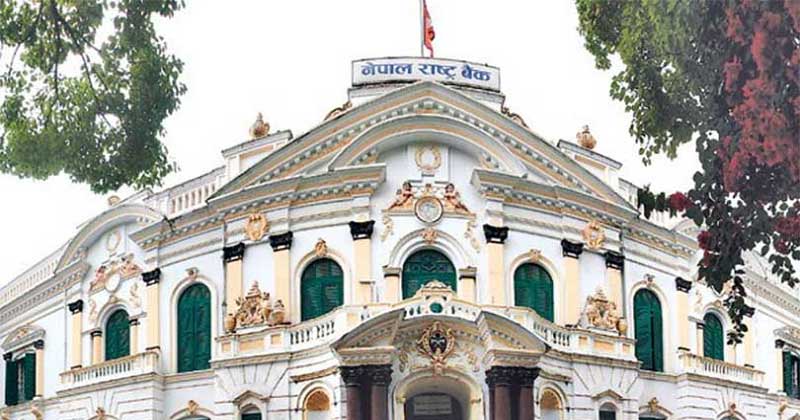
Nepal Rastra Bank is Nepal’s central bank. It regulates Nepal’s monetary, banking, and financial sectors.
As per the Nepal Rastra Bank Act, 2058, the bank has three main objectives:
Maintain price stability and balance of payments stability for sustainable economic development.
Expand access to financial services and maintain stability in the banking sector.
Develop a secure, sound, and efficient payment system.
Without understanding history, it is difficult to understand the foundation of the present. It would not be an exaggeration to say that the era of modern banking in Nepal began with the establishment of Nepal Rastra Bank.
The history of NRB is not only the story of an institution’s establishment; it is an engaging journey of Nepal’s economic sovereignty, currency independence, and modern state-building. From a researcher’s lens, NRB’s history can be analyzed in five major phases:
Before 2013 B.S., it was difficult to imagine a modern economy in Nepal.
Sadar Muluki Khana: The “Sadar Muluki Khana” used to operate the state treasury, issue notes (paper currency), and mint coins. Although paper notes were first issued in 2002 B.S. during the time of Juddha Shumsher, management was not scientific.
Dual Currency System: The biggest problem of that time was the dominance of the Indian currency (IC) within Nepal. Not only in the Terai, but even in the Kathmandu Valley, market prices were quoted in Indian rupees. Government taxes and revenues were also accepted in Indian currency. Money changers determined the exchange rate of Nepali currency, and it fluctuated heavily. Although the country was politically independent, it was economically dependent and unstable.
As a result of King Mahendra’s visionary economic reform thinking and the resolve to make Nepal economically independent, Nepal Rastra Bank was established on 2013 B.S. Baisakh 14 (April 26, 1956) under the “Nepal Rastra Bank Act, 2012.”
First Governor: Himalaya Shumsher JBR (appointed as the first governor at the age of only 29).
Key Challenges: In the establishment phase, the bank’s three main aims were:
Introduce Nepali currency into circulation across the country.
Maintain stability in the exchange rate.
Develop banking habits.
This phase became a landmark in Nepal’s economic history.
Monopoly of Nepali Currency: In 2017 B.S., the “Act to Increase the Circulation of Nepali Currency” was introduced. It made Nepali currency the only compulsory legal tender across Nepal. This was one of the biggest victories of Nepal’s economic nationalism.
Exchange Rate Stability: To curb speculation in the market, NRB adopted a policy of pegging the Nepali currency to the Indian rupee (which still remains at the 160:100 ratio, although rates have been adjusted from time to time).
Banking Expansion: Through laws such as the Commercial Bank Act, 2021 and the Agricultural Development Bank Act, 2024, NRB played a guardian role in the establishment of Rastriya Banijya Bank and the Agricultural Development Bank.
By the late 1980s and early 1990s, a global wave of economic liberalization emerged.
Private Sector Entry: With the establishment of Nepal Arab Bank (now Nabil Bank) in 2041 B.S. (1984), NRB began licensing private sector and foreign investment banks. This was a shift from “control banking” to “regulatory banking.”
Financial Sector Reform Program (FSRP): When government banks (NBL and RBB) reached a near-collapse situation, the “Financial Sector Reform Program” was implemented with support from the World Bank and IMF.
The year 2058 B.S. is a turning point in NRB’s history.
Nepal Rastra Bank Act, 2058: The old act was repealed and a new act was issued. This freed NRB from the direct control of the Ministry of Finance and granted it legal status as an autonomous body. The appointment and dismissal process of the governor was made more complex, providing institutional stability.
Financial Strengthening: Capital increase plans (the policy of NPR 8 billion), the policy of Merger & Acquisition, and implementation of Basel-III occurred during this period.
Crisis Management: During the 2072 B.S. earthquake, the Indian blockade, and the 2077 B.S. COVID-19 pandemic, NRB used instruments such as refinancing and installment deferment to prevent the economy from collapsing.
Today, Nepal Rastra Bank has moved beyond its traditional role.
Digital Era: Establishment and implementation of RTGS and the National Payment Switch (NPS).
Central Bank Digital Currency (CBDC): Preparatory work to introduce a “digital currency” as an alternative to physical currency.
Supervision: Use of technology-based “SupTech” (Supervisory Technology).
From the old ledger of the Sadar Muluki Khana to today’s era of artificial intelligence and digital currency, Nepal’s central banking journey has advanced significantly. Over this seven-decade journey, NRB has proven itself as a pillar of financial stability, even amid political instability.
Nepal Rastra Bank is not like other commercial banks. It does not have shares held by the general public.
Ownership: 100% owned by the Government of Nepal
Board of Directors: The highest policy-making body is a seven-member Board of Directors:
Governor: Chairperson (appointed by the Government of Nepal, Council of Ministers, for 5 years)
Secretary, Ministry of Finance: Member
Two Deputy Governors: Members
Three Directors: Experts appointed by the government from among distinguished individuals in economic, monetary, banking, financial, and commercial law fields
Executive Leadership: The Governor is the Chief Executive of the bank. Supporting the Governor are two Deputy Governors and Executive Directors of various departments.
As an expert, I explain NRB’s functions from the perspective of “problem solving.”
Problem: Inflation rises in the market, or there is a shortage of investable capital.
Solution: NRB issues a “Monetary Policy” every year. Through tools such as interest rate, Cash Reserve Ratio (CRR), and Statutory Liquidity Ratio (SLR), it controls the money supply. If there is too much money in the market, inflation rises; if too little, economic activity slows. NRB balances this.
Problem: Risk that banks could endanger the public’s money.
Solution: NRB licenses and strictly regulates banks and financial institutions by classifying them into Class “A,” “B,” “C,” and “D.”
Capital Adequacy: Ensures banks have sufficient capital to absorb risks by enforcing Basel-III standards.
Non-Performing Loans (NPL): Uses watchlists and provisioning arrangements to prevent bad loans from increasing.
Problem: Foreign currency could run out, making imports impossible.
Solution: NRB manages the country’s foreign exchange reserves. It regulates exchange rate determination (market-based for currencies other than INR; pegged with INR) and governs foreign investment and payments.
NRB is responsible for supplying clean and sufficient notes to the market. It reduces the risk of counterfeit notes by adding security features.
NRB operates the Government of Nepal’s accounts, collects revenues, and raises loans (internal debt) when needed.
The classification of institutions regulated by NRB must be clear. By 2025, many institutions have gone through mergers and acquisitions, so the number has decreased, but institutions have become stronger.
Class “A”: Commercial Banks (full banking operations)
Class “B”: Development Banks (focused on specific areas)
Class “C”: Finance Companies
Class “D”: Microfinance Financial Institutions (credit flow to low-income groups)
Infrastructure Development Bank: (e.g., NIFRA) invests in large projects
Note: Recently, NRB has also started monitoring cooperatives (especially large-transaction cooperatives, as per new legal provisions).
NRB has entered a fully digital era from the traditional ledger system.
RTGS (Real Time Gross Settlement): A system to transfer large amounts instantly from account to account without writing cheques.
National Payment Switch (NPS): A mechanism to operate all digital transactions within Nepal (wallets, cards, QR) through a single gateway.
CBDC (Central Bank Digital Currency): In 2025, NRB is in the final stage of research or a pilot project for a “Digital Rupee.” This is the digital form of physical money.
Payment Systems Department: Licenses and regulates payment service providers (PSP/PSO) such as Fonepay, eSewa, and ConnectIPS.
NRB gives high priority to the safety of public deposits.
Grievance Handling: If a bank troubles you, charges excessive interest, or fails to provide service, you can file a complaint directly to NRB’s “Financial Consumer Protection Unit.”
Grievance Portal: gunaso.nrb.org.np
Deposit Insurance: Individual deposits up to NPR 500,000 are insured through the Deposit and Credit Guarantee Fund. Even if a bank fails, this amount can be recovered.
Borrower Protection: NRB has strictly prohibited actions such as mentally harassing borrowers or threatening them by visiting their homes.
NRB acts as a bridge to connect Nepal’s economy with global markets.
International Monetary Fund (IMF): The Governor represents Nepal on the IMF Board of Governors.
World Bank: Cooperation in financial sector reforms.
Asian Clearing Union (ACU): Facilitates regional trade payments.
From an expert’s viewpoint, NRB always faces some serious challenges:
Foreign Exchange Reserves: Because the economy is import-oriented, there is constant pressure to preserve reserves.
Money Laundering (AML/CFT): Strong regulation is needed to prevent Nepal from entering or to keep it away from the “Grey List.”
Interest Rate Stability: Maintaining an interest rate acceptable to both depositors and borrowers is always like “walking on a balance beam.”
Nepal Rastra Bank is not only a government office; it is a barometer of the country’s economic health. When you buy goods in the market, deposit money in a bank, or receive remittances from abroad, NRB’s policy is connected there in one way or another.
As an expert, my suggestion is: “When making financial decisions, always pay attention to NRB’s directives and notices. Do not follow rumors; transact only with institutions licensed by NRB. The safety of your money is the safety of the country’s economy.”
Supporting Nepal Rastra Bank’s campaigns—“Clean Notes, Strong Economy” and “Digital Nepal”—is the duty of all aware citizens.
This content is prepared for general informational (financial literacy) and educational purposes only. Although it is presented carefully based on research, it does not constitute legal, financial, or professional advice. Readers should verify any time-sensitive or policy-related details directly from Nepal Rastra Bank’s official publications, directives, and website before making decisions. Collegenp is not responsible for any loss or damage arising from the use of this information.






.jpg)