



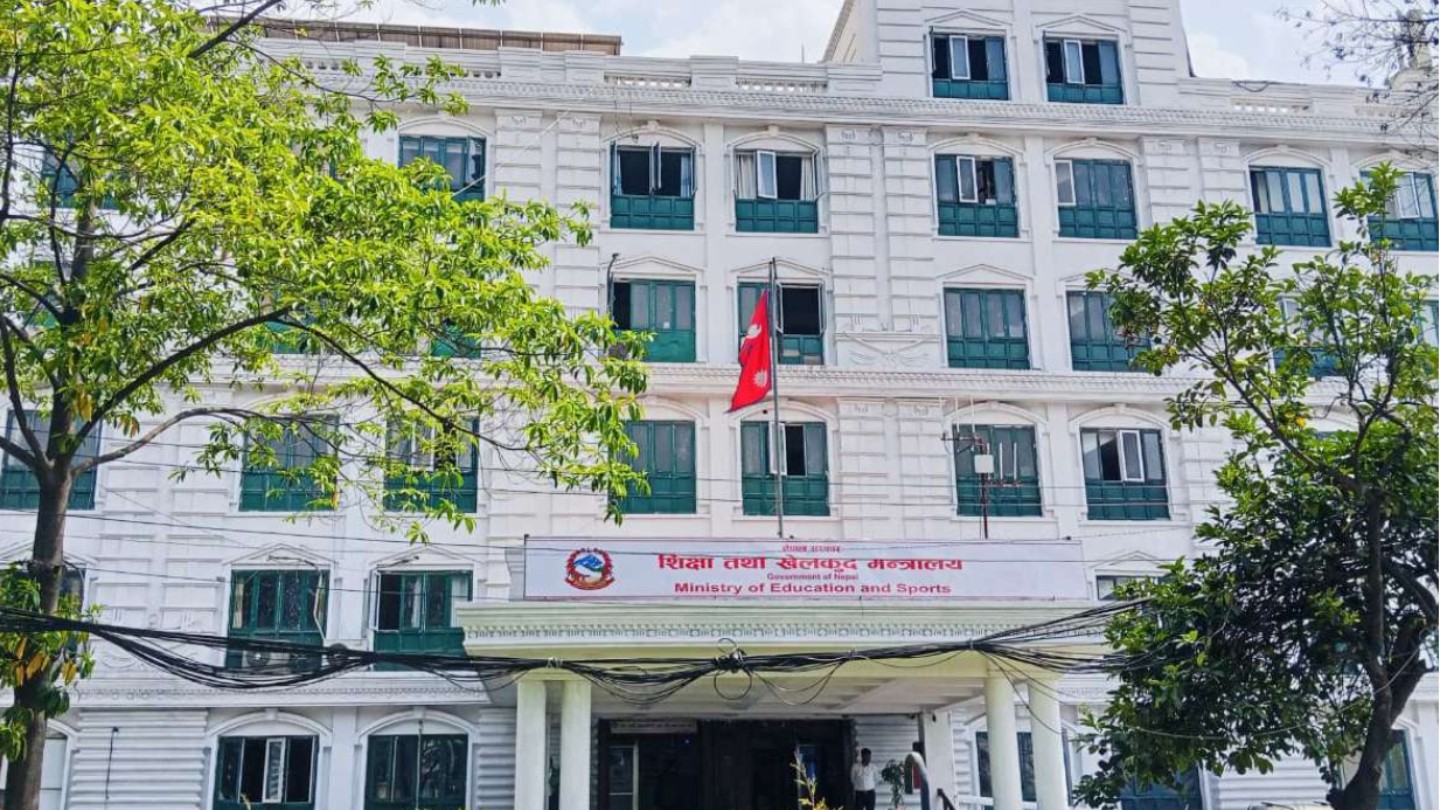
National School Curriculum Revision Delayed, Feedback to Be Collected from All Seven Provinces
The revision of the national curriculum for school education will take some more time. The process has been delayed because direct discussions with stakeholders in all seven provinces and the collection of their feedback are required before the revision of the National Curriculum Framework for School Education, 2076 is finalized. Feedback is being collected to make the curriculum relevant to the times, practical, useful for life, and effective.
The National Curriculum Framework Revision Task Force, formed with the facilitation of the Curriculum Development Centre, will visit 28 districts across all seven provinces from Bhadra 24 to 30 and conduct interaction programs. Seven province-wise teams will be mobilized to hold discussions with teachers, students, headteachers, parents, experts, and policymakers.
In the first phase, interactions will be held with stakeholders in 28 districts. In the second phase, feedback will also be collected from all 77 Education Development and Coordination Units and through the Centre's website. Teams have been formed in each province with representation from the Ministry of Social Development, local levels, institutional schools, Education Development and Coordination Units, and other bodies.
Orientation and Stakeholder Views
An orientation program was organized on Friday at the Curriculum Development Centre in Sanothimi, Bhaktapur, to make the province-level discussions systematic. Representatives from PABSON, N-PABSON, HISSAN, APIN, the Parents' Association, teachers, and other stakeholders participated in the program.
In accordance with the decision of the 98th meeting of the National Curriculum and Assessment Council, 12 thematic groups under the task force formed last Baisakh under the coordination of Prof. Dr. Balchandra Luitel will collect feedback at the provincial and district levels.
Speaking at the program, Shailendra Jha, Chief Advisor to the Education Minister, said the curriculum should be enriched by understanding actual conditions in the field while remaining free from intellectual bias. He said the curriculum should be developed in a way that has a positive impact on students' academic outcomes and expressed the view that universities and other educational institutions should also take ownership of the new curriculum.
Task force coordinator Prof. Dr. Luitel said feedback was being collected from across the country to revise education in line with students' aspirations and needs. Mahendra Parajuli, Executive Director of the Curriculum Development Centre, said the new curriculum would soon be brought to a conclusion based on consultations with all stakeholders.
Main Issues for Discussion
According to task force member Pramod Bhatt, feedback will be collected on the main goals of school education, the structure from early childhood development to the secondary level, continuity of learning, curriculum load, and teachers' perspectives.
Opinions will also be sought on natural disaster management, technical and vocational education, indigenous and local knowledge, digital technology and artificial intelligence (AI), human values among students, moral education, and citizenship education, among other topics.
Provinces and Districts Selected for Feedback Collection
-
Koshi Province: Morang, Dhankuta, and Sankhuwasabha
-
Madhesh Province: All eight districts
-
Bagmati Province: Makwanpur, Dolakha, and Kathmandu
-
Gandaki Province: Kaski, Tanahun, and Gorkha
-
Lumbini Province: Rupandehi, Dang, Banke, and Pyuthan
-
Karnali Province: Surkhet, Dailekh, and Mugu
-
Sudurpashchim Province: Kailali, Dadeldhura, Baitadi, and Doti



Comments 0
No comments yet. Be the first to start the conversation.