



The distribution of scholarships in Nepal's private and institutional schools has raised concerns about transparency and compliance with legal requirements. Although existing education laws require schools to provide scholarships to a specified percentage of students, complaints have emerged that some schools have failed to distribute scholarships, disclose beneficiary details, or maintain updated records.
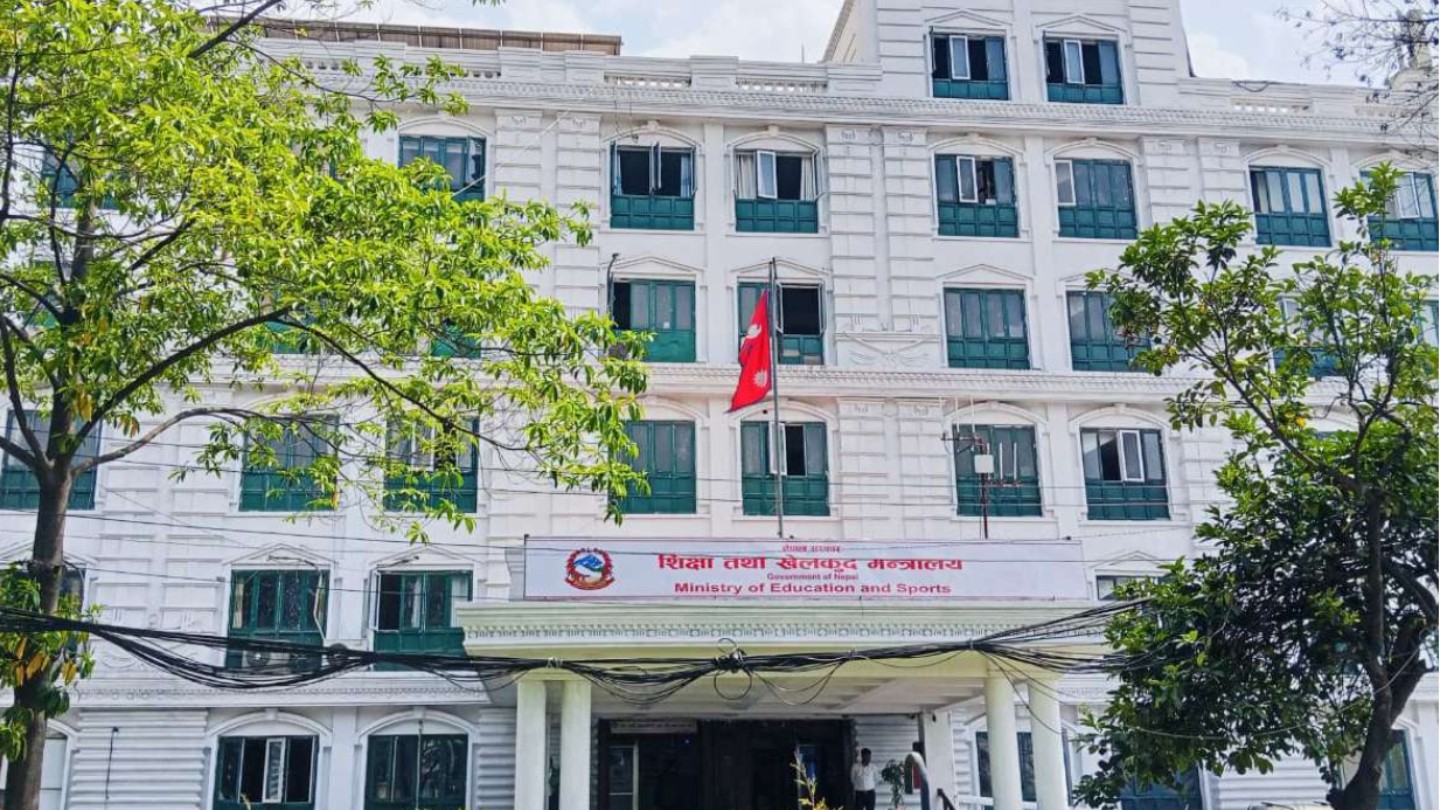
The Ministry of Education and Sports has instructed the Department of Education to address these concerns. Following the ministry's directive, the department has asked local governments and Education Development and Coordination Units to monitor scholarship distribution and verify the details of students receiving scholarships.
Background and Legal Provisions
Nepal's Education Act, Education Regulations, and the Act Relating to Compulsory and Free Education establish mandatory scholarship requirements for private and institutional schools.
Section 27(3) of the Act Relating to Compulsory and Free Education, 2075 (2018), requires privately funded schools and schools operated under public educational trusts to reserve places for free education based on their total enrollment, covering early childhood education through Grade 12.
The minimum scholarship requirements are:
-
Schools with up to 500 students: At least 10% of students must receive free education.
-
Schools with 500 to 800 students: At least 12% of students must receive free education.
-
Schools with more than 800 students: At least 15% of students must receive free education.
These provisions make scholarship allocation a legal obligation rather than a voluntary arrangement by school operators.
The Ministry of Education has also issued instructions concerning the implementation of scholarship quotas and student selection in institutional schools.
Current Problems and Complaints
Despite the legal requirements, concerns remain about whether scholarships are being distributed transparently and whether schools are maintaining accurate records of beneficiaries.
According to Bhakta Bahadur Godar, Director of the Department of Education, the Ministry of Education and Sports and the department have repeatedly received written and verbal complaints alleging that some private school operators have failed to provide the scholarships required by law.
The reported problems include:
-
Failure to provide scholarships: Complaints have been submitted alleging that some schools are not distributing scholarships in accordance with the prescribed legal provisions.
-
Lack of public disclosure: Some schools claim to have distributed scholarships but have not publicly disclosed the names of students receiving them. The issue of publicly displaying scholarship recipients' names has also been addressed in previous government instructions.
-
Incomplete EMIS records: Some schools have not updated the number of scholarship recipients and their details in the Education Management Information System (EMIS). The submission of scholarship beneficiary details by institutional schools has also been addressed through local-level notices.
The complaints highlight concerns about the transparency of scholarship distribution and the accuracy of student information maintained by educational institutions.
Claims from Private School Representatives
The Private and Boarding Schools' Organization Nepal (PABSON) maintains that scholarship distribution is generally transparent despite problems in some institutions.
According to PABSON General Secretary RB Katuwal, issues have been observed in certain schools, but the overall scholarship distribution process remains transparent.
Katuwal claimed that hundreds of thousands of students across Nepal have benefited from scholarships provided in accordance with existing legal requirements.
The claim reflects PABSON's position regarding scholarship implementation. The source does not provide independently verified figures establishing the total number of students currently receiving scholarships.
Educational Statistics for Fiscal Year 2082/83
According to the annual report of the Ministry of Education and Sports for fiscal year 2082/83, Nepal has 35,951 operating schools.
Private and institutional schools account for approximately 25% of the total number of schools.
The reported distribution of student enrollment is as follows:
-
Total operating schools: 35,951
-
Private and institutional schools: Approximately 25% of all schools
-
Students enrolled in community schools: 62.2%
-
Students enrolled in private and institutional schools: 37.8%
These figures indicate that private and institutional schools accommodate a substantial proportion of Nepal's school-going population.
The figures also demonstrate the importance of maintaining accurate scholarship records, as the legal provisions apply to institutions serving a considerable share of students.
Government Instructions and Monitoring Measures
Following complaints about the lack of transparency in scholarship distribution, the Ministry of Education and Sports directed the Department of Education to take steps to strengthen implementation and monitoring.
The department subsequently issued instructions to local governments and Education Development and Coordination Units across the country.
Instructions to Local Governments
All local governments have been directed to ensure that schools implement the scholarship provisions prescribed by law.
They have also been instructed to verify the students receiving scholarships to determine whether the benefits have been distributed in accordance with the applicable requirements.
The verification process is intended to establish whether the reported scholarship beneficiaries are receiving the educational benefits claimed by their respective schools.
Instructions to Education Development and Coordination Units
Education Development and Coordination Units in all districts have been instructed to monitor scholarship distribution and examine whether student information has been updated in EMIS.
Their responsibilities include reviewing:
-
Whether schools have distributed scholarships in accordance with legal requirements.
-
Whether the number of scholarship recipients has been accurately recorded.
-
Whether the details of students receiving scholarships have been updated in EMIS.
School-level scholarship allocation, selection, and reporting procedures have also been addressed through local government instructions, including those issued by Kathmandu Metropolitan City.
The department's instructions follow complaints concerning scholarship distribution and incomplete reporting by some private and institutional schools.
The measures are intended to improve compliance with existing scholarship requirements, strengthen verification of beneficiary records, and address concerns about transparency in the distribution process.

Comments 0
No comments yet. Be the first to start the conversation.