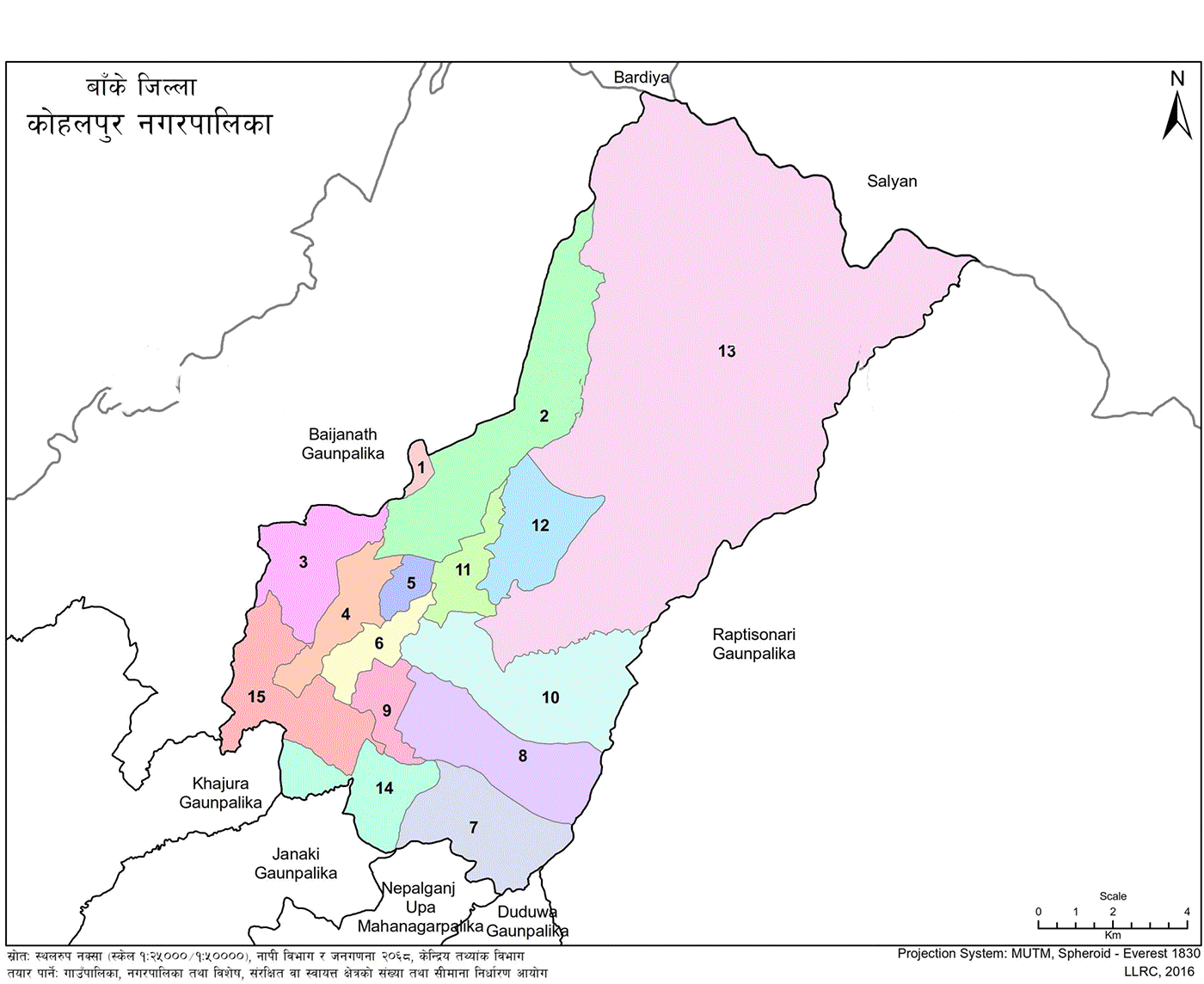
The Municipal Executive Office of Kohalpur Municipality (कोहलपुर नगरपालिका, बाँके) is situated in Kohalpur, Banke District, Lumbini Province, Nepal. Kohalpur Municipality is a local government. It was incorporated in 2014 and has been providing various local government services through 15 wards.
Kohalpur Municipality, located in Banke District of Lumbini Province, operates under Nepal’s federal governance framework. The municipality delivers decentralized governance through a network of municipal executive offices, ward offices, and sector-specific administrative units.
Office of the Municipal Executive - Coordinates development, planning, service delivery, and regulatory functions.
15 Ward Offices - Provide localized governance, documentation, public services, and community-level decision-making.
Education, Youth, and Sports Section - Oversees school operations, educational planning, sports events, and youth-focused programs.
Urban Planning and Building Permit Section - Handles land use planning, building approvals, and construction monitoring.
Revenue Section - Manages municipal taxes, business registration, land revenue, and service fees.
Social Development Section - Implements programs in health, literacy, gender equity, and social security.
Infrastructure and Public Works Section - Develops and maintains roads, water supply systems, sanitation facilities, and other public infrastructure.
Agriculture and Livestock Section - Provides extension services, training, and support to farmers and livestock owners.
Health Section - Oversees public health facilities, vaccination campaigns, COVID-19 response, and sanitation programs.
Disaster Risk Reduction Unit - Implements risk reduction, early warning systems, and emergency preparedness strategies.
Available at ward and municipal offices:
Birth, death, marriage, and migration registration
Recommendation letters for citizenship, social security, and academic purposes
Relationship verification and property ownership documents
Operation of 30 community schools
Scholarships for disadvantaged groups
Open education programs
Technical and vocational training
Inclusive education for students with disabilities
School infrastructure development (toilets, labs, libraries)
Municipal health posts, Ayurvedic dispensary, and COVID-19 hospital
Vaccination, maternity services, and immunization outreach
Health awareness campaigns
Drinking water monitoring and sanitation promotion
E-governance systems (record keeping, business licensing, taxation)
Free public Wi-Fi zones at municipal centers
Internet access in ward offices, selected schools, and health centers
An interactive website and municipal mobile app for updates
Construction and maintenance of roads, bridges, and street lighting
Drainage and irrigation projects
Solar-powered streetlights in select areas
Drinking water supply through urban and small-town schemes
Social security allowances for senior citizens, single women, Dalits, and persons with disabilities
Livelihood support and income-generation training
Women and children-focused programs
Disaster-affected community support and relocation
Farmer training and seed distribution
Technical advisory on livestock management and organic farming
Veterinary services and animal vaccination
Promotion of kitchen gardening and agro-tourism
Operation of youth clubs and child clubs
Annual sports competitions (e.g., Deputy Mayor Cup Cricket)
Youth empowerment, leadership, and capacity-building workshops
Local Emergency Operations Center (LEOC)
Disaster response planning with the Nepal Red Cross
Early warning systems for floods and lightning
Emergency rescue coordination and medical evacuation (including helipads)
Kohalpur Municipality is advancing toward digital governance through:
Digitized registration, revenue, HR, and education management systems
Real-time data updates via ePortals and mobile applications
Student tracking system for special needs and scholarship management
Interactive platforms for public feedback and service delivery transparency
Community Learning Center for lifelong education and skill-building
Gyanodaya Library for knowledge access and literacy promotion
Public consultation in policy design and municipal budgeting
Inclusion of marginalized and underrepresented communities in local planning





.jpg)