




Choosing a college in Nepal often starts with a simple question: “Is it constituent or affiliated?” People ask it for a reason. The label affects fees, staffing, facilities, and how academic rules get enforced.
The confusion begins when two institutions teach the same university syllabus and still feel completely different. One campus may have strict attendance rules, predictable exam routines, and lower fees. Another may offer newer buildings and more flexible class timings, yet costs more and changes teachers more often.
Many students assume those differences come from “quality” alone. In practice, a big part comes from how the institution is set up: university-run (constituent) or university-linked (affiliated).
This guide explains both models in plain terms, then connects the definitions to real student life: who runs the place, who hires teachers, who sets academic rules, how exams and degrees work, how to verify status, and what quality signals to check before you enroll.
What the terms mean in Nepal’s university system
Constituent campus: what it means
A constituent campus (often called a “constituent college” in legal language) is part of the university’s own structure. Tribhuvan University’s founding law defines “Constituent Campus/College” as a campus of the university.
That definition sounds short, yet it has a clear implication: the university is not only awarding the degree; it is running the campus as its own unit.
Affiliated college: what it means
An affiliated college is a separate institution linked to a university through affiliation approval. Tribhuvan University’s law defines “Affiliated Campus/ College” as a campus or college affiliated to the university.
Affiliation creates a formal relationship. The college teaches the university’s approved programs under the university’s academic rules. Day-to-day management stays with the college.
The difference that students actually feel
Ownership and identity
A constituent campus belongs to the university. The campus identity sits inside the university system, not outside it.
An affiliated college has its own identity as an institution. It can be private, community-run, or run by a company or trust, depending on Nepal’s education sector structure. The key point is independence in management, paired with academic linkage to a university.
Governance and accountability
This part shapes how problems get solved.
Who runs daily operations
In a constituent campus, administrative decisions run through university-linked chains: campus chief, dean’s office coordination, university directives, and internal reporting.
In an affiliated college, the college management runs daily operations: hiring, payroll, facility investment, student services, internal discipline, and many academic support decisions.
Who answers when something goes wrong
If a constituent campus delays internal processes, students typically deal with university-linked administrative channels.
If an affiliated college delays processes, students deal with college management first, then the university only for issues tied to university-controlled systems (such as exam rules, eligibility, or degree procedures).
TU’s Office of the Monitoring Directorate describes monitoring and directing academic, administrative, and financial works across the university structure. That kind of mechanism exists because a large university needs oversight across many units.
Curriculum, exams, and the degree: what stays the same, what changes
Curriculum control
Across both models, the curriculum comes from the university (or its institute/faculty). A college does not “invent” the university’s syllabus for an affiliated program.
That said, delivery can vary. Two colleges can teach the same course outline and still differ in:
-
class discipline and attendance monitoring
-
pace and coverage of the syllabus
-
lab time and supervision
-
internal assessment fairness
-
availability of extra classes or mentoring
So, syllabus sameness does not mean learning sameness.
Exam control and evaluation
University systems in Nepal commonly centralize exams and results. In TU’s science stream, IoST notes site visits for monitoring affiliated academic programs and examinations. That tells you something practical: universities can supervise affiliated exam processes, yet the learning environment still depends on the college.
Degree awarding
For approved affiliated programs, the degree comes from the university. Pokhara University states that graduates from affiliated colleges are awarded degrees certified by the university.
So if the program is officially approved and you meet requirements, the degree certificate is a university degree. The campus type does not change that core fact. What changes is the path you take to reach that degree: teaching quality, support, facilities, cost, and administrative culture.
Fees and funding: why price differences happen
Fees are often the first reason families ask about constituent vs affiliated. The safest way to approach fees is not to assume a pattern; treat fees as an outcome of the institution’s cost structure and governance.
Common fee patterns
Many public constituent campuses charge lower fees, since their operating model often differs from private institutions. Private affiliated colleges often charge higher fees, since they cover costs through student fees: buildings, labs, staff contracts, marketing, technology, and service expansion.
Still, there are exceptions in both directions. Some affiliated colleges keep fees moderate with tight cost control. Some constituent campuses run self-funded programs with higher costs.
What to check before paying
Ask for a written fee sheet that covers the full program cost, not only the admission fee. Look for:
-
semester or annual tuition
-
lab and practical charges
-
fieldwork, project, or internship costs
-
exam form and exam-related charges
-
retake and re-registration costs
-
refund rules with dates
If a college avoids giving a written breakdown, treat that as a warning sign. Transparency is a basic trust test.
Teachers and staffing: stability matters more than labels
Students often hear: “Constituent campuses have better teachers.” That statement fails in two ways.
-
A constituent campus can face shortages or uneven teaching quality.
-
An affiliated college can build a strong faculty team with stable contracts and clear academic management.
The campus type tells you who hires and manages teachers. It does not guarantee classroom results.
How staffing differs in practice
-
Constituent campus: staffing often runs closer to university or public-style pathways.
-
Affiliated college: staffing is managed by the college. Contracts and turnover depend on the college’s culture and resources.
What to ask during a visit
Ask questions that reveal real staffing strength:
-
“How many full-time teachers teach core subjects?”
-
“Do you publish faculty profiles and qualifications?”
-
“Who supervises labs, and how many lab assistants work per shift?”
-
“How do internal assessments get moderated?”
You will learn more from these answers than from slogans.
Facilities, labs, and student services: the day-to-day difference
Facilities shape your learning routine. This is where affiliated colleges can look stronger on paper, since private investment can build newer buildings and labs. Yet the reverse happens too: some affiliated colleges run in tight spaces with limited lab time.
Instead of guessing, verify by observation:
-
Visit the library and ask about opening hours, lending rules, and study space
-
Visit labs during practical hours, not only during a tour
-
Ask how many students share a lab workstation
-
Ask how practical classes are scheduled across the week
A campus that offers strong facilities should be able to show how students use them in real class time.
Quality signals beyond “constituent” and “affiliated”
If you treat constituent vs affiliated as the only quality filter, you will miss good options and you may accept weak ones. Look for quality signals that apply to both models.
QAA in Nepal: what it is and why it helps
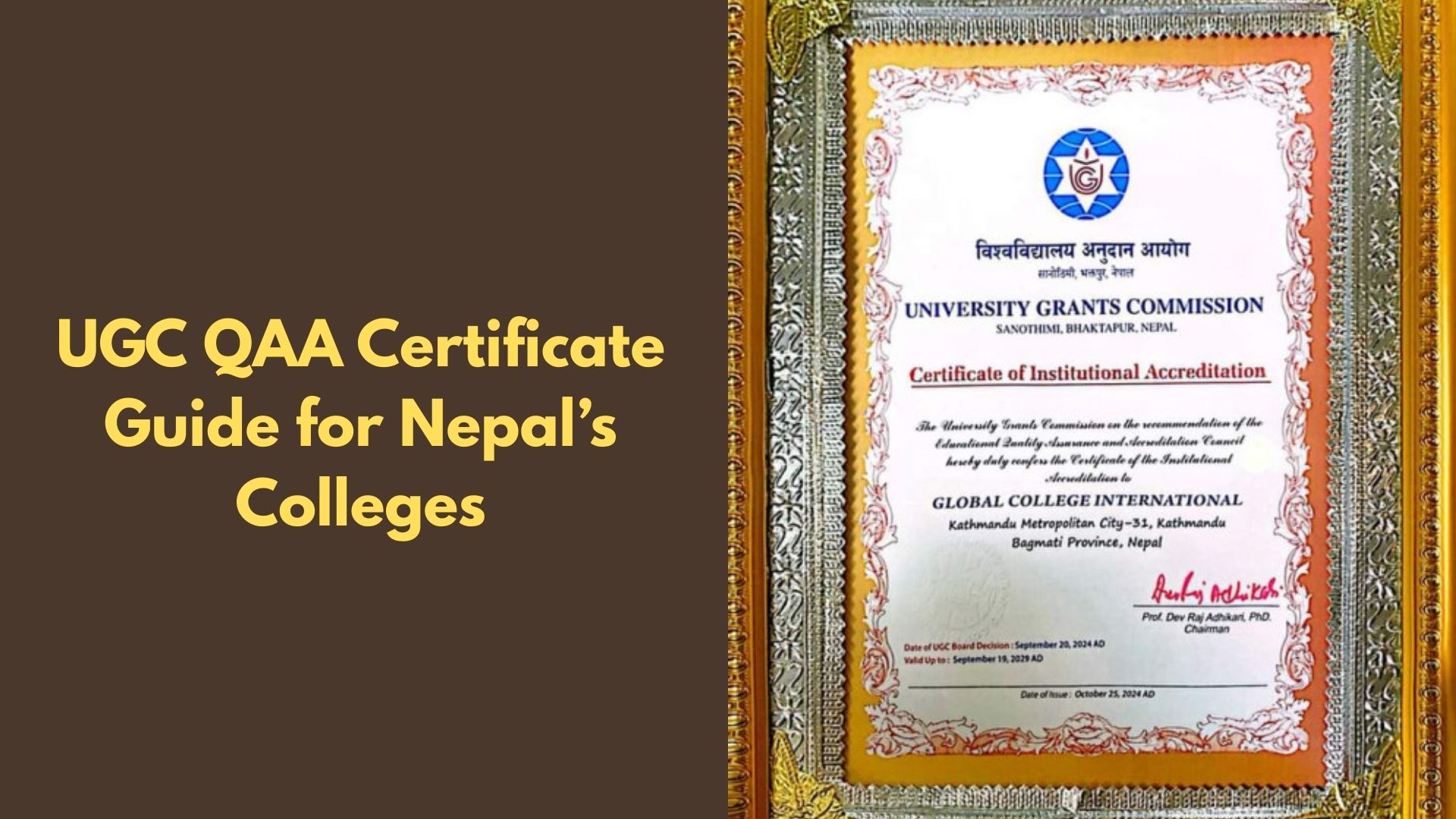
Nepal’s University Grants Commission runs Quality Assurance and Accreditation (QAA) for higher education institutions. TU’s own QAAC page links the national QAA start to 2007. Academic work from Nepal discusses QAAC formation in 2007 and the national push for quality systems in higher education.
UGC publishes lists of institutions under QAA with details such as nature, university, accreditation date, and expiry date. TU’s QAAC site publishes an “Accredited HEIs” list with nature and university fields.
How to read QAA information as a student
Look for:
-
the institution name matching exactly
-
“nature” or category field (constituent, community, private, etc.)
-
accreditation date and expiry date
-
whether the listing shows current accreditation status or a preparatory stage
QAA is not a magic stamp. It is still a useful signal when combined with your campus visit findings.
Monitoring and oversight in the TU system
Large universities need internal monitoring units. TU’s Monitoring Directorate outlines a mandate covering academic, administrative, and financial areas. TU’s IoST mentions site visits for monitoring affiliated academic programs and examinations.
For students, this matters in a practical way: it indicates where oversight is expected to come from. Still, oversight works best when the college cooperates and keeps clear records.
How to verify if a college is constituent or affiliated
Rumors travel fast in education. Verification takes minutes when you know where to look.
Step 1: Check the university’s official listings
Start with the university’s campus and institute pages. TU publishes lists and descriptions of its campuses and institutes.
Step 2: Check institute-level affiliated lists for your field
Many programs sit under a specific institute or faculty. TU IoST publishes lists of affiliated colleges and offered programs.
Step 3: Use official downloadable lists when available
TU publishes PDF lists of affiliated campuses or colleges with address details. These lists are useful for cross-checking names, locations, and affiliation status.
Step 4: Cross-check QAA status
Use UGC QAA lists and TU QAAC accredited institution lists for an extra quality signal.
Step 5: Verify program approval, not only institution name
A college may be affiliated, yet not for every program advertised. Match:
-
the program name
-
the level (bachelor’s, master’s)
-
the campus name and address
If details do not match official lists, pause and verify again.
Red flags worth taking seriously
-
unclear fee sheets or refusal to provide written terms
-
Program advertisements not reflected in official institute lists
-
No faculty list for core subjects
-
frequent campus location changes without clear updates on official records
-
vague answers about exams, internal marks, or attendance rules
None of these proves fraud on its own. Each is a reason to verify more carefully.
Choosing based on your situation
There is no single “best” model for every student. Your situation decides what matters most.
If budget is the main factor
Compare total cost across the full program. Add lab, exam, and project costs. Many public constituent campuses cost less, yet fee structure still varies by program and campus.
If labs and practical learning matter most
Visit labs during class hours. Ask how many practical sessions run weekly and who supervises them. QAA status can add confidence when it matches your observations.
If you work or manage distance constraints
Ask about class schedules, attendance enforcement, internal assessment dates, and make-up policies. A strict system helps some students and clashes with others. Pick what fits your daily routine.
If you want predictable academic processes
Ask how exam forms, internal marks submission, and result updates are handled. Clarity here often reflects administrative maturity.
Common myths that mislead students
Myth 1: “Constituent means low fees, affiliated means high fees.”
Fee patterns often follow that direction, yet exceptions exist. Verify the written fee structure.
Myth 2: “Affiliated colleges do not give a real university degree.”
For approved programs, the university awards the degree. Pokhara University states this clearly for its affiliated colleges.
Myth 3: “Same syllabus means same learning.”
Syllabus sets topics. Learning depends on teaching stability, lab access, internal assessment discipline, and academic support.
Myth 4: “Popularity proves official status.”
Popularity can be driven by location, marketing, peer influence, or convenience. Official lists prove status.
Conclusion
A constituent campus is part of a university’s own structure. An affiliated college is a separate institution linked to a university through affiliation approval. Tribhuvan University’s founding law uses both terms directly.
Both models can lead to a university degree for approved programs. The label still matters, since it shapes governance, fee setting, staffing, facilities, and how accountable management feels when issues arise. The safest path is straightforward: verify the campus type on official university and institute lists, verify the exact program approval, then check quality signals such as QAA listings and transparent academic processes.
FAQs
1) Is a constituent campus the same as a government campus in Nepal?
Many people use “government campus” for public constituent campuses. “Constituent” is the precise term, tied to university ownership and governance.
2) Do affiliated colleges in Nepal award university degrees?
Affiliated colleges teach approved programs. The university awards the degree for those programs. Pokhara University states this for its affiliated colleges.
3) How can I verify if a TU college is officially affiliated for my subject?
Check the relevant institute’s affiliated college list (such as TU IoST for science programs), then cross-check TU’s official downloadable affiliated lists when available.
4) Does QAA apply only to constituent campuses?
No. UGC QAA listings show institutions across different “nature” categories, and TU QAAC lists show accredited institutions with nature and university details.
5) What matters most when choosing between constituent and affiliated?
Verified program approval, transparent fees, stable teaching capacity, lab access, predictable academic processes, and credible quality signals such as QAA status.





Comments 0
No comments yet. Be the first to start the conversation.