




Artificial intelligence can summarize documents, explain difficult passages, suggest outlines, correct language, translate text, and produce drafts. These functions may reduce the time required for some tasks, but they do not remove the need for human literacy.
Reading and writing still matter because people must understand sources, distinguish evidence from assertion, form ideas, evaluate generated output, communicate decisions, and take responsibility for what they submit or publish. A polished response does not prove that its claims are accurate or that its user understands the subject.
The main change is not a move from human literacy to machine-produced language. It is a change in emphasis. Text production may become faster, while interpretation, verification, reasoning, source evaluation, and authorship become more important.
UNESCO’s AI Competency Framework for Students identifies 12 competencies across four dimensions: a human-centered mindset, ethics of AI, AI techniques and applications, and AI system design. It organizes development through three levels—understand, apply, and create—and emphasizes critical judgment and responsible participation.
This article explains which reading and writing abilities should remain human-led, when AI support may be useful, how dependence can interfere with learning, and how readers and writers can assess whether a tool is supporting or replacing their skills.
Answer Summary: Reading and writing remain essential in the AI era because generated text still requires human interpretation, source checking, reasoning, revision, and accountability. AI may help explain difficult language, generate questions, organize ideas, and provide feedback. It should not replace close reading, independent idea development, evidence evaluation, personal judgment, or responsibility for the final document.
Table of Content
- Evidence Base and Scope
- Why Reading and Writing Still Matter When AI Can Produce Text
- Three Useful Definitions for AI-Era Literacy
- How AI Is Changing the Way People Read
- Essential Reading Skills in the AI Era
- How AI Is Changing the Writing Process
- Essential Writing Skills in the AI Era
- How Much AI Support Is Appropriate?
- AI-Assisted and AI-Dependent Behavior
- Human–AI Literacy Responsibility Framework
- A Responsible Before–During–After AI Workflow
- How to Verify AI-Generated Claims and Citations
- Five Exercises That Strengthen Literacy While Using AI
- Reading and Writing With AI in Different Contexts
- Risks That Require Safeguards
- Self-Assessment: Is AI Supporting or Replacing Your Skills?
- What the Current Evidence Cannot Establish
- Reading and Writing Remain Human Responsibilities
Key Takeaways:
-
Fluent output does not prove that a person understands a subject.
-
Important sources should be read directly rather than replaced by summaries.
-
Human writers should control purpose, reasoning, evidence, and final decisions.
-
Generated facts, quotations, and citations require independent checking.
-
Feedback on human-created work generally preserves more human control than outsourcing the full task.
-
Regular reading and writing without AI helps reveal whether core skills remain available.
-
The person submitting or publishing a document should verify its contents and follow the applicable rules.
Evidence Base and Scope
This article draws on UNESCO guidance and competency frameworks, the Association of College and Research Libraries’ information-literacy framework, the National Institute of Standards and Technology’s generative AI risk profile, and peer-reviewed reviews of AI-supported reading and writing.
The evidence includes reported benefits and identified risks. Findings are qualified by educational level, task type, study design, population, and degree of AI involvement. Guided classroom use, unrestricted use, workplace use, language assistance, and accessibility support should not be assumed to produce identical results.
Why Reading and Writing Still Matter When AI Can Produce Text
Reading and writing still matter because sentence production is only one part of literacy. Understanding, questioning, connecting evidence, developing a position, and communicating that position remain human responsibilities.
Literacy is more than producing sentences
A person may produce grammatically correct writing without understanding the topic. A reader may also receive a clear summary without knowing which evidence was omitted, simplified, or interpreted inaccurately.
Literacy includes the ability to:
-
interpret meaning;
-
identify purpose and audience;
-
distinguish claims from evidence;
-
compare sources;
-
recognize uncertainty;
-
form and revise ideas;
-
explain reasoning;
-
communicate with appropriate context;
-
take responsibility for the final text.
These abilities become especially important when a system can produce confident language even when its content is incomplete or wrong. NIST identifies confidently presented false or erroneous content as a form of generative AI confabulation.
Reading and writing are tools for thinking
Reading is not passive reception. A reader selects important details, connects ideas, tests assumptions, and compares new information with prior knowledge.
Writing also involves more than recording a finished thought. Choosing a claim, arranging evidence, explaining a relationship, and revising an unclear paragraph can reveal weaknesses in reasoning.
When a system performs all these stages, a person may receive a finished document without developing the understanding that usually emerges through reading, drafting, and revision.
The Association of College and Research Libraries’ Framework for Information Literacy for Higher Education encourages readers to consider contextual authority, how information is created, research as inquiry, and searching as a strategic process. These principles shift attention from polished presentation to how knowledge was produced and supported.
Critical AI literacy is therefore part of wider digital literacy in education, not a substitute for information literacy, media literacy, or critical reading. The internal resource provides additional background on evaluating and using digital information.
Polished output is not the same as understanding
A polished response may contain an unsupported statement, inaccurate citation, hidden assumption, or interpretation that does not match the original source. Readers who judge quality mainly by fluency may overlook these weaknesses.
A useful comprehension test is whether the reader can explain the following without repeating the generated response:
-
the central claim;
-
the main evidence;
-
the source’s limitations;
-
a credible counterargument;
-
the practical meaning of the conclusion.
When the reader cannot do this, the tool may have completed the language task without helping the reader build durable understanding.
A systematic review of 136 publications examined research published between January 1, 2023, and March 7, 2025. It identified reported benefits involving writing quality, feedback, idea generation, paraphrasing, and self-editing, alongside concerns involving overreliance, reduced metacognitive engagement, plagiarism, and authorship. The review focused on higher education, particularly social-science contexts, so its findings should not be generalized automatically to all ages or settings.
Three Useful Definitions for AI-Era Literacy
The following working definitions distinguish responsible assistance from dependence. They are not universal legal, academic, or institutional definitions.
Critical AI literacy
Critical AI literacy is the ability to understand that AI output comes from a computational system, evaluate its evidence and limitations, recognize possible errors or bias, and use the technology responsibly.
A critically literate user does not accept an answer because it sounds certain. The user asks where the information came from, what may be missing, how the response can be checked, and whether the output is suitable for the task.
AI-assisted writing
AI-assisted writing is writing in which a person retains control over purpose, argument, evidence, organization, voice, and final decisions while using AI for limited support.
Examples include requesting feedback on clarity, asking for counterarguments, identifying repetitive sentences, or discussing alternative structures.
AI-dependent writing
AI-dependent writing occurs when a system performs central reasoning or composition that the named writer cannot independently explain, verify, revise, or defend.
Dependence is not determined only by the number of generated words. It is determined by how much intellectual control the writer retained.
How AI Is Changing the Way People Read
AI is changing reading by making summaries, explanations, translations, and generated questions easier to obtain. These functions may improve access, but they may also encourage readers to stop before engaging sufficiently with the original material.
Summaries and explanations can reduce initial difficulty
A reader may use AI to define unfamiliar vocabulary, restate a complex passage, generate guiding questions, or explain how two ideas relate.
This support is most useful when it acts as a bridge to the original source. It becomes less useful when the explanation replaces the source.
A practical sequence is:
-
Read the title, introduction, headings, and central passages.
-
Mark unclear terms or arguments.
-
Request an explanation of a specific difficulty.
-
Return to the source and test whether the explanation fits.
-
State the main point in your own words.
Translation and accessibility support may improve access
Language assistance may help multilingual readers compare wording or understand an unfamiliar passage. Text simplification, speech tools, and structured summaries may also help some users access information.
The effects depend on accuracy, language coverage, context, device access, instructional support, and the needs of the individual reader. A translated or simplified version should be compared with important parts of the original when precision matters. Research findings, academic definitions, official instructions, and policy language may lose qualifications when simplified.
An AI summary cannot replace the original source
A summary selects information. It may omit methodology, examples, qualifications, disagreements, or evidence that changes how a claim should be understood.
Before relying on a summary, check:
-
whether the original source is available;
-
whether its author, organization, and date are identified;
-
whether its main qualification is preserved;
-
whether evidence is separated from interpretation;
-
whether important exceptions were removed;
-
whether the summary introduces claims absent from the source.
A summary can help with orientation. It should not be treated as the original evidence.
Repeated simplification may create comprehension debt
In this article, “comprehension debt” describes the gap that may develop when someone repeatedly obtains simplified answers without practicing the reading required to understand difficult material independently.
The immediate task may feel easier, but the reader may later struggle when asked to interpret a full report, compare competing arguments, or identify a subtle error.
This is an editorial description, not a standardized research or clinical term.
Essential Reading Skills in the AI Era
The most important reading skills involve source awareness, evidence evaluation, contextual judgment, and the ability to engage with material without automatic simplification.
Identify the source, author, purpose, and date
Before evaluating a passage, establish where it came from.
Ask:
-
Who produced it?
-
What is the author or organization trying to accomplish?
-
When was it published or updated?
-
Is it research, guidance, commentary, advertising, or opinion?
-
Does the author have access to relevant evidence?
-
Is a newer official source available?
Authority depends on context. A researcher may be qualified to explain a study but not a country’s current regulation. A company may describe its own service accurately while remaining a weak source for proving that the service improves learning.
Separate claims, evidence, and interpretation
A claim states what an author wants the reader to accept. Evidence provides support. Interpretation explains what the evidence may mean.
Generated responses often combine these categories into fluent paragraphs. Readers should separate them deliberately.
For each major statement, ask:
-
What exact claim is being made?
-
What evidence supports it?
-
Can the evidence be opened and checked?
-
Does the conclusion extend beyond the evidence?
-
What qualification would make the statement more accurate?
The Collegenp guide to critical thinking and reading skills provides related methods for examining evidence, assumptions, context, and conclusions.
Compare an AI summary with the original text
A direct comparison helps reveal whether a summary preserved the source’s meaning.
Check the summary against:
-
the abstract or executive summary;
-
the author’s main conclusion;
-
the evidence or results;
-
the stated limitations;
-
dates, figures, and named groups;
-
statements of uncertainty;
-
recommendations and exceptions.
Do not compare only isolated facts. Compare emphasis. A summary can reproduce individual details accurately while giving disproportionate attention to one part of the source.
Detect missing context, bias, and unsupported certainty
Generated text may present one explanation without showing competing interpretations. It may also remove uncertainty words and turn a limited finding into a broad conclusion.
Warning signs include:
-
no named source;
-
exact figures without a traceable reference;
-
a confident statement about an unsettled issue;
-
a conclusion applied beyond the population studied;
-
a quotation that cannot be located;
-
a citation whose title, author, journal, or publisher cannot be confirmed;
-
a summary that ignores limitations.
NIST’s Generative Artificial Intelligence Profile identifies risks involving confabulation, data privacy, harmful bias, information integrity, intellectual property, and human–AI interaction, including overreliance.
Retain the ability to read difficult material
Not every difficult passage requires immediate simplification. Readers need some practice working through unfamiliar arguments, technical terms, long sentences, and conflicting evidence.
A useful method is to read in layers:
-
First pass: Identify the purpose and structure.
-
Second pass: Mark central claims and unfamiliar terms.
-
Third pass: Examine evidence and qualifications.
-
Final pass: Summarize the argument without looking at an AI response.
AI assistance can be added after the reader has attempted these stages.
Ask analytical and evaluative questions
Strong reading questions move beyond “What does this say?”
Ask:
-
What evidence would change this conclusion?
-
Which voices, groups, or cases are missing?
-
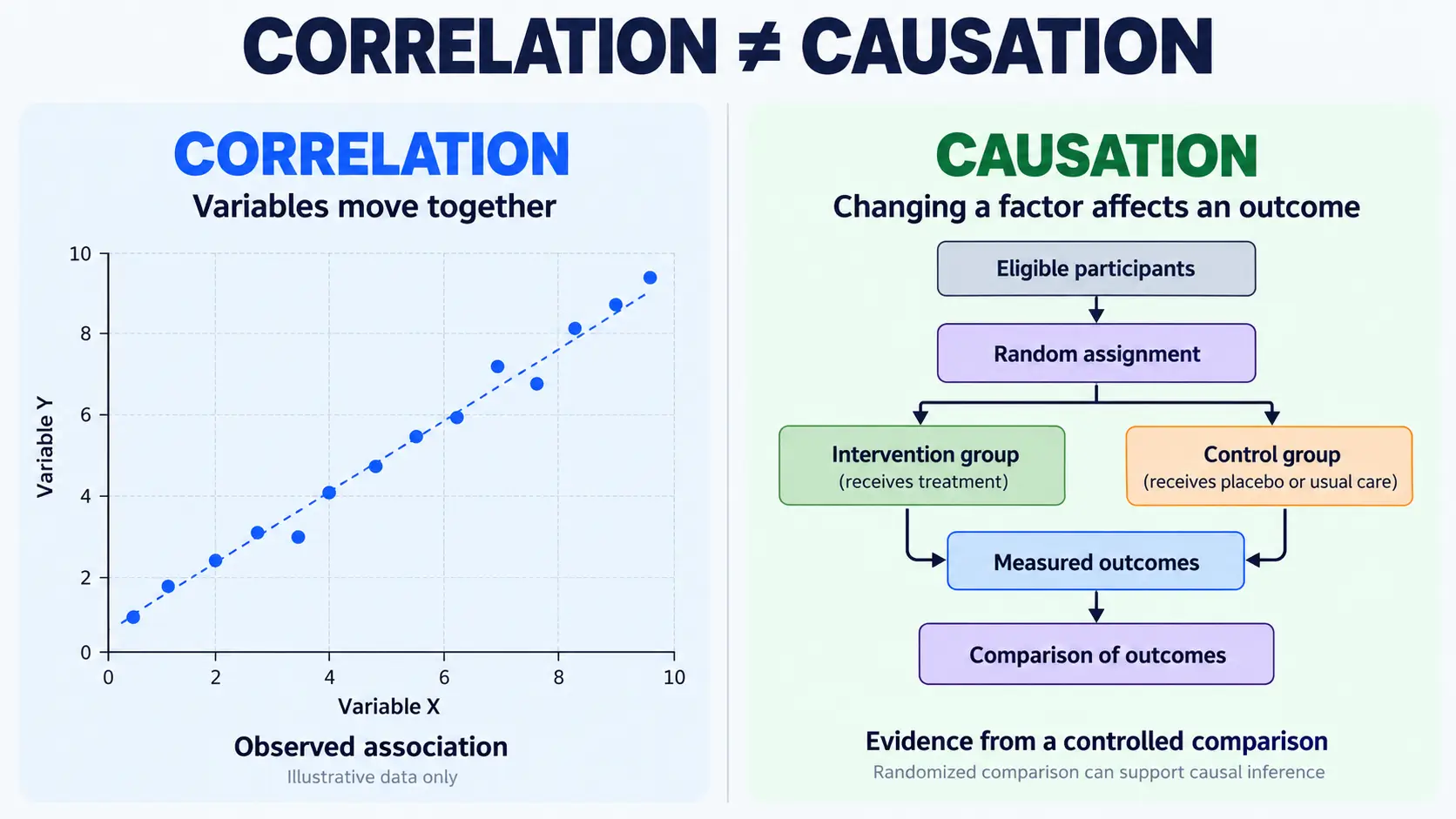
Does the source distinguish correlation from causation?
-
What assumptions connect the evidence to the conclusion?
-
Does another credible source agree?
-
How does the publication date affect relevance?
-
What remains uncertain?
These questions turn AI from an answer provider into a questioning aid.
How AI Is Changing the Writing Process
AI can support planning, language feedback, translation, and revision. It can also separate writers from the reasoning and practice through which writing ability develops.
Idea generation and outlining may become faster
A writer may ask AI to generate questions, identify possible structures, suggest counterarguments, or flag areas requiring evidence.
This support preserves more human control when the writer has already defined the purpose and recorded initial ideas. When a system determines the subject, argument, evidence structure, and conclusion before the writer has considered them, it begins to replace rather than support composition.
Language feedback may support revision
A writer may ask AI to identify unclear passages, repeated points, abrupt transitions, or possible grammar problems.
The writer should decide whether each change improves meaning. A smoother sentence may still become less precise, less accurate, or less consistent with the writer’s voice.
The higher-education review reported possible benefits involving feedback, revision, idea generation, organization, and self-editing. Because its included studies varied in task, method, population, and setting, those findings support context-dependent conclusions rather than a claim that AI automatically improves writing ability.
Multilingual support may help writers express ideas
Multilingual writers may use AI to compare expressions, identify possible grammar problems, clarify tone, or examine whether a sentence carries the intended meaning.
Every change still requires review. A suggestion may alter emphasis, remove cultural context, flatten an individual voice, or introduce language the writer cannot confidently explain.
Language assistance is more educational when the writer examines why a change was proposed instead of accepting it automatically.
Outsourced reasoning may weaken authorship
The risk increases when a system selects the argument, produces the evidence structure, writes the draft, and revises the final version.
A writer in that position may be unable to answer:
-
Why was this claim included?
-
Which source supports it?
-
Why is the evidence arranged this way?
-
What alternative interpretation was rejected?
-
What does this paragraph mean?
-
Which wording reflects the writer’s judgment?
A finished document should remain intellectually traceable to the named author.
Authorship includes responsibility
Authorship involves more than typing sentences. It includes decisions about purpose, claims, evidence, tone, and final approval.
Rules on acceptable AI assistance and disclosure vary among schools, universities, publishers, employers, and other organizations. Writers should check the rule that applies to their task rather than assume one standard applies everywhere.
As a practical safeguard, a person who submits, signs, or publishes an AI-assisted document should verify its content and should not assume that using a tool transfers responsibility for errors.
Essential Writing Skills in the AI Era
Writers need to retain the abilities required to direct, assess, and defend a text rather than only produce fluent language.
Define the purpose and audience
Before requesting assistance, establish:
-
what the document needs to accomplish;
-
who will read it;
-
what the reader already knows;
-
what evidence is required;
-
what tone and format are appropriate;
-
what rules govern AI use.
Without these decisions, a system may generate text that is smooth but poorly matched to the task.
Develop ideas before requesting a draft
Record initial thoughts in your own words. This may take the form of questions, a position statement, a rough outline, or short notes.
Independent preparation helps preserve ownership. It also gives the writer a basis for rejecting suggestions that do not fit the intended argument.
Organize claims and evidence
A strong draft should show which source supports each important claim.
| Claim | Supporting source | Necessary qualification | Status |
|---|---|---|---|
| Main factual statement | Original source | Date, population, or scope | Checked or pending |
| Interpretation | Evidence used | Competing explanation | Writer’s analysis |
| Recommendation | Supporting reason | Limits or exceptions | Reviewed |
This practice reduces the chance that an unsupported statement remains because it sounds plausible.
Write and revise in a recognizable voice
Voice comes from decisions about detail, rhythm, examples, emphasis, and stance. It is not simply a decorative layer added after a system has produced the central argument.
Writers can protect their voice by:
-
drafting key passages independently;
-
comparing suggestions with previous writing;
-
rejecting phrases they would not naturally use;
-
rewriting rather than lightly editing generated paragraphs;
-
explaining why each accepted revision improves meaning.
The Collegenp guide to improving writing skills provides further practice in planning, drafting, revision, grammar, and sentence clarity.
Verify facts, quotations, and citations
Every consequential factual claim should be checked against an accessible source.
For each citation:
-
Open the source.
-
Confirm the author, title, publisher, and date.
-
Locate the passage supporting the claim.
-
Check whether it supports the exact wording.
-
Preserve its population, timeframe, and limitations.
-
Remove or narrow the claim when support cannot be found.
NIST identifies false or erroneous content and false citations as examples associated with generative AI confabulation risk.
Explain decisions, not only conclusions
A reader should be able to follow how the writer reached a conclusion.
This requires:
-
presenting relevant evidence;
-
connecting evidence to the claim;
-
acknowledging important limits;
-
addressing reasonable counterarguments;
-
distinguishing fact from interpretation.
AI may suggest objections, but the writer should decide which are credible and how they affect the position.
Disclose AI assistance where required
Disclosure rules are set by the relevant institution, publisher, employer, examination body, or client.
A school may permit language feedback while restricting generated drafts. A publisher may require authors to describe AI assistance. A workplace may restrict the use of confidential material in external systems.
The responsible approach is to check the applicable rule before beginning the task and to describe assistance accurately when disclosure is required.
How Much AI Support Is Appropriate?
The appropriate level of AI support depends on the purpose of the task, the learning goal, the stakes, the availability of sources, and the user’s ability to verify the result.
Before using AI, ask:
-
Is the purpose to learn the skill or complete a routine production task?
-
Does the task require original reasoning or personal judgment?
-
Could an error affect another person or an important decision?
-
Can I open and verify the sources behind the answer?
-
Does an institution, employer, publisher, or client restrict this use?
-
Can I complete part of the task independently?
-
Will I be able to explain and defend the final document?
| AI-supported task | Possible benefit | Main risk | Safer use |
|---|---|---|---|
| Summarizing a source | Faster orientation | Evidence or qualifications may be omitted | Read key sections and compare the summary with the source |
| Explaining a passage | Reduced language or technical difficulty | Meaning may be oversimplified | Request a focused explanation, then return to the passage |
| Suggesting sources | Wider starting point for discovery | Citations may be false, irrelevant, or outdated | Find each source independently and confirm its details |
| Generating questions | Supports review and inquiry | Questions may be shallow or misdirected | Evaluate and rewrite them before use |
| Brainstorming ideas | Provides additional directions | Generic suggestions may replace original thought | Record personal ideas first |
| Creating an outline | Makes possible structures visible | The system may determine the argument prematurely | Define the thesis and evidence needs first |
| Producing a first draft | Reduces production time | Reasoning, voice, and authorship may be outsourced | Use only when permitted and when independent drafting is not the learning goal |
| Editing a human draft | Identifies possible clarity or consistency issues | Suggestions may change meaning or flatten voice | Review changes individually |
| Translating or simplifying | May improve access | Nuance or technical meaning may be lost | Compare important passages with the original |
| Checking facts or citations | May identify items needing review | The system may confidently confirm false information | Treat its response as a checklist, not verification |
AI-Assisted and AI-Dependent Behavior
AI-assisted use preserves human control. AI-dependent use transfers central understanding or authorship to the system.
| Dimension | AI-assisted behavior | AI-dependent behavior |
|---|---|---|
| Reading | Uses explanations after attempting the source | Replaces the source with generated summaries |
| Idea development | Records initial ideas before requesting alternatives | Asks the system to determine the position |
| Evidence | Opens and checks original sources | Accepts generated claims or citations |
| Drafting | Writes key reasoning independently | Submits reasoning the writer cannot explain |
| Revision | Evaluates each suggestion | Accepts broad rewrites without review |
| Voice | Rewrites suggestions into natural language | Retains language the writer would not normally use |
| Learning | Uses the tool to identify weaknesses | Uses the tool to avoid practicing the skill |
| Accountability | Can defend important decisions | Cannot explain how the final text was produced |
The distinction is not absolute. A person may use AI responsibly in one stage and depend on it in another. The comparison helps identify where human control has been lost.
Human–AI Literacy Responsibility Framework
AI support is most defensible when the person retains control over understanding, reasoning, evidence, and final judgment.
| Task | Human responsibility | Appropriate AI support |
|---|---|---|
| Understanding a source | Read key passages and identify the central claim | Explain difficult vocabulary or propose reading questions |
| Evaluating evidence | Open the source and compare claims | Produce a verification checklist |
| Forming an argument | Decide the position and reasoning | Challenge assumptions or suggest counterarguments |
| Drafting | Establish purpose, audience, and core ideas | Suggest possible structures |
| Revising | Decide what the text should mean and sound like | Flag repetition, unclear sentences, or gaps |
| Final verification | Confirm facts, citations, tone, and disclosure | Assist with consistency checks, not final accountability |
The greater a decision’s effect on meaning, evidence, or responsibility, the more clearly that decision should remain human-led.
A Responsible Before–During–After AI Workflow
A three-stage workflow can reduce the risk that AI assistance replaces essential reading and writing practice.
Before using AI
Complete the intellectual setup independently.
-
Define the task and audience.
-
Read the essential source material.
-
Record initial ideas in your own words.
-
Identify claims that require evidence.
-
Decide which forms of assistance are allowed.
-
Identify private, sensitive, or confidential information that should not be entered into an external system.
While using AI
Use the tool for bounded support.
-
Request explanations of specific passages.
-
Ask for questions rather than immediate answers.
-
Request counterarguments or missing perspectives.
-
Ask the system to mark uncertainty.
-
Check suggested sources before using them.
-
Keep control of the thesis and structure.
-
Reject language that changes meaning or voice.
After using AI
Treat the output as unverified working material.
-
Check each factual statement.
-
Compare important claims with original sources.
-
Confirm citations and quotations.
-
Remove generic, repetitive, or unsupported wording.
-
Rewrite passages that do not reflect your reasoning.
-
Apply the relevant disclosure rules.
-
Read the finished text without the AI conversation beside it.
The final test is whether the writer can explain and defend the document independently.
How to Verify AI-Generated Claims and Citations
Verification requires checking the original source rather than asking the same system whether its earlier answer was correct.
Source-verification checklist
For every important claim:
-
Identify the exact statement requiring support.
-
Open the original source.
-
Confirm the author or issuing organization.
-
Confirm the title, publisher, date, and URL.
-
Locate the passage that directly supports the claim.
-
Check whether the population, jurisdiction, and timeframe match.
-
Review limitations and exceptions.
-
Compare the claim with another authoritative source when the decision is consequential.
-
Remove or narrow the statement when support cannot be found.
-
Record the verification result before submission or publication.
Illustration: a plausible but false citation
Suppose an AI response recommends an article with a realistic title, named authors, and an academic journal. Searches of the journal, publisher, author profiles, and academic databases do not locate it.
The reference should not be cited. The writer should locate a real source supporting the claim or remove the claim.
Illustration: a real source used inaccurately
An AI summary may identify a genuine study but claim that it proves a result for all students. The original paper may have examined a small group in one educational setting completing one type of task.
The source exists, but the wording remains misleading. The claim should be narrowed to the study’s actual population, setting, method, and limitations.
Five Exercises That Strengthen Literacy While Using AI
These exercises preserve active reading and writing practice while allowing limited tool support.
1. Summary comparison
Read a source and write a short summary before asking AI to summarize it.
Compare:
-
the main idea selected;
-
evidence included;
-
evidence omitted;
-
qualifications preserved;
-
tone;
-
conclusions.
Revise your summary using the source rather than copying the generated version.
2. Claim–evidence audit
Take an AI-assisted paragraph and label every factual claim.
For each claim, record:
-
its source;
-
the supporting passage;
-
the publication date;
-
the population or context;
-
the limitation;
-
whether the wording needs narrowing.
Delete claims that cannot be supported.
3. Reverse outline
Write one sentence beside each paragraph stating its purpose.
A reverse outline may identify:
-
the claim;
-
evidence;
-
explanation;
-
example;
-
counterargument;
-
transition.
When several paragraphs have no distinct purpose, the draft may be repetitive or poorly organized.
4. Counterargument test
Ask AI to propose objections to your position. Evaluate each objection instead of accepting the list automatically.
Classify the objections as:
-
supported and important;
-
reasonable but outside scope;
-
based on a false assumption;
-
unsupported;
-
requiring more evidence.
Revise the argument in response to credible objections.
5. No-AI baseline
Complete part of the task without assistance.
For reading, summarize a section and answer analytical questions independently. For writing, produce an outline or paragraph before requesting feedback.
Compare the independent and assisted work. The purpose is to confirm that the underlying skill remains available.
Reading and Writing With AI in Different Contexts
Appropriate use depends on the user, task, learning goal, risk level, and governing policy.
Students and academic work
Students need practice that demonstrates understanding rather than only a submitted answer.
AI may support:
-
vocabulary explanations;
-
practice questions;
-
feedback on a student-written draft;
-
comparison of possible structures;
-
identification of unclear reasoning.
It should not replace required reading, original analysis, source verification, or work that an assignment expects the student to complete independently.
A 2025 systematic review in Thinking Skills and Creativity examined 15 studies of AI-assisted writing in kindergarten-to-secondary education. It organized findings around five themes: critical content production and evaluation, metacognition and self-regulation, ethical thinking, analytical thinking and problem-solving, and motivation and self-efficacy. The review was limited to English-language articles from four databases, and the authors identified limited primary-level research and no included preschool studies.
Collegenp’s articles on the positive effects of AI on students and the risks of AI use among students provide further discussion of learning support, privacy, dependence, bias, and academic integrity.
Educators and assessment
Educators may need to distinguish the quality of a finished product from evidence that learning occurred.
Assessment may include:
-
planning notes;
-
source logs;
-
drafts;
-
oral explanations;
-
revision records;
-
reflection on AI assistance;
-
in-class writing;
-
comparison between independent and assisted work.
These approaches may help show how a learner formed, tested, and revised an idea. They should be adapted to age, subject, accessibility needs, technology access, and institutional policy.
UNESCO’s Guidance for Generative AI in Education and Research recommends a human-centered approach that addresses human agency, privacy, age appropriateness, ethical validation, pedagogical design, and the development of human capacity.
Professionals reviewing workplace documents
Professionals may use AI for summaries, meeting notes, reports, emails, proposals, or policy drafts. The same verification principles apply, with added attention to confidentiality and organizational accountability.
A workplace reviewer should confirm:
-
names, dates, figures, and references;
-
whether sensitive information was entered into an external service;
-
whether a summary omitted a material risk;
-
whether the document reflects the organization’s approved position;
-
who reviewed and approved the final version.
Documents affecting important decisions require stronger human review than routine wording assistance.
Multilingual readers and writers
AI may help multilingual users compare expressions, understand idioms, test tone, and identify possible grammatical patterns.
Useful practice includes asking for an explanation of each proposed correction and checking whether the suggestion preserves the intended meaning. Writers should retain language that expresses their position accurately, even when another version sounds more formal.
Accessibility and assistive use
Some users employ text-to-speech, speech-to-text, simplification, structured summaries, or language conversion to access information.
Such assistance should not automatically be treated as avoidance of learning. The relevant question is whether it provides access while preserving the reading, reasoning, or decision-making responsibility intended by the task.
Parents supporting older learners
Parents can ask learners to explain what they read, identify the sources behind a claim, and describe how AI was used.
The purpose is not to monitor every sentence. It is to determine whether the learner understands the material, follows the applicable rules, and can complete relevant work independently when required.
Risks That Require Safeguards
The main risks include false information, missing context, privacy problems, dependence, unclear authorship, and unequal access.
| Risk | Why it matters | Practical safeguard |
|---|---|---|
| False facts or citations | Fluent wording may conceal unsupported information | Open every important source and locate the supporting passage |
| Bias or missing context | A response may exclude relevant groups or interpretations | Compare credible sources and ask what is absent |
| Privacy and confidentiality | Submitted material may contain sensitive information | Follow institutional rules and avoid entering confidential data |
| Dependence | Repeated outsourcing may reduce independent practice | Use no-AI baselines and limit assistance to defined stages |
| Plagiarism or unclear authorship | Readers may misunderstand who completed the work | Follow the applicable policy and disclose assistance when required |
| Unequal access | Users differ in devices, connectivity, language support, and training | Provide alternative methods and avoid making tool access a hidden requirement |
| Automation bias | A user may trust a confident system too readily | Require independent review for consequential claims and decisions |
NIST identifies related risks involving confabulation, data privacy, harmful bias, information integrity, intellectual property, and human–AI interaction. UNESCO separately emphasizes human-centered safeguards in education and research.
Self-Assessment: Is AI Supporting or Replacing Your Skills?
Use this checklist after an AI-assisted reading or writing task.
-
Can I explain the source without looking at the AI summary?
-
Can I identify the source’s central claim and main evidence?
-
Did I open and check every important reference?
-
Can I explain why I accepted or rejected the suggestions?
-
Did I form the main argument before requesting a draft?
-
Can I identify what the system changed?
-
Would I recognize a factual or logical error?
-
Does the final text reflect my judgment and voice?
-
Can I defend the conclusion in my own words?
-
Have I followed the relevant privacy, disclosure, and integrity rules?
-
Could I complete a smaller version of the task without AI?
-
Did the tool help me practice the skill or help me avoid it?
Several “no” answers are a warning sign rather than a validated diagnostic score. They suggest that the user should review where independent control was lost and reduce the scope of assistance where necessary.
What the Current Evidence Cannot Establish
Current research does not justify one universal conclusion about whether AI improves or weakens literacy.
Effects may vary according to:
-
age and educational level;
-
prior reading and writing ability;
-
the type of task;
-
the amount of AI involvement;
-
instructional design;
-
feedback quality;
-
frequency of use;
-
language background;
-
accessibility needs;
-
institutional rules;
-
whether learning or production is the main goal.
Positive results from guided use do not prove that unrestricted use produces the same outcomes. Evidence from university settings should not automatically be applied to younger learners, workplace communication, or independent everyday use. The K–12 evidence base also remains limited in size and coverage.
The research base and the technology are still changing. Claims about long-term effects on cognition, creativity, employment, or educational outcomes therefore require caution.
Reading and Writing Remain Human Responsibilities
AI changes how people approach text, but it does not remove the need to understand, evaluate, reason, and communicate.
Reading remains essential because summaries and explanations must be compared with original sources. Writing remains essential because ideas, evidence, voice, and responsibility cannot be judged by fluency alone.
A responsible approach is selective use: read important material directly, form initial ideas independently, use AI for bounded assistance, verify consequential claims, and retain authority over the final text.
A person who can explain, question, revise, and defend the work is using AI as support. A person who cannot do so may have transferred too much of the task.





Comments 0
No comments yet. Be the first to start the conversation.