



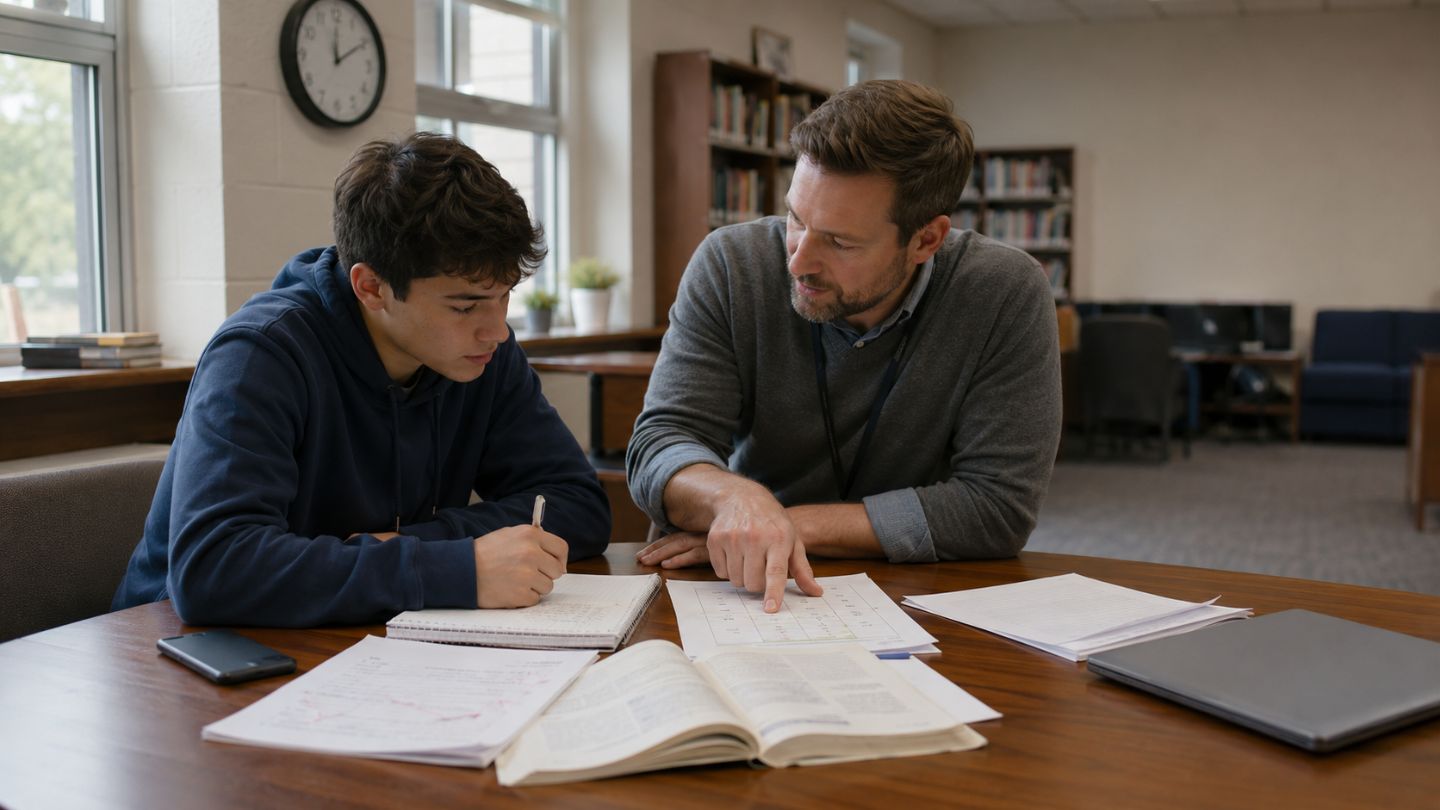
Academic difficulty rarely has one cause. A student may have gaps in prerequisite knowledge, use study methods that create familiarity without reliable recall, miss important lessons, receive limited feedback, or face health, family, financial, language, or accessibility barriers. Several factors may occur at the same time.
This article examines recurring academic difficulty and unsuccessful assessments in secondary school and higher education. It does not treat one disappointing result as proof that a student lacks intelligence or academic potential.
Some problems can be addressed through changes in study strategy, planning, attendance, or help-seeking. Others require action from teachers, parents, counselors, health professionals, learning-support teams, or institutions.
The ten reasons below are diagnostic categories rather than a worldwide ranking. Their relative importance varies by student, subject, age, institution, country, and assessment system.
Answer Summary: Students may fail because of weak foundational knowledge, passive study methods, poor planning, unclear goals, irregular attendance, distraction, health difficulties, unaddressed learning needs, limited feedback, or financial and institutional barriers. Academic recovery begins by identifying the main barrier and choosing a response that matches it. Some actions belong to the student, while others require shared or institutional support.
Table of Content
- What Does Student Failure Mean?
- Reasons Students Fail and Possible Responses
- Who Is Responsible for Addressing Academic Difficulty?
- 1. Weak Foundational Knowledge or Academic Readiness
- 2. Ineffective or Passive Study Methods
- 3. Poor Planning, Time Management, and Procrastination
- 4. Unclear Goals, Low Motivation, or Lack of Relevance
- 5. Irregular Attendance and Disengagement
- 6. Distractions and an Unsuitable Learning Environment
- 7. Sleep, Physical Health, Stress, or Mental-Health Difficulties
- 8. Learning Needs, Language Barriers, or Accessibility Gaps
- 9. Limited Feedback, Teaching Support, or Help-Seeking
- 10. Financial Pressure, Family Responsibilities, and Institutional Barriers
- Why Do Students Fail Even When They Study Hard?
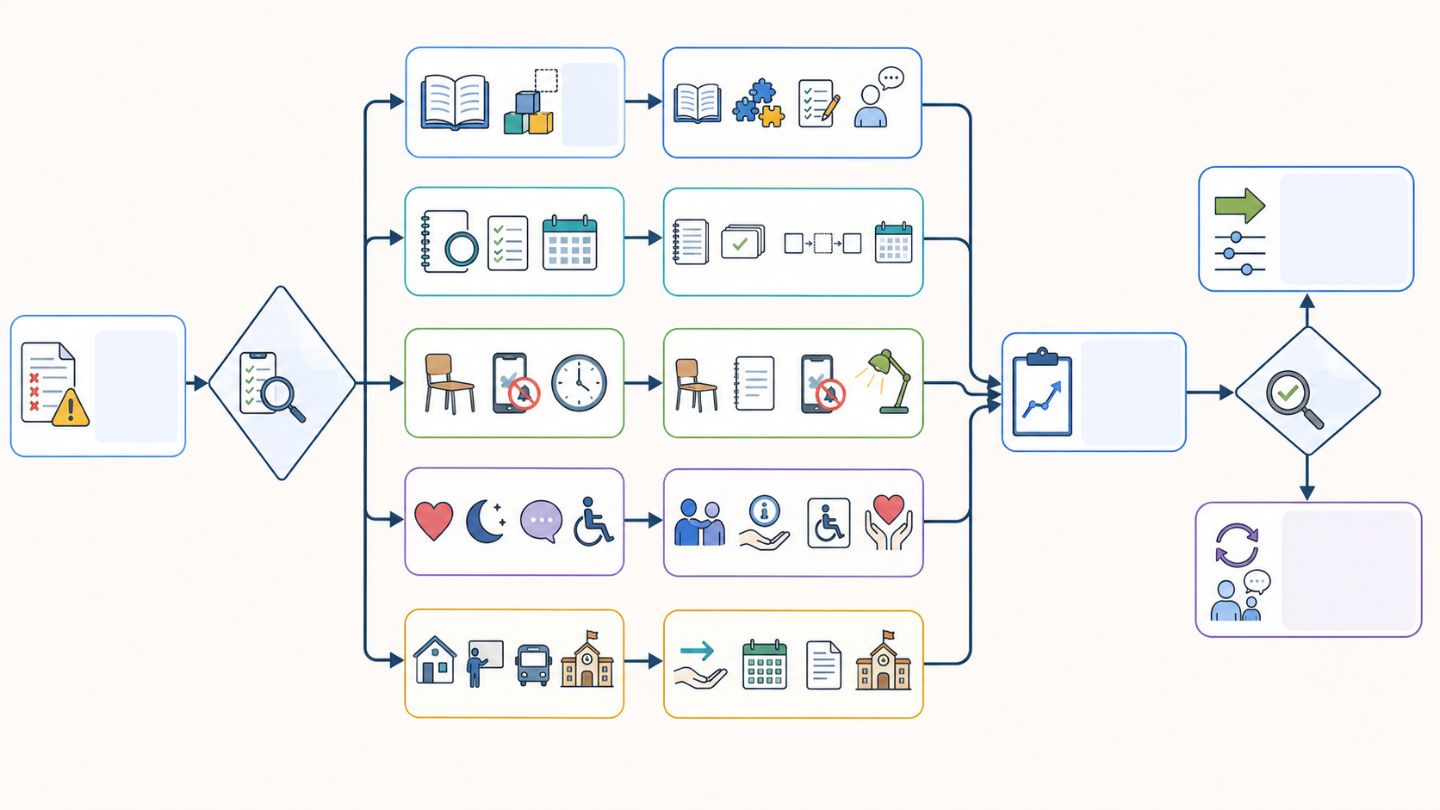
- How to Identify the Underlying Cause
- What Should a Student Do After a Failed Result?
- A Practical Academic Recovery Plan
- How Parents and Teachers Can Respond Without Blame
- When Additional Support May Be Needed
- Final Takeaway
Key Takeaways:
-
Academic difficulty often has several interacting causes.
-
A failed result does not reveal the underlying problem.
-
Longer study hours do not necessarily produce effective learning.
-
Procrastination may involve confusion, stress, avoidance, or overload.
-
Poor grades alone do not establish a learning disability.
-
Responsibility may rest with the student, supporting adults, or the institution.
-
Recovery is more effective when the response matches the barrier.
What Does Student Failure Mean?
Student failure is a broad term for academic performance that does not meet a required learning or assessment standard. It may involve failing an examination, receiving recurring low grades, not completing coursework, failing a course, or being unable to progress under an institution’s academic rules.
Its exact meaning depends on the school, university, subject, assessment system, and jurisdiction.
One Failed Result Versus Recurring Academic Difficulty
One failed result is an event. Recurring academic difficulty is a pattern.
A single poor result may follow incomplete preparation, illness, misunderstanding of the questions, weak time use during the assessment, or unfamiliarity with the examination format. It does not establish that the student has a continuing academic problem.
Recurring difficulty may include:
-
Repeated failure in one subject
-
Declining grades across several subjects
-
Frequent incomplete assignments
-
Persistent attendance problems
-
Continuing difficulty despite suitable instruction and practice
-
Repeated misunderstanding of feedback or task requirements
An isolated result may require an assessment review and focused revision. A continuing pattern calls for a wider examination of learning, attendance, health, support, and access.
School and Higher-Education Contexts
Academic failure has different consequences across education systems.
At school level, it may mean failing a subject, not meeting grade-level expectations, or receiving recurring low marks. In higher education, it may involve failing a course, losing credits, repeating a module, or becoming subject to academic-standing or progression rules.
School students often depend on family routines, teacher monitoring, and school-based support. College and university students may have greater independence while also managing employment, accommodation, finances, caregiving, language differences, or administrative requirements.
Reassessment, appeal, progression, and support procedures vary by institution. Students should verify the rules that apply through the relevant school, college, university, examination body, or official policy.
Why Grades Do Not Reveal the Full Cause
A grade reports an outcome within a particular assessment system. It does not explain why the outcome occurred.
The same low mark may result from:
-
Missing prerequisite knowledge
-
Ineffective revision
-
Poor attendance
-
Misreading the task
-
Limited feedback
-
Health difficulties
-
Inaccessible materials
-
Employment or caregiving responsibilities
-
Weak assessment technique
Academic recovery should begin with evidence rather than assumptions about intelligence, effort, or character.
Why These Ten Reasons Are Not Ranked
The reasons are arranged from knowledge and study behaviour to health, support, access, and institutional conditions.
They should not be described as the ten most common causes worldwide. Their relative importance varies across students, subjects, education systems, and social circumstances.
Reasons Students Fail and Possible Responses
| Common reason | What it may look like | First practical response | Who may need to help |
|---|---|---|---|
| Weak foundational knowledge | Advanced topics remain confusing | Identify missing prerequisite concepts | Student and teacher |
| Passive study methods | Notes look familiar, but recall is weak | Use retrieval and application practice | Student and teacher |
| Poor planning or procrastination | Work begins late or remains incomplete | Divide work into scheduled actions | Student, family, or adviser |
| Unclear goals or low motivation | Little connection between study and purpose | Set short, meaningful learning goals | Student, teacher, or counselor |
| Irregular attendance | Missed explanations and growing knowledge gaps | Identify and address the cause of absence | Family and institution |
| Distractions or poor study conditions | Frequent interruption and task-switching | Create a focused study period | Student and family |
| Sleep, health, or stress difficulties | Fatigue, withdrawal, or poor concentration | Protect health and request support | Family, institution, or health service |
| Learning or accessibility needs | Persistent difficulty despite suitable practice | Request a learning-support review | Institution and specialist services |
| Limited feedback or teaching support | The same mistakes continue | Request specific and timely feedback | Teacher and institution |
| Financial or institutional barriers | Work, care, transport, or access problems | Connect the student with available support | Family and institution |
Who Is Responsible for Addressing Academic Difficulty?
Responsibility depends on the cause. A student should not carry sole responsibility for a barrier that requires action from a teacher, family, specialist, or institution.
Student Actions
Students may be able to address:
-
Study methods
-
Planning
-
Assignment completion
-
Attendance within their control
-
Distraction management
-
Asking for clarification
-
Using feedback
-
Seeking help before a deadline
These actions matter, but they cannot remove every health, accessibility, financial, safety, or institutional barrier.
Shared Support
Some problems require cooperation between the student and other people.
Shared support may include:
-
Teacher feedback
-
Family routines
-
Tutoring
-
Counseling
-
Catch-up planning
-
Communication between home and school
-
Help returning after an absence
-
Review of workload or expectations
The student participates in the response but should not be expected to design and provide all necessary support.
Institutional Response
Schools, colleges, and universities may need to address:
-
Inaccessible learning materials
-
Limited academic support
-
Unclear assessment expectations
-
Weak early-identification procedures
-
Technology or resource barriers
-
Financial-support referrals
-
Approved accommodations
-
Unsafe or exclusionary learning conditions
This model distinguishes a personal study adjustment from a problem that requires outside action.
1. Weak Foundational Knowledge or Academic Readiness
Students may struggle with advanced material when important earlier concepts are missing, inaccurate, or difficult to retrieve.
The National Academies’ research on prior knowledge and learning explains that earlier knowledge influences how people understand new information. Relevant and accurate knowledge can support learning, while misconceptions or knowledge that is not connected to the current task can interfere with it.
Warning Signs
-
Current lessons are confusing from the beginning.
-
Errors repeatedly trace back to an earlier topic.
-
Procedures are memorized without being understood.
-
A small change in a question makes the method unusable.
-
Advanced practice produces little improvement.
-
The student cannot explain basic terms needed for the topic.
What May Help
The student and teacher can begin by locating the earliest point of confusion.
Useful actions include:
-
Complete a short diagnostic task.
-
Identify one missing prerequisite at a time.
-
Use worked examples before independent practice.
-
Explain the concept in simple language.
-
Correct misconceptions before adding more material.
-
Create a focused catch-up plan.
The aim is not necessarily to repeat an entire course. It is to repair the knowledge required for the current topic.
2. Ineffective or Passive Study Methods
Students may study for long periods without practising the type of thinking required by the assessment.
Rereading, copying notes, and highlighting may create familiarity. These activities do not, by themselves, show whether the student can recall, explain, compare, solve, or apply the material independently.
A controlled retrieval-practice study found stronger learning from practising recall than from elaborative concept mapping under the conditions examined. The finding supports recalling information from memory, but it does not establish that one study technique is superior in every subject or setting.
Warning Signs
-
Notes seem clear during review, but answers cannot be recalled later.
-
The correct answer is recognizable but cannot be produced independently.
-
Practice is completed with books or solutions constantly open.
-
Revision does not include assessment-style questions.
-
Errors are checked but not attempted again.
-
Study time is recorded without testing what has been learned.
What May Help
Students can use activities that require retrieval, explanation, application, and correction:
-
Answer questions without looking at notes.
-
Complete problems before checking solutions.
-
Explain a topic aloud in simple language.
-
Compare similar concepts.
-
Practise extended answers or calculations.
-
Record why an error occurred.
-
Return to missed questions after an interval.
Collegenp’s guide to improving study habits provides additional methods for organizing and reviewing academic work.
3. Poor Planning, Time Management, and Procrastination
Planning problems can turn manageable academic work into a last-minute crisis.
Students may underestimate how long tasks require, delay unclear work, or create schedules that do not account for classes, travel, employment, caregiving, and rest.
The Education Endowment Foundation’s school-focused metacognition and self-regulation guidance describes planning, monitoring, and evaluating learning as connected parts of self-regulated learning. Its conclusions are primarily intended for school settings.
Procrastination should not automatically be described as laziness. Delay may involve confusion, fear of making mistakes, difficulty beginning, competing responsibilities, or an attempt to avoid an uncomfortable task.
Warning Signs
-
Assignments repeatedly begin close to the deadline.
-
Large tasks remain vague and unstructured.
-
Easy activities replace important work.
-
Planning takes place, but action does not follow.
-
The student waits for motivation before beginning.
-
Worry increases while task completion decreases.
What May Help
Break each assignment into specific actions, such as choosing a topic, collecting sources, drafting one section, and reviewing the work.
A realistic plan should:
-
Include fixed commitments.
-
Give each study period a defined task.
-
Begin with a manageable entry action.
-
Set an earlier personal deadline where practical.
-
Include extra time for difficult work.
-
Track completed actions.
-
Be reviewed each week.
Students can use Collegenp’s guidance on time management for students and overcoming procrastination to develop a more focused plan.
4. Unclear Goals, Low Motivation, or Lack of Relevance
Students may disengage when they do not understand the purpose of a subject, the expected standard, or the connection between current work and a meaningful goal.
Motivation may also decline after recurring difficulty, criticism, fear of another poor result, or a belief that effort is not producing change. Low motivation should be treated as a pattern to investigate rather than a permanent personal trait.
Warning Signs
-
The student cannot explain the purpose of an assignment.
-
Study is driven only by punishment or external pressure.
-
Effort falls immediately after an error.
-
Subjects associated with previous failure are avoided.
-
Long-term goals feel disconnected from current work.
-
The student does not know what successful performance requires.
What May Help
Replace broad instructions such as “work harder” with short and specific goals:
-
Identify the week’s learning outcome.
-
Choose one task that demonstrates progress.
-
Clarify what acceptable work looks like.
-
Connect the topic with a realistic academic or personal purpose.
-
Offer suitable choices where the curriculum permits.
-
Record completed actions rather than waiting for motivation.
Teaching clarity, course relevance, feedback, belonging, and learning conditions may also influence engagement. The response should not place all responsibility on the student.
5. Irregular Attendance and Disengagement
Students who miss lessons lose access to explanations, guided practice, feedback, discussion, and contact with teachers.
Attendance problems may reflect disengagement, but they may also follow health, transport, safety, family, financial, or administrative barriers. The response should therefore begin by identifying the cause rather than assuming the student is simply unwilling to attend.
Warning Signs
-
Absences occur repeatedly or follow a pattern.
-
Missed work is not reviewed.
-
Assignments accumulate after an absence.
-
The student becomes less connected to teachers and classmates.
-
Returning feels harder after each missed period.
-
Attendance problems occur alongside transport, health, or family difficulties.
What May Help
Possible actions include:
-
Review attendance and missed topics.
-
Prioritize essential catch-up work.
-
Provide notes or alternative materials where available.
-
Assign one staff contact for returning students.
-
Address transport, safety, caregiving, or health barriers.
-
Offer support before missed work becomes unmanageable.
Punishment alone does not repair lost learning or remove the cause of absence.
6. Distractions and an Unsuitable Learning Environment
Learning becomes harder when attention is repeatedly interrupted or when the student lacks a workable study setting.
Phones, messages, noise, crowded spaces, family interruptions, and switching between tasks can reduce the amount of focused work completed. Some learners also lack reliable internet, electricity, equipment, or a quiet place to study.
Warning Signs
-
Messages are checked throughout study periods.
-
Several unrelated tasks remain open at once.
-
Required materials are not prepared.
-
More time is spent arranging work than completing it.
-
Home conditions repeatedly interrupt study.
-
Online learning is affected by unreliable access.
What May Help
Create a limited period for one defined task:
-
Remove non-essential notifications.
-
Prepare materials before beginning.
-
Use a library, classroom, or community study space where available.
-
Tell family members when uninterrupted time is needed.
-
Download materials in advance where practical.
-
Use shorter focused sessions when long periods are unrealistic.
-
Separate communication time from focused study.
The goal is not a perfect environment. It is a setting that reduces avoidable interruption within the student’s circumstances.
7. Sleep, Physical Health, Stress, or Mental-Health Difficulties
Health and well-being difficulties may affect energy, concentration, attendance, participation, and task completion.
The World Health Organization’s adolescent mental-health guidance notes that anxiety and depressive disorders can affect school attendance and schoolwork. This supports early attention to well-being, but grades or classroom behaviour alone cannot establish a diagnosis.
Warning Signs
-
Persistent fatigue affects lessons or study.
-
Concentration changes noticeably.
-
The student withdraws from academic activities.
-
Symptoms or appointments interrupt attendance.
-
Stress prevents work from beginning or continuing.
-
Academic difficulty appears alongside a wider change in daily functioning.
What May Help
Possible actions include:
-
Protect regular sleep and rest.
-
Inform a trusted adult when health affects coursework.
-
Request available academic support.
-
Use school, university, or community health services.
-
Review workload with an appropriate adviser.
-
Follow institutional procedures for approved adjustments.
-
Seek responsible adult or professional help for urgent health or safety concerns.
General academic guidance does not replace assessment or treatment from a qualified health professional.
8. Learning Needs, Language Barriers, or Accessibility Gaps
Persistent academic difficulty may occur when teaching, materials, communication, or assessment conditions do not meet a student’s learning or accessibility needs.
Low grades alone do not establish that a student has a learning disability. Difficulty may also reflect interrupted education, second-language learning, inaccessible materials, attention difficulties, sensory barriers, limited prior instruction, or unfamiliar assessment formats.
Definitions, assessment procedures, and accommodation rules vary by jurisdiction.
Warning Signs
-
Difficulty remains concentrated in one area despite suitable practice.
-
Spoken understanding and written performance differ noticeably.
-
Instructions are frequently misunderstood.
-
The course language is not the student’s strongest language.
-
Materials or assessment formats are inaccessible.
-
Organizational or attention difficulties affect several tasks.
-
Ordinary study changes do not address the pattern.
What May Help
Students, families, and institutions may:
-
Record recurring patterns rather than relying on one result.
-
Discuss concerns with teachers or learning-support staff.
-
Request assessment through the relevant local procedure.
-
Use approved accommodations and accessible formats.
-
Provide language support while maintaining necessary learning expectations.
-
Review whether teaching or assessment procedures create avoidable barriers.
Collegenp’s explanation of learning difficulty and learning disability clarifies why the terms should not be treated as interchangeable across all contexts.
9. Limited Feedback, Teaching Support, or Help-Seeking
Students may repeat mistakes when feedback is unclear, delayed, unavailable, or not followed by an opportunity to act.
Some students also avoid asking questions because they fear criticism, embarrassment, or appearing unprepared.
Warning Signs
-
The same errors appear in several assignments.
-
Feedback is vague or difficult to interpret.
-
The student does not know what a strong answer requires.
-
Questions are delayed until an assessment is near.
-
The course offers little guided practice.
-
Marked work is returned without an opportunity for correction.
What May Help
Students can ask focused questions:
-
Which part of the answer was incorrect?
-
What knowledge or process was missing?
-
What would a stronger response contain?
-
Which error should be corrected first?
-
What practice task can show that the correction has been learned?
Teachers and institutions can support learning through:
-
Clear assessment criteria
-
Worked examples
-
Low-stakes practice
-
Timely and specific feedback
-
Tutorials or office hours
-
Opportunities to revise
-
Early identification of recurring difficulty
Students need to use available feedback, while institutions need to make useful feedback accessible.
10. Financial Pressure, Family Responsibilities, and Institutional Barriers
Students may struggle because employment, caregiving, transport, food insecurity, housing problems, technology gaps, or inflexible institutional systems reduce their time or access to learning.
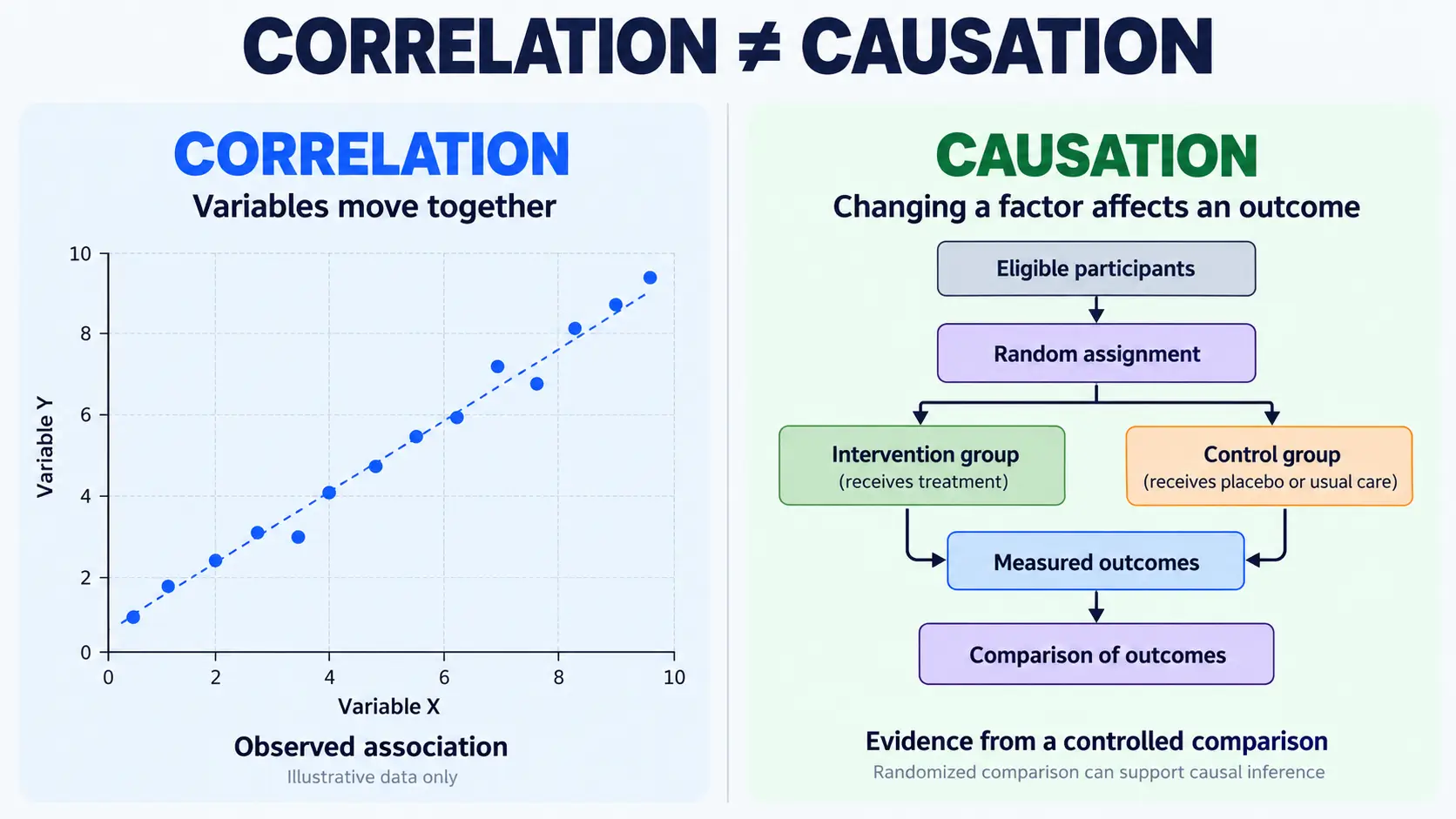
The OECD PISA 2022 equity analysis found that socioeconomic status was associated with part of the variation in mathematics performance among 15-year-old students in participating education systems. This is a population-level association and does not mean that socioeconomic circumstances determine an individual student’s result.
Warning Signs
-
Paid work conflicts with classes or assessment preparation.
-
Care responsibilities reduce available study time.
-
The student lacks transport, materials, food, equipment, or internet access.
-
Support is available only at impractical times.
-
Administrative procedures prevent access to help.
-
The student is blamed for barriers outside their control.
What May Help
The response may require:
-
Financial-aid referrals
-
Meal, transport, housing, or technology support
-
Flexible timetables where available
-
Downloadable and accessible learning materials
-
Clear support-referral processes
-
Emergency academic arrangements
-
Review of institutional rules that create avoidable barriers
A timetable does not solve a resource problem. The response needs to address the actual constraint.
Why Do Students Fail Even When They Study Hard?
Students may fail despite studying because time spent does not show what has been learned.
The study method may create familiarity without recall, focus on the wrong material, or fail to match the skills required by the assessment.
| Studying pattern | Possible problem | More useful check |
|---|---|---|
| Repeatedly reading notes | Familiarity is mistaken for recall | Close the notes and explain the topic |
| Memorizing procedures | Prerequisite concepts are unclear | Solve a changed version of the problem |
| Practising only easy questions | Practice does not match the assessment | Attempt assessment-level tasks |
| Studying for long periods | Fatigue reduces productive practice | Use shorter planned sessions |
| Reviewing without feedback | Errors remain unidentified | Mark work and examine the cause |
| Studying every topic equally | Weak areas receive too little attention | Prioritize evidence from past work |
| Using one method for every subject | The method does not fit the task | Match practice to the required skill |
A useful check is to remove the notes and attempt to retrieve, explain, solve, compare, or write. This provides stronger evidence of learning than the number of hours recorded.
How to Identify the Underlying Cause
The likely cause should be identified from patterns in completed work, attendance, feedback, study behaviour, and personal circumstances.
Five Diagnostic Questions
-
Do I understand the prerequisite concepts?
-
Can I recall and apply the material without looking at notes?
-
Am I attending, participating, and completing work consistently?
-
Are health, stress, access, or responsibilities interfering?
-
Have I received useful feedback or requested suitable support?
This is a reflection framework, not a medical, psychological, or learning-disability assessment.
Important Diagnostic Distinctions
| Pattern | What it may suggest | What to check next |
|---|---|---|
| Long study hours but weak recall | Passive study methods | Closed-book practice |
| Difficulty begins with basic concepts | Foundational knowledge gap | Prerequisite assessment |
| Work is delayed when tasks feel unclear | Confusion or avoidance | Clarify the first action |
| Effort falls after recurring failure | Reduced confidence or relevance | Feedback, support, and goal clarity |
| Difficulty persists in one area despite practice | A specific learning or access need | Learning-support discussion |
| Performance declines across subjects | A wider health, attendance, or access issue | Review circumstances and support |
| Strong coursework but weak timed exams | Assessment technique or time pressure | Timed practice and feedback |
| Good intentions but recurring absence | An attendance barrier | Identify the cause of absence |
The distinction between effort and access is important. Added pressure will not correct an inaccessible assessment, an untreated health concern, or a missing prerequisite concept.
What Should a Student Do After a Failed Result?
The first response should be to understand the result before selecting a solution.
A student can:
-
Read the result and feedback carefully.
-
Confirm which part of the work did not meet the standard.
-
Obtain the marked assessment or rubric where available.
-
Check whether the problem involved knowledge, method, instructions, completion, or time use.
-
Ask the teacher or instructor focused questions.
-
Verify institutional rules for reassessment, review, appeal, or progression.
-
Avoid making broad conclusions about ability from one result.
-
Record the first corrective action.
Collegenp’s guide on what to do after failing an exam provides an assessment-focused recovery process.
Reassessment and appeal procedures vary by institution. Students should rely on the current official policy that applies to them.
A Practical Academic Recovery Plan
Academic recovery is easier to manage when the student selects one or two evidence-supported causes rather than trying to change every habit at once.
Step 1: Review the Evidence
Collect:
-
Marked assignments
-
Assessment criteria
-
Attendance records
-
Incomplete work
-
Teacher comments
-
Practice-test results
-
Notes about health, access, or timetable disruption
Look for recurring patterns.
Step 2: Identify One or Two Likely Causes
Select the categories most strongly supported by the available evidence.
Repeated conceptual errors may suggest a knowledge gap. Correct untimed work followed by weak timed performance may suggest an assessment-practice problem. Recurring incomplete work may involve planning, access, health, or responsibility barriers.
Step 3: Choose One Measurable Change
Examples include:
-
Complete three closed-book retrieval sessions.
-
Review one prerequisite topic.
-
Attend each scheduled class during the next week.
-
Meet the teacher to review repeated mistakes.
-
Begin the next assignment before the final days.
-
Request accessible materials through the approved procedure.
Step 4: Request the Necessary Support
Identify who has the authority or ability to help:
-
Teacher or instructor
-
Parent or caregiver
-
Academic adviser
-
Tutor or study group
-
Counselor
-
Health service
-
Accessibility office
-
Financial-aid or student-support service
Step 5: Review the Result
Check whether understanding, completion, attendance, participation, or assessment performance has changed.
Continue an action when it helps. Adjust it when the evidence shows little change. Escalate the concern when the barrier requires specialist or institutional action.
Collegenp’s guide to recovering from academic failure provides a more detailed recovery framework.
How Parents and Teachers Can Respond Without Blame
Parents and teachers can help by discussing evidence, barriers, and next actions rather than judging the student’s character.
Useful responses include:
-
Ask what is making learning difficult.
-
Review attendance, assignments, and feedback together.
-
Avoid comparisons with classmates or siblings.
-
Separate lack of understanding from lack of effort.
-
Agree on one manageable next action.
-
Provide predictable routines and check-ins.
-
Make expectations clear.
-
Recognize when the institution needs to act.
-
Refer persistent concerns to suitable support services.
Pressure may increase visible study activity without resolving the learning problem. Support should help the student understand the barrier, the required action, and the available assistance.
When Additional Support May Be Needed
Additional support may be appropriate when academic difficulty is persistent, worsening, or connected with health, accessibility, safety, family, or financial problems.
A student should consider speaking with a trusted adult, teacher, adviser, counselor, learning-support service, or appropriate health professional when:
-
Ordinary study changes do not help.
-
Attendance continues to decline.
-
Health difficulties interfere with daily participation.
-
Accessible materials or approved adjustments are needed.
-
Family or financial responsibilities make normal participation difficult.
-
The student cannot identify or manage the barrier alone.
-
The problem affects several areas of daily functioning.
The aim is not to place a label on the student. It is to identify the support required for meaningful participation and learning.
Final Takeaway
Students do not fail for one universal reason, and one response will not fit every situation.
The starting point is to identify whether the main barrier involves knowledge, study strategy, planning, attendance, health, accessibility, feedback, or wider circumstances. The next action should match that cause.
Some changes depend on the student’s actions. Others require family routines, teacher support, specialist guidance, or institutional change. Academic recovery becomes more realistic when responsibility is assigned to the people and systems capable of addressing the problem.





Comments 0
No comments yet. Be the first to start the conversation.