




Artificial intelligence can draft text, summarize documents, perform calculations, organize information, and suggest possible solutions. These capabilities change how people complete tasks, but they do not remove the need to understand a question, examine evidence, communicate clearly, or take responsibility for a decision.
For students, early-career professionals, educators, and lifelong learners, the practical goal is not to choose between traditional skills and AI skills. It is to develop both in a useful order.
Foundational skills in the AI age are the core literacies, thinking habits, human capabilities, digital and AI understanding, and domain knowledge that enable people to learn, evaluate information, communicate, make judgments, and use automated tools responsibly. This is a Collegenp editorial definition rather than an official universal taxonomy.
The OECD’s 2026 paper on skills in the AI age distinguishes foundational, information and communication technology, and complementary skills. It presents them as an interconnected mix needed for participation in digital environments. The paper focuses mainly on adult skills, employment, and digital society, so it should not be treated as one curriculum for every learner or country.
Answer Summary: Preparation for the AI age rests on five connected layers: core literacies, thinking and learning, human interaction, digital and AI literacy, and domain judgment. AI can support practice, feedback, comparison, and verification, but completing a task with AI does not by itself demonstrate learning. A practical approach is to attempt the task, request limited assistance, verify important claims, and then explain or perform the task independently.
Table of Content
- What Are Foundational Skills in the AI Age?
- Why Basic Skills Still Matter When AI Can Produce Answers
- The Five Layers of AI-Age Foundations
- Digital Literacy and AI Literacy: What Is the Difference?
- AI Literacy Is More Than Prompting
- When Can AI Weaken Foundational Skills?
- A Practical Learning Loop: Attempt → Assist → Verify → Explain
- How the Five Layers Work Together
- How to Choose Which Skill to Build First
- How Priorities Differ by Reader
- A Four-Week Foundational Skills Practice Plan
- What This Framework Does Not Claim
- Access, Language, and Local Conditions Matter
- Keep the Capability With the Learner
Key Takeaways:
-
Reading, writing, numeracy, and subject knowledge support verification.
-
AI literacy adds AI-specific understanding but does not replace core literacies.
-
Digital literacy covers a wider range of technologies and online activities.
-
Critical thinking includes framing questions, examining evidence, and revising conclusions.
-
Faster task completion does not prove durable learning.
-
AI is more useful when the learner remains responsible for checking and explaining.
-
Progress should be measured through observable performance.
What Are Foundational Skills in the AI Age?
“Foundational skills” can have a narrow educational meaning or a broader AI-age meaning.
In education, the phrase commonly refers to abilities such as literacy, numeracy, basic scientific understanding, and transferable learning skills. In discussions about AI, work, and digital participation, it may also include reasoning, collaboration, digital competence, AI literacy, and domain judgment.
The wider definition used in this article contains five connected layers:
-
Core literacies
-
Thinking and learning
-
Human interaction
-
Digital and AI literacy
-
Domain judgment and adaptation
This five-layer model is a Collegenp editorial synthesis. It draws together ideas from education, digital-literacy, AI-literacy, and workforce frameworks. It is intended as a practical personal-development model, not an official international standard.
Foundations, fluency, and judgment
The five layers can also be grouped into three broad stages:
| Stage | Main components | Central test |
|---|---|---|
| Foundations | Literacy, numeracy, knowledge, thinking, and interaction | Can I understand, reason, calculate, and communicate? |
| Digital and AI fluency | Information search, digital-tool use, output evaluation, and AI understanding | Can I use the technology critically and responsibly? |
| Judgment | Context, evidence, ethics, systems awareness, and accountability | Can I decide whether the result is suitable and act responsibly? |
These stages are connected rather than fixed. A person can develop them together. However, technology fluency without enough subject knowledge makes verification harder, while strong traditional skills without digital understanding may limit effective participation.
Why Basic Skills Still Matter When AI Can Produce Answers
Producing a fluent answer and understanding it are separate achievements. An AI response may contain an unsupported claim, incorrect quantity, weak source, missing condition, or conclusion that does not fit the user’s context.
Reading and writing support understanding
Reading enables people to interpret instructions, distinguish claims from evidence, compare sources, and notice missing context. Writing helps them organize ideas, explain reasoning, and revise weak arguments.
AI can provide feedback, examples, or possible structures. That assistance does not transfer understanding automatically. A learner may possess a polished paragraph while remaining unable to define its terms, explain its reasoning, or defend its evidence.
Useful practice includes:
-
reading the original material before requesting a summary;
-
making notes without copying source language;
-
drafting an explanation before seeking feedback;
-
comparing a personal draft with an assisted version;
-
explaining why each accepted revision improves the work.
Numeracy and scientific thinking support checking
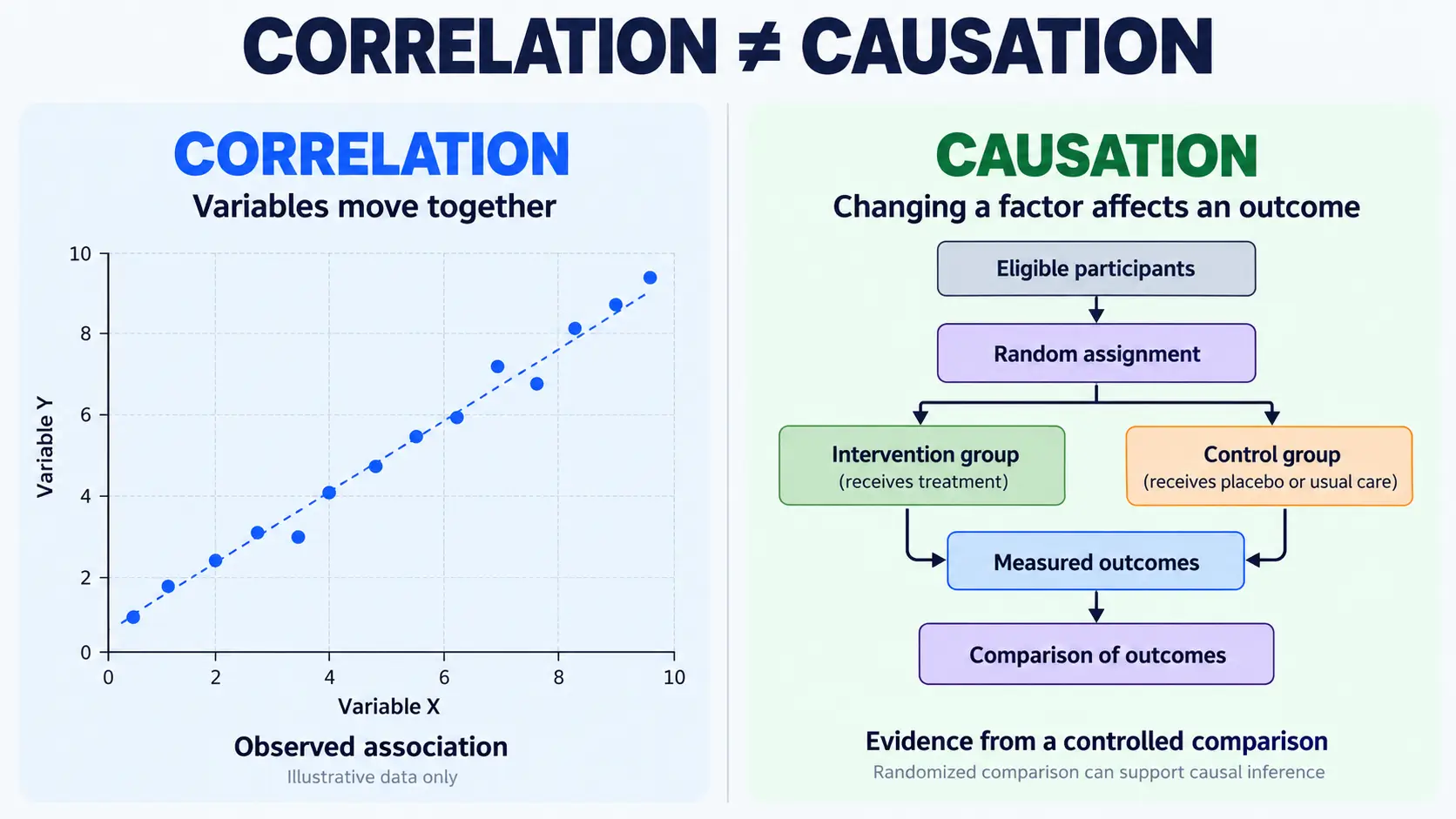
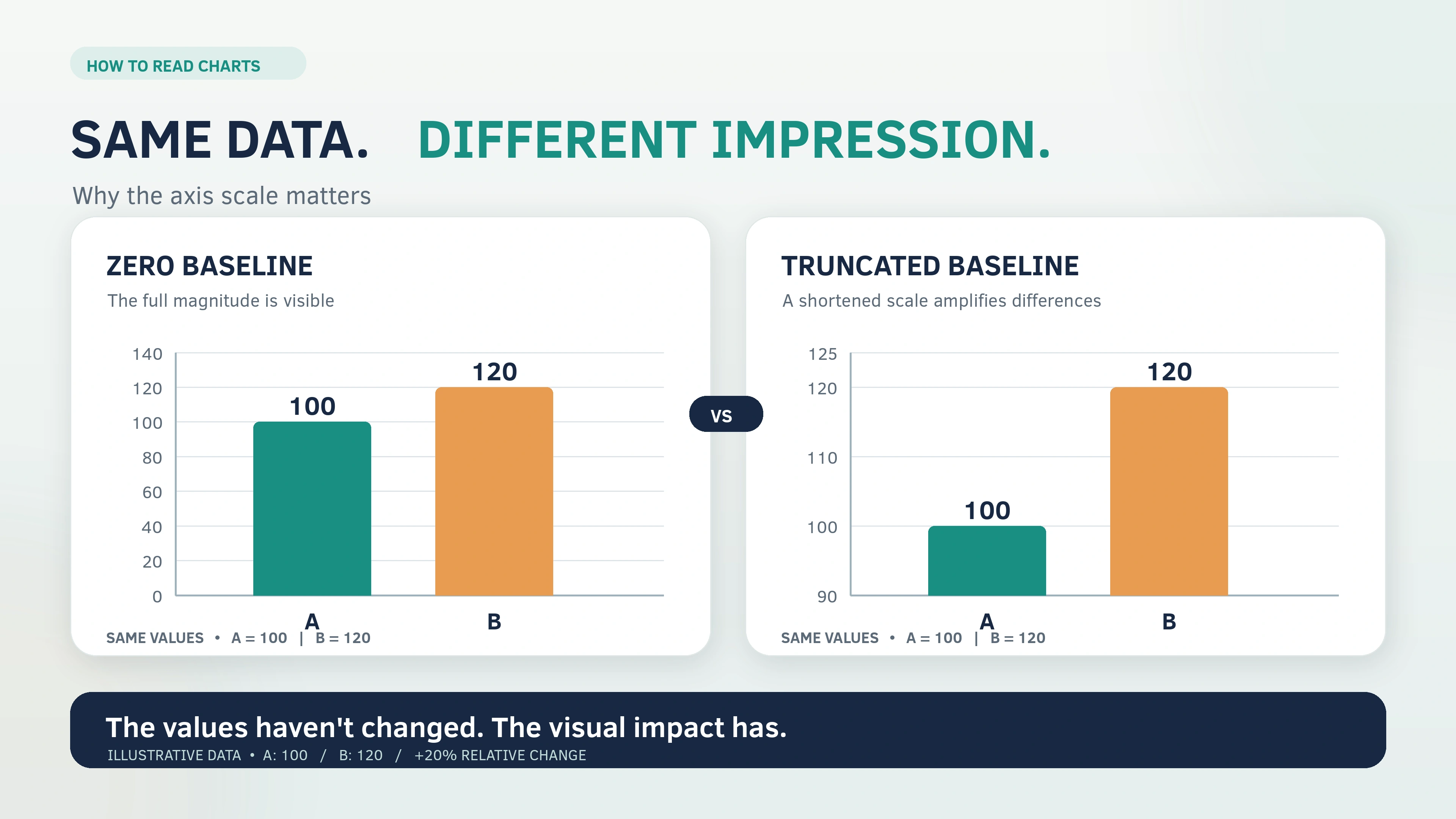
Numeracy helps people examine percentages, rates, averages, units, scales, estimates, and graphs. Scientific thinking helps distinguish observation from explanation and association from causation.
The OECD’s adult-skills analysis connects stronger literacy and numeracy with better problem solving in digital environments. It also notes that weak literacy and numeracy may create barriers to managing information through digital applications. This is an association based on adult-skills evidence, not proof that one ability alone causes stronger digital performance in every population.
A simple estimate may expose an implausible answer. Someone checking a percentage change, for example, should identify the original value, new value, denominator, unit, and period before accepting the result.
Knowledge provides context for judgment
Subject knowledge helps people recognize what is plausible, incomplete, outdated, or inconsistent. Without sufficient background, a fluent but incorrect response can appear trustworthy.
Learners do not need to memorize every available detail before using AI. They need enough knowledge to understand an answer, ask focused follow-up questions, and recognize when an official source, textbook, direct calculation, or qualified person is required.
The Five Layers of AI-Age Foundations
The five-layer model shows how abilities depend on one another instead of placing prompting, empathy, mathematics, and creativity in one undifferentiated list.
| Layer | Observable behaviour | Why it matters | Appropriate AI support | Main over-reliance risk |
|---|---|---|---|---|
| Core literacies | Reads carefully, writes clearly, estimates, and checks data | Supports comprehension and verification | Examples, practice questions, and feedback | Replacing reading, writing, or calculation practice |
| Thinking and learning | Frames problems, compares evidence, reflects, and revises | Supports inquiry and improvement | Questions, counterexamples, and limited feedback | Receiving finished reasoning before attempting the task |
| Human interaction | Listens, explains, collaborates, and handles disagreement | Supports trust, coordination, and responsibility | Agenda preparation, rehearsal, or wording comparison | Replacing necessary human discussion |
| Digital and AI literacy | Evaluates sources and outputs, understands limits, and protects information | Supports informed and responsible technology use | Search support, organization, comparison, and drafting | Passive trust, privacy errors, or poor attribution |
| Domain judgment and adaptation | Applies knowledge in context and updates it when needed | Turns general ability into competent action | Identifying gaps and comparing options | Generic recommendations that ignore local rules or circumstances |
Layer 1: Core literacies
Core literacies include reading, writing, numeracy, scientific understanding, and basic data interpretation.
These skills allow people to understand a task, calculate or estimate a result, interpret evidence, and communicate what they know. They are also the tools used to check whether an AI-generated response is coherent and plausible.
Layer 2: Thinking and learning
This layer includes critical thinking, problem framing, creativity, metacognition, self-regulation, and learning-to-learn.
Critical thinking involves:
-
identifying the real question;
-
clarifying definitions and assumptions;
-
examining evidence;
-
considering alternative explanations;
-
revising a conclusion when the evidence changes.
Metacognition adds awareness of one’s own learning. A learner asks what is understood, what remains uncertain, where the reasoning failed, and what can be completed independently.
Question-based learning can support this process by using a sequence of questions to organize inquiry instead of beginning with a finished answer.
Layer 3: Human interaction
Communication, collaboration, empathy, responsibility, and active listening matter when people have different goals, experiences, or interpretations.
These behaviours can be practised. Examples include restating another person’s position fairly, giving specific feedback, asking clarifying questions, explaining a decision, and working through disagreement.
The World Economic Forum’s Future of Jobs Report 2025 reports employer expectations involving analytical thinking, resilience, creative thinking, technological literacy, leadership, and lifelong learning. These are survey findings about participating employers and industries, not a universal curriculum or a guarantee for an individual worker.
Layer 4: Digital and AI literacy
Digital literacy includes using devices, platforms, information, communication systems, and online services safely and critically.
AI literacy adds AI-specific understanding. It includes knowing that generated outputs require evaluation, understanding basic system limits, considering privacy and bias, and deciding when automated assistance is appropriate.
The OECD–European Commission AI literacy framework for primary and secondary education defines AI literacy as knowledge, skills, and attitudes that help learners understand how AI works, evaluate outputs, and use AI ethically and creatively. Its formal scope is school education, so applying it to adult learning or workplaces requires adaptation.
UNESCO’s AI Competency Framework for Students outlines 12 competencies across four dimensions:
-
a human-centred mindset;
-
ethics of AI;
-
AI techniques and applications;
-
AI system design.
The UNESCO framework is curriculum-oriented and designed for students. It should not be treated as a complete taxonomy for every adult, profession, or workplace.
Layer 5: Domain judgment and adaptation
Domain judgment means applying knowledge within a specific subject, profession, organization, or local setting.
A general-purpose AI system may explain a concept while lacking the current institutional rule, classroom policy, local-language nuance, technical standard, or situational knowledge needed for a real decision.
Adaptation means reviewing and updating relevant knowledge as evidence, policies, and tools change. It does not require following every new feature. The goal is to maintain reliable methods for learning and verification while updating information that has become outdated.
Digital Literacy and AI Literacy: What Is the Difference?
Digital literacy has a wider scope. AI literacy adds knowledge and judgment specific to AI systems.
| Area | Digital literacy | AI literacy |
|---|---|---|
| Main scope | Digital devices, platforms, content, communication, safety, and information | AI systems, generated outputs, data use, limitations, ethics, and suitable use |
| Typical activities | Searching, managing files, communicating, creating content, and protecting accounts | Checking generated claims, recognizing uncertainty, reviewing bias, and deciding when AI use is appropriate |
| Common risks | Scams, weak sources, unsafe accounts, misinformation, and privacy loss | Fabricated details, hidden assumptions, inappropriate automation, bias, and over-reliance |
| Main judgment | Is the source, platform, or digital activity trustworthy and safe? | Is the generated result accurate, relevant, fair, and appropriate for this decision? |
Someone may be comfortable with documents, messaging, online search, and file management while still accepting AI-generated content without adequate checking. In that case, general digital ability is present, but AI-specific evaluation remains weak.
AI Literacy Is More Than Prompting
Prompting is one way to communicate with an AI system. It is not a complete literacy.
A clear prompt can describe the task, audience, evidence requirements, constraints, and desired format. It cannot guarantee that the response will be correct.
Understand what the system is doing
AI systems can summarize, classify, compare, draft, and suggest possibilities. They may also misread ambiguity, omit context, generate unsupported information, or reproduce bias.
Users do not need an advanced technical education for every task. They do need enough understanding to recognize that fluent language is not evidence of factual accuracy.
Evaluate outputs and sources
Useful evaluation questions include:
-
Does the response answer the exact task?
-
What evidence supports its main claim?
-
Is the source authoritative for this issue?
-
Is the information current enough?
-
Are units, dates, definitions, and geographic scope clear?
-
Is a relevant exception missing?
-
Can the result be checked by another method?
-
Does a local or institutional rule take priority?
Reading, numeracy, and subject knowledge support each of these checks.
Protect privacy and maintain accountability
Responsible use includes privacy, attribution, disclosure, fairness, and accountability.
Students should follow assessment rules and disclose assistance when required. Workers should review organizational policies before entering personal, confidential, or internal information into an external service.
AI can contribute to a decision, but responsibility remains with the person or institution using the result. The Collegenp article on AI ethics, responsibility, roles, and accountability explains how responsibility can be assigned according to control and decision-making authority.
When Can AI Weaken Foundational Skills?
AI use may reduce skill practice when it performs the part of a task that the learner is meant to develop. The effect depends on the task, learner, guidance, system design, and outcome being measured.
The OECD Digital Education Outlook 2026 distinguishes successful task performance from durable learning. It reports that general-purpose generative AI can improve the immediate quality of work without necessarily producing learning gains, while purposeful educational use can support learning. The OECD recommends selective use that does not replace cognitive effort.
Faster output is not proof of durable learning
A learner may complete a task quickly and still be unable to reproduce the skill later.
Learning is more visible when a person can:
-
recall the central idea;
-
explain the reasoning;
-
apply the method to a new problem;
-
detect an error;
-
revise an unsuccessful approach;
-
complete a related task without the same assistance.
A useful test is removal: after using the tool, can the learner still explain or perform a comparable task independently?
The Collegenp article on how AI affects student learning outcomes examines the difference between immediate assistance and measurable learning more closely.
When to practise without AI
Independent practice is appropriate when the main goal is to build recall, fluency, reasoning, or self-explanation.
Examples include:
-
reading a complete passage before requesting a summary;
-
writing an initial draft from a personal outline;
-
performing a basic calculation before checking it;
-
recalling important ideas without notes;
-
planning an argument before requesting feedback;
-
explaining a concept aloud;
-
completing a practice assessment under its stated rules.
When AI can support practice
AI can support learning when it offers limited assistance without completing the central learning task.
Possible roles include:
-
giving a hint after an attempt;
-
asking diagnostic questions;
-
presenting a counterexample;
-
comparing an answer with a rubric;
-
creating additional practice items;
-
identifying a missing step;
-
offering an alternative explanation;
-
checking whether a calculation method was applied consistently.
The related discussion of whether AI can make learners less capable explains why the effect depends on how assistance changes practice, effort, and independent performance.
A Practical Learning Loop: Attempt → Assist → Verify → Explain
The four-stage loop below is a Collegenp practice framework. It is an editorial application of evidence about maintaining cognitive effort, not a universally validated learning protocol.
| Stage | Learner action | Suitable AI role | Human responsibility |
|---|---|---|---|
| Attempt | Begin the task before asking for a completed answer | Clarify instructions when needed | Reveal current understanding and gaps |
| Assist | Request a hint, question, example, or feedback | Provide limited support | Choose the amount and type of help |
| Verify | Check evidence, calculations, sources, and context | Suggest alternatives or items to examine | Confirm the result through reliable evidence |
| Explain | Restate or perform the task without assistance | Ask follow-up questions or test transfer | Demonstrate independent capability |
Attempt the task first
An initial attempt shows where understanding ends and difficulty begins. It may be a rough outline, estimate, first calculation, or incomplete explanation.
Without an attempt, the system may solve the wrong problem or hide the knowledge gap that needs attention.
Ask for limited assistance
The request should match the difficulty:
-
“Give me one hint.”
-
“Ask questions that reveal gaps in my reasoning.”
-
“Show one counterexample.”
-
“Check my method without replacing it.”
-
“Identify the first unsupported step.”
-
“Compare my response with the assessment criteria.”
This approach leaves more of the intellectual work with the learner.
Verify important claims
Verification may involve official documents, original research, textbooks, direct calculations, or a qualified person.
The level of checking depends on the consequences of an error. A brainstorming suggestion requires less scrutiny than an examination rule, application deadline, health claim, legal condition, or workplace decision.
Explain or perform without the tool
The final stage tests transfer.
Ask:
-
Can I explain the main idea in my own words?
-
Can I show the reasoning or calculation?
-
Can I identify the source of an important claim?
-
Can I detect a plausible error?
-
Can I apply the method to a new example?
-
Can I complete a similar task without assistance?
Students can apply the same principle when using AI tools for exam preparation without cheating: use the tool for practice, checking, or feedback while following assessment rules and keeping the tested work independent.
How the Five Layers Work Together
A single task often requires all five layers.
Consider a simplified illustration: a student must compare two proposals for reducing energy use at school. This is a hypothetical learning example, not a documented case.
Core literacies: The student reads both proposals, identifies their central claims, checks units and percentages, and writes a clear comparison.
Thinking and learning: The student chooses comparison criteria, separates evidence from opinion, tests assumptions, and revises the conclusion when necessary.
Human interaction: The student asks classmates and staff about practical concerns, listens to different views, and explains the recommendation fairly.
Digital and AI literacy: The student may use search or AI to organize questions, identify possible gaps, or compare structures. Factual outputs are checked against suitable sources.
Domain judgment: The recommendation considers the school’s facilities, resources, local conditions, and responsibility for implementation.
A strong prompt may improve how an answer is organized. The quality of the decision still depends on reading, calculation, evidence, communication, context, and accountability.
How to Choose Which Skill to Build First
Start with the weakest enabling skill that obstructs a current goal. Working on every layer at once is unnecessary.
A learner who struggles with dense reading may benefit more from comprehension practice than from advanced prompting. A professional who understands a technical issue but cannot explain it may need communication practice. A confident AI user who rarely checks sources may need a stronger verification routine.
Use a simple self-audit
Rate each statement as consistent, inconsistent, or not yet tested:
-
I can explain what I read without copying the wording.
-
I can estimate whether a numerical answer is plausible.
-
I can separate a claim from its supporting evidence.
-
I can ask a clear question with relevant constraints.
-
I can restate another person’s position fairly.
-
I can check an AI output against an authoritative source.
-
I know which information should not be shared with an external system.
-
I can perform a similar task after assistance is removed.
-
I can apply subject knowledge to a new situation.
-
I revise a conclusion when stronger evidence appears.
Choose one or two weak areas connected to a real task.
Match practice to observable performance
Useful practice goals include:
-
summarizing a chapter accurately;
-
comparing two sources;
-
checking a graph or calculation;
-
explaining a concept to another person;
-
revising a paragraph after feedback;
-
solving a related problem independently;
-
verifying a generated claim;
-
answering questions after a presentation.
Measure behaviour rather than confidence
Confidence may change before competence. Better evidence includes accuracy, explanation quality, source choice, error detection, transfer to a new problem, revision quality, and independent performance.
How Priorities Differ by Reader
The five layers apply broadly, but priorities vary by age, role, and immediate goal.
| Reader | Likely starting priorities | Useful practice | Main caution |
|---|---|---|---|
| Student or recent graduate | Reading, writing, subject knowledge, self-regulation, and responsible AI use | Independent drafts, explanations, source checks, and permitted practice tasks | A completed assignment does not prove independent ability |
| Early-career professional | Domain judgment, communication, verification, and adaptation | Explain decisions, compare evidence, document checks, and seek feedback | Employer surveys do not predict every role or labour market |
| Educator or parent | Foundational practice, assessment design, guidance, and equitable access | Observe the learner’s process, require explanation, and vary AI-permitted activities | Avoid treating total prohibition or unrestricted use as universal solutions |
| Lifelong learner or career changer | Core skill gaps, digital confidence, and goal-specific knowledge | Use one real project and test independent performance | Advanced programming is not a universal starting requirement |
A Four-Week Foundational Skills Practice Plan
This plan is an adaptable practice structure. It is not a tested programme or a promise of a particular result.
| Week | Main focus | Independent practice | Limited AI support | Evidence to record |
|---|---|---|---|---|
| 1 | Core literacy and numeracy | Read, summarize, estimate, and check a table or graph | Compare summaries or request extra questions | Clearer explanations and fewer basic errors |
| 2 | Critical thinking and questions | Separate claims from evidence and test alternatives | Request probing questions or counterexamples | Stronger reasoning and source choices |
| 3 | Communication and collaboration | Explain ideas, listen, revise, and handle disagreement | Rehearse an outline or compare wording | Clearer explanations and more useful revisions |
| 4 | AI literacy and responsible use | Check outputs, review privacy, and document verification | Compare possible answers and request error checks | Less passive dependence and better source checking |
A daily routine can use five actions:
-
Work independently at the beginning.
-
Record where the difficulty starts.
-
Request narrow assistance.
-
Check at least one important claim or step.
-
Explain the result without assistance.
What This Framework Does Not Claim
This framework does not claim that one skill sequence fits every child, university student, adult learner, profession, or country.
It also does not claim that:
-
AI use inevitably causes skill loss;
-
AI reliably improves every learning task;
-
one skill set guarantees employment;
-
human capabilities are outside all forms of automation;
-
every learner needs advanced programming;
-
employer expectations define a universal curriculum;
-
task completion proves understanding.
Evidence about AI-supported learning depends on the task, tool, learner, teaching design, duration, and measured outcome. The OECD describes current evidence as emerging and advises educational use that preserves independent thinking and cognitive effort.
Access, Language, and Local Conditions Matter
Access to reliable devices, connectivity, accessible interfaces, language support, teacher guidance, and institutional resources affects how AI can be used.
A practice plan that assumes constant access to a paid service or high-speed connection will not suit every learner. Limited tool access should not be confused with limited ability.
Rules also vary. Schools, universities, employers, and public institutions may have different policies for assessment, data handling, disclosure, and acceptable use. Readers should verify those requirements with the responsible institution.
Educators and organizations considering required AI use should examine whether learners have equitable access, whether personal information is protected, whether accessible alternatives exist, and whether the activity still measures the intended capability. The OECD also identifies devices, connectivity, digital resources, professional learning, privacy, safety, transparency, and age-appropriate safeguards as relevant to inclusive educational use.
Keep the Capability With the Learner
The goal is not to identify human abilities that can defeat AI. It is to develop the foundations that help people use AI responsibly, understand its outputs, and continue performing without depending entirely on the tool.
Strengthen reading, writing, numeracy, evidence use, and subject knowledge. Practise problem framing, self-regulation, communication, and collaboration. Add digital and AI literacy, then apply those capabilities through domain judgment.
For one real learning or work task, use this sequence:
Attempt → Assist → Verify → Explain
Assistance is not the problem. The central question is whether understanding, judgment, and responsibility remain with the person.





Comments 0
No comments yet. Be the first to start the conversation.