




High-pressure careers are often framed as tests of personal resilience. A sociological approach asks a different set of questions: How is the job designed? Who controls priorities and deadlines? Which behaviors are rewarded? Who can question a decision, refuse additional work, recover after an intense period, or leave a harmful environment?
Demanding work does not automatically produce an anxiety disorder, and employment is rarely its sole explanation. The World Health Organization’s anxiety disorders fact sheet describes these conditions as shaped by interacting social, psychological, and biological factors. Its mental health at work guidance also identifies excessive workloads, low job control, weak support, bullying, discrimination, unclear roles, job insecurity, and work-home conflict as psychosocial risks.
The International Labour Organization’s 2026 report on the psychosocial working environment places these risks within job design, work organization, management practices, workplace relationships, and the policies governing work. This broader view helps explain why anxiety in high-pressure careers cannot be reduced to personal coping skills.
Answer Summary: Anxiety in high-pressure careers is both a personal health experience and a socially patterned workplace issue. Workload matters, but so do control, fairness, security, hierarchy, emotional demands, professional norms, and access to support or alternative employment. Personal coping can help, but it cannot correct harmful job design. A proportionate response distinguishes stress from clinical anxiety and assigns responsibility across workers, teams, organizations, and public institutions.
This article provides general educational information. It does not diagnose anxiety disorders or replace qualified health, occupational-health, or locally applicable legal guidance.
Table of Content
- What Does a Sociology of Anxiety Examine?
- How Stress, Workplace Anxiety, Anxiety Disorders, and Burnout Differ
- What Makes a Career High-Pressure?
- How Can Work Structures Intensify Anxiety?
- Why Does the Same Job Affect People Differently?
- How Professional Identity and Stigma Affect Help-Seeking
- Pressure Archetypes Across Careers, Not Rankings
- How to Examine a Work or Career Context
- Individual and Organizational Responsibility
- What Can Organizations Change?
- When Does Professional Assessment Matter?
- Anxiety as a Personal Condition and a Social Signal
Key Takeaways:
-
A high-pressure career is not a clinical category.
-
Work may contribute to anxiety without being its sole cause.
-
High demands are more concerning when control, support, fairness, or recovery are weak.
-
Status can provide resources while increasing visibility and reputation pressure.
-
Unequal resources affect who can challenge or leave harmful work.
-
Individual support does not replace safer job design.
-
Persistent or impairing anxiety warrants qualified assessment.
What Does a Sociology of Anxiety Examine?
A sociology of anxiety examines how institutions, workplace rules, power, status, inequality, and cultural expectations shape the experience and distribution of anxiety.
Clinical assessment focuses on a person’s symptoms, health, history, and circumstances. Sociology adds questions about patterned exposure. It considers why some workers receive autonomy while others face close monitoring, why certain professional cultures treat distress as weakness, and why financial or employment security gives some workers more freedom to challenge unreasonable demands.
A psychosocial risk is a condition connected to job content, work organization, workplace relationships, schedules, management, or the wider employment context that may affect mental health. WHO and the ILO place these risks within the way jobs are designed and managed rather than treating them solely as failures of individual resilience.
Individual symptoms and social conditions
Anxiety is experienced by individuals, but workplace exposure is not distributed evenly.
Two employees with the same title may have different supervisors, contracts, workloads, schedules, authority, caring responsibilities, financial reserves, health needs, and access to support. They may also face different consequences for raising concerns or taking leave.
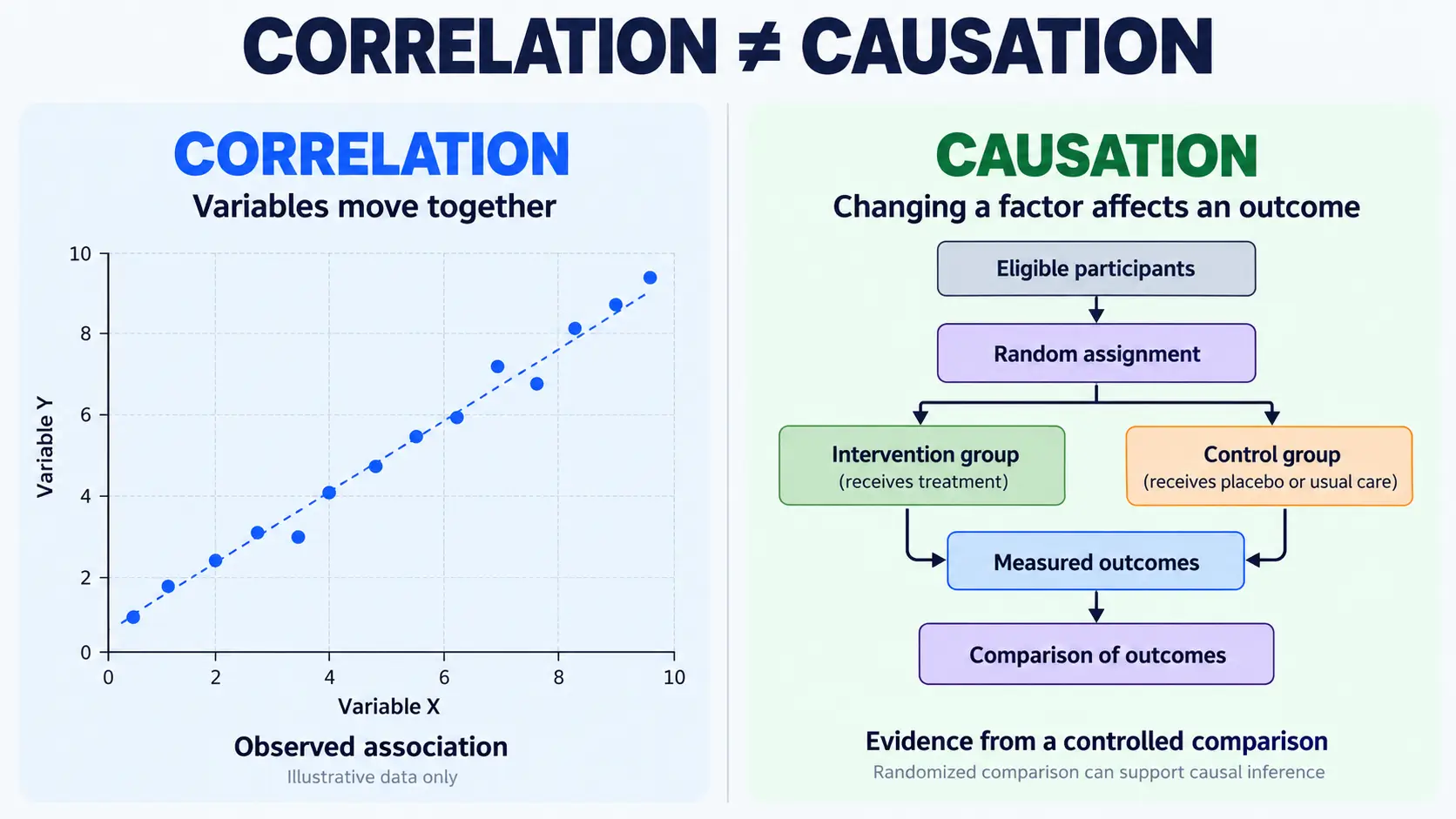
No single workplace condition reliably predicts an individual mental health outcome. Some people exposed to demanding conditions do not develop a disorder, while others experience anxiety without an identifiable workplace cause. Social conditions still influence the wider pattern of exposure, protection, recognition, and access to assistance.
This both-and approach avoids two errors. The first is treating anxiety as evidence of personal weakness. The second is assuming that every uncomfortable workplace emotion represents an anxiety disorder.
How Stress, Workplace Anxiety, Anxiety Disorders, and Burnout Differ
Stress, workplace anxiety, anxiety disorders, and burnout describe different experiences or classifications.
Stress is a response to pressure, uncertainty, challenges, or difficult situations. An anxiety disorder involves excessive or persistent fear or worry and related difficulties that can cause significant distress or interfere with daily functioning.
“Workplace anxiety” is a useful general phrase, but it is not one standardized diagnosis. It can refer to temporary worry about a deadline, anxiety connected to a particular workplace, or symptoms occurring alongside a clinical condition.
WHO classifies burnout as an occupational phenomenon associated with chronic workplace stress that has not been successfully managed. Its burnout classification note states that burnout applies specifically to the occupational context and is not classified as a medical condition.
| Term | Meaning and connection to work | Important caution |
|---|---|---|
| Stress | A response to demands, uncertainty, pressure, or change. Work may be one source. | Stress is not automatically an anxiety disorder. |
| Workplace anxiety | A general phrase for anxiety experienced in connection with work. | It is not a standardized diagnosis and does not establish what caused the anxiety. |
| Anxiety disorder | A mental health condition involving excessive or persistent fear or worry and related difficulties. | Diagnosis requires qualified assessment and cannot be inferred from a job situation alone. |
| Burnout | An occupational phenomenon associated with chronic workplace stress that has not been successfully managed. | Burnout is not synonymous with anxiety, although the experiences may coexist. |
These distinctions affect the response. A temporary deadline may call for recovery, additional time, or clearer priorities. Repeated distress connected to job design may require team or organizational action. Persistent anxiety that affects daily functioning may warrant professional assessment.
The categories can overlap. Clarifying them is more useful than trying to assign a diagnosis from a short description or online checklist.
What Makes a Career High-Pressure?
A career becomes high-pressure through combinations of demands, limited resources, uncertainty, visibility, and consequences rather than through its occupational title alone.
“High-pressure career” is not a standardized medical or occupational-health diagnosis. In this article, it refers to roles containing several pressure dimensions, such as:
-
serious consequences for errors;
-
persistent workload or time pressure;
-
long, irregular, or unpredictable hours;
-
responsibility without matching authority;
-
frequent measurement, comparison, or surveillance;
-
emotional responsibility for other people;
-
status competition or reputation risk;
-
insecure employment or income;
-
weak bargaining power;
-
blurred boundaries between work and personal time.
A global ranking of supposedly “most anxious” careers would conceal differences among employers, countries, contracts, teams, schedules, and career stages. Occupation-level findings are also difficult to compare when studies use different definitions, populations, measurements, and methods.

Stakes, workload, control, and visibility
Pressure can intensify when workers face substantial responsibility without enough control over pace, priorities, methods, or staffing.
High stakes do not produce the same experience in every setting. A demanding role with clear procedures, suitable resources, decision authority, and reliable colleagues differs from one with similar responsibilities under punitive monitoring and weak support.
Performance visibility can add uncertainty. Rankings, public scrutiny, client ratings, promotion contests, dashboards, and frequent reviews may make each result feel consequential. Evaluation can serve legitimate purposes, but problems may arise when criteria are opaque, difficult to challenge, or disconnected from factors outside the worker’s control.
Emotional demands, status, insecurity, and availability
Some workers are expected to appear calm, confident, friendly, or reassuring during conflict, distress, fear, or aggression. This requirement is often described as emotional labor.
Senior roles may provide greater authority while increasing responsibility for teams, budgets, public decisions, or organizational reputation. Insecure workers may have less freedom to decline extra work, report harmful conduct, take recovery time, or challenge unreasonable expectations.
Digital communication can also extend pressure beyond formal working hours when employees are expected to monitor messages or respond during personal time. The effect depends on workplace expectations, managerial practices, and whether workers have protected recovery time.
The main pressure dimensions
| Pressure dimension | How it may shape anxiety | What to examine |
|---|---|---|
| Demands | Heavy workload, rapid pace, conflicting tasks, or serious consequences may create sustained strain. | Staffing, priorities, workload limits, and recovery |
| Control | Limited influence over methods, pace, scheduling, or decisions may increase uncertainty. | Decision latitude, schedule input, and matching authority |
| Support | Weak practical or social support may leave workers managing difficult situations alone. | Supervisory support, teamwork, and access to assistance |
| Reward and fairness | Unclear recognition or inconsistent procedures may make outcomes unpredictable. | Transparent criteria and consistent processes |
| Status and visibility | Comparison and reputation pressure may increase the perceived cost of mistakes or disclosure. | Proportionate accountability and safe discussion |
| Insecurity | Contract, income, restructuring, or career uncertainty may extend pressure beyond current tasks. | Communication, protection, and transition support |
| Emotional labor | Required emotional displays may conflict with a worker’s internal experience. | Staffing, recovery, training, and protection from aggression |
| Monitoring and boundaries | Continuous measurement or connectivity may reduce control, privacy, or recovery. | Monitoring purpose, worker consultation, and non-work time |
These dimensions interact. High demands may be more manageable when employees have adequate control, support, fair procedures, and recovery time. They may become more difficult when those resources are absent.
How Can Work Structures Intensify Anxiety?
Work structures may intensify anxiety by increasing demands, reducing control, creating uncertainty, or limiting access to support and recovery.
A systematic meta-review of work-related mental health risks grouped relevant conditions into imbalanced job design, occupational uncertainty, and lack of value or respect. It found that evidence strength differed across workplace factors, study designs, populations, and mental health outcomes. The findings support cautious association language rather than a claim that one work condition inevitably causes an anxiety disorder.
High demands, low control, and weak support
High demands are more concerning when workers have limited influence and insufficient support.
Control includes more than seniority. It may involve influence over work pace, task order, methods, schedules, breaks, and the ability to use professional judgment. Responsibility without corresponding authority can leave a worker accountable for outcomes they cannot meaningfully shape.
Weak support may involve unavailable supervisors, poor team cooperation, unsafe reporting systems, or a lack of practical help during difficult work. Support is not merely friendliness. It includes access to information, staffing, consultation, equipment, training, and timely decisions.
Effort, reward, fairness, and recognition
Distress may intensify when sustained effort is paired with uncertain reward, inconsistent recognition, or procedures perceived as unfair.
Reward includes more than income. It can involve security, respect, advancement, learning opportunities, professional recognition, and confidence that decisions follow understandable rules.
Fairness also affects predictability. Workers who do not understand how assignments, promotions, discipline, or evaluations are decided may spend additional energy anticipating possible consequences. Clear procedures do not remove every disagreement, but they make organizational decisions easier to understand and question.
Hierarchy, status, and constant evaluation
Hierarchy shapes responsibility, resources, and voice.
Workers with less organizational power may experience closer supervision, weaker bargaining power, and limited influence over decisions. Higher-status workers may gain income, autonomy, and professional networks while carrying broader responsibility, public visibility, work-family conflict, or reputation pressure.
Status therefore has competing effects. It may provide protection in one part of a role while increasing exposure in another. Neither high nor low status guarantees protection from anxiety.
Culture, unclear norms, and perfectionistic expectations
Organizational culture includes formal policies and unwritten rules about overtime, communication, competition, leave, mistakes, emotional control, and requests for help.
A culture can increase anxiety when expectations are intense, inconsistent, unclear, or unsafe to question. Employees may spend substantial time trying to predict what is expected when written policy and daily behavior do not match.
High professional standards are necessary in many occupations. Problems arise when those standards become expectations of limitless availability, silence about uncertainty, or refusal to acknowledge human constraints.
A workplace can also claim to value openness while punishing disagreement or error reporting. That gap between stated values and actual consequences can make workers less willing to raise concerns.
Job insecurity and precarious work
Job insecurity can extend workplace uncertainty to income, housing, identity, family responsibilities, and future plans.
Precarity is not defined by contract type alone. A flexible contract selected by a worker with savings and several alternatives differs from insecure work accepted because no stable option is available.
The relevant issues include:
-
how predictable income and hours are;
-
whether benefits or protections are available;
-
whether the worker can decline tasks safely;
-
how easily the contract can be ended;
-
whether the person has realistic alternatives;
-
whether immigration, housing, or family responsibilities depend on the job.
Insecurity can therefore operate as both an economic concern and a power relationship.
Emotional labor and client-facing work
Emotional labor involves managing emotional expression as part of paid work.
It appears in health care, education, emergency services, social care, management, hospitality, customer service, and other roles involving sustained contact with people.
The important question is not whether emotional skill is harmful. It is whether emotional demands are recognized as part of the workload, whether staffing and recovery are adequate, and whether workers are protected from aggression or repeated exposure to distress.
A role that requires calm communication during a difficult interaction may be manageable when the worker has training, backup, and time to recover. The same demand can become more difficult when conflict is constant and support is absent.
Digital monitoring and constant availability
Digital systems may support scheduling, safety, coordination, record-keeping, and workload planning. They may also create psychosocial risks when used for intrusive surveillance, opaque scoring, automated task allocation, or continuous performance evaluation.
The ILO’s 2026 review treats digitalization, algorithmic management, monitoring, and work intensification as developing areas that require attention to autonomy, privacy, transparency, worker participation, and organizational responsibility. It does not establish that a particular technology inevitably causes an anxiety disorder.
For related background, Collegenp’s employee tracking apps overview explains the stated purposes and governance questions associated with workplace tracking tools. The page is included for navigation, not as primary evidence for health claims.
Constant connectivity creates a related problem. Formal working hours may not reflect the full demand when employees are expected to monitor messages, respond outside scheduled time, or remain mentally available during recovery periods.
Collegenp’s discussion of remote work technology benefits and challenges provides additional context on how digital tools can support coordination while also creating boundary and monitoring concerns.
Why Does the Same Job Affect People Differently?
Employees in the same occupation may experience different workloads, resources, treatment, and consequences.
A job title does not reveal:
-
control over pace or schedules;
-
quality of supervision;
-
workload distribution;
-
employment and income security;
-
access to leave or health support;
-
caring responsibilities;
-
disability or health needs;
-
discrimination or exclusion;
-
social support inside and outside work;
-
career stage and professional influence;
-
freedom to transfer, refuse work, or resign.
These differences affect both exposure and available responses.
Resources can protect while pressure accumulates
Resources may reduce exposure or increase choice, but they do not make a person immune to anxiety.
A worker with schedule control, savings, supportive colleagues, secure employment, and several career options may have more room to challenge an unreasonable demand. Another worker may depend on one insecure income and face serious consequences for objecting or leaving.
Resources can also bring additional demands. Promotion may increase autonomy while expanding responsibility. Professional status may provide influence while increasing visibility, availability expectations, or reputation risk.
The relevant question is not whether a resource is always protective. It is how that resource interacts with workload, organizational rules, personal circumstances, and the consequences of speaking up.
Inequality shapes exposure and exit options
Social inequality may affect who receives autonomy, whose concerns are believed, and who can leave harmful work without major financial or legal consequences.
Class, disability, migration status, gender, caregiving responsibilities, race, employment status, and access to professional networks can influence exposure to insecure work, weak scheduling control, discrimination, or limited advancement. These patterns differ across countries and sectors and should not be turned into assumptions about every individual in a group.
A sociological explanation asks whether workplace systems distribute exposure, protection, credibility, and alternatives unevenly.
Advice to “find another job” assumes that another suitable role is available, affordable to pursue, legally accessible, and compatible with the worker’s responsibilities. Those conditions do not apply equally to everyone.
How Professional Identity and Stigma Affect Help-Seeking
Professional identity can discourage help-seeking when competence is defined as constant control, productivity, and emotional self-sufficiency.
Workers may worry that disclosing anxiety will affect reputation, authority, advancement, professional relationships, or privacy. Junior employees may fear being viewed as incapable or replaceable. Senior workers may fear that acknowledging difficulty will weaken confidence in their leadership.
These concerns vary across professions, employers, countries, and legal systems. Silence does not prove that employees are unaffected. It may reflect privacy preferences, fear of consequences, limited trust in workplace procedures, or reliance on support outside the organization.
Organizations should not assume that employees must disclose personal health information before working conditions can be examined. They can review workload, scheduling, harmful conduct, reporting systems, and role clarity without asking individuals to reveal unnecessary private details.
Legal rights, accommodation duties, confidentiality requirements, and disclosure protections differ by jurisdiction. Workers and employers should consult locally applicable official or professional guidance where those questions arise.
Pressure Archetypes Across Careers, Not Rankings
Career pressure is better understood through recurring patterns than through lists claiming one profession is universally more stressful than another.
| Pressure archetype | Common pressure pattern | Context that changes the experience |
|---|---|---|
| Life-critical service | Urgent decisions, serious consequences, exposure to distress, and staffing pressure | Team quality, protocols, shift design, resources, and recovery |
| Prestige and competition | Reputation pressure, comparison, long hours, and uncertain advancement | Fair promotion, mentoring, autonomy, and financial security |
| Client-facing emotional work | Required emotional control, conflict management, and responsibility for others | Staffing, protection from aggression, supervision, and debriefing |
| Precarious or portfolio work | Irregular income, insecure contracts, weak protections, and self-management | Degree of choice, savings, demand stability, and legal protection |
| Digitally monitored or high-responsibility work | Continuous evaluation, broad accountability, rapid communication, and blurred boundaries | Monitoring design, decision authority, worker input, and recovery time |
These archetypes are explanatory tools rather than risk scores. They help workers, students, managers, and career advisers identify the forms of pressure within a role and the resources available to manage them.
A career should not be selected or rejected based on its label alone. Employer practices, contracts, supervision, schedules, team culture, and job design can change the experience substantially.
Students considering technical professions can apply this framework alongside Collegenp’s sector-specific discussion of work-life balance for civil engineers. The internal page illustrates one career context rather than establishing a universal risk level for engineering.
How to Examine a Work or Career Context
Workers and career choosers can examine pressure dimensions without attempting to diagnose themselves.
Demands and recovery
-
Are intense demands temporary, cyclical, or continuous?
-
Are workloads adjusted when staffing or priorities change?
-
Is recovery possible after difficult periods?
-
Do formal hours reflect the time workers are expected to remain available?
-
Are workers routinely expected to compensate for understaffing?
Control and voice
-
Can workers influence schedules, methods, priorities, or deadlines?
-
Does responsibility come with enough authority?
-
Can employees question decisions or report risks without punishment?
-
Are monitoring and evaluation criteria understandable?
-
Is there a credible way to challenge an inaccurate assessment?
Fairness, reward, and security
-
Are promotion, recognition, discipline, and workload decisions transparent?
-
Is employment sufficiently predictable for the worker’s circumstances?
-
Are expectations matched by suitable resources?
-
Do contract or status differences affect access to protection?
-
Are organizational changes explained early enough for workers to plan?
Culture and support
-
Is asking for help treated as responsible professional behavior?
-
Can errors and uncertainty be discussed openly?
-
Are bullying, harassment, aggression, and discrimination addressed?
-
Are support services confidential and accessible?
-
Do managers have enough authority and resources to respond?
Questions for students and career changers
Students and career changers can apply the same framework before deciding that a demanding field is either suitable or unsuitable.
They may examine:
-
the main forms of pressure within the role;
-
how much control early-career workers receive;
-
whether schedules are predictable;
-
how supervision and error reporting work;
-
differences among employers and work settings;
-
training demands and available support;
-
resources needed during entry-level employment;
-
alternative roles within the same field;
-
whether the work aligns with their values and preferred working conditions.
This approach provides a more grounded basis for career decisions than prestige, stereotypes, or unsupported rankings.
Individual and Organizational Responsibility
Personal action can help, but each level of a workplace system controls different parts of the problem.
A worker may seek support, clarify priorities, use available leave, document workload concerns, or reconsider career fit. One worker cannot independently correct chronic understaffing, unfair promotion systems, bullying, insecure contracting, or opaque surveillance.
| Responsibility level | What this level can influence | What it cannot solve alone |
|---|---|---|
| Individual | Seek support, clarify priorities, record concerns, use available leave, and assess personal fit | Staffing, organizational culture, reward systems, harassment controls, or labor protections |
| Team | Coordinate workload, respect boundaries, share information, and discuss uncertainty | Organization-wide resources, contract policy, or structural inequality |
| Organization | Redesign work, review staffing, improve fairness, address harmful conduct, and protect confidentiality | National labor conditions, economic insecurity, or public-service shortages |
| Policy and institutions | Set standards, strengthen protections, fund services, collect evidence, and support enforcement | Daily management practices within each workplace |
Individual assistance and organizational prevention are not competing approaches. A person may benefit from qualified support while the employer addresses harmful working conditions.
The concern arises when organizations present stress-management training, wellness activities, or personal resilience as substitutes for reviewing workloads, staffing, control, fairness, or harmful conduct.
What Can Organizations Change?
Organizations can reduce psychosocial risk by examining working conditions rather than assuming employees lack resilience.
WHO recommends organizational interventions that assess and then mitigate, modify, or remove workplace risks to mental health. It also emphasizes meaningful worker participation, manager training, mental health literacy, and support for workers with mental health conditions.
| Risk area | Possible organizational response | Application caution |
|---|---|---|
| Excessive demands | Review staffing, priorities, deadlines, workload, and recovery periods | Measure actual exposure, not only whether a policy exists |
| Low control | Increase appropriate influence over methods, schedules, and priorities | Autonomy should not become unsupported responsibility |
| Unfair procedures | Clarify evaluation, promotion, recognition, and discipline | Written rules must also be applied consistently |
| Bullying or harmful conduct | Provide safe reporting, investigation, accountability, and protection from retaliation | Reporting channels require trust and confidentiality |
| Weak support | Improve supervision, teamwork, referral routes, and confidential services | Support should accompany work redesign |
| Monitoring and boundaries | Define monitoring purposes, consult workers, and protect non-work time | Technology and privacy requirements need regular review |
| Unequal exposure | Examine how status, contract, disability, migration, and discrimination affect risk | Legal duties differ across jurisdictions |
| Uncertain results | Evaluate workload, control, fairness, support, recovery, and worker experience | Intervention effects may differ across organizations |
Why participation and evaluation matter
A workplace policy can exist without changing everyday conditions.
Flexible scheduling may provide little benefit when workloads make flexibility impractical. A reporting procedure may fail when workers fear retaliation. Manager training may have limited effect when managers lack the authority or resources to change staffing and deadlines.
Evaluation should examine whether the work itself changed:
-
Did workload or work pace improve?
-
Did schedule predictability increase?
-
Did workers gain meaningful influence?
-
Were reports handled safely?
-
Did recovery time increase?
-
Were highly exposed groups included?
-
Were improvements sustained?
Participation does not transfer organizational responsibility to workers. Employees can identify risks and explain how systems operate in practice, but leaders and institutions remain responsible for acting on conditions within their control.
When Does Professional Assessment Matter?
Professional assessment may be appropriate when anxiety persists, becomes difficult to manage, causes significant distress, or interferes with work, study, sleep, relationships, or everyday activities.
A qualified health professional can consider workplace conditions alongside physical health, personal circumstances, history, and other possible contributors. Assessment does not automatically prove that work caused the anxiety.
Workplace change and clinical care address different needs. One does not necessarily replace the other.
This section is intentionally general. It should receive qualified clinical or occupational-health review before publication, as required by the approved research plan.
Anxiety as a Personal Condition and a Social Signal
Anxiety in a demanding career cannot be understood by examining only the worker or only the workplace.
The personal experience is real, while exposure to workplace risks may be socially patterned. Workload, control, support, fairness, status, security, emotional demands, professional identity, monitoring, and access to alternatives influence how pressure is experienced and which responses are available.
These conditions do not predict one outcome for every worker. They help explain why distress may be concentrated in particular environments and why personal coping reaches a limit when the underlying problem concerns job design or organizational power.
A proportionate response asks two questions together: What support does the person need, and what conditions need to change?





Comments 0
No comments yet. Be the first to start the conversation.