



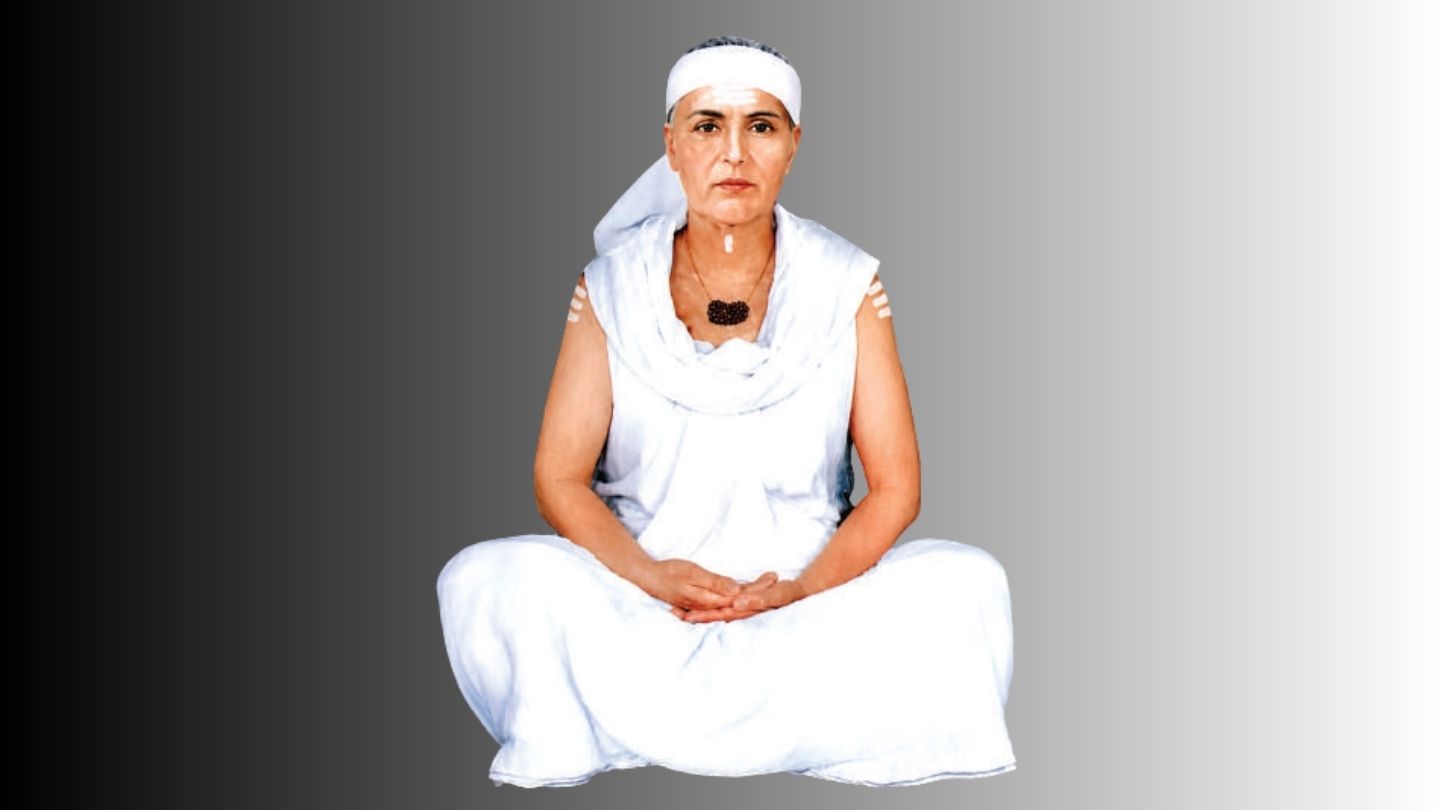
Yogmaya Neupane (c. 1860–1868 to 1941) was a Nepali social reformer, spiritual practitioner, and poet. Born in Bhojpur, she spoke against caste-based untouchability, child marriage, discrimination against women, religious hypocrisy, economic exploitation, and administrative injustice during Nepal's Rana regime.
Despite receiving no formal schooling, Yogmaya expressed her ideas through oral poetry, devotional songs, and religious discourses. Her teachings and verses were collected in a work titled Sarvartha Yogavani. She also appealed to the Rana rulers for Satyadharma Bhiksha, seeking just and morally responsible governance.
Yogmaya connected spiritual practice with social reform. She brought attention to the problems faced by women, communities subjected to caste discrimination, and economically disadvantaged people. Her movement questioned the prevailing social order and the conduct of the state.
Yogmaya is believed to have died on Ashadh 22, 1998 BS (1941), in a mass incident historically described as jal samadhi, associated with the Arun River in Bhojpur. Historical sources differ on the exact number of followers who died in the incident.
Researchers, including historian Michael Hutt and anthropologist Barbara Nimri Aziz, have studied Yogmaya's life, literature, and social movement. Their research has helped bring renewed attention to her contributions to Nepal's social history and the study of women's rights.
Yogmaya Neupane: Quick Facts
|
Particulars |
Details |
|---|---|
|
Full name |
Yogmaya Neupane |
|
Other known names |
Shakti Yogmaya, Bhaktini Yogmaya |
|
Birth year |
1924 BS is commonly cited; historical sources differ |
|
Birthplace |
Nepalidanda area, Bhojpur (now Shadananda Municipality–1) |
|
Death |
Ashadh 22, 1998 BS (1941) |
|
Place associated with death |
Arun River area, Bhojpur |
|
Father |
Shrilal Neupane |
|
Mother |
Chandrakala Neupane |
|
Child |
A daughter named Nainkala is mentioned in historical accounts |
|
Major literary work |
Sarvartha Yogavani |
|
Major movement |
Satyadharma Bhiksha and social reform |
|
Main areas of contribution |
Literature, spiritual practice, and social movements |
Social Conditions in Nepal During Rana Rule
Understanding Yogmaya's life and movement requires examining the political and social conditions of Nepal during her lifetime.
Rana rule began in Nepal in 1903 BS (1846). Under this system, political power was concentrated within the Rana family. Opportunities for ordinary citizens to participate in politics or express themselves publicly were limited.
The Muluki Ain (National Code), introduced in 1910 BS (1854), gave legal recognition to caste divisions and practices associated with untouchability. Caste identity strongly influenced social relationships, religious practices, and people's positions within society.
Women faced additional inequalities. Child marriage, discrimination against widows, limited access to education, and restricted participation in family decisions were significant problems. In some communities, women were subjected to strict social and religious restrictions.
In rural eastern Nepal, exploitative lending practices, the influence of moneylenders, and unfair treatment by local administrative authorities were also social concerns.
Against this background, Yogmaya used religious and moral arguments to criticize discrimination and injustice in society.
Birth, Family and Childhood
Yogmaya Neupane is believed to have been born in the Nepalidanda area of Bhojpur. Different biographies associate her birth and other events in her life with the Simle and Majhuwabesi areas.
Her father was Shrilal Neupane, and her mother was Chandrakala Neupane. She was born into a Brahmin family.
Disagreement Over Yogmaya's Birth Year
Available historical sources do not agree on Yogmaya's exact year of birth.
Information associated with the Yogmaya Foundation and some Nepali biographies states that she was born in 1924 BS (around 1867 AD). Other sources suggest different years, including 1917 BS.
An academic article published in Cooperation and Conflict, drawing on Michael Hutt's 2013 research, places her birth sometime between 1860 and 1868.
Therefore, although 1924 BS is a commonly cited birth year, it cannot be regarded as an undisputed historical fact.
Childhood and Education
Yogmaya spent her childhood in a rural social setting. At the time, girls had limited access to formal education. She, too, did not have the opportunity to attend school.
However, she became familiar with religious discourses, devotional songs, and oral literary traditions. She later expressed her ideas through poetry and public teachings.
The influence of oral tradition is clearly evident in her literary expression.
Child Marriage, Widowhood and Resistance to Social Traditions
Various biographies and academic studies report that Yogmaya married at an early age and became a widow during childhood.
According to an academic study published in 2021, she was approximately nine years old or younger when she married.
Historical accounts suggest that her husband died sometime after their marriage and that she subsequently experienced discrimination associated with widowhood.
Women who became widows had limited personal freedom in the society of that period. Remarriage was socially discouraged, and traditions requiring women to remain under the control of their families and communities significantly affected their lives.
Historical accounts indicate that Yogmaya left her husband's household and returned to her parental home. She later decided to separate herself from conventional family life.
These personal experiences appear to have influenced her later views on women's dignity, freedom, and social equality.
Migration to Assam, India, and Intellectual Development
Yogmaya lived in Assam, India, for some time. Researchers have linked her years away from Nepal to questions of personal freedom, changes in family life, and spiritual reflection.
Academic literature drawing on the studies of Barbara Nimri Aziz and Michael Hutt indicates that she remarried while living in India. These accounts also mention that she had a daughter named Nainkala from a later marriage.
However, historical sources differ on the complete sequence of her marriages and the identities of the individuals involved.
During her stay in Assam, Yogmaya is believed to have encountered various religious and reformist ideas. At that time, religious and social reform movements were active in several parts of India.
Her later criticism of caste discrimination, religious hypocrisy, and social injustice can be examined in relation to this wider intellectual setting.
Nevertheless, the available evidence does not establish every detail of the religious groups or individuals from whom she may have received teachings, or when such interactions occurred.
Return to Nepal, Spiritual Practice and Ashram
After spending an extended period away from Nepal, Yogmaya returned to her homeland. According to various biographies, she returned to Bhojpur with her daughter around 1973 BS (1916–1917 AD).
Following her return, she devoted much of her life to spiritual practice and social reform activities.
Religious Journeys and Spiritual Life
Historical accounts mention that Yogmaya visited various religious sites in Nepal. During these journeys, she remained actively engaged in spiritual reflection and religious practice.
Spirituality occupied an important place in her life. However, she did not confine her religious beliefs to personal practice.
Her teachings raised questions about truth, justice, morality, and social responsibility. This approach connected her spiritual life with her commitment to social reform.
The Role of the Majhuwabesi Ashram
After returning to Nepal, Yogmaya established an ashram in the Majhuwabesi area of Bhojpur, where she conducted religious and social activities.
The ashram hosted devotional singing, religious discourses, and community activities. People from different social backgrounds came into contact with her teachings.
Women's participation was also significant in Yogmaya's movement. Her activities provided women with opportunities to take part in religious and community gatherings.
The ashram thus became both a place of spiritual practice and a space for discussing social problems.
Major Social Reform Campaigns of Yogmaya Neupane
Yogmaya made caste equality, women's dignity, economic justice, and administrative reform important concerns of her movement.
Her ideas focused on criticizing inequalities and unfair practices that were widespread in society at the time.
Opposition to Caste-Based Untouchability and Discrimination
Yogmaya opposed social traditions that classified people as superior or inferior based on their birth or caste.
Although she was born into a Brahmin family, she questioned the idea of caste superiority.
Her teachings placed greater importance on individual conduct and humane treatment than on caste identity.
The verses collected by Barbara Nimri Aziz also contain ideas that challenge rigid boundaries associated with caste identity.
These ideas demonstrate the relationship between Yogmaya's social philosophy and the principle of caste equality.
Opposition to Child Marriage and Discrimination Against Women
Child marriage, polygamy, and unequal treatment of widows were among the practices Yogmaya criticized.
She opposed customs that humiliated women or restricted their lives because of prevailing social expectations.
Having experienced child marriage and widowhood herself, Yogmaya raised questions about women's dignity and freedom.
Her movement also created opportunities for women to participate in religious and public activities.
These efforts are studied within the historical development of early awareness of women's rights and gender equality in Nepal.
Opposition to Sati and Other Harmful Social Practices
Yogmaya's reformist thinking included opposition to unjust practices affecting women and other forms of social exploitation.
Sati was legally abolished in Nepal in 1920 during the premiership of Chandra Shumsher. Measures to abolish slavery were also introduced during his administration.
Yogmaya's views were associated with reformist principles opposing such practices. Some academic studies acknowledge her contribution to campaigns against sati.
However, the extent of her direct influence on the government's decision to abolish the practice requires further assessment based on historical evidence.
Economic Exploitation and the Influence of Moneylenders
Yogmaya criticized the exploitation of poor farmers and economically disadvantaged people.
Her teachings addressed unfair lending practices, economic inequality, and the self-interests of powerful individuals.
She expressed opposition to conditions in which vulnerable communities suffered under pressure from moneylenders and other forms of economic injustice.
This demonstrates that her social movement extended beyond women's rights to include economic justice.
Administrative Corruption and the Demand for Justice
Yogmaya questioned irregularities in judicial and administrative institutions.
Her poetic discourses criticized bribery, abuse of power, unfair decisions, and the difficulties ordinary people faced in obtaining justice.
In her view, those responsible for governing society should be accountable to truth, moral conduct, and justice.
These concerns connected Yogmaya's social reform movement with broader questions about the ethical responsibilities of government.
Sarvartha Yogavani: Yogmaya's Literary Contribution
Sarvartha Yogavani is a collection of Yogmaya Neupane's oral poems, devotional songs, teachings, and ideas concerning social criticism.
Yogmaya had not received formal education. She presented her compositions orally, while her followers played a role in remembering, collecting, and recording her words.
Compilation and Publication of Sarvartha Yogavani
The name of Pandit Prem Narayan Bhandari is associated with the documentation of Yogmaya's teachings.
According to various Nepali sources, Yogmaya's daughter Nainkala preserved some of her compositions through memory, while Prem Narayan Bhandari helped record them in written form.
However, historical sources differ on when and where Sarvartha Yogavani was first published.
The 2021 academic article Unruly Wives in the Household: Toward Feminist Genealogies for Peace Research states that a collection of Yogmaya's verses was published in India during the 1930s, while she was still alive.
Other Nepali sources provide different dates concerning the initial documentation and publication of her compositions.
Therefore, it would be inappropriate to present a definitive conclusion about the work's first publication year or place.
Main Themes of Sarvartha Yogavani
Sarvartha Yogavani combines religious and moral reflection with criticism of the social problems of its time.
Its major themes include caste discrimination, injustice against women, economic exploitation, corruption, religious hypocrisy, truth, and justice.
Yogmaya expressed her ideas in language that ordinary people could understand. Her compositions reflect the influence of oral devotional songs and folk poetry.
Dipesh Neupane's 2023 study, Dynamics of Social Aberrations in Yogmaya's Sarvartha Yogavani, also examines the work's criticism of social inequality, corruption, caste discrimination, and unjust practices.
Yogmaya's Place in Nepali Literature
Yogmaya is regarded as one of the early Nepali women poets whose work expressed social awareness.
Her compositions help readers understand the position of women, caste discrimination, economic exploitation, and dissatisfaction with governance during the Rana period.
One of her important literary contributions was using oral literature as a means of social criticism.
Her teachings are valuable not only for literary studies but also for research into social history, gender studies, and religious reform.
What Was the Satyadharma Bhiksha Movement?
Satyadharma Bhiksha was a movement associated with Yogmaya's appeal to the Rana rulers for just governance and social reform.
She maintained that truth, justice, and moral responsibility should guide the exercise of political authority.
The concept of Dharmarajya occupies an important place in her teachings. In her historical context, this concept was associated with religious and moral principles.
However, it would be historically inaccurate to treat Dharmarajya as entirely equivalent to modern democratic or constitutional systems of government.
Major Demands of Satyadharma Bhiksha
Based on studies of Yogmaya's movement, her principal reform concerns included:
-
Opposition to corruption and irregularities in the justice system and public administration.
-
Ending the exploitation of poor and economically disadvantaged people.
-
Opposition to caste-based untouchability and social discrimination.
-
Reform of unjust practices involving child marriage, polygamy, and discrimination against women.
-
A demand for governance based on truth, justice, and ethical conduct.
Historical sources provide different accounts of the number of demands and the detailed contents of her original petition. Consequently, it is not possible to present a single, undisputed list of all her demands.
Dialogue and Conflict with the Rana Rulers
Yogmaya attempted to communicate her demands for social reform directly to the ruling authorities.
Historical accounts also mention the role of her followers and supporters in delivering petitions and messages to the relevant government offices.
Meeting with Juddha Shumsher
According to various historical accounts, Yogmaya travelled to Kathmandu around 1993 BS (1936 AD) and presented her demands for just governance to the then Prime Minister, Juddha Shumsher Jung Bahadur Rana.
Sources differ on certain details concerning the location, discussions, and circumstances of the meeting.
Nevertheless, her efforts to present demands for social reform to the Rana rulers are regarded as an important aspect of her movement.
Historical accounts suggest that dissatisfaction with the government increased when the reforms sought by Yogmaya and her followers were not implemented.
The 1995 BS Movement and Government Intervention
In 1995 BS (1938 AD), Yogmaya's movement came into direct conflict with the government.
In protest against the failure to address their demands, Yogmaya and her followers announced plans for an extreme collective action. The government intervened and prevented the planned event.
Various academic studies mention that Yogmaya and some of her followers were arrested and detained for a period.
Historical sources differ on the number of people arrested and the length of their detention.
Michael Hutt and other researchers have examined this episode as an important example of the conflict between Yogmaya's movement and the Rana administration.
The Mass Jal Samadhi Incident of 1998 BS
Yogmaya Neupane is believed to have died on Ashadh 22, 1998 BS (1941), in an incident associated with the Arun River in Bhojpur, historically described as a mass jal samadhi.
The incident occupies a significant place in Nepal's social and political history. Researchers have examined it in the context of collective resistance associated with demands for justice and social reform during Rana rule.
Number of Followers Who Died in the Incident
Historical sources differ on the exact number of people who died in the incident involving Yogmaya.
Some Nepali accounts state that 68 people, including Yogmaya, died. Other sources describe the group as consisting of Yogmaya and 68 followers.
Michael Hutt's 2013 research discusses the commonly accepted historical account that Yogmaya and approximately 60 of her followers died.
These differences suggest that further archival research is necessary to establish the exact number of people who died.
Historical Assessment of the Incident
Understanding the circumstances surrounding Yogmaya's death requires examining the social inequalities, political repression, religious beliefs, and conditions affecting her movement at the time.
The incident also involved a significant loss of human life. Its historical importance should therefore be assessed without idealizing the event, while considering the available evidence, social circumstances, and different scholarly interpretations.
How Yogmaya's History Returned to Public Attention
For a long time, Yogmaya Neupane's life and movement received limited attention in mainstream accounts of Nepal's history.
Her teachings, the recollections of her followers, and local oral traditions helped preserve information about her life.
During the 1980s, anthropologist Barbara Nimri Aziz conducted research in the Arun Valley, contributing to the academic study of Yogmaya's life and movement.
Aziz's 2001 book, Heir to a Silent Song: Two Rebel Women of Nepal, is an important reference in research on Yogmaya.
Later, Michael Hutt and other researchers conducted additional studies of her life, literary work, and historical identity.
Hutt's 2013 research article, The Disappearance and Reappearance of Yogmaya: Recovering a Nepali Revolutionary Icon, examined how Yogmaya's movement faded from historical attention and subsequently re-entered public discussion.
Limitations of Historical Research
Oral history plays a significant role in the available information about Yogmaya's life.
Although oral accounts are valuable sources for historical research, not every detail they contain can be treated as equivalent to contemporary written evidence.
Disagreements remain concerning Yogmaya's birth year, certain events in her marital life, the first publication of Sarvartha Yogavani, and the number of people involved in the mass jal samadhi incident.
Research into her life and contributions therefore requires distinguishing among available written records, oral accounts, and later literary representations.
Recognition and Remembrance of Yogmaya's Contributions
Yogmaya's life and ideas have been commemorated in various ways by literary, educational, and public institutions in recent years.
The Novel Yogmaya and the Madan Puraskar
Nepali writer Neelam Karki Niharika wrote a novel titled Yogmaya, based on Yogmaya Neupane's life.
According to the Madan Puraskar Pustakalaya's bibliographic records, the novel's first edition was published in Falgun 2074 BS.
The novel received the Madan Puraskar for 2074 BS. According to the official records of the Madan Puraskar Guthi, the award was presented to the author at a ceremony held on Ashoj 25, 2075 BS.
As a literary work based on historical events, the novel's reconstructed dialogues and narrative details should be distinguished from independently verified historical evidence.
Vidushi Yogmaya Himalayan Ayurveda University
Legal provisions have been introduced in Nepal to establish a university named after Yogmaya.
A bill concerning Yogmaya Ayurveda University was authenticated on Bhadra 28, 2079 BS.
The university's name was subsequently changed through a legal amendment. The Nepal Law Commission's records now identify the legislation as the Vidushi Yogmaya Himalayan Ayurveda University Act, 2079.
The university's stated objectives include education, teaching, and research in Ayurveda, yoga, meditation, alternative medicine, and medicinal herbs.
Public Commemoration
Statues and memorial structures have been established in various locations to commemorate Yogmaya's contributions.
A postage stamp has also been issued in her name. Her life has been included in school-level educational materials and research concerning Nepal's social history.
These efforts have helped introduce her life and contributions to younger generations.
Yogmaya's Significance in Nepal's Social and Women's Rights Movements
Yogmaya Neupane's contributions can be examined through the perspectives of women's rights awareness, social equality, literature, and public accountability.
Awareness of Women's Rights
Yogmaya opposed unequal social restrictions imposed on women's lives.
Raising questions about child marriage, discrimination against widows, and women's limited participation in public activities was significant within the social conditions of her time.
Women's participation in her movement also created opportunities to expand their roles in religious and community activities.
Caste Equality and Social Justice
Yogmaya criticized discrimination based on caste identity.
Her ideas also addressed problems faced by poor farmers, economically disadvantaged people, and socially marginalized communities.
This demonstrates that her movement was not limited to women's rights but was also connected to broader questions of social equality.
Social Criticism Through Literature
Yogmaya brought social problems into public discussion through poetry, devotional songs, and religious discourses.
Her literary expression combined religious reflection with criticism of social injustice.
Studying her teachings helps explain the relationship between oral literature, spiritual traditions, and social reform ideas during the Rana period.
Her contribution also provides an important perspective for understanding art and literature in Nepal, particularly the role of oral poetry in expressing social concerns.
Demand for Just Governance
Yogmaya raised questions about the ethical responsibilities of rulers and administrative authorities.
Her demands reflected the idea that governance should be based on truth, justice, and moral conduct.
This illustrates the relationship between religious thought and emerging social and political awareness during the period.
Conclusion
Yogmaya Neupane occupies an important place in the history of social reform and literature in Nepal. During Rana rule, she raised concerns about caste discrimination, injustice against women, economic exploitation, and administrative misconduct.
Despite having no formal education, she expressed her ideas through oral poetry and religious discourses. Sarvartha Yogavani remains an important source for understanding her literary contributions and social philosophy.
Several historical details of her life remain disputed. Any assessment of her contributions must therefore consider the available academic research, historical records, and limitations of oral traditions.
The questions she raised about women's dignity, caste equality, social justice, and government accountability remain important subjects in the study of Nepal's social history.
References and Sources
1. Hutt, Michael (2013). The Disappearance and Reappearance of Yogmaya: Recovering a Nepali Revolutionary Icon. Contemporary South Asia, 21(4), 382–397.
2. Lyytikäinen, Minna, Punam Yadav, Annick T. R. Wibben, Marjaana Jauhola, and Catia Cecilia Confortini (2021). Unruly Wives in the Household: Toward Feminist Genealogies for Peace Research. Cooperation and Conflict, 56(1).
3. Aziz, Barbara Nimri (2001). Heir to a Silent Song: Two Rebel Women of Nepal. Centre for Nepal and Asian Studies, Tribhuvan University.
4. Ghimire, Asmita (2022). Yogmaya Neupane: The Unknown Rhetorician and the Known Rebel. Peitho, 24(3).
5. Neupane, Dipesh (2023). Dynamics of Social Aberrations in Yogmaya's Sarvartha Yogavani. International Journal of Literature and Arts, 11(5).
6. Kantipur (2020). Yugaghi Yogmaya (Yogmaya Ahead of Her Time).
7. Gorkhapatra Online. Prerak Vyaktitwa (Inspirational Personality).
8. Madan Puraskar Pustakalaya. Yogmaya — Neelam Karki Niharika.
9. Madan Puraskar Guthi. Madan Puraskar 2074 — Neelam Karki Niharika, Yogmaya.
10. Office of the President, Nepal. Authentication of Bills, Bhadra 28, 2079 BS.
11. Nepal Law Commission. Vidushi Yogmaya Himalayan Ayurveda University Act, 2079.



Comments 0
No comments yet. Be the first to start the conversation.