The Bachelor of Public Health (BPH) at Krishna Medical and Technical Research Centre is a four-year undergraduate health program conducted under Purbanchal University. The program follows an eight-semester structure and the revised 2019 BPH curriculum of the Faculty of Medical and Allied Sciences.
The curriculum combines public health sciences, basic medical sciences, epidemiology, community health, health education, statistics, research, health policy, management, and field-based learning. At Krishna Medical and Technical Research Centre, BPH classes are scheduled in the evening.
| Field | Details |
|---|---|
| Program | Bachelor of Public Health (BPH) |
| Level | Bachelor’s Degree |
| College | Krishna Medical and Technical Research Centre |
| Affiliation | Purbanchal University |
| Duration | 4 Years |
| Academic Structure | 8 Semesters |
| Curriculum | Revised 2019 |
| Class Schedule | Evening |
| Admission Framework | MECEE-BL and prevailing MEC provisions |
The first two semesters establish the scientific and public health foundation of the program. Students study Introduction to Public Health, Anatomy, Physiology and Patho-physiology, Public Health Microbiology, Public Health Biochemistry, Applied Professional English, Public Health Entomology and Rodentology, Public Health Pharmacy, Pharmacology and Toxicology, First Aid and Safety, Basic Foods and Nutrition, Ecosystem and Environmental Health, and communicable disease epidemiology. Laboratory and field-based components accompany several of these subjects.
The third and fourth semesters move into areas such as Public Health Core Actions, Family Health, Applied Public Health Nutrition, Environmental and Occupational Health, Demography, Population Studies and Family Planning, Reproductive Health and Gender, epidemiology of non-communicable diseases and mental health, Public Health Epidemiology Methods, and Rural, Urban and International Health. Concurrent field-based practice and term-paper work are integrated into this stage of study.
In the fifth and sixth semesters, the curriculum covers Public Health Statistics and Computer Application, Community Organization, Participation and Action, Public Health Infrastructure Engineering and Disaster Management, Fundamentals of Health Education, Health-Promoting School Program, Public Health Service Management, Applied Health Education and Promotion, Public Health and Medical Services in Nepal, Public Health Policy, Plan and Program in Nepal, and Community Health Diagnosis and Intervention. These semesters include laboratory, classroom, field, and residential field-based practice.
The final two semesters place greater emphasis on statistics, research, program supervision, monitoring and evaluation, health economics and financing, health management information systems, logistics management, human-resource education and training, public health project management, and public health research. Students also complete proposal-writing activities, residential public health management field practice, training-program conduction, and a Public Health Research Practicum.
BPH is structured around both academic study and applied public health work. Laboratory-based practice begins with the basic sciences, while later semesters incorporate concurrent field practice, community diagnosis and intervention, health education activities, residential field-based practice, research proposal development, and research practicum.
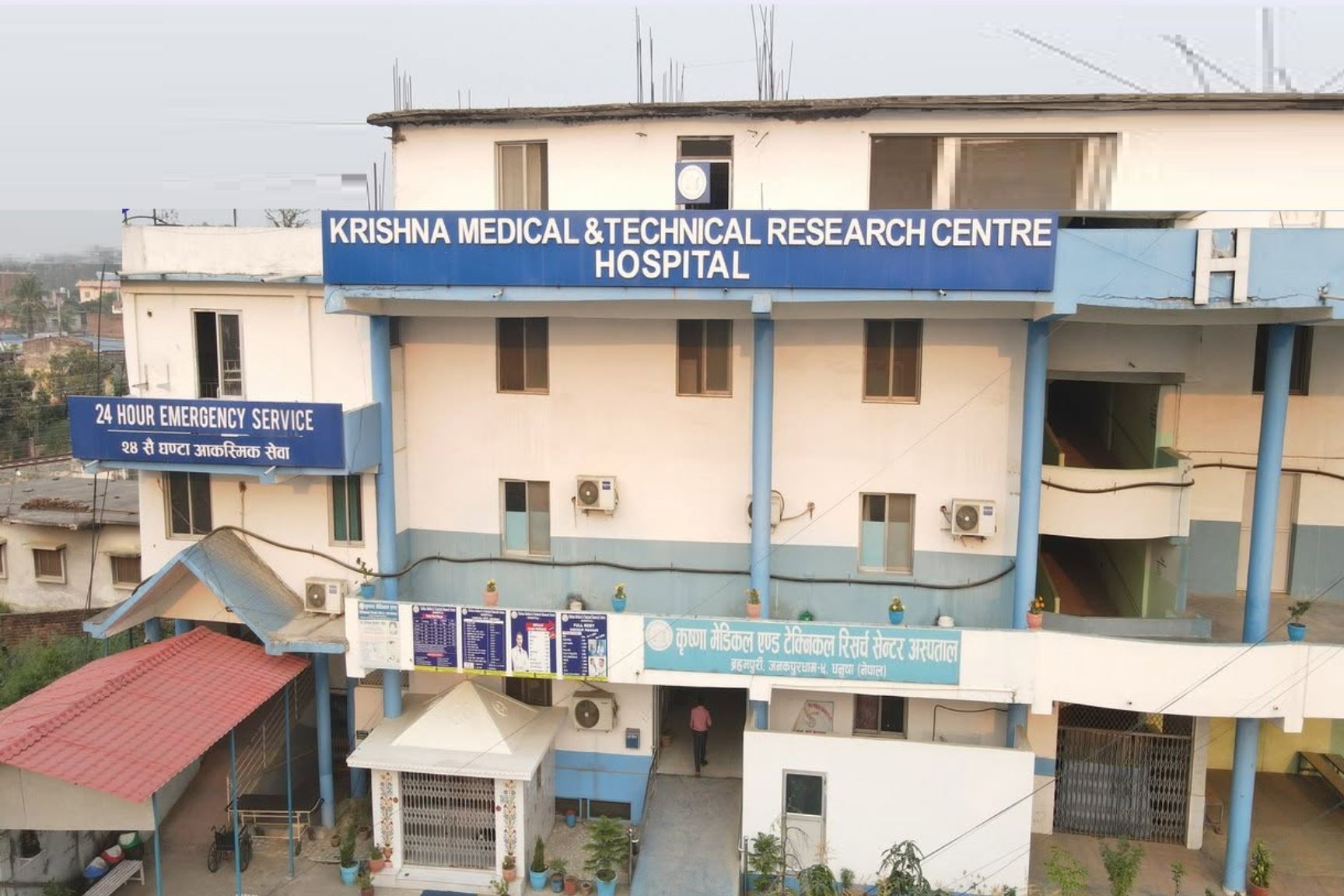
Krishna Medical and Technical Research Centre also has a 100-bed hospital and provides laboratories, a library, multimedia facilities, a conference facility, counselling services, hostel accommodation, and scholarship support as part of its institutional learning environment.
Admission to BPH follows the MECEE-BL process and the prevailing framework of the Medical Education Commission. Applicants must satisfy the eligibility conditions applicable to BPH for the relevant admission cycle.
Admission arrangements follow MEC provisions concerning entrance procedures, matching, seat allocation, scholarship provisions, fees, admission procedures, and the academic calendar. Applicants participating in the matching process may select Krishna Medical and Technical Research Centre Pvt. Ltd. as an institutional choice.
The number of BPH seats is determined by MEC for the applicable admission cycle and may vary from year to year. Applicable fee and scholarship arrangements are also governed by the prevailing MEC framework.
After completing the BPH degree, graduates are required to meet the licensing requirements of the relevant professional council before entering regulated professional practice. For BPH graduates, the relevant professional body is the Nepal Health Professional Council (NHPC).
The program is academically aligned with students interested in population health, epidemiology, community health, disease prevention, health promotion, statistics, research, health policy, program planning, and public health management.
Its combination of classroom study, laboratory work, community-based activities, residential field practice, and research requires sustained participation across all eight semesters.
Institution: Krishna Medical and Technical Research Centre
Address: Brahampuri-9, Janakpur, Madhesh Province, Nepal
Phone: 041-591092
Additional Contact: +9779814029769
Enquiry: 9801666518
Email: kmtrcjnk@gmail.com
Website: https://kmtrch.org.np/